Kia: выручка ускорилась до +12,6%, но EBITDA-маржа сжалась до 10,4%
30 июля 2026 года Kia раскрыла результаты за второй квартал 2026 года. Выручка выросла на 12,6% год к году, до 33 037 млрд вон, при этом EBITDA снизилась на 7,3%, а чистая прибыль увеличилась на 2,6%. На фоне сильного спроса и роста продаж, маржинальность продолжает сжиматься, что делает акции скорее привлекательными, чем однозначно выгодными.
Главные тезисы
— Выручка во втором квартале 2026 года выросла на 12,6% год к году, до 33 037 млрд вон, на фоне высокого спроса и благоприятного ассортимента.
— EBITDA-маржа снизилась до 10,4% с 12,6% годом ранее, что отражает рост затрат и давление на операционную эффективность.
— Чистая прибыль во втором квартале выросла на 2,6%, до 2 327,6 млрд вон, благодаря разовым факторам и налоговым эффектам.
— Операционный денежный поток во втором квартале составил 4 556,4 млрд вон, что значительно выше капитальных затрат в 1 251,3 млрд вон.
— Чистый долг на конец второго квартала составил минус 14 256,5 млрд вон, что отражает сильную денежную позицию компании.
— Дивидендная доходность за последние 12 месяцев составляет 5,4%, что выглядит привлекательно на фоне текущей процентной ставки.
— По модели портала, акции торгуются с нулевым потенциалом роста, что указывает на справедливую оценку.
Оценка привлекательности
Ключевые показатели, млрд KRW
| Показатель | Q2 2025 | Q2 2026 | Изм. |
|---|---|---|---|
| Выручка | 29 350 | 33 037 | +12,6% |
| EBITDA | 3 692 | 3 421 | -7,3% |
| Операционная прибыль | 2 765 | 2 629 | -4,9% |
| Чистая прибыль | 2 269 | 2 328 | +2,6% |
| Операционный денежный поток | 2 339 | 4 556 | +94,8% |
| Капзатраты | 1 036 | 1 251 | +20,8% |
| Рентабельность по EBITDA | 12,6% | 10,4% | -2,2 п.п. |
| Чистая маржа | 7,7% | 7,0% | -0,7 п.п. |
Выручка во втором квартале 2026 года выросла на 12,6% год к году, до 33 037 млрд вон, на фоне высокого спроса и благоприятного ассортимента.
Во втором квартале 2026 года Kia увеличила выручку на 12,6% по сравнению с тем же периодом прошлого года, достигнув 33 037 млрд вон. Это ускорение по сравнению с ростом на 5,3% в первом квартале 2026 года и на 3,5% в четвертом квартале 2025 года, что указывает на усиление спроса на автомобили компании.
Основным драйвером роста стали высокие продажи новых моделей и благоприятный ассортимент, особенно в сегменте электромобилей и SUV. Компания продолжает наращивать присутствие на ключевых рынках, включая Северную Америку и Европу, где спрос остается устойчивым.
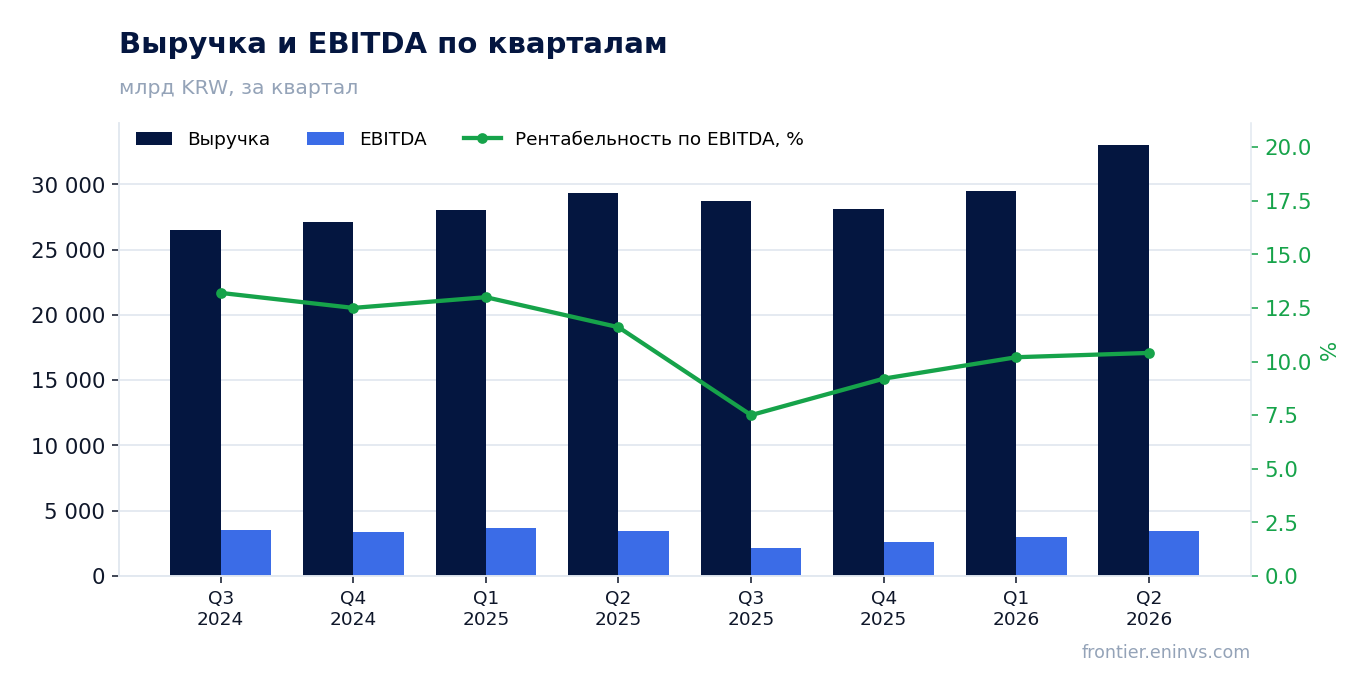
EBITDA-маржа снизилась до 10,4% с 12,6% годом ранее, что отражает рост затрат и давление на операционную эффективность.
EBITDA во втором квартале 2026 года составила 3 420,5 млрд вон, что на 7,3% ниже, чем годом ранее, несмотря на значительный рост выручки. Это привело к снижению EBITDA-маржи до 10,4% с 12,6% во втором квартале 2025 года.
Сжатие маржи связано с ростом затрат на сырье, логистику и маркетинг, а также с увеличением инвестиций в разработку новых моделей и технологий. Компания сталкивается с инфляционным давлением и усилением конкуренции, что ограничивает возможности по переносу затрат на потребителей.
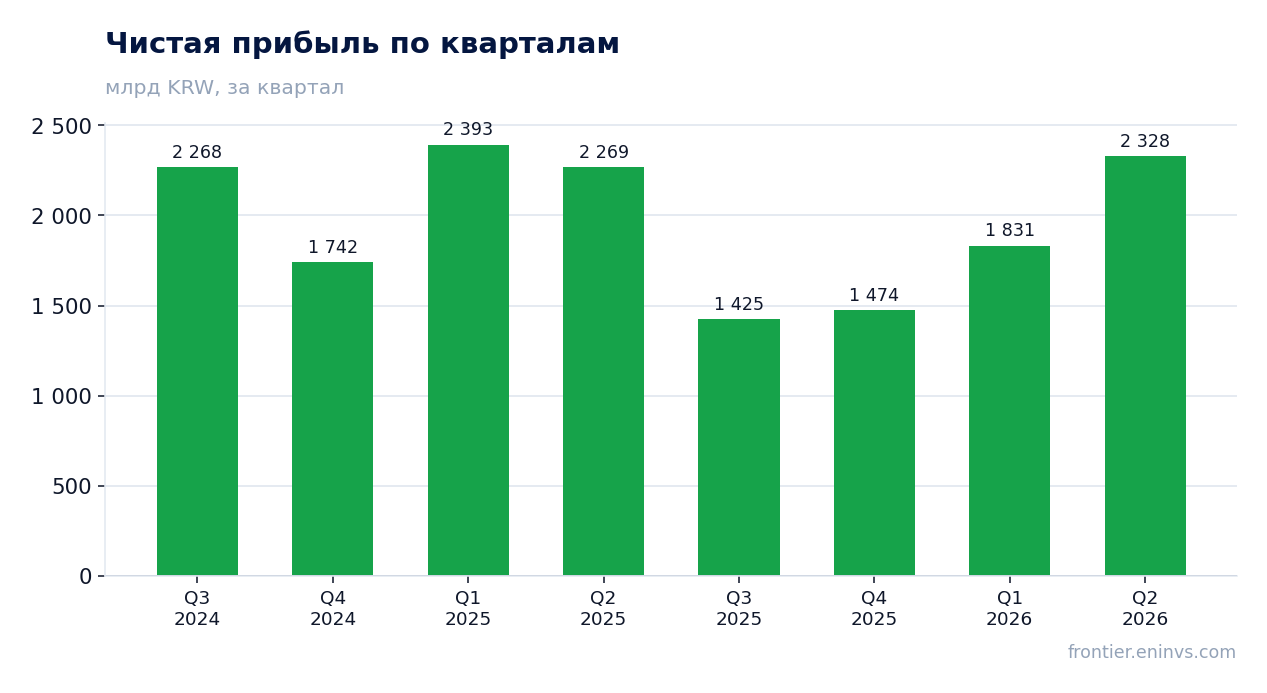
Чистая прибыль во втором квартале выросла на 2,6%, до 2 327,6 млрд вон, благодаря разовым факторам и налоговым эффектам.
Чистая прибыль во втором квартале 2026 года увеличилась на 2,6% год к году, до 2 327,6 млрд вон, несмотря на снижение операционной прибыли. Рост обеспечен разовыми доходами, включая переоценку валютных позиций и налоговые эффекты.
Без учёта этих факторов прибыль могла бы быть ниже, что указывает на сохраняющееся давление на основную деятельность. Тем не менее, компания продолжает генерировать достаточную прибыль для поддержания дивидендов и инвестиций.
Операционный денежный поток во втором квартале составил 4 556,4 млрд вон, что значительно выше капитальных затрат в 1 251,3 млрд вон.
Во втором квартале 2026 года операционный денежный поток Kia составил 4 556,4 млрд вон, что значительно превышает капитальные затраты в 1 251,3 млрд вон. Это обеспечивает свободный денежный поток около 3 305,1 млрд вон за квартал.
Сильный денежный поток поддерживает финансовую гибкость компании, позволяя финансировать инвестиции в электромобили и автономное вождение, а также выплачивать дивиденды. Капитальные затраты остаются умеренными, что способствует сохранению высокой рентабельности капитала.
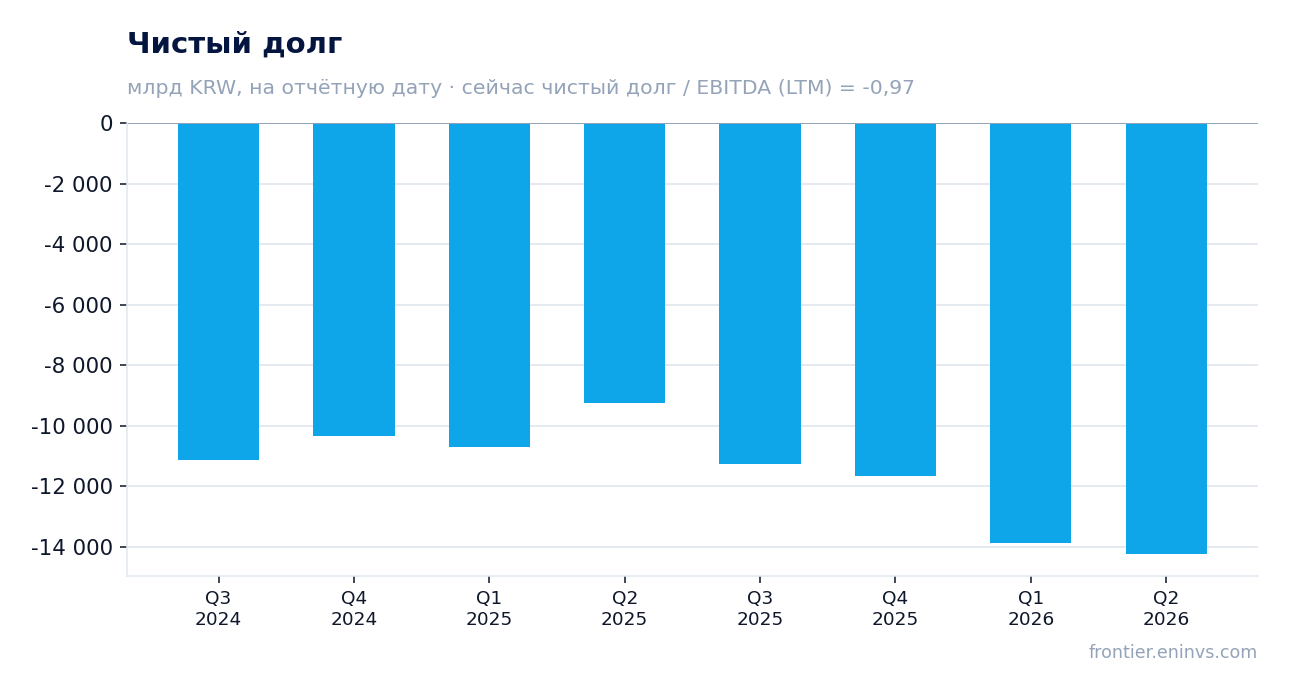
Чистый долг на конец второго квартала составил минус 14 256,5 млрд вон, что отражает сильную денежную позицию компании.
На конец второго квартала 2026 года чистый долг Kia составил минус 14 256,5 млрд вон, что означает превышение денежных средств над долгом. За последние 12 месяцев чистый долг сократился на 5 000,7 млрд вон, что свидетельствует о последовательном улучшении баланса.
Соотношение чистого долга к EBITDA за последние 12 месяцев составляет минус 0,97, что указывает на значительную финансовую подушку. Это даёт компании возможность увеличивать дивиденды или проводить обратные выкупы акций без ущерба для кредитного профиля.
Дивидендная доходность за последние 12 месяцев составляет 5,4%, что выглядит привлекательно на фоне текущей процентной ставки.
За последние 12 месяцев Kia выплатила дивиденды в размере 5,4% от текущей цены акций. Это выше средней доходности за последние годы и выглядит привлекательно для инвесторов, ориентированных на доход.
Компания имеет устойчивую дивидендную политику, направленную на возврат акционерам значительной части прибыли. При текущей чистой прибыли и денежном потоке выплаты вряд ли будут сокращены, если только не произойдет резкого ухудшения рыночной конъюнктуры.
По модели портала, акции торгуются с нулевым потенциалом роста, что указывает на справедливую оценку.
Наша модель оценки, основанная на росте EBITDA и целевом мультипликаторе, показывает, что акции Kia торгуются на уровне справедливой стоимости, с потенциалом роста 0%. Это означает, что текущая цена полностью отражает ожидаемые финансовые показатели.
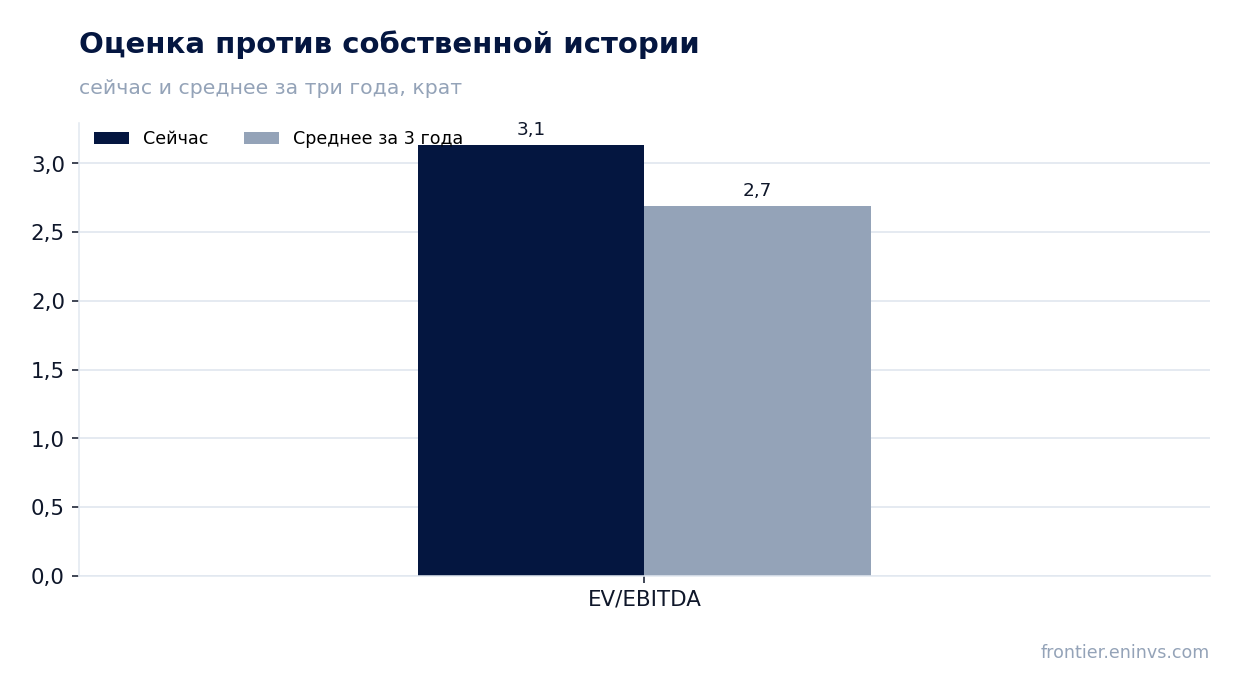
При этом мультипликатор EV/EBITDA составляет 3,1, что ниже среднего за три года (2,7), но учитывая сжатие маржи, такая оценка выглядит обоснованной. P/E за последние 12 месяцев равен 7,0, что также указывает на отсутствие явной недооценки.
Оценка по последним отчётным данным
| Метрика | Значение |
|---|---|
| Капитализация | 49 282 млрд KRW |
| P/E (LTM) | 7,0 |
| EV/EBITDA (LTM) | 3,1 |
| P/B | 0,81 |
| Чистый долг / EBITDA | -0,97 |
| Операционный денежный поток (LTM) | 9 054 млрд |
| ROE | 14,7% |
| Дивидендная доходность (12 мес) | 5,4% |
| EV/EBITDA, среднее за 3 года | 2,7 |
Итог
Во втором квартале 2026 года Kia показала сильный рост выручки, ускорившись до 12,6%, что свидетельствует о высоком спросе на продукцию. Однако EBITDA-маржа продолжает сжиматься, снизившись до 10,4% с 12,6% годом ранее, что отражает рост затрат и давление на операционную эффективность. Чистая прибыль выросла лишь на 2,6% благодаря разовым факторам, что указывает на ограниченную операционную устойчивость. Тем не менее, компания генерирует значительный денежный поток, имеет отрицательный чистый долг и выплачивает дивиденды с доходностью 5,4%. При текущей оценке, близкой к справедливой по модели портала, акции выглядят скорее привлекательными для долгосрочных инвесторов, но требуют мониторинга маржинальности.
Перейти к финансовой карточке компании 000270 →
Смотрите также: обзор рынка · карта оценки рынков · скринеры акций