Gran Tierra Energy: profit is back, but it came from prices, not production
On 5 August Gran Tierra Energy reported second-quarter 2026 results. Revenue rose 22.8% year on year to $187.2 million, adjusted EBITDA by 40.5% to $85.1 million, and net income reached $24.9 million against a $12.7 million loss a year earlier. The swing into profit was driven by a 45% rise in Brent and lower operating costs, while production fell 12% on the sale of Canadian assets. We view the stock as rather attractive: leverage is falling and the discount to its own historical multiples persists, but earnings durability depends on oil prices rather than volumes.
Key takeaways
— Revenue rose 22.8% on Brent, not production, which fell 12%
— EBITDA margin climbed to 45.4% on lower operating costs and higher prices
— Net income of $24.9 million marks a swing from loss, but earnings quality hinges on prices
— Free cash flow of $6.0 million remains thin relative to debt
— Debt is falling: $9.2 million of notes repurchased at a 12% discount
— Capex of $54.3 million was front-loaded into the first half
— Valuation: discount to historical multiples with declining debt
Attractiveness
Key figures, USD bn
| Metric | Q2 2025 | Q2 2026 | Change |
|---|---|---|---|
| Revenue | 0.15 | 0.19 | +22.8% |
| EBITDA | 0.06 | 0.09 | +40.5% |
| Operating profit | -0.01 | 0.06 | to profit |
| Net profit | -0.01 | 0.02 | to profit |
| Operating cash flow | 0.03 | 0.06 | +65.6% |
| Capex | 0.09 | 0.06 | -29.5% |
| EBITDA margin | 39.7% | 45.4% | +5.7 pp |
| Net margin | -8.4% | 13.3% | +21.7 pp |
Revenue rose 22.8% on Brent, not production, which fell 12%
Second-quarter 2026 revenue reached $187.2 million, up 22.8% year on year. The increase was driven by Brent, whose average price rose 45% to $96.68 per barrel. Production, meanwhile, fell 12% to 41,501 barrels of oil equivalent per day.
The production decline reflects the sale of the Simonette and Lodgepole assets in Canada and temporary failures of artificial lift systems at the Acordionero and Cohembi fields in Colombia. Those failures have been rectified. The Lodgepole disposition closed on 23 June 2026 for C$12.8 million ($9.3 million).
Revenue growth was therefore entirely price-driven. Sales volumes in oil equivalent fell 16% year on year. This means that if oil prices reverse, revenue will contract faster than it grew unless production recovers.
EBITDA margin climbed to 45.4% on lower operating costs and higher prices
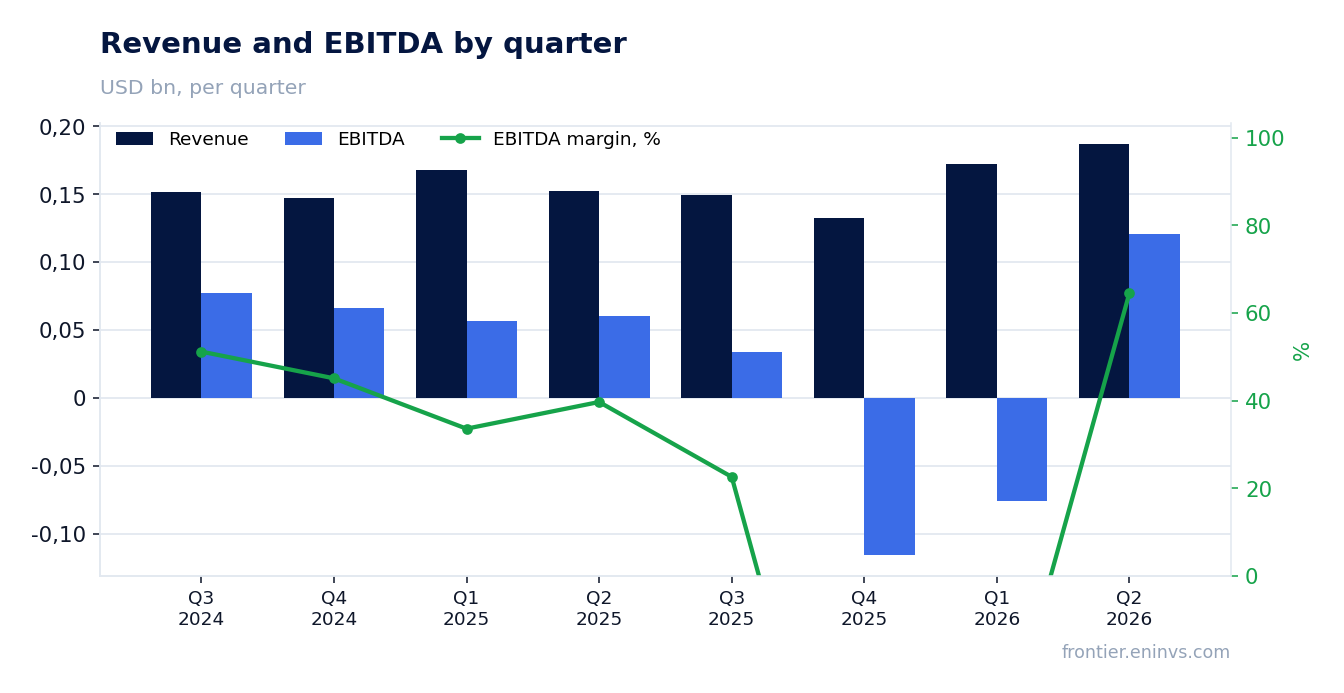
The EBITDA margin in the second quarter of 2026 was 45.4% against 39.7% a year earlier. Adjusted EBITDA rose 40.5% to $85.1 million. The margin improvement came from two factors: higher realised prices and lower operating costs.
Operating expenses per barrel of oil equivalent fell to $13.59 from $13.36 a year earlier, but total operating expenses dropped 7% to $51.6 million. The decline reflects lower workover activity, reduced field personnel costs and lower oil treatment costs.
Operating netback rose 62% year on year to $34.73 per barrel. This key measure of production efficiency reflects improved pricing with cost control. However, margin sustainability depends on prices holding at current levels.
Net income of $24.9 million marks a swing from loss, but earnings quality hinges on prices
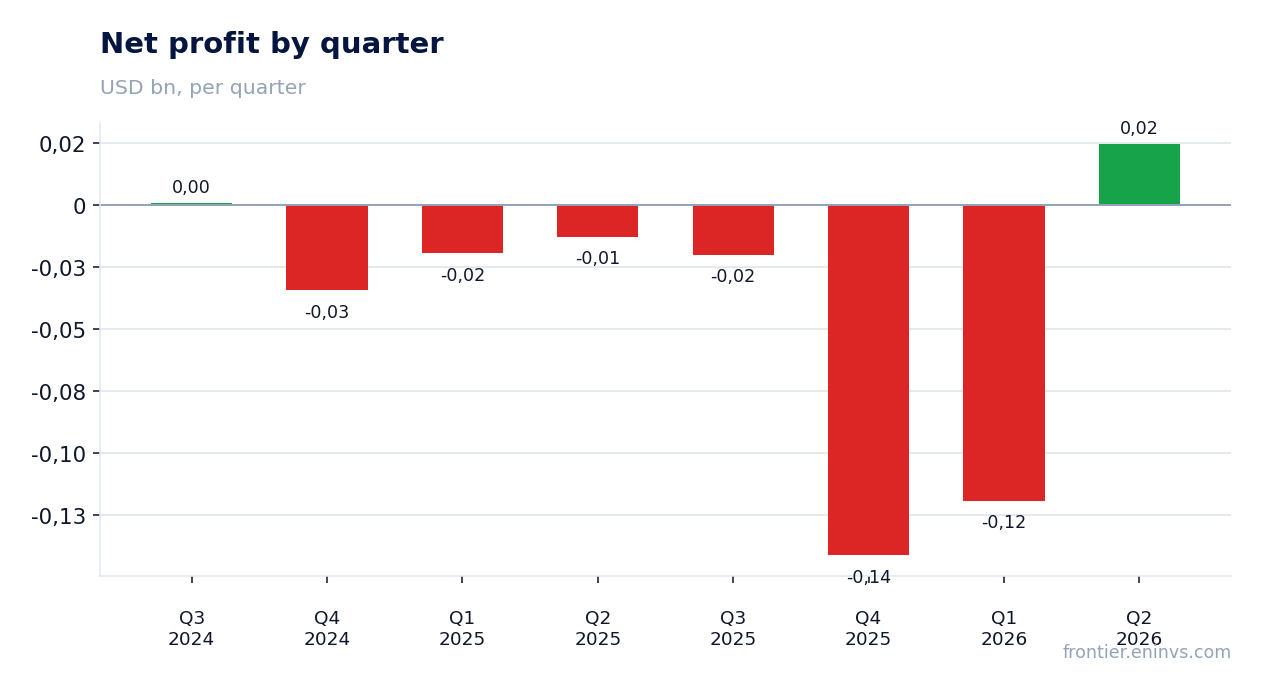
Net income in the second quarter of 2026 was $24.9 million against a $12.7 million loss a year earlier. The swing was driven by higher revenue and lower operating costs. Earnings per share were $0.70.
Gross profit reached $75.5 million against $23.3 million a year earlier. Per barrel of oil equivalent, gross profit rose to $19.90 from $5.60. This increase reflects both pricing and lower unit costs.
However, earnings quality is questionable. It was driven mainly by prices rather than sustainable production growth. If oil prices fall, profit could quickly return to loss, as happened in the first quarter of 2026 when the loss was $119.2 million.
Free cash flow of $6.0 million remains thin relative to debt
Free cash flow in the second quarter of 2026 was $6.0 million against $2.7 million a year earlier. The increase was driven by a higher realised price. However, relative to debt of $606 million and capex of $54.3 million, this flow remains insignificant.
Operating cash flow was $57.4 million, up 66% year on year. Over the trailing twelve months, operating cash flow reached $313.2 million. This covers capital expenditure and debt service but does not create a substantial cushion for dividends or buybacks.
Capex of $54.3 million was higher than in the first quarter ($45.4 million) and higher than a year earlier ($51.2 million). The company completed the drilling programme at the Cohembi field and fulfilled its Suroriente Carry obligations. The 2026 programme was front-loaded into the first half, and the company expects capex to remain within previously stated guidance.
Debt is falling: $9.2 million of notes repurchased at a 12% discount
In the first half of 2026, Gran Tierra repurchased $9.2 million face value of its 9.75% senior notes due 2031 at a 12% discount to face value. After the reporting date, the company repurchased an additional $15.0 million of notes at a 10% discount. This reduces leverage and generates a gain on repurchase.
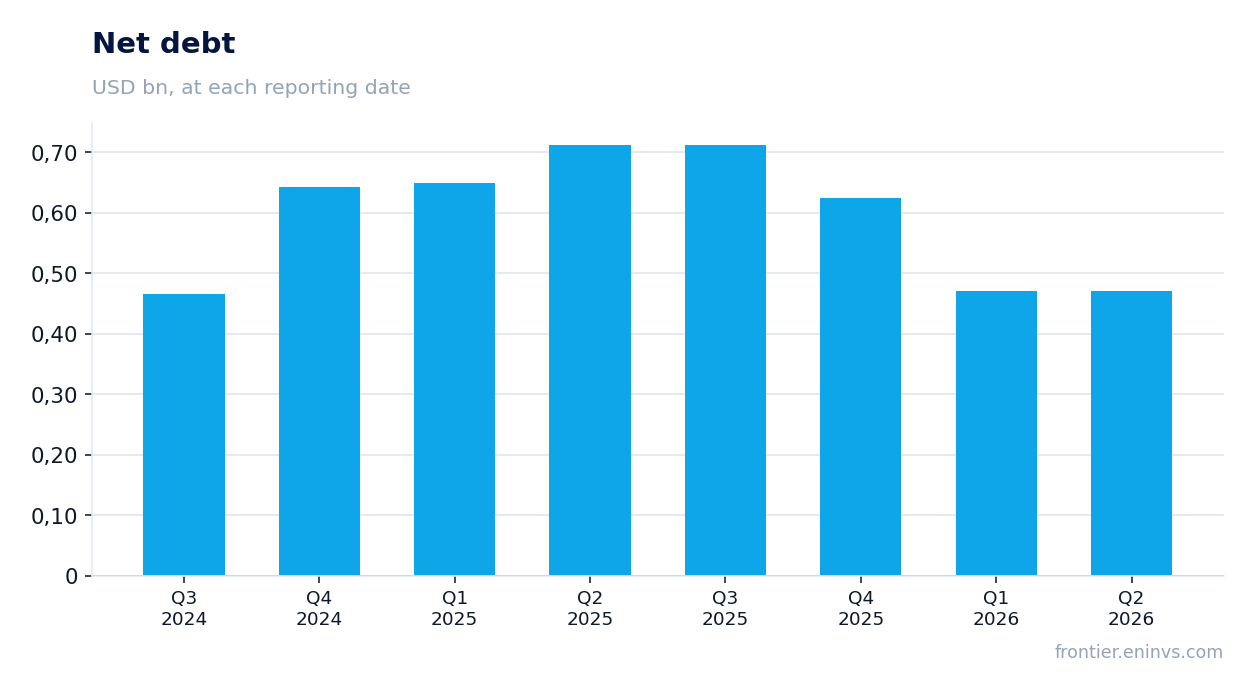
Total debt as of 30 June 2026 was $606 million, cash was $127 million, and net debt was $479 million. The ratio of trailing twelve-month net debt to adjusted EBITDA was 1.7 times against a target of 1.0 times. The company is steadily moving towards its target.
Debt reduction matters because interest expense consumes a significant portion of operating cash flow. In the reported quarter, interest expense was $4.17 per barrel. Further debt reduction will improve free cash flow and reduce risks if oil prices fall.
Capex of $54.3 million was front-loaded into the first half
Capital expenditure in the second quarter of 2026 was $54.3 million against $45.4 million in the first quarter and $51.2 million a year earlier. The increase reflects the completion of the drilling programme at the Cohembi field in Colombia and the fulfilment of Suroriente Carry obligations.
The company completed the six-well programme at Cohembi, with the final two wells drilled and brought on production during the quarter. The programme was delivered under budget. The $123.0 million Suroriente capital carry was also completed, improving the economics of the block.
The 2026 programme was planned to be front-loaded into the first half. The company expects capex to remain within previously stated guidance. This means capital expenditure may decline in the second half, supporting free cash flow.
Valuation: discount to historical multiples with declining debt
Gran Tierra Energy's market capitalisation is $369.6 million. With net debt of $479 million and trailing twelve-month adjusted EBITDA of about $159 million (sum of four quarters), the EV/EBITDA ratio exceeds 5 times. For comparison, the company's historical average multiple over the past three years was higher, indicating a current discount.
Return on equity (ROE) is 82.5%, reflecting both the profit recovery and a low equity base. This is a high figure, but it is largely driven by the price factor and may be unsustainable.
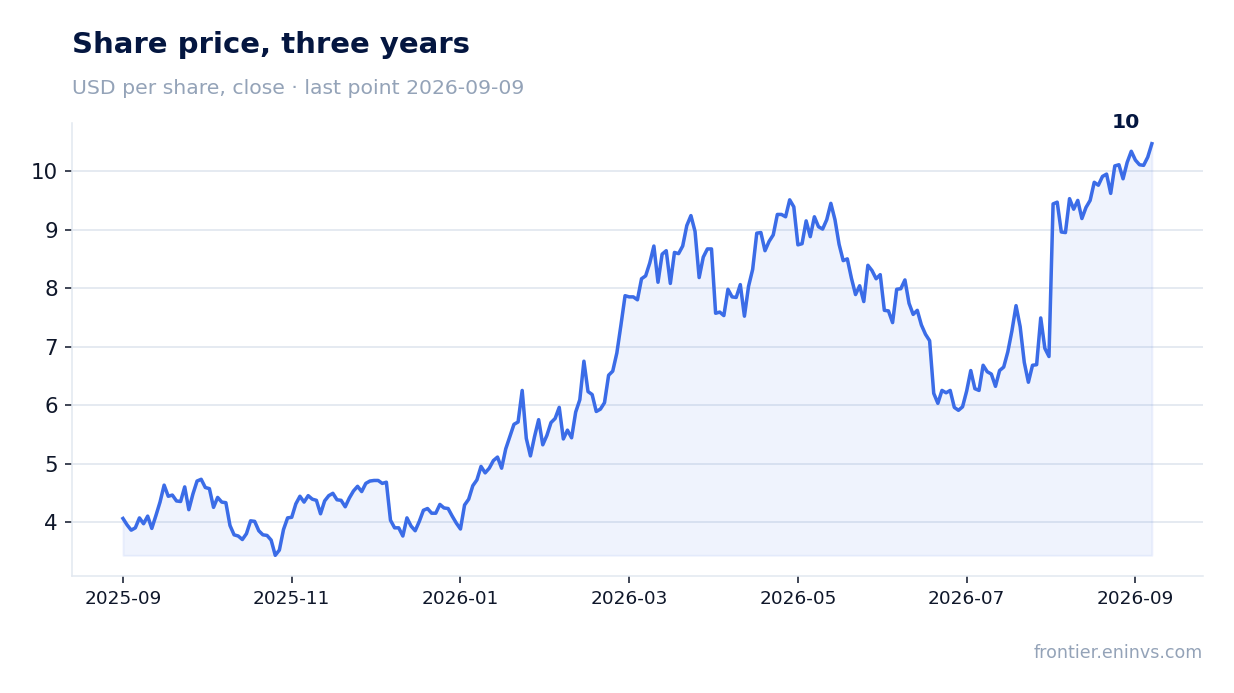
The shares reacted to the report with a 38.2% gain on the publication day and a 53.3% gain from the release to 9 September 2026. This rally reflects improved financials and lower leverage. However, the current valuation still implies a significant discount to historical levels, which may be justified by risks related to oil prices and production.
Valuation on the latest reported figures
| Metric | Value |
|---|---|
| Market cap | 0.37 bn USD |
| P/B | 1.62 |
| Operating cash flow (LTM) | 0.31 bn |
| ROE | 82.5% |
Bottom line
Bottom line: Gran Tierra Energy delivered a strong quarter – net income of $24.9 million, EBITDA margin of 45.4%, and falling debt. However, this result rests on oil prices, not production, which fell 12%. Free cash flow of $6.0 million remains thin, and leverage at 1.7 times EBITDA is above target. The shares have risen 53.3% since the report, but a discount to historical multiples persists. We view the stock as rather attractive for investors willing to accept price risk, but earnings sustainability is questionable.
Open the company's financial profile GTE →
See also: market overview · valuation map · stock screeners