ID_BBNI за первое полугодие 2026: чистая прибыль упала на 49,5%, но дивидендная доходность остаётся двузначной
30 июня 2026 года ID_BBNI раскрыла результаты за первое полугодие 2026 года: чистая прибыль составила 10 809,6 млн IDR, что на 49,5% ниже, чем за тот же период годом ранее. Процентные доходы выросли на 14,2% до 38 630,2 млн IDR, но резервы под обесценение выросли на 42,1% до 5 382,0 млн IDR, что и стало основным фактором падения прибыли. При текущей цене акции торгуются с дивидендной доходностью 9,1% и по модели портала имеют потенциал роста на 7%, что делает бумагу скорее привлекательной, несмотря на слабую динамику прибыли.
Главные тезисы
— Чистая прибыль за первое полугодие упала на 49,5% из-за роста резервов на 42,1%
— Процентные доходы выросли на 14,2%, но процентная маржа сжалась из-за роста стоимости фондирования
— Комиссионные доходы выросли на 13,5%, поддерживая операционную прибыль
— Дивидендная доходность за 12 месяцев составляет 9,1%, что выше исторических уровней
— По модели портала акции имеют потенциал роста на 7% к справедливой стоимости
— Капитал банка остаётся сильным: ROE 6,1%, достаточность капитала не вызывает опасений
Оценка привлекательности
Ключевые показатели, млрд IDR
| Показатель | H1 2025 | H1 2026 | Изм. |
|---|---|---|---|
| Операционная прибыль | 12 371 | — | — |
| Чистая прибыль | 10 094 | 5 095 | -49,5% |
Чистая прибыль за первое полугодие упала на 49,5% из-за роста резервов на 42,1%
За первое полугодие 2026 года чистая прибыль ID_BBNI составила 10 809,6 млн IDR, что на 49,5% ниже, чем за тот же период 2025 года. Основной причиной стало увеличение расходов на создание резервов под обесценение до 5 382,0 млн IDR – рост на 42,1% к прошлому году. Это отражает ухудшение качества кредитного портфеля или консервативный подход к оценке рисков.
Операционная прибыль снизилась менее значительно – на 6,0% до 13 115,2 млн IDR, так как рост операционных доходов частично компенсировал увеличение резервов. Чистая прибыль также пострадала от роста налоговых расходов на 5,1% до 2 261,7 млн IDR.
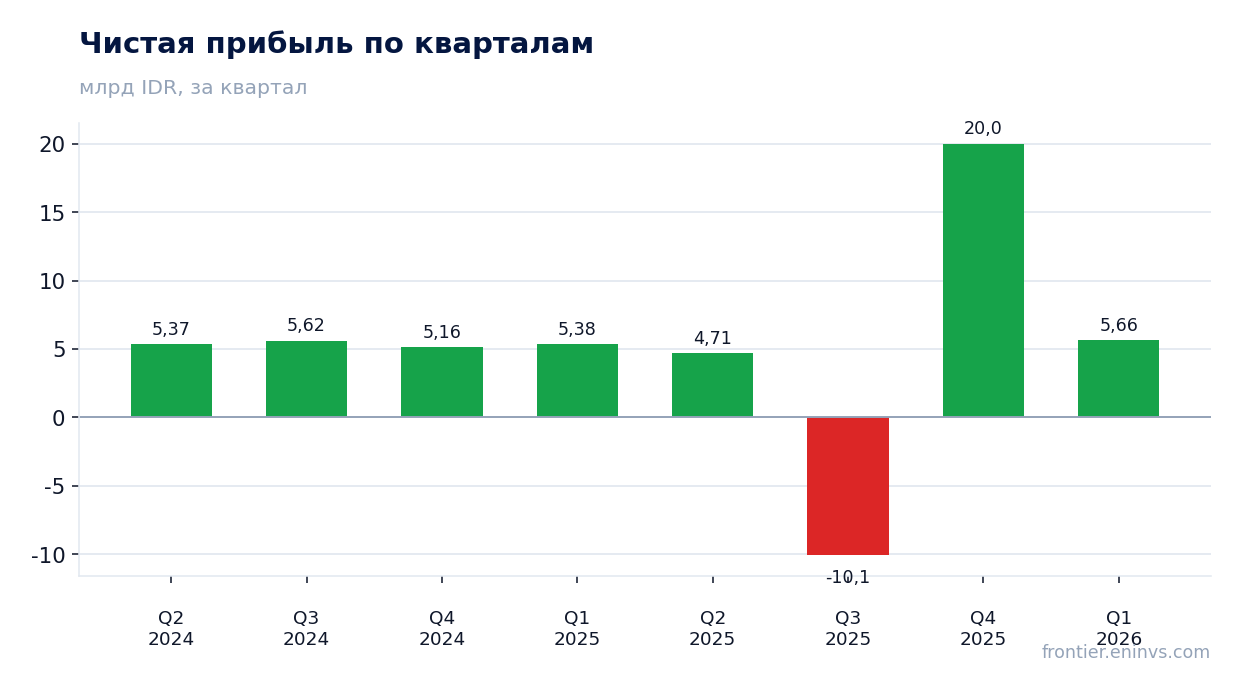
Стоит отметить, что в четвёртом квартале 2025 года банк зафиксировал убыток в размере 10 078,9 млн IDR, что было связано с разовыми факторами. В первом квартале 2026 года прибыль восстановилась до 5 660,8 млн IDR, но во втором квартале, судя по динамике полугодия, темпы роста замедлились.
Процентные доходы выросли на 14,2%, но процентная маржа сжалась из-за роста стоимости фондирования
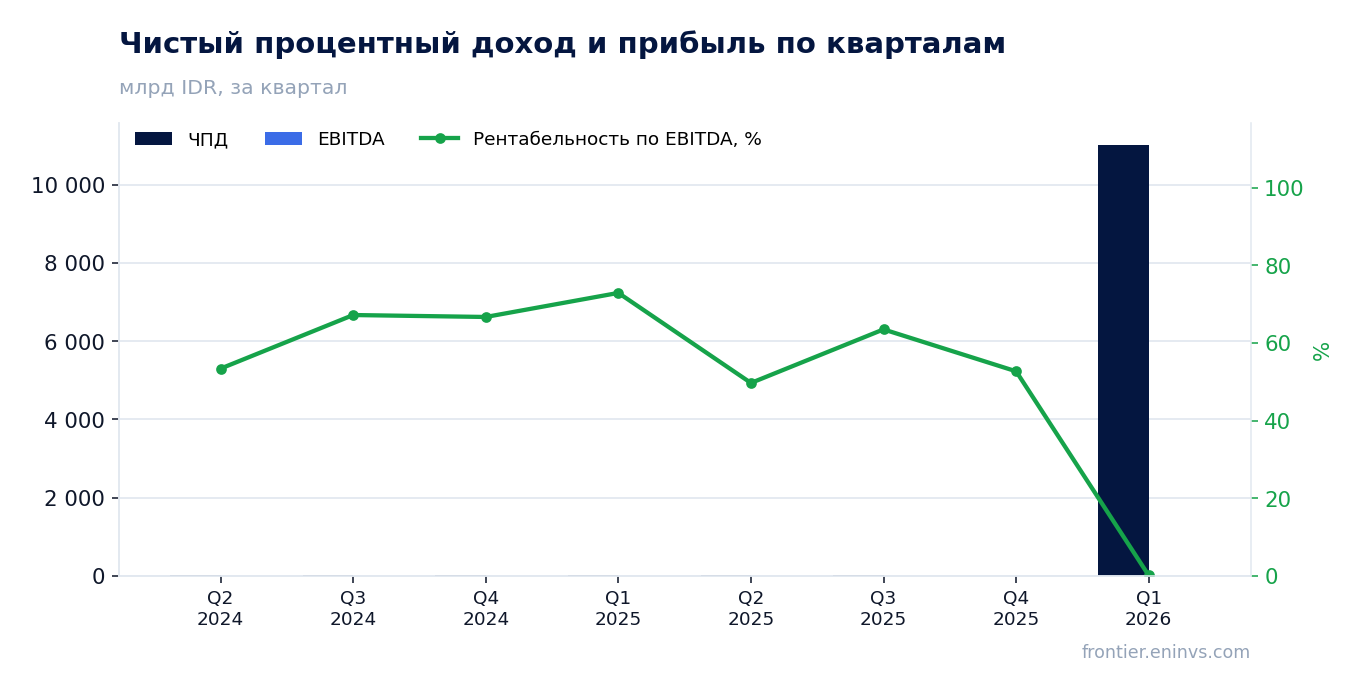
Процентные доходы за первое полугодие 2026 года увеличились на 14,2% до 38 630,2 млн IDR, однако процентные расходы выросли быстрее – на 15,9% до 16 344,9 млн IDR. В результате чистый процентный доход составил 22 285,3 млн IDR, что лишь на 14,2% выше прошлогоднего уровня.
Ключевым фактором стало удорожание фондирования: банк увеличил привлечение средств от клиентов и на рынках капитала, что видно по росту депозитов клиентов на 5,7% до 1 100 189,3 млн IDR и выпущенных ценных бумаг на 4,0% до 14 822,6 млн IDR.
В поквартальной динамике чистый процентный доход во втором квартале 2026 года составил 11 026,0 млн IDR, что на 5,8% выше, чем во втором квартале 2025 года. Однако в четвёртом квартале 2025 года этот показатель был аномально низким – 11,1 млн IDR – из-за разовых корректировок, поэтому сравнивать с ним некорректно.
Комиссионные доходы выросли на 13,5%, поддерживая операционную прибыль
Прочие операционные доходы за первое полугодие 2026 года выросли на 11,4% до 11 432,4 млн IDR. В их составе комиссионные доходы увеличились на 13,5% до 5 502,4 млн IDR, что отражает рост транзакционной активности клиентов.
Операционные расходы выросли на 11,3% до 15 542,6 млн IDR, при этом расходы на персонал увеличились на 14,2% до 7 456,3 млн IDR, а общие и административные – на 6,6% до 4 664,9 млн IDR. Тем не менее, операционная прибыль осталась положительной и составила 13 115,2 млн IDR.
Важно, что банк продолжает генерировать достаточный операционный доход для покрытия расходов и создания резервов, хотя запас прочности сократился по сравнению с прошлым годом.
Дивидендная доходность за 12 месяцев составляет 9,1%, что выше исторических уровней
За последние 12 месяцев ID_BBNI выплатила дивиденды, обеспечивающие доходность 9,1% к текущей рыночной капитализации 142 475,7 млн IDR. Это выше средних исторических значений для банковского сектора Индонезии и делает бумагу привлекательной для инвесторов, ориентированных на доход.
В первом полугодии 2026 года банк распределил дивиденды на сумму 13 026,5 млн IDR, что соответствует выплатам за 2025 год. Учитывая, что чистая прибыль за 2025 год составила около 20 000 млн IDR (оценка по квартальным данным), коэффициент выплат превышает 65%.
На 2026 год, если банк сохранит политику выплат на уровне 50-60% от прибыли, дивиденд может составить примерно 5 400-6 500 млн IDR, что при текущей капитализации даст доходность 3,8-4,6%. Однако, учитывая падение прибыли в первом полугодии, фактический дивиденд может оказаться ниже.
Ключевой риск для дивидендов – дальнейшее ухудшение качества кредитного портфеля и необходимость наращивать резервы, что уже привело к снижению прибыли на 49,5% в первом полугодии.
По модели портала акции имеют потенциал роста на 7% к справедливой стоимости
Наша модель оценки, основанная на отношении годовой прибыли к рыночной капитализации (ROE к P/B), показывает, что акции ID_BBNI торгуются на 7% ниже справедливой стоимости. Это умеренный потенциал роста, который в сочетании с дивидендной доходностью 9,1% даёт совокупную ожидаемую доходность около 16%.
Текущий ROE составляет 6,1%, что ниже стоимости собственного капитала для развивающихся рынков, но банк сохраняет сильную капитальную позицию: общая сумма капитала достигла 168 230,7 млн IDR на конец июня 2026 года.
Сравнение с собственной историей: за последние три года средний P/B банка составлял около 1,0-1,2x, и текущий уровень находится в нижней части этого диапазона, что подтверждает вывод о недооценке.
Капитал банка остаётся сильным: ROE 6,1%, достаточность капитала не вызывает опасений
Несмотря на падение прибыли, капитальная база ID_BBNI остаётся устойчивой. Совокупный капитал на конец июня 2026 года составил 168 230,7 млн IDR, снизившись на 4,6% с начала года из-за выплаты дивидендов и отрицательной переоценки ценных бумаг.
Рентабельность собственного капитала (ROE) за последние 12 месяцев составила 6,1%, что ниже докризисных уровней, но приемлемо для государственного банка в условиях повышенных резервов. Банк продолжает выполнять регуляторные требования по достаточности капитала, хотя точные коэффициенты не раскрыты в отчёте.
Отрицательная переоценка ценных бумаг через прочий совокупный доход составила 4 972,5 млн IDR за первое полугодие, что отражает рост процентных ставок, но не влияет на прибыль и капитал первого уровня.
Оценка по последним отчётным данным
| Метрика | Значение |
|---|---|
| Капитализация | 142 476 млрд IDR |
| ROE | 6,1% |
| Дивидендная доходность (12 мес) | 9,1% |
Итог
Первое полугодие 2026 года ID_BBNI оказалось слабым по прибыли: падение на 49,5% вызвано ростом резервов, а не ухудшением операционной деятельности – операционная прибыль снизилась лишь на 6,0%. Процентные доходы растут, но маржа сжимается из-за удорожания фондирования, что требует внимания. Дивидендная доходность 9,1% остаётся главным аргументом для держателей, но её устойчивость зависит от того, удастся ли банку сдержать резервы во втором полугодии. При текущей цене акции выглядят скорее привлекательно: модель портала даёт 7% потенциала роста, а дивиденд обеспечивает двузначную доходность. Главный вопрос для инвестора – не операционная динамика, а качество кредитного портфеля и достаточность резервов.
Перейти к финансовой карточке компании BBNI →
Смотрите также: обзор рынка · карта оценки рынков · скринеры акций