VICI Properties: revenue grows, but profit falls 39% on credit loss allowance
On July 29, VICI Properties reported Q2 2026 results. Revenue grew 5.7% to $1.1 billion, but net income fell 39.1% to $526.5 million due to a $413.1 million change in the CECL allowance. Our verdict: the shares look attractive — AFFO growth of 7.8% and tenant diversification offset the volatility of paper earnings.
Key takeaways
— Revenue grew 5.7% thanks to new tenants and rent indexation
— Net income fell 39.1% due to credit loss allowance, not operational issues
— AFFO rose 7.8% to $679.6 million — the key metric for a REIT
— The company added three new tenants and expanded its portfolio by $1.3 billion
— Debt burden decreased: net debt fell by $2.4 billion in the quarter
— Dividend of $0.45 per share is well covered by AFFO
Attractiveness
Key figures, USD bn
| Metric | Q2 2025 | Q2 2026 | Change |
|---|---|---|---|
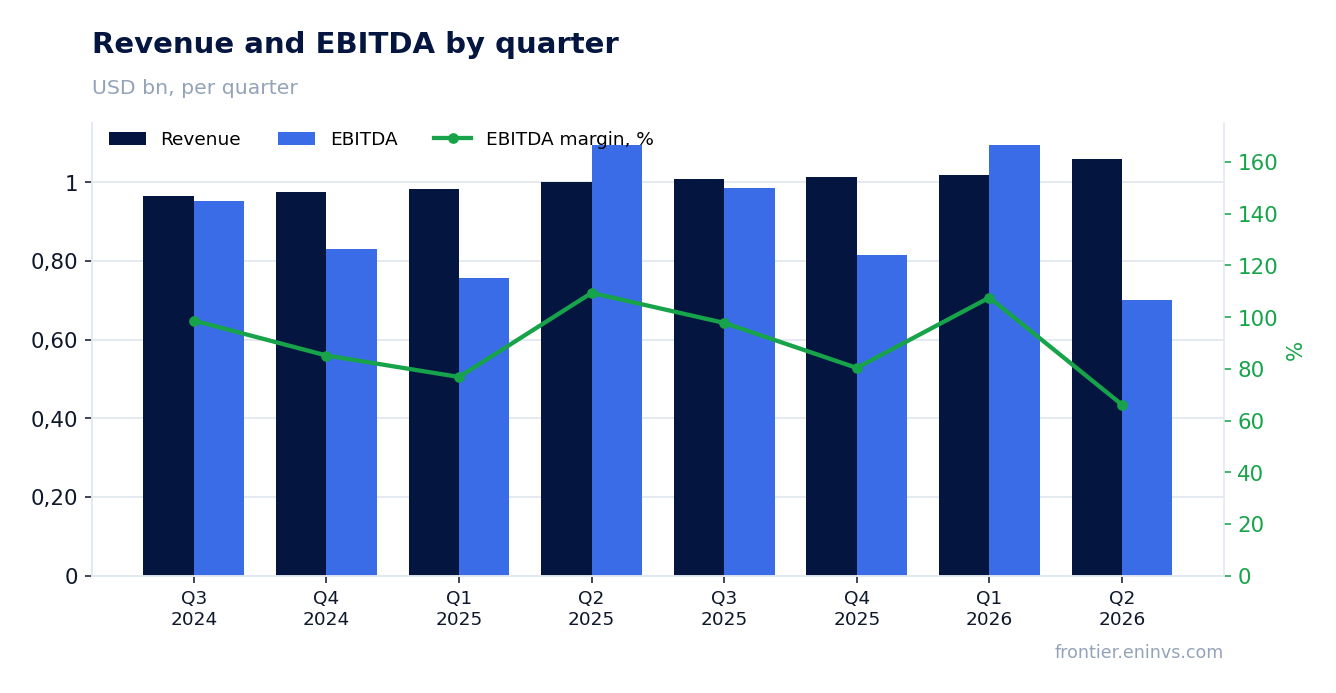
| Revenue | 1.00 | 1.06 | +5.7% |
| EBITDA | 1.10 | 0.80 | -27.0% |
| Operating profit | 1.10 | 0.70 | -36.5% |
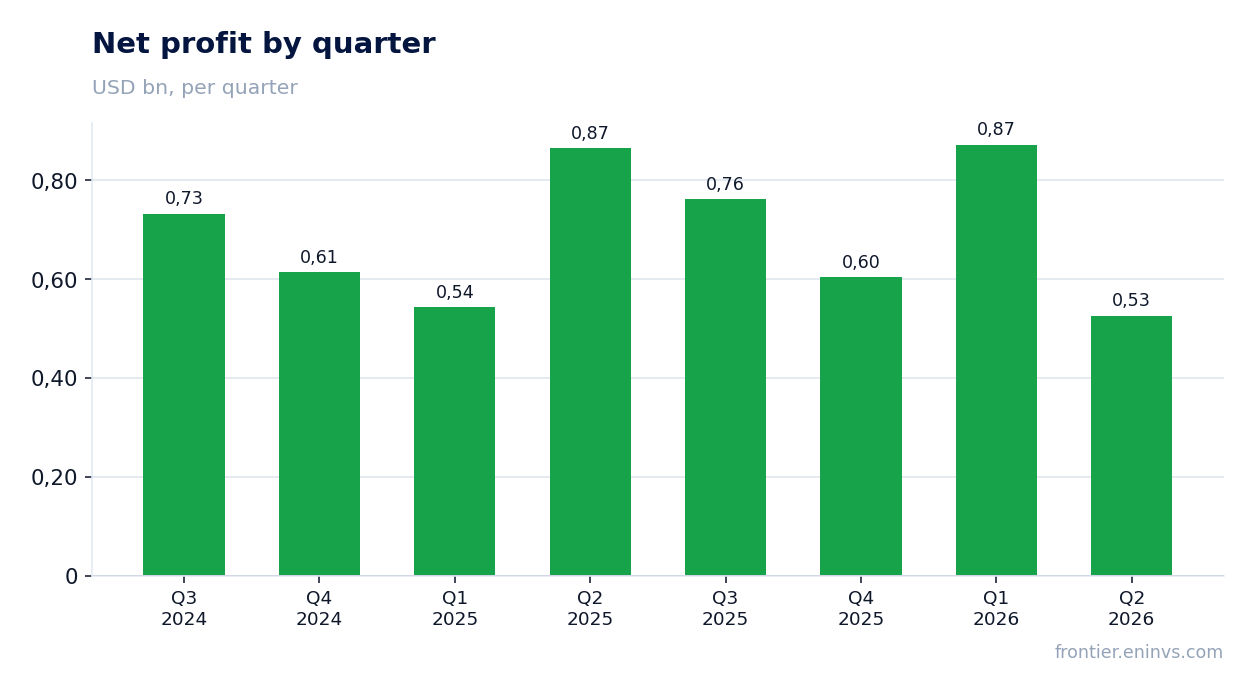
| Net profit | 0.87 | 0.53 | -39.1% |
| Operating cash flow | 0.64 | 0.60 | -6.2% |
| Capex | 0.00 | — | — |
| EBITDA margin | 109.4% | 75.6% | -33.8 pp |
| Net margin | 86.4% | 49.7% | -36.7 pp |
Revenue grew 5.7% thanks to new tenants and rent indexation
In Q2 2026, VICI Properties' revenue reached $1,058.5 million, up 5.7% year-over-year. Growth was driven by new leases: with Clairvest for Northfield Park (initial rent of $53 million per year), with Golden Entertainment (master lease with annual rent of $87 million), and with Club Med for Carambola Beach Resort. Additionally, most existing leases provide for annual escalation of 2% or more.
Organic growth was also supported by rent indexation on Caesars, MGM, and Venetian master leases, which rose 2–3% year-over-year. As a result, revenue from sales-type and financing leases increased 5.7%, at the upper end of the company's target range.
Net income fell 39.1% due to credit loss allowance, not operational issues
Net income in Q2 was $526.5 million versus $865.1 million a year earlier. The 39.1% decline is explained by the change in the credit loss allowance (CECL): in the reporting quarter, the company accrued $271.1 million, while a year ago the reserve was released by $142.0 million. The combined effect is minus $413.1 million to profit.
This is a non-operating item: it depends on tenants' financial health and macroeconomic factors, but does not reflect a deterioration of the business. Operating profit (EBITDA) also fell 27% to $701.0 million, but this is due to one-time income from lease modifications included last year. Excluding these effects, operational dynamics remain stable.
AFFO rose 7.8% to $679.6 million — the key metric for a REIT
Adjusted funds from operations (AFFO) in Q2 rose 7.8% to $679.6 million, or $0.62 per share (+4.6% year-over-year). AFFO is the key metric for REITs as it excludes non-cash items, including the CECL allowance change and depreciation.
AFFO growth was driven by higher rental income from new assets and indexation of existing leases. Management raised its 2026 AFFO guidance to $2,675–2,695 million, implying 5–6% growth over last year.
The company added three new tenants and expanded its portfolio by $1.3 billion
In Q2, VICI closed several deals: the acquisition of seven Golden Entertainment casinos for $1.16 billion (at a 7.5% cap rate), the purchase of Carambola Beach Resort for $20.3 million with a commitment to fund $55.2 million of redevelopment, and two gaming properties in Canada for C$200.6 million (approximately $141.0 million).
These transactions added three new tenants — Clairvest, Golden Entertainment (through Sartini), and Club Med — bringing the tenant count to 16. The portfolio now includes 103 properties in the US and Canada. The expanded tenant base reduces concentration risk and creates potential for future rental income growth.
Debt burden decreased: net debt fell by $2.4 billion in the quarter
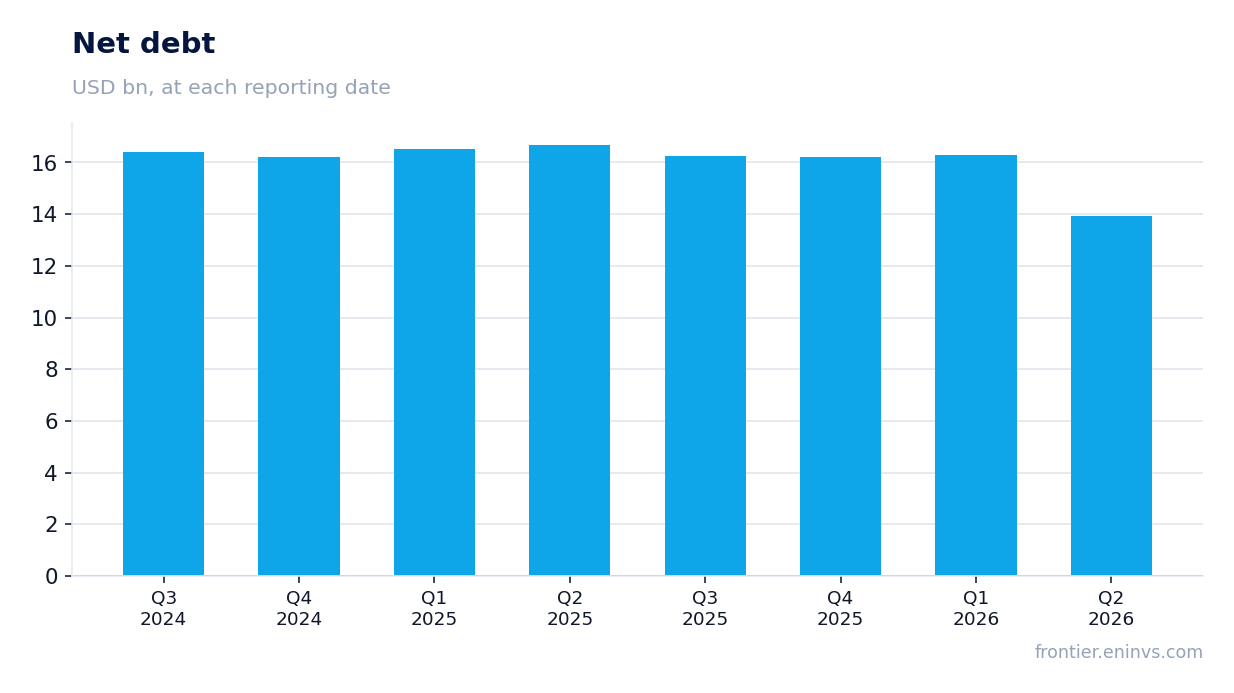
At the end of June, net debt stood at $13,931.2 million, down $2.4 billion from the previous quarter ($16,306.9 million). The decrease was driven by repayment of part of Golden Entertainment's debt ($426 million) and higher cash balances of $288.1 million.
Total debt rose to $17.2 billion due to a C$185 million draw on the credit facility for the Canadian deal, but the company maintains strong liquidity of $2.5 billion, including $2.2 billion of available credit. Interest rates are partially hedged with $600 million of forward-starting swaps.
Dividend of $0.45 per share is well covered by AFFO
The company declared a quarterly dividend of $0.45 per share, corresponding to an annual level of $1.80. The payment for the quarter was approximately $495.3 million, while AFFO for the same period was $679.6 million, implying a coverage ratio of 1.37.
This is typical for net-lease REITs: the dividend grows steadily and is fully covered by cash flow. Given the 2026 AFFO guidance ($2.45–2.47 per share), coverage will remain at 1.36–1.37, leaving room for dividend increases.
Valuation on the latest reported figures
| Metric | Value |
|---|---|
| Operating cash flow (LTM) | 2.50 bn |
| ROE | 7.3% |
Bottom line
The reporting quarter showed steady organic revenue growth (+5.7%) and AFFO growth (+7.8%), confirming the quality of the portfolio and the effectiveness of the partnership strategy. The decline in net income is the result of a non-cash CECL allowance, which does not affect cash flow and was partially offset by AFFO growth. The company is actively expanding its tenant base, reducing concentration, and maintaining high dividend coverage. At the current valuation, the shares look attractive for long-term investors focused on stable cash flow.
Open the company's financial profile VICI →
See also: market overview · valuation map · stock screeners