Air Arabia: revenue almost flat, but EBITDA plunged 49.9% — margin halved
On August 25, Air Arabia reported results for the second quarter of 2026. Revenue was AED 1,688.6 million, down 0.2% year-on-year, EBITDA fell 49.9% to AED 228.3 million, and net profit dropped 74.9% to AED 87.9 million. The shares look unattractive: margins halved and multiples are far above their own history.
Key takeaways
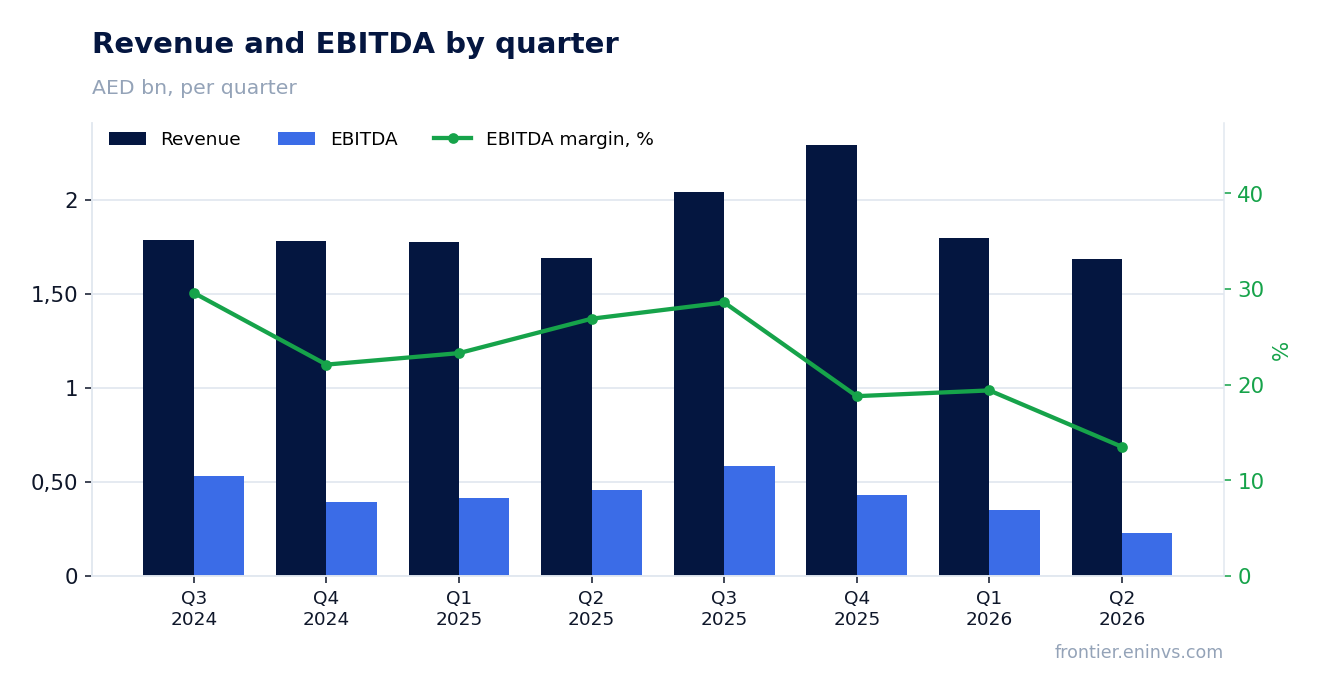
— Revenue in Q2 was almost flat, but EBITDA halved — margin compressed from 26.9% to 13.5%
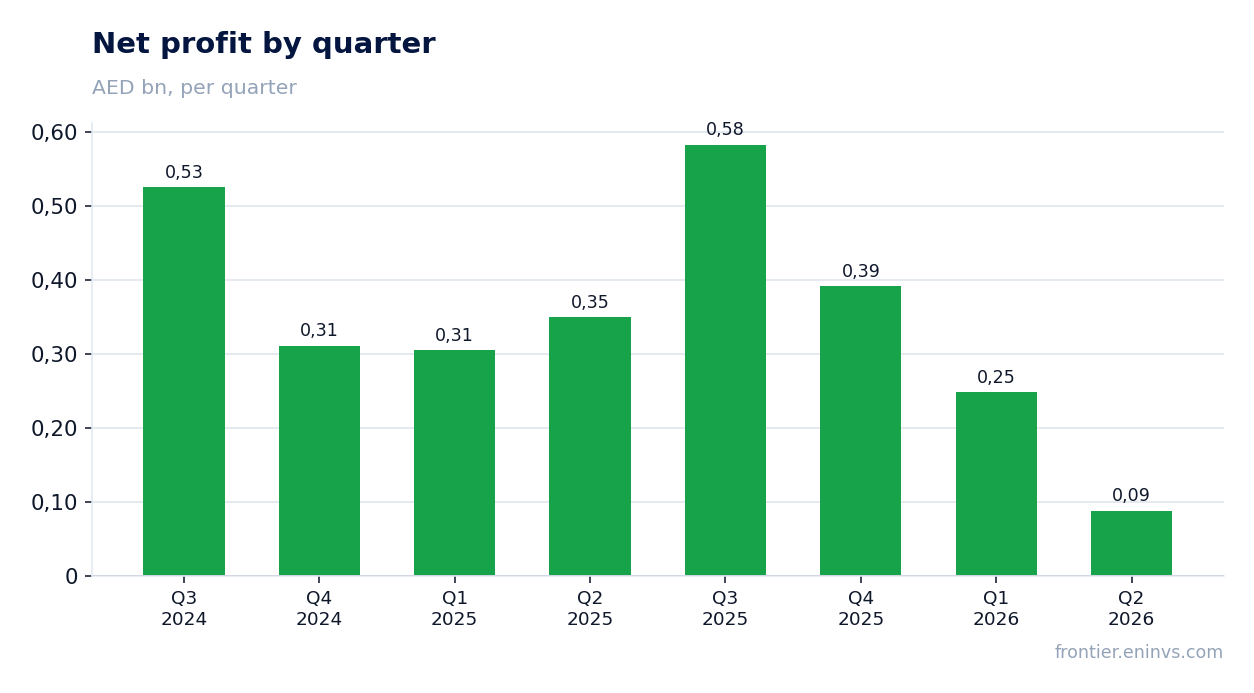
— Net profit plunged 74.9% to AED 87.9 million, a sharp contrast with the year-ago level
— Operating cash flow rose to AED 828.9 million, but capex reached AED 987.3 million — free cash flow is negative
— Trailing dividend yield of 6.1% is higher than most peers, but questionable given weak earnings
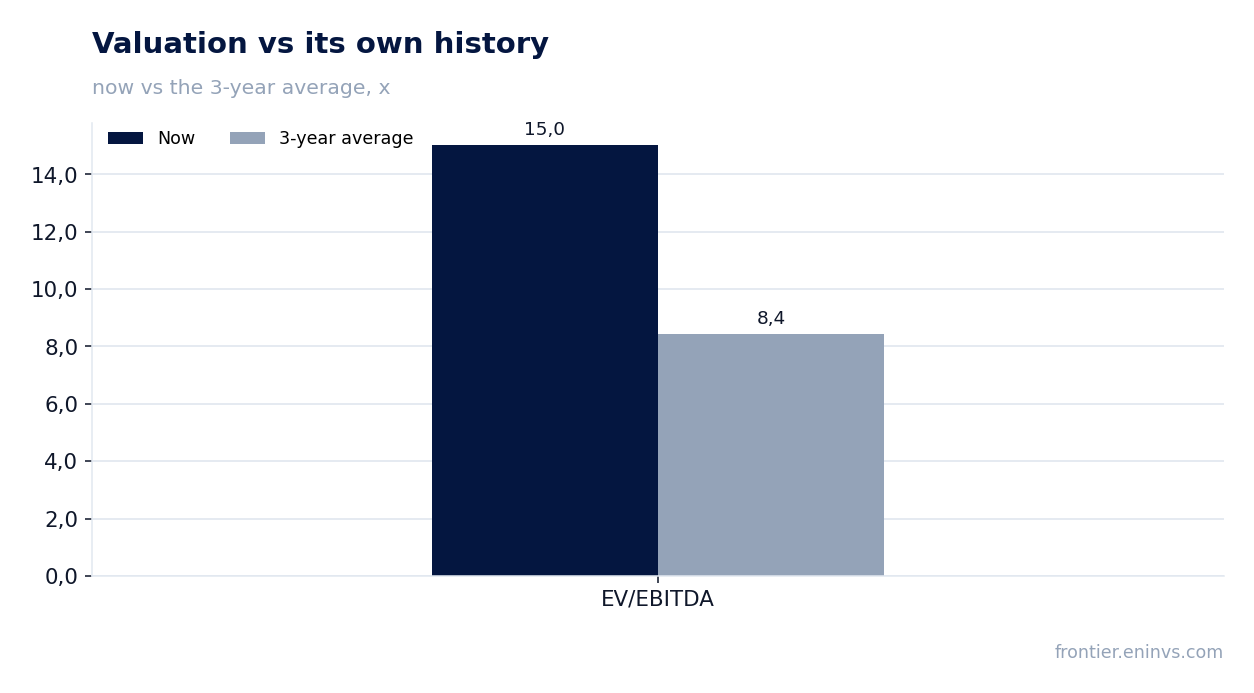
— EV/EBITDA of 15.0 versus a three-year average of 8.4 — shares trade at a premium to their own history
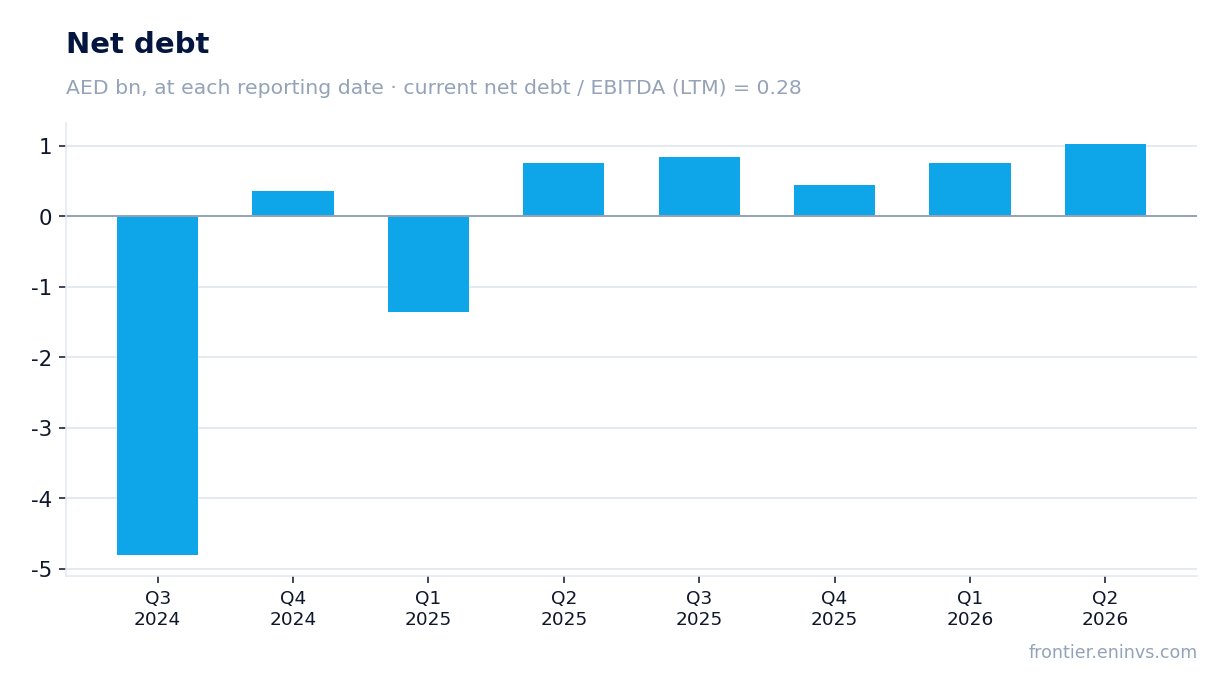
— Net debt rose to AED 1,031.4 million, but the debt-to-EBITDA ratio remains low at 0.28
Attractiveness
Key figures, AED bn
| Metric | Q2 2025 | Q2 2026 | Change |
|---|---|---|---|
| Revenue | 1.69 | 1.69 | -0.2% |
| EBITDA | 0.46 | 0.23 | -49.9% |
| Operating profit | 0.28 | 0.04 | -84.8% |
| Net profit | 0.35 | 0.09 | -74.9% |
| Operating cash flow | 0.78 | 0.83 | +6.5% |
| Capex | 0.13 | 0.99 | +672.1% |
| EBITDA margin | 26.9% | 13.5% | -13.4 pp |
| Net margin | 20.7% | 5.2% | -15.5 pp |
1. Revenue in Q2 was almost flat, but EBITDA halved — margin compressed from 26.9% to 13.5%
In Q2 2026, Air Arabia's revenue was AED 1,688.6 million, down 0.2% year-on-year. This is the first decline in recent quarters: Q1 2026 saw growth of 1.2%, and Q4 2025 saw 28.8%. Stagnant top line amid rising costs led to an EBITDA collapse.
Quarterly EBITDA fell 49.9% to AED 228.3 million, and the EBITDA margin contracted from 26.9% to 13.5%. Operating profit was just AED 43.2 million versus AED 284.6 million a year earlier. The margin pressure likely stems from higher operating expenses, but the exact cause is not disclosed in the provided data.
2. Net profit plunged 74.9% to AED 87.9 million, a sharp contrast with the year-ago level
Net profit in Q2 2026 was AED 87.9 million versus AED 349.8 million a year earlier. The 74.9% decline reflects not only weak operations but possibly one-off factors, though they are not identified in the provided data.
Net margin contracted from 20.7% to 5.2%. Trailing twelve-month net profit was AED 1,309.6 million, implying a P/E of about 17.5 — notably higher than typical for airlines, though we cannot compare with the sector.
3. Operating cash flow rose to AED 828.9 million, but capex reached AED 987.3 million — free cash flow is negative
In Q2 2026, operating cash flow was AED 828.9 million, significantly above the prior quarter (AED 67.8 million) and the year-ago quarter (AED 778.0 million). However, capital expenditures surged to AED 987.3 million — nearly eight times higher than in Q2 2025 (AED 127.9 million).
As a result, free cash flow turned negative at minus AED 158.4 million. This continues a trend: in Q4 2025, capex also exceeded operating cash flow. The aggressive capex likely relates to fleet expansion, though the data does not specify.
4. Trailing dividend yield of 6.1% is higher than most peers, but questionable given weak earnings
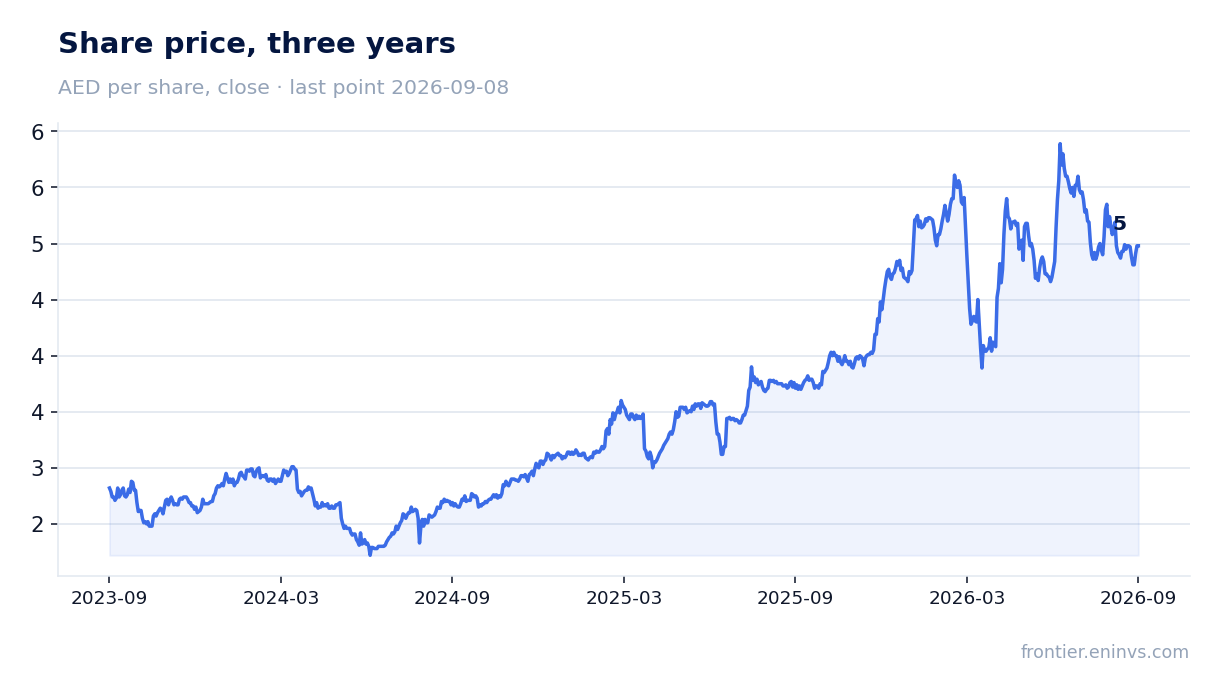
Over the trailing twelve months, Air Arabia paid dividends implying a yield of 6.1% at the current price. This is a notable level, especially amid falling profits. However, with trailing net profit of AED 1,309.6 million and a market cap of AED 22,913.5 million, the dividend payments, judging by the yield, amount to about AED 1,400 million, exceeding net profit.
Such a ratio is possible thanks to cash reserves, but the sustainability of payouts is questionable if profits remain low. Our estimate for the current year's dividend is a reduction if the company maintains its payout ratio, though the exact policy parameters are not disclosed in the data.
5. EV/EBITDA of 15.0 versus a three-year average of 8.4 — shares trade at a premium to their own history
The current EV/EBITDA multiple is 15.0, almost double the three-year average of 8.4. This means the market values the company significantly higher than usual, despite deteriorating operating performance.
The trailing P/E is 17.5. Our portal's model, based on EBITDA growth and a target multiple, implies a potential decline of 86% to fair value. This is an extremely negative signal.
6. Net debt rose to AED 1,031.4 million, but the debt-to-EBITDA ratio remains low at 0.28
At the end of Q2 2026, net debt stood at AED 1,031.4 million, up AED 0.3 billion from the previous reporting date and over the trailing twelve months. The increase is linked to the large investment program.
Nevertheless, the net debt to trailing EBITDA ratio is only 0.28 — a low level that poses no servicing issues. Even with lower EBITDA, the debt burden remains moderate.
Valuation on the latest reported figures
| Metric | Value |
|---|---|
| Market cap | 22.9 bn AED |
| P/E (LTM) | 17.5 |
| EV/EBITDA (LTM) | 15.0 |
| P/B | 2.72 |
| Net debt / EBITDA (LTM) | 0.28 |
| Operating cash flow (LTM) | 2.90 bn |
| ROE | 4.7% |
| Dividend yield (12m) | 6.1% |
| EV/EBITDA, 3-year average | 8.4 |
Bottom line
The report's strength is operating cash flow, which rose to AED 828.9 million in Q2, and low debt levels. However, the EBITDA and net profit declines of more than two-thirds, negative free cash flow due to record capex, and a valuation far above its own history make the shares unattractive. The 6.1% dividend yield looks tempting, but its sustainability is questionable given current earnings. Until signs of margin recovery appear, the verdict remains 'unattractive'.
Open the company's financial profile AIRARABIA →
See also: market overview · valuation map · stock screeners