Frontierby eninvs

Language: EN · RU

UAE Stocks — Valuations, P/E & Dividends

Guide: UAE Stocks (2026): Tax-Free Dividends in Dubai and Abu Dhabi

Sectors: Banks (5)

Rows are ordered partly by extraction health (share of stable periods). Hover a row for OK / partial / error counts.

CompanyCountrySectorValue / upsideDiv. %FCF Yield LTMΔ revenue (NII for banks)Δ EBITDA (assets for financials)EV/EBITDA LTMP/E LTMP/B FYROE (ann.)
ADNOC Distribution
AE_ADNOCDIST
AEFuel retail+82%23.1%52.8%61.3%4.7x5.0x4.0x163.3%
Emaar Development
AE_EMAARDEV
AEReal estate development+58% 7.6%16.4%32.1% ▼37.4%0.8x4.0x1.3x24.9%
Parkin
AE_PARKIN
AEParking infrastructure+21% 4.1%2.1%41.0% ▲31.5%19.8x23.5x31.4x172.8%
Spinneys
AE_SPINNEYS
AEGrocery retail+17%5.3%16.2%-1.6%0.6%5.2x13.1x11.3x89.5%
Americana Restaurants
AE_AMR
AERestaurants+17% 8.4%11.1% ▲21.9%7.6x19.5x10.9x68.1%
TECOM Group
AE_TECOM
AEBusiness parks+15% 5.2%-2.2%10.8% ▲24.3%9.8x7.7x2.1x19.9%
Dubai Islamic Bank
AE_DIB
AEBanks+14%4.7%1.7%20.7%7.3x1.0x13.7%
Emirates NBD
AE_EMIRATESNBD
AEBanks+13%3.2%12.1%16.8%8.1x1.4x16.9%
Abu Dhabi Commercial Bank
AE_ADCB
AEBanks+11%21.3%18.5%9.3x1.4x15.4%
Aldar Properties
AE_ALDAR
AEReal estate+11% 10.9%4.8% ▼18.1%6.8x7.4x1.2x16.9%
First Abu Dhabi Bank
AE_FAB
AEBanks+10%5.4%15.7%10.3x1.5x16.1%
Emaar Properties
AE_EMAAR
AEReal estate+10% 8.9%17.7%18.2% ▲15.0%3.9x7.0x0.9x13.8%
Abu Dhabi Islamic Bank
AE_ADIB
AEBanks+9%9.9%24.3%12.3x2.6x23.2%
du (EITC)
AE_DU
AETelecom+7%5.5%-0.5%4.6%9.0%10.4x18.0x5.5x33.4%
Talabat
AE_TALABAT
AEFood delivery-6%5.7%0.5%16.3%-12.4%48.4x61.6x36.6x55.5%
Salik
AE_SALIK
AEToll infrastructure-14% 4.1%-0.6%-12.0% ▲-14.1%21.1x26.5x32.3x84.3%
Air Arabia
AE_AIRARABIA
AEAirlines-26%5.8%-8.8%1.2%-16.0%13.6x15.2x2.8x12.4%
e& (Etisalat Group)
AE_EAND
AETelecom-47% 5.3%6.4% ▲-22.8%9.4x15.6x2.9x20.2%
ADNOC Drilling
AE_ADNOCDRILL
AEOilfield services4.3%2.9% ▼2.9%13.0x17.6x6.3x32.9%
Borouge
AE_BOROUGE
AEPetrochemicals5.4%7.7% ▼-10.6%12.1x20.4x4.8x19.1%
ADNOC Gas
AE_ADNOCGAS
AEGas processing4.1%-33.2%-42.0%13.4x22.2x2.9x10.6%
Fertiglobe
AE_FERTIGLB
AEFertilizers5.0%91.9% ▲79.7%5.1x12.6x3.2x22.3%
TAQA (Abu Dhabi National Energy)
AE_TAQA
AEUtilities0.4%0.0% ▼-2.5%19.4x37.5x2.8x7.4%
DEWA (Dubai Electricity & Water)
AE_DEWA
AEUtilities4.6%1.4%-2.6%13.0%9.8x17.6x1.4x9.8%

Earnings analysis

Short take-aways from recent corporate results and commodity trends.

Emaar Properties: Dubai's #1 developer at 5.4x earnings with an 8.7% tax-free dividend

EMAAR →

Emaar Properties (DFM: EMAAR) is the first screen hit of our newly added UAE coverage (24 names across ADX and DFM): a combination of 5x earnings, an 8.7% dividend and a growing business, in a currency pegged to the dollar. Below are the numbers from primary filings and press releases, the growth and re-rating drivers, and an honest look at the risks.

Not just a homebuilder: Dubai Mall and Burj Khalifa provide a recurring cushion

Emaar is Dubai's #1 developer (builder of Burj Khalifa, Dubai Mall and Downtown Dubai; 129,100 units delivered since 2002), but a quarter of its revenue is not construction: malls, hotels and leasing generated AED 2.8bn of recurring revenue in Q1 2026 alone (~23% of group revenue). Dubai Mall is the most visited shopping centre in the world. The development arm sits in a separately listed subsidiary, Emaar Development (~87.5% owned); international projects - India, Egypt, Saudi Arabia - added AED 2.3bn of sales in the quarter.

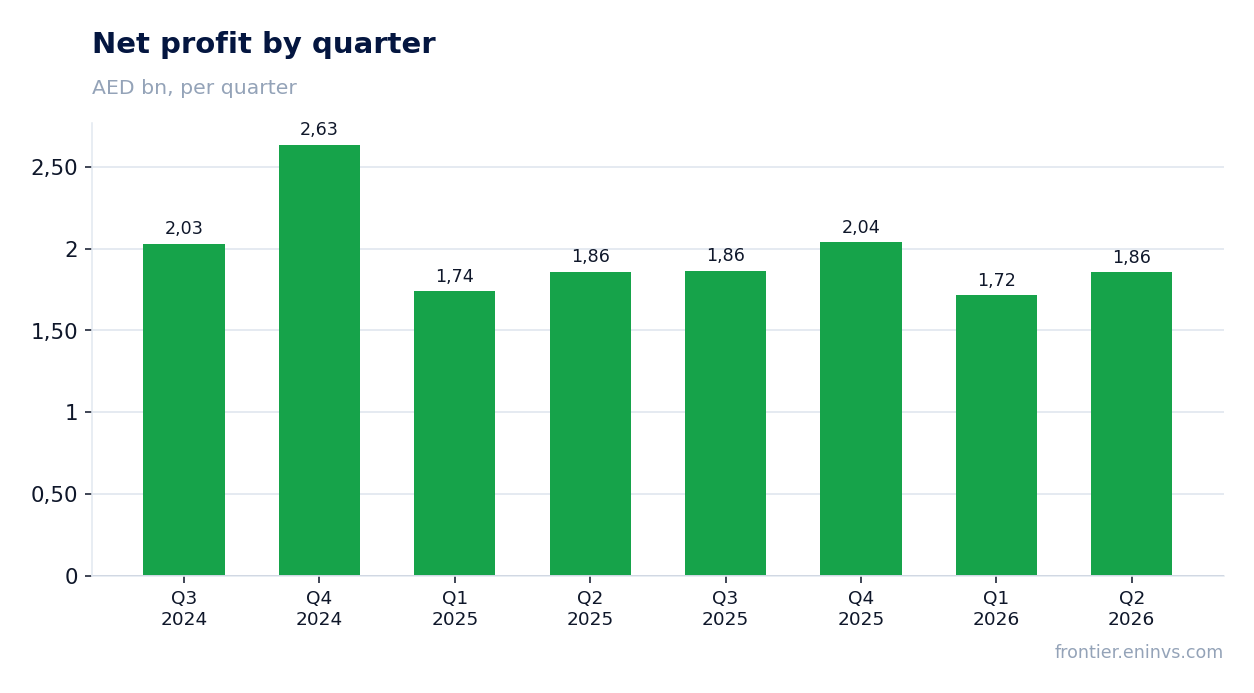
Revenue doubled in three years; profit up 2.6x

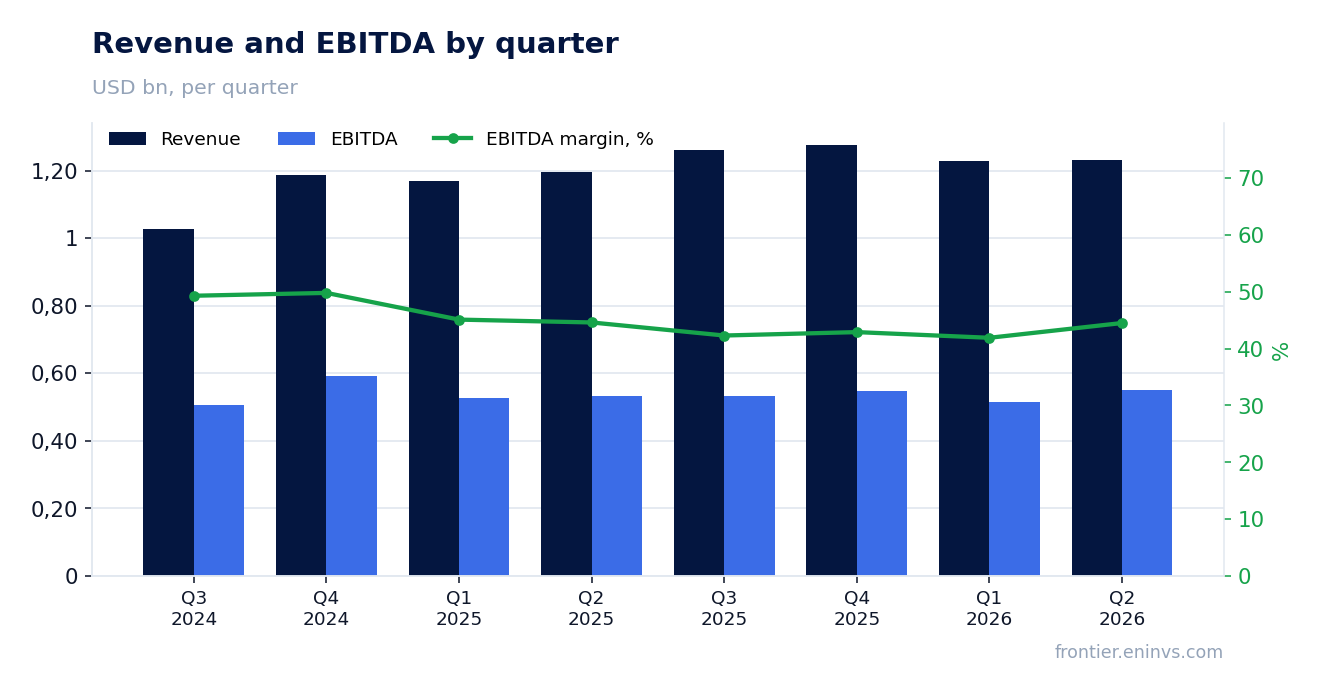
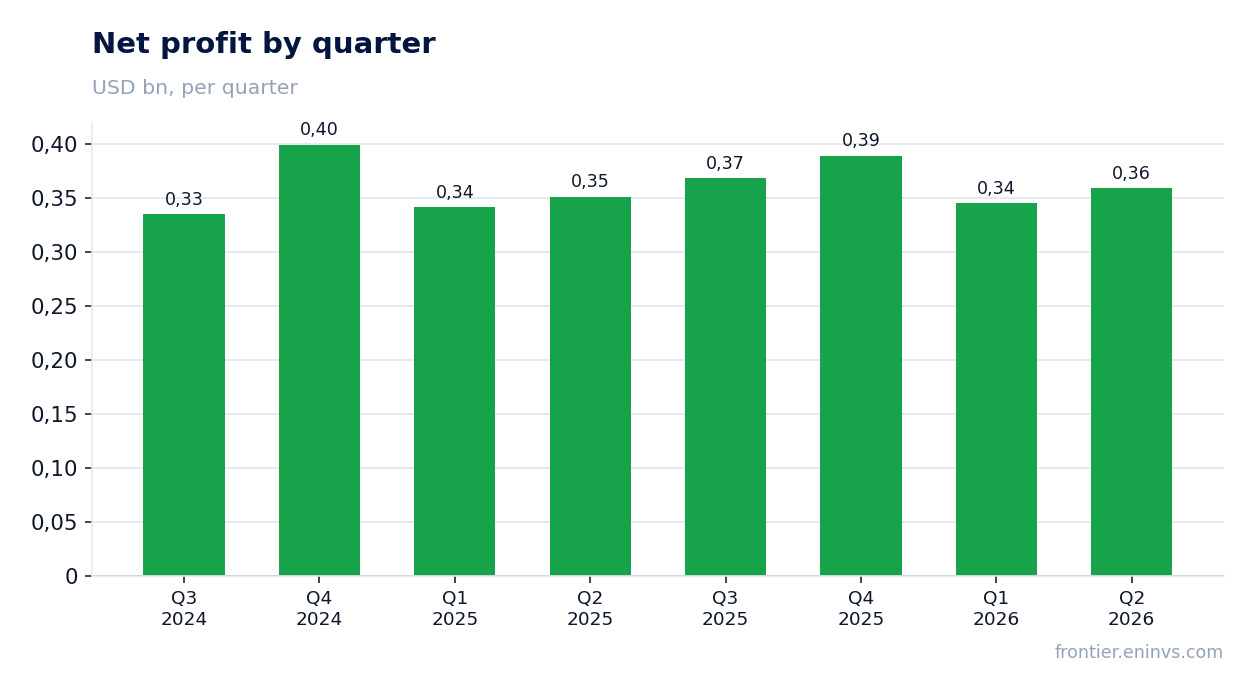
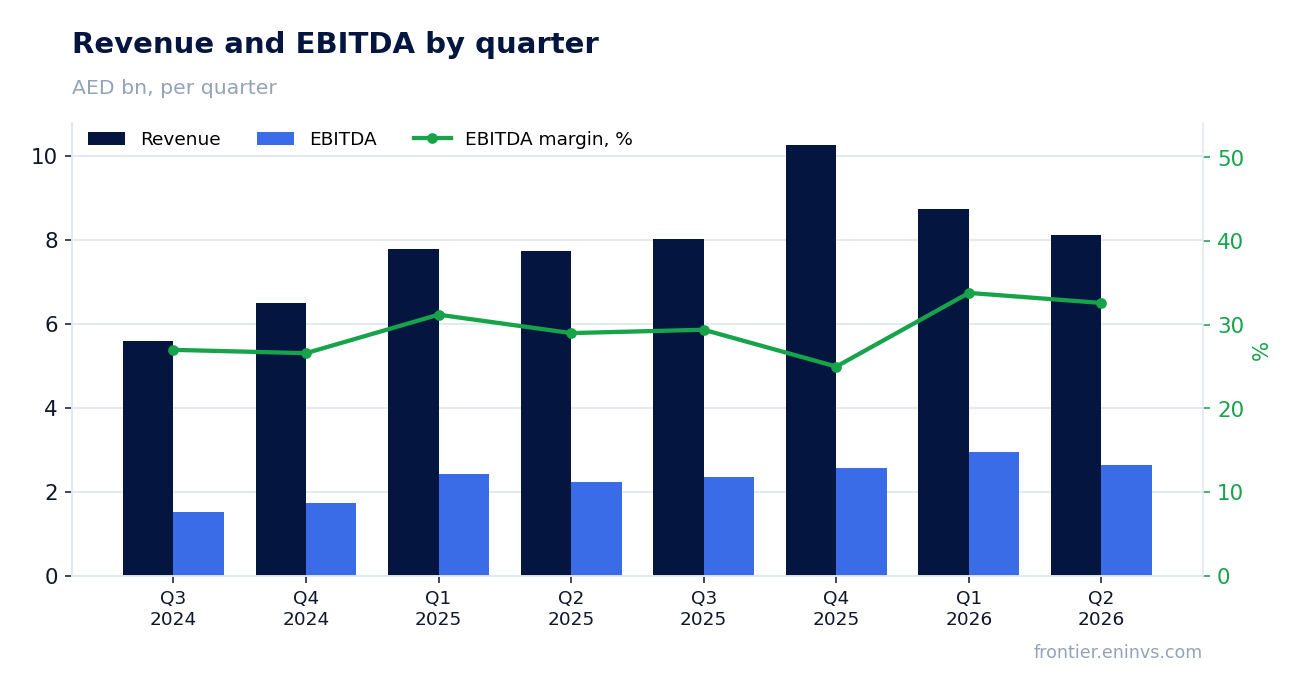
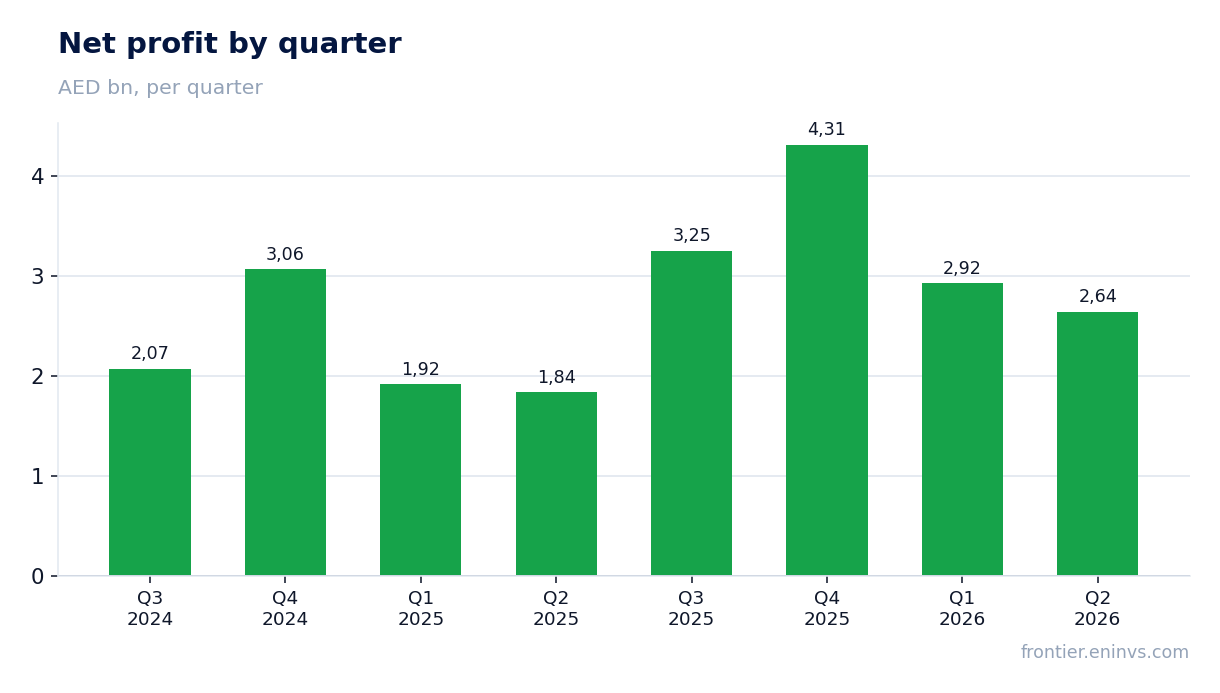
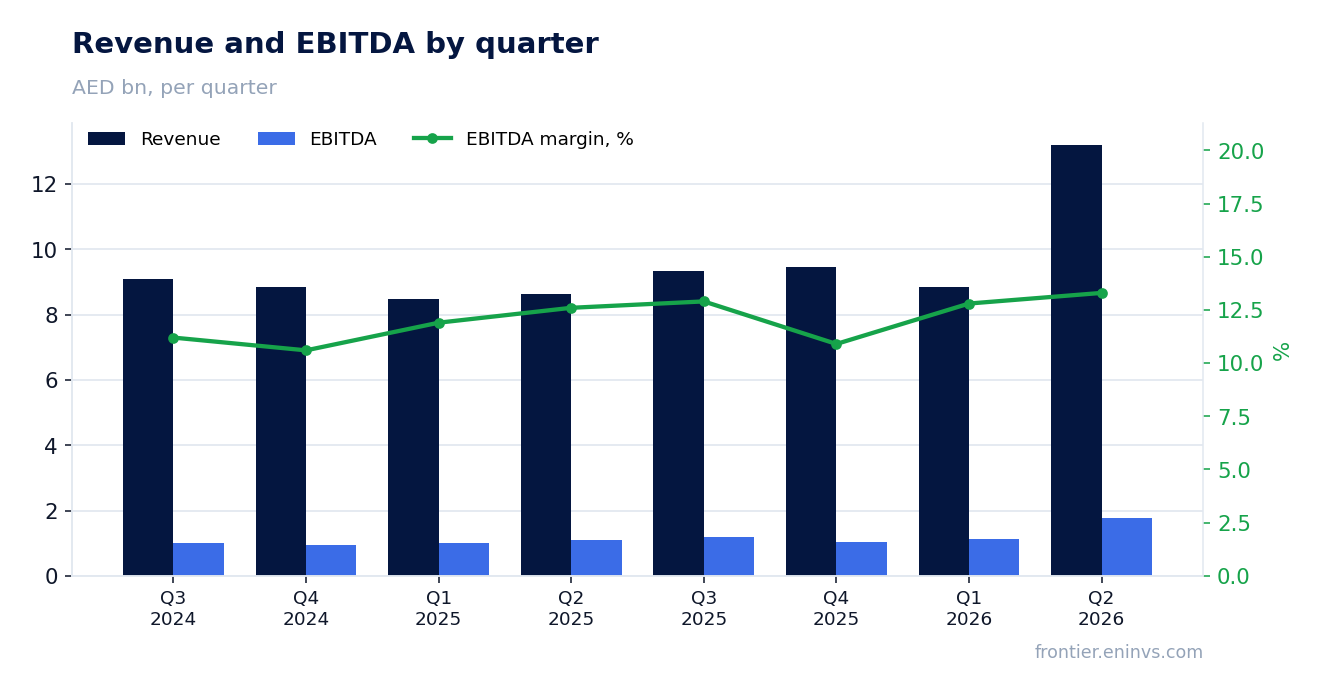
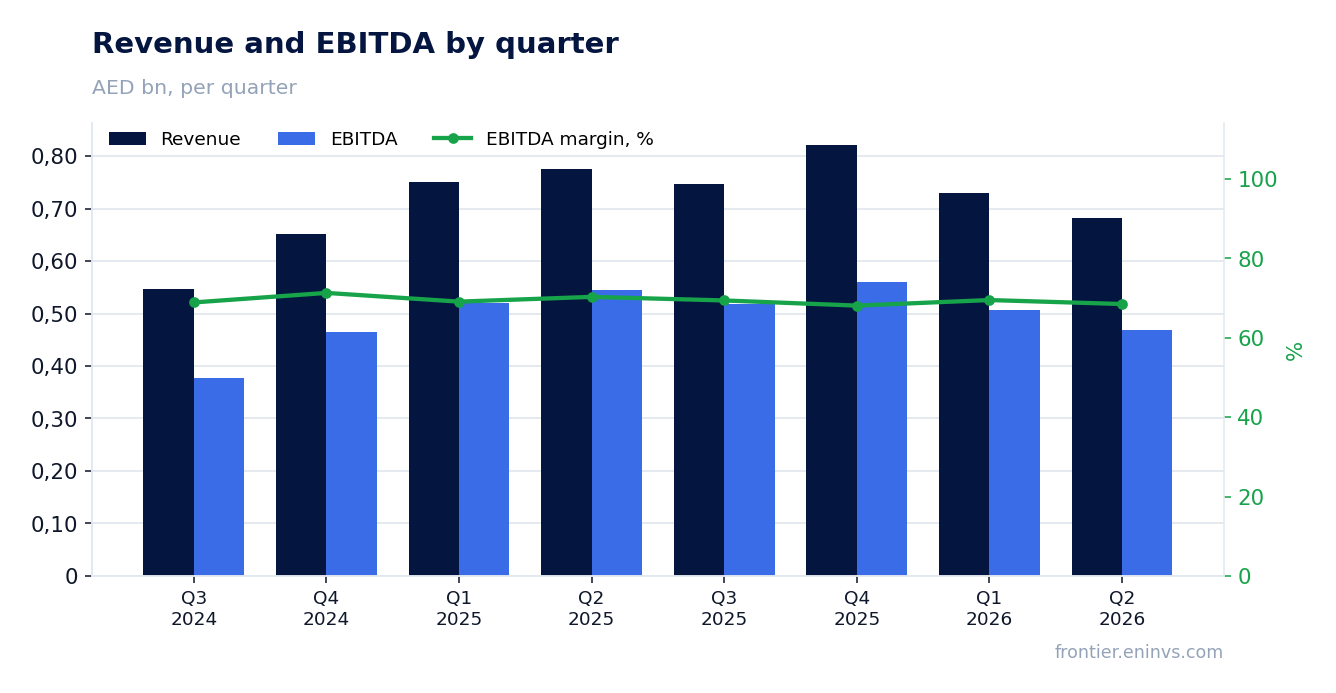
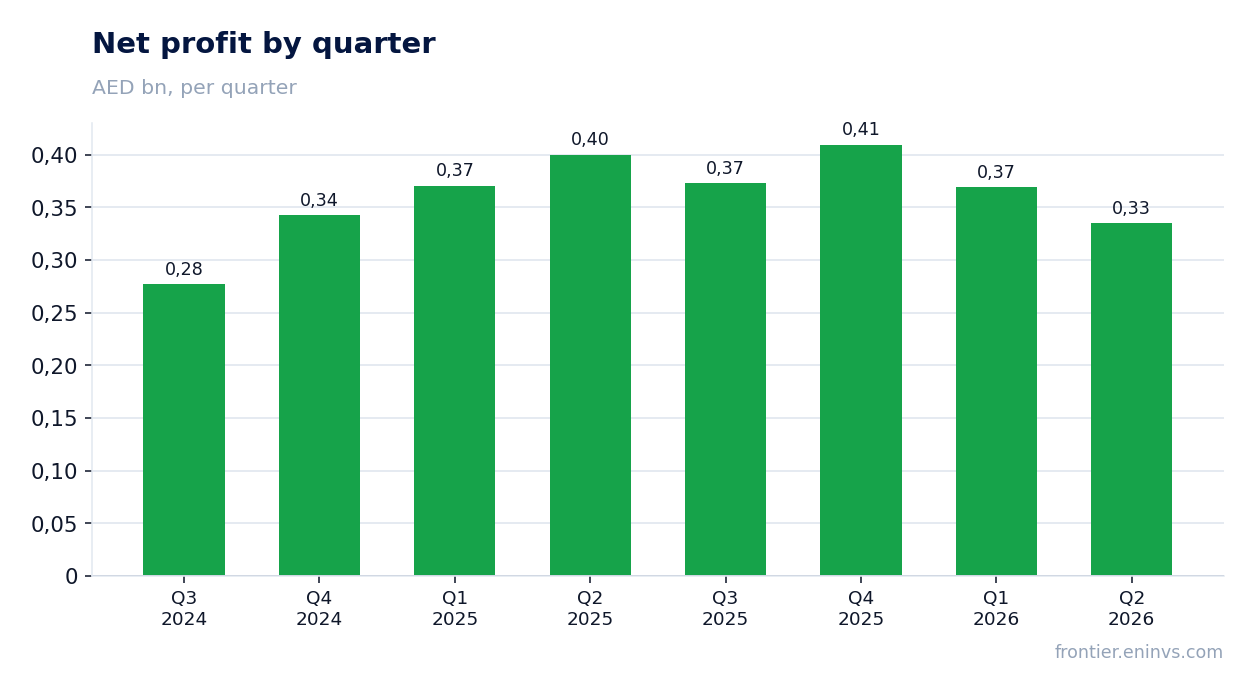
Group revenue grew from AED 24.9bn in 2022 to AED 49.6bn in 2025; net profit from 6.8bn to 17.6bn. The pace is not slowing: in Q1 2026 revenue rose 23%, EBITDA 34% and pre-tax profit 33% year on year. The company reports quarterly - data freshness on par with the US market.

Quarterly revenue and net profit, AED bn

A 163bn AED backlog: three years of future revenue already contracted

The key leading indicator for a developer is the backlog: contracts signed and being paid for by buyers but not yet recognised as revenue. Emaar's reached AED 163.4bn (+29% y/y) - 3.3 years of group revenue that will be recognised as homes are delivered in 2026-2029, regardless of what happens to new sales. Sales themselves are also at records: AED 71.1bn in 2025 (+9%), 22.4bn in Q1 2026 (+16%).

Property sales and revenue backlog (Emaar press releases)

Where the Dubai cycle stands: the turn has already begun - and it is the heart of the case

The honest picture from fresh Q2 2026 data: apartment prices printed their first decline - minus 4% q/q (AED 1,960/sq ft), villas -0.8% q/q; annual growth slowed from +20% in late 2025 to +6.1% by April. Transaction volumes fell 31% q/q in Q2, while a record 27,300 units were handed over in the quarter. The most telling signal is the behaviour of developers themselves: new launches were cut from 45,000 units in Q1 2026 to 5,300 in Q2, and delivery timelines are stretching from three years to four. This is a classic cycle top, not a hypothetical risk - and it is exactly why the region's best developer trades at 5.4x earnings.

Dubai cycle gauge: price deceleration and a collapse in new launches (Savills, ValuStrat)

What this changes for Emaar: the thesis shifts from 'the boom continues' to 'the backlog and the dividend survive the cooling'. AED 163bn of contracted revenue gets recognised in 2026-2029 regardless of new sales, the recurring malls and hotels do not depend on off-plan demand, and Emaar's prime locations (Downtown, Dubai Hills) historically fall later and less than the broader market. But the +16% sales growth of Q1 2026 is likely to prove the peak - a model should assume a slowdown to zero or negative in H2 2026.

Valuation: 5.4x earnings and 0.95x book at ~18% ROE

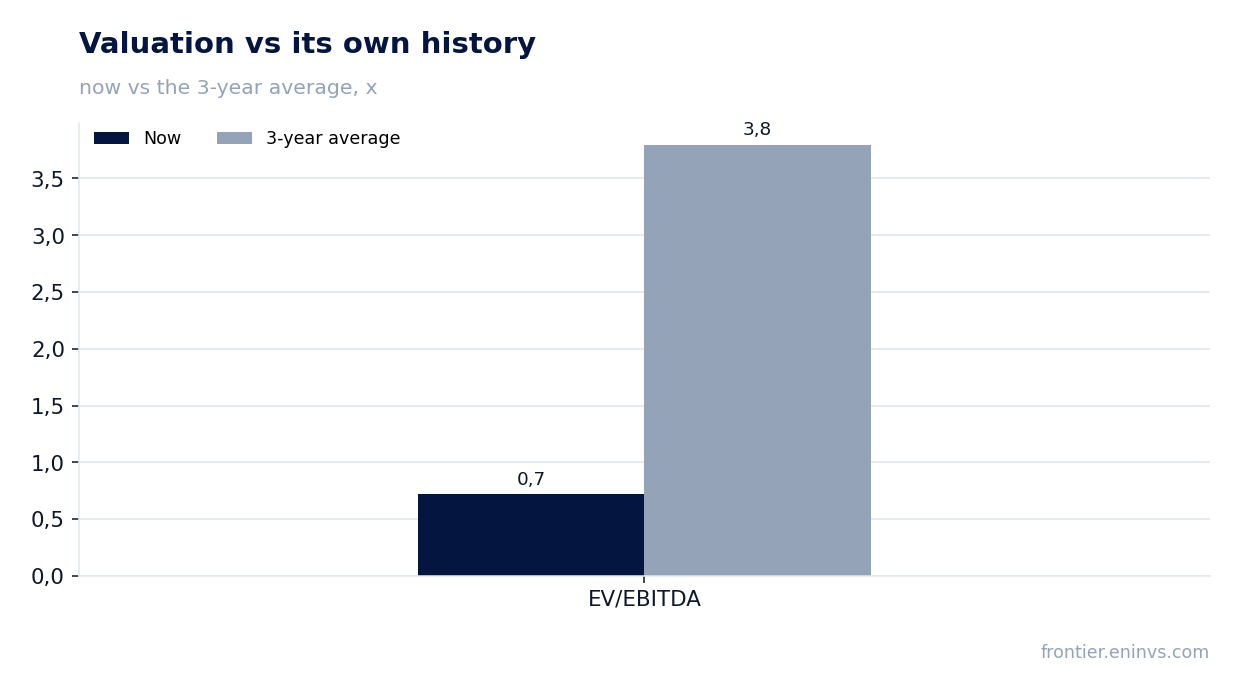
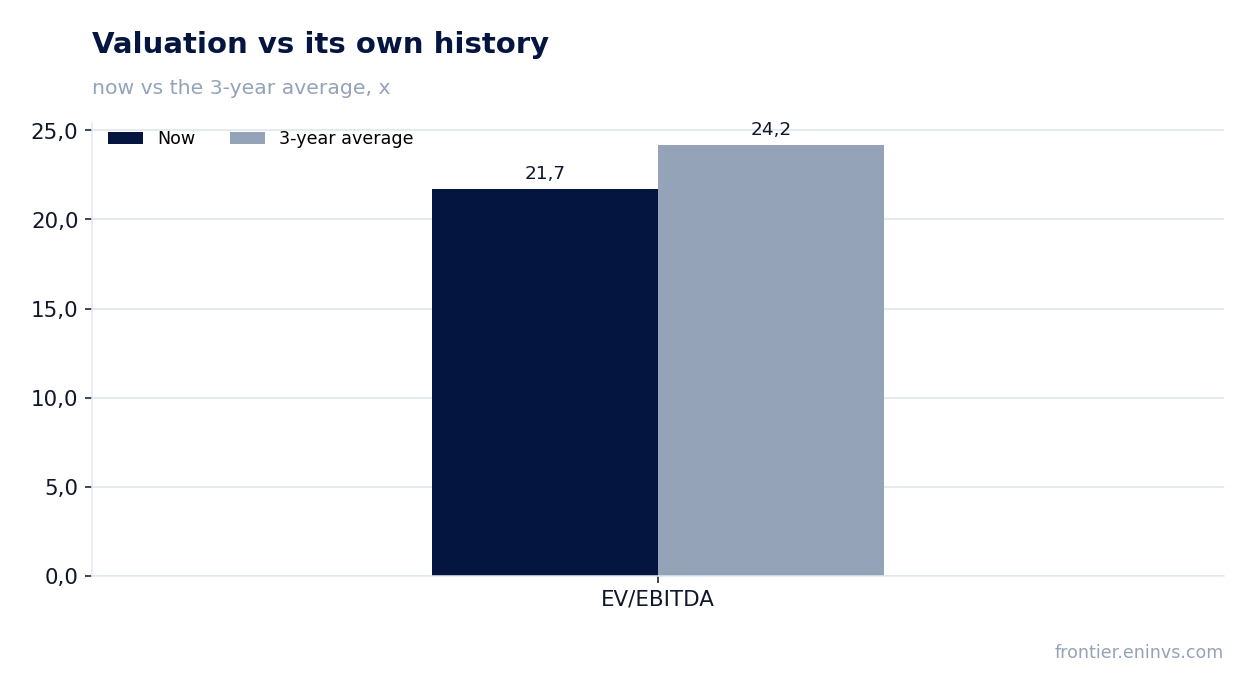
A market cap of AED 102bn puts EMAAR at ~5.4x LTM earnings and ~0.95x book with ~18% ROE and growing profit. For comparison: neighbouring Aldar trades at 7.6x earnings with a 2.6% dividend; global developers of comparable quality at 8-12x. The subsidiary Emaar Development is even cheaper (P/E 4.4, dividend 7.4%) - an aggressive version of the same bet without the recurring cushion. The market prices the region's best developer as if the cycle had already turned - while the backlog guarantees revenue three years out.

UAE names: P/E vs dividend yield

An 8.7% dividend: a payout equal to 100% of share capital, two years running

For 2025 Emaar paid AED 8.9bn - a dividend equal to 100% of share capital for the second consecutive year, ~8.7% on the current price. The payout is supported by recurring mall and hotel cash flows plus the wave of backlog revenue recognition - the dividend base for the next few years is more visible than in most EM dividend stories. UAE withholding tax on dividends is zero.

No currency leg: the dirham has been pegged to the dollar since 1997

The key difference from our Indonesia and Kazakhstan ideas: the AED is hard-pegged to the USD (3.6725) for almost thirty years, the UAE runs huge reserves and surpluses - currency risk is close to zero and no hedge is needed. The 8.7% dividend in AED is effectively 8.7% in dollars. The flip side of the peg is imported Fed policy (see risks).

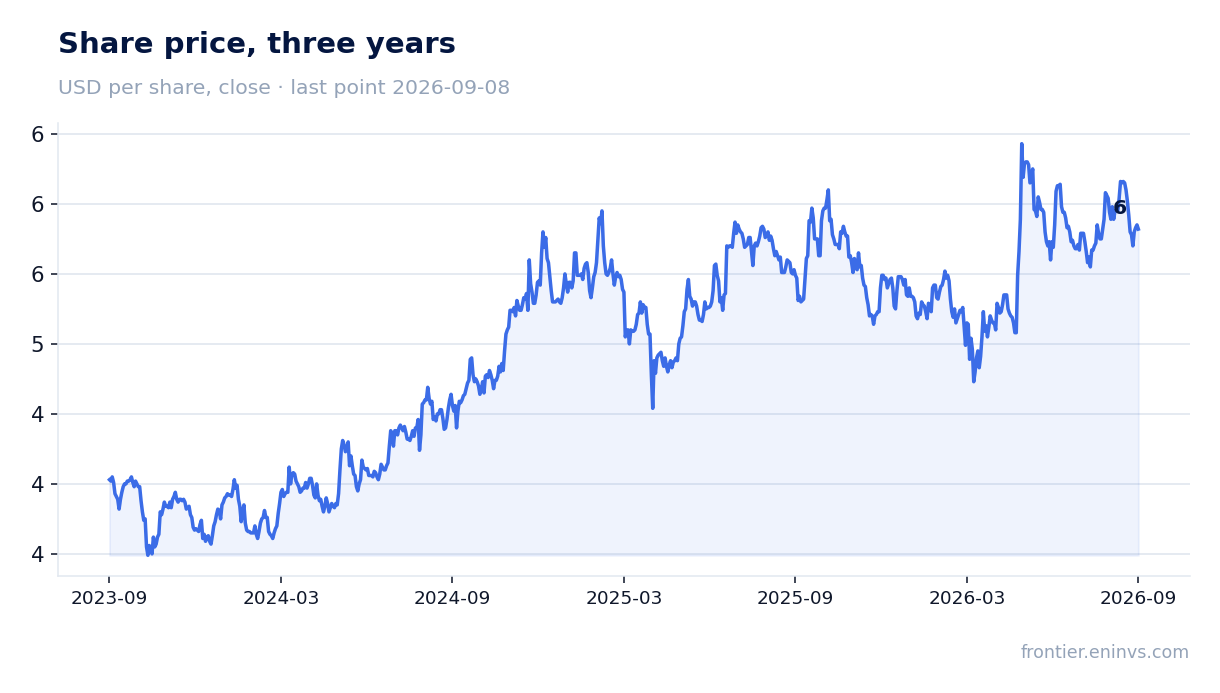
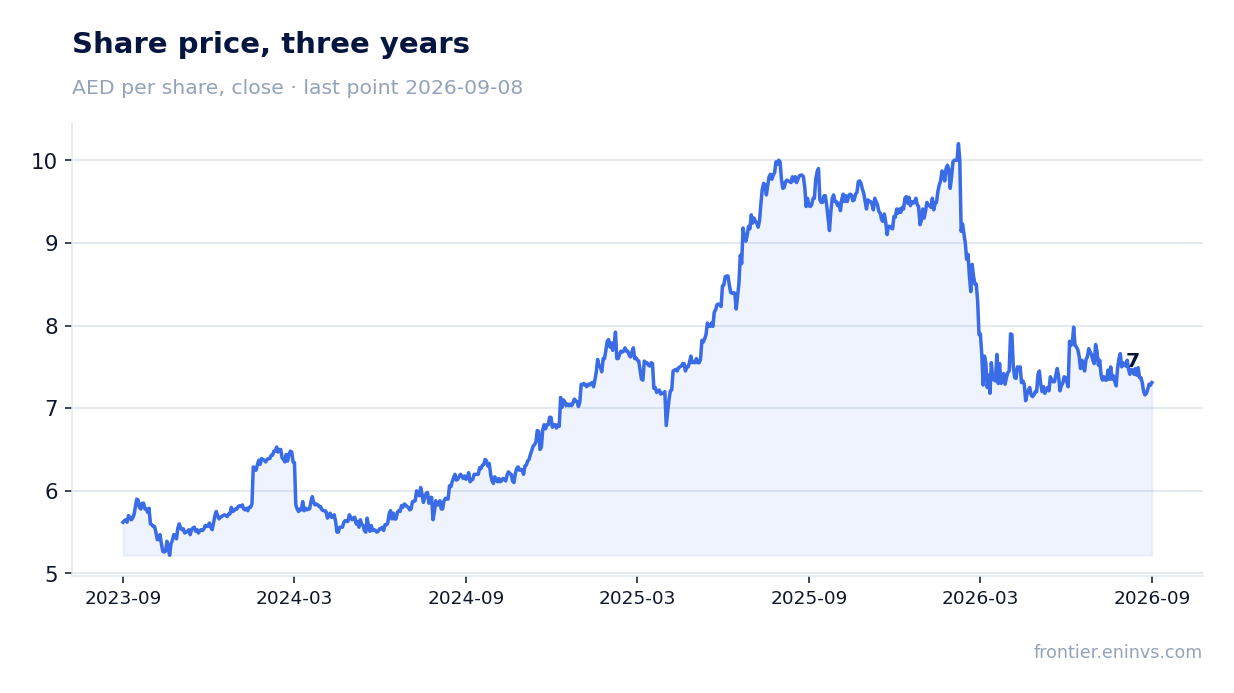
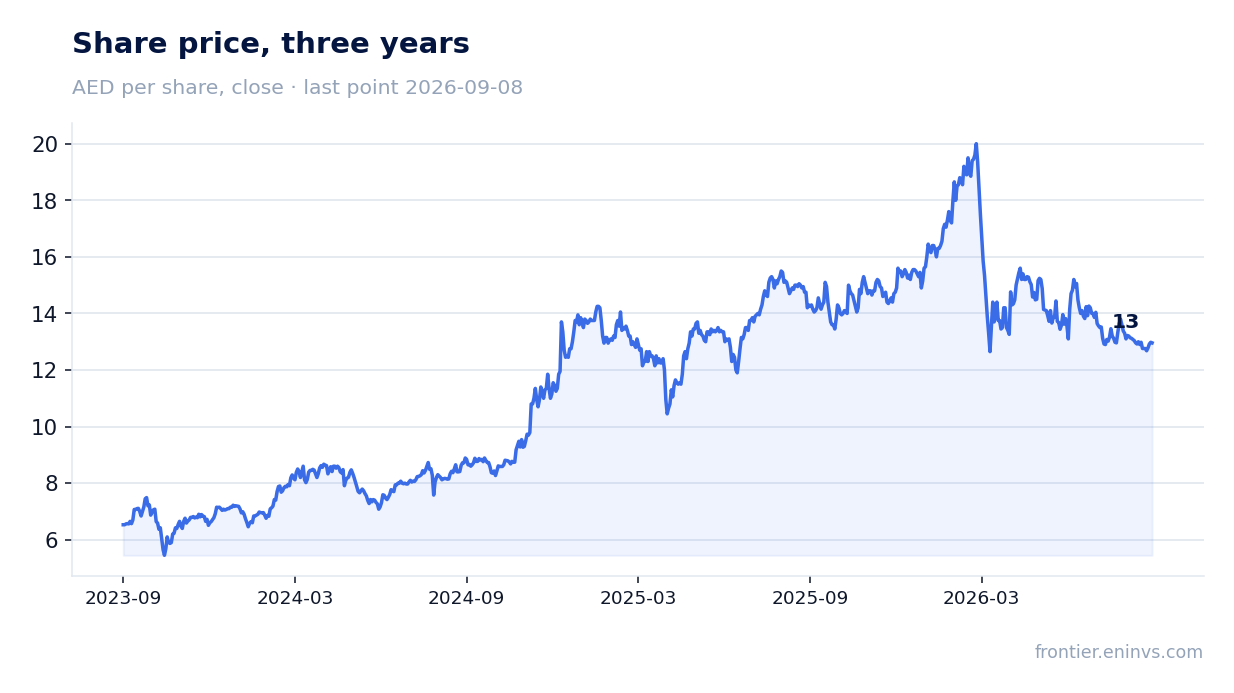
Share price over 5 years: the multiple stayed low - earnings grew faster than the price

Re-rating drivers

— Backlog recognition: AED 163bn converts into 2026-2029 revenue - EPS growth is programmed in even if new sales stop.

— A Fed-easing option: NOT the base case today (the June FOMC revised the rate path up and discussed a hike), but if a pivot happens, the peg transmits it straight into Dubai mortgages.

— Continued migration inflows (golden visas, capital relocation) - the driver of off-plan demand.

— Rising UAE weight in EM indices and passive inflows; inclusion in global real estate funds' watchlists.

— An option to monetise the recurring portfolio (malls/hotels) - a REIT spin-off or stake sale at a multiple several times higher.

Risks - know them before buying

— The cycle has turned (see above). The first q/q declines are already in the Q2 2026 data; the question is no longer 'whether' but 'soft or hard landing'. In a hard scenario (sales down 30-50%, as in 2015-2019) the stock halved regardless of multiples.

— Dependence on non-resident inflows. Emaar's sales are largely foreign capital; a Gulf geopolitical shock or tighter visa/compliance regimes hits demand fast.

— The peg means imported monetary policy, and it is tightening rather than easing. US inflation is 4.2%, the June FOMC shifted the rate path up, part of the committee discussed a hike. A long period of an expensive dollar is double pressure: on mortgages/demand and on the relative appeal of an 8.7% dividend versus ~4% risk-free in the same currency.

— The dividend is a decision, not a formula. The '100% of share capital' policy is not a binding commitment; the controlling shareholder can change priorities (in 2020 the dividend was cancelled).

— Structure: 77% is cyclical development. The recurring cushion softens but does not cancel the developer nature of the business; in the last downturn (2015-2019) the stock lost more than half.

How to buy

Direct listing on the Dubai Financial Market, ticker EMAAR. Interactive Brokers offers DFM directly (verified: EMAAR and EMAARDEV are in IB's product database), settlement in AED; several brokers with UAE offices also provide access. Liquidity is fine for personal size; use limit orders. Dividends are paid in AED with 0% withholding - a rarity for a dividend idea.

Prepared by Enhanced Investments from Emaar Properties' quarterly reports, official DFM press releases, Dubai Financial Market and TradingView data; July 2026. Not individual investment advice.

Parkin: Dubai's 49-year parking monopoly compounding at 30%+ with a 100%-payout dividend

PARKIN →

A follow-up in our UAE series (24 names in Frontier coverage). After the Emaar review, where fresh data showed the property cycle turning, the natural question is what in Dubai grows independently of the cycle. The answer: infrastructure monopolies. Between Salik (toll roads) and Parkin (parking), the numbers point to Parkin - here is why.

A parking monopoly over an entire city - a 49-year concession

Parkin is the exclusive operator of Dubai's public paid parking: ~197,000 spaces plus enforcement and fines, under a concession with the RTA transport authority until 2073. The March 2024 IPO at AED 2.10 became the most oversubscribed in UAE history. The business model is asphalt-digital: nearly all payments go through the app and automatic number-plate recognition, capex is minimal, and the city's growth automatically converts into revenue growth - every new district eventually becomes a paid zone (49,000 spaces added in Q1 2026 alone).

Revenue +41%, profit +36% - every quarter a record

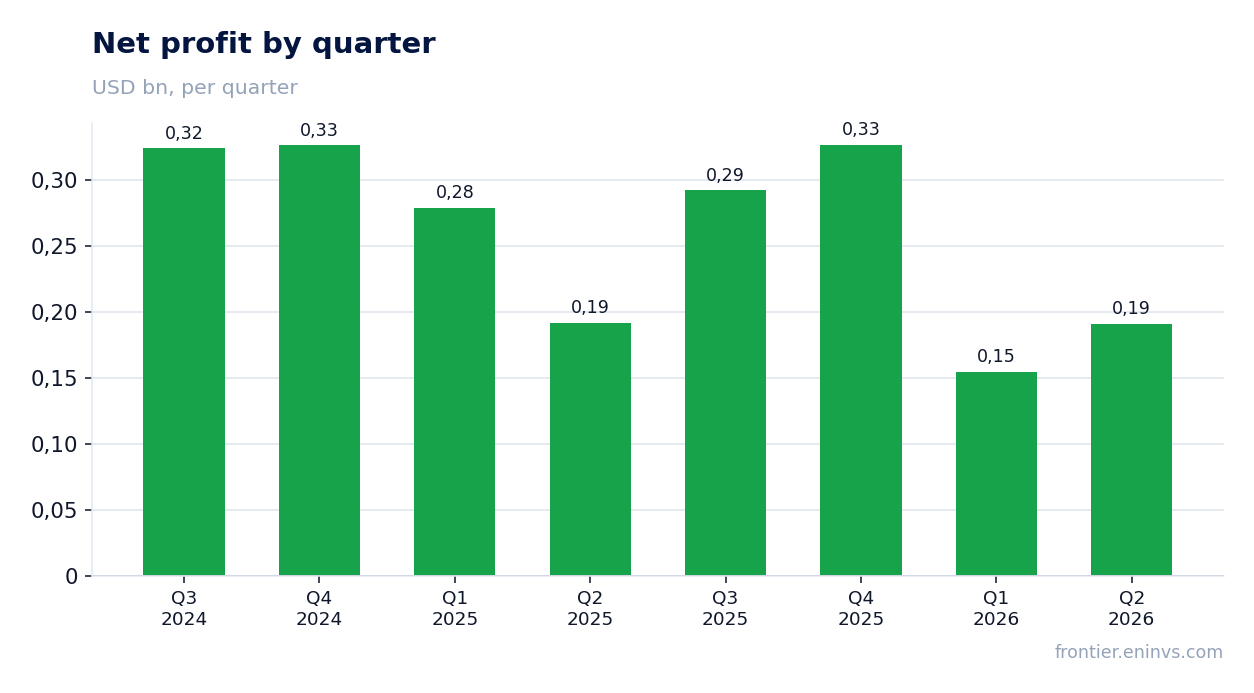
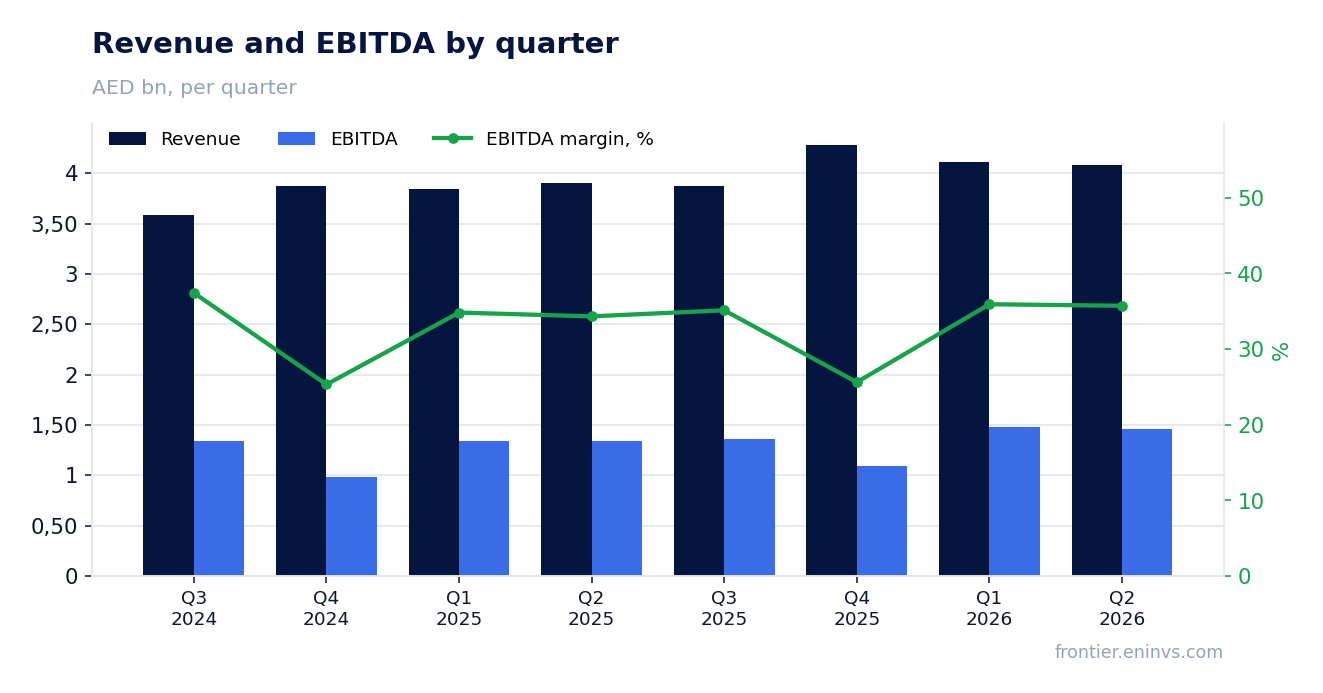
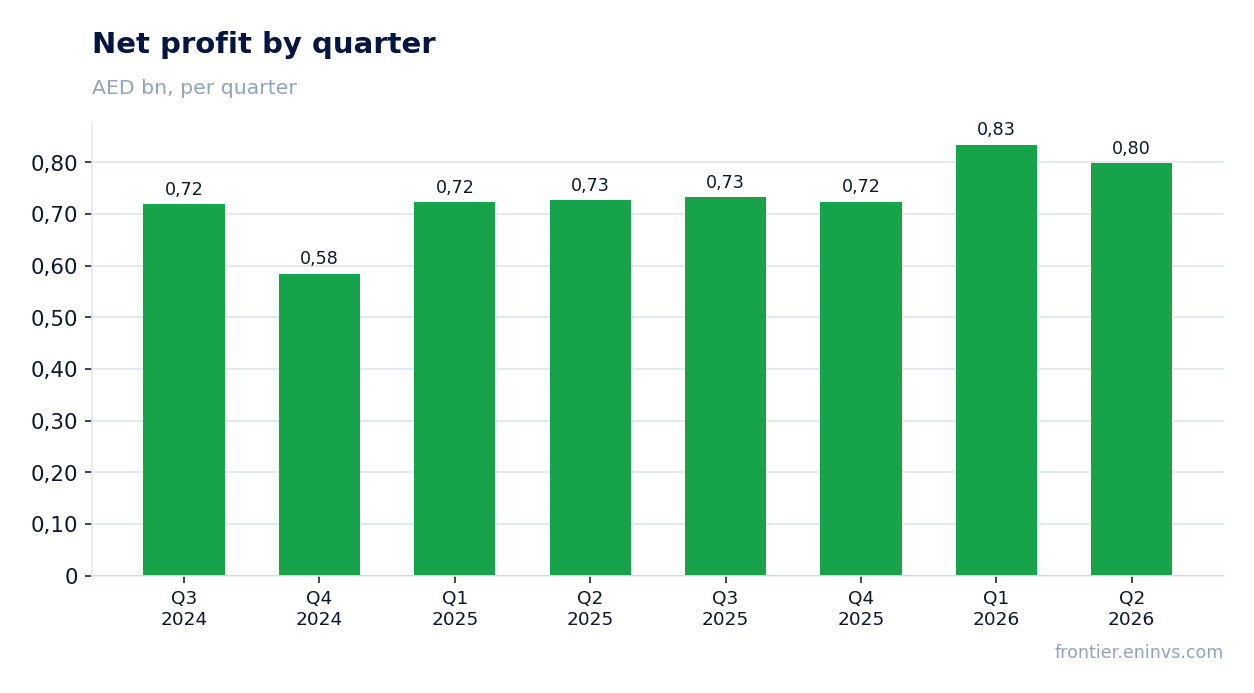
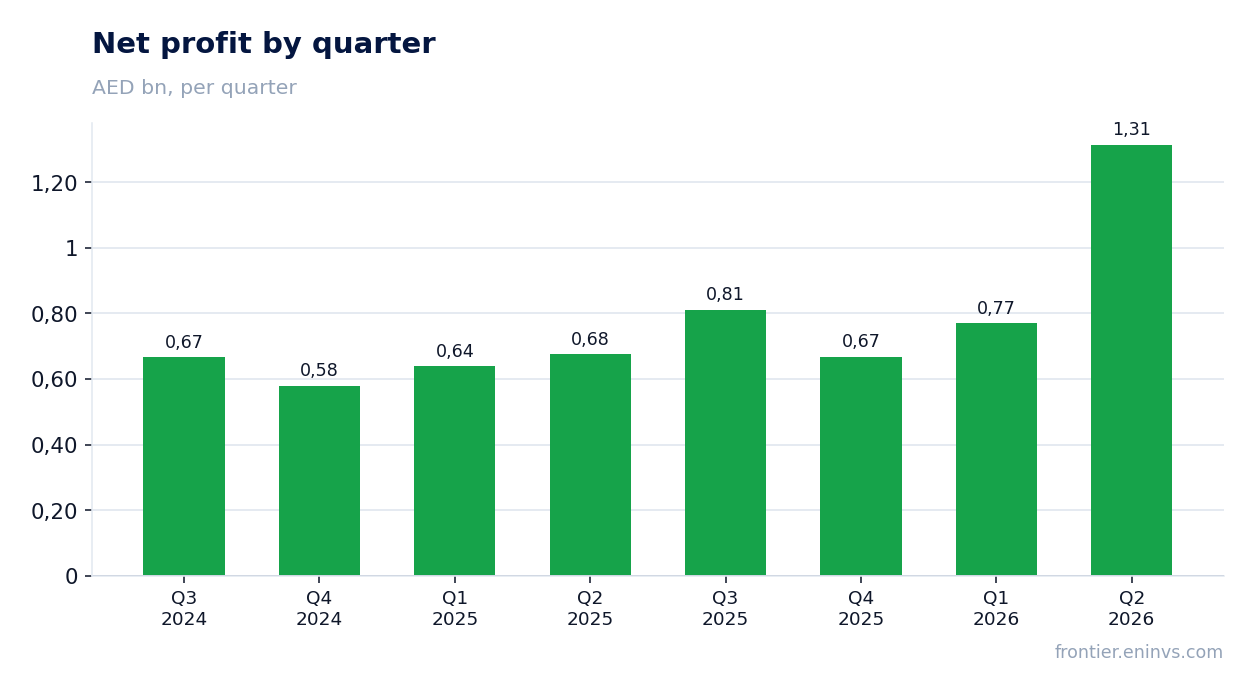
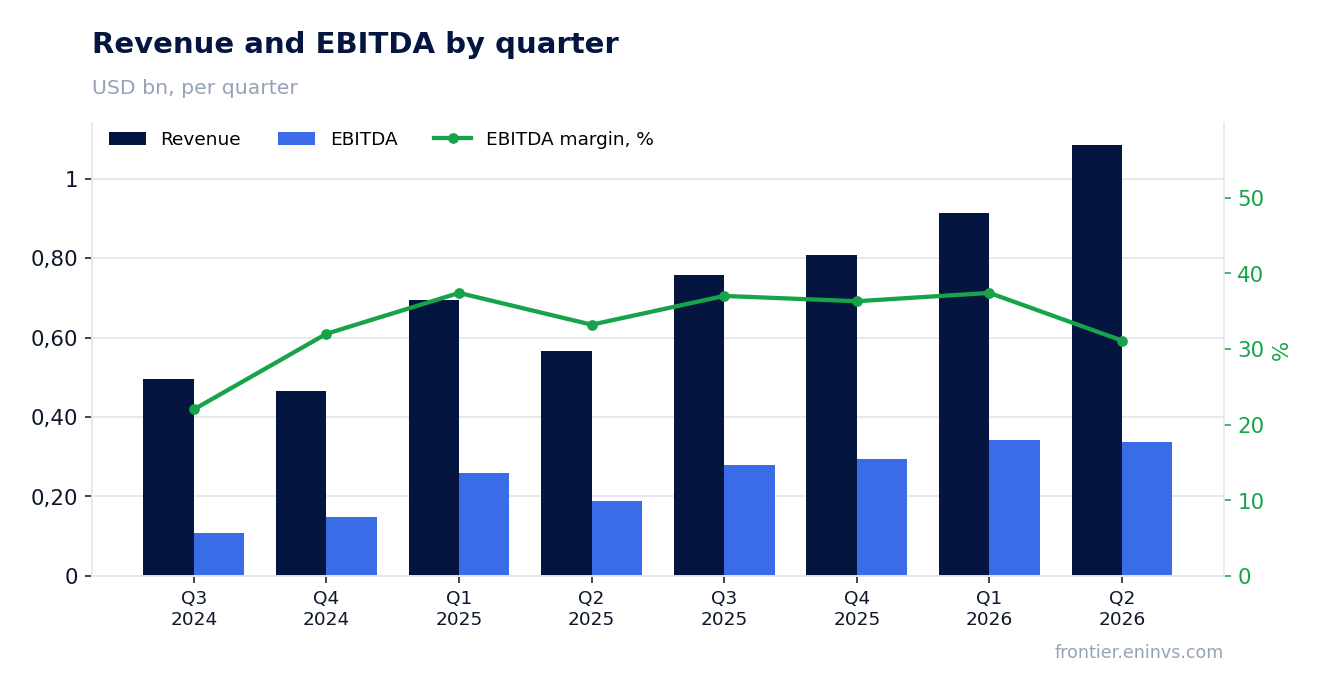
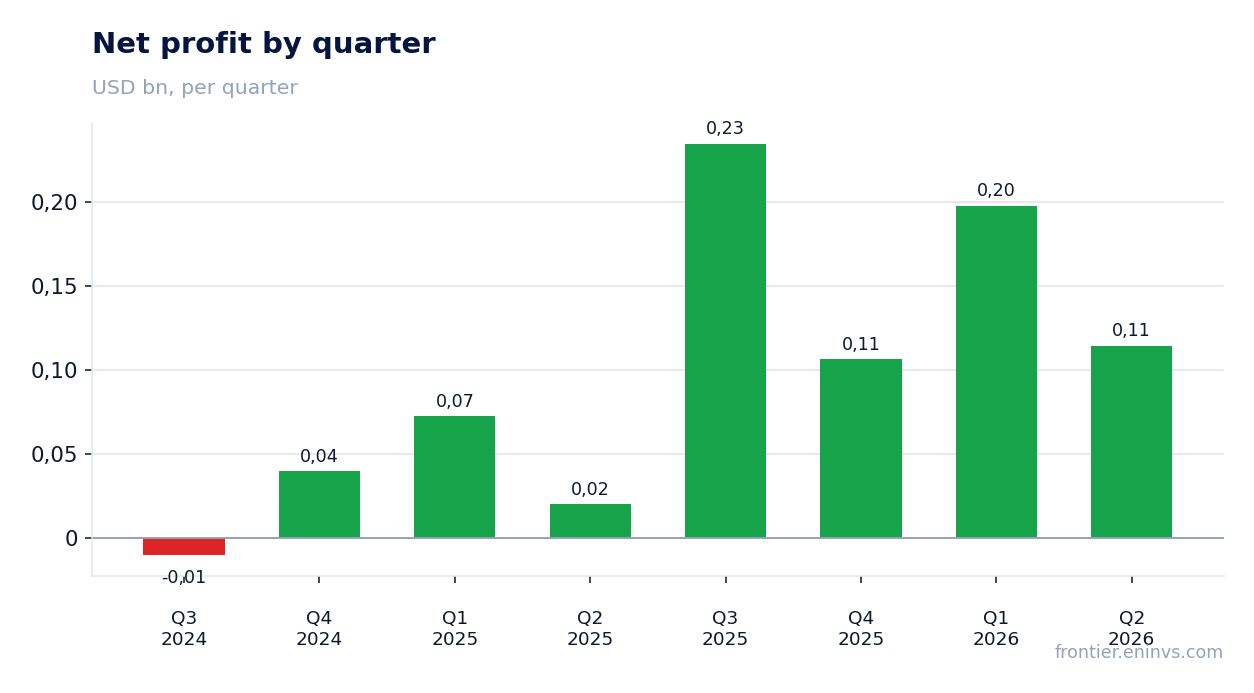
Q1 2026 results: revenue AED 384.2mn (+41% y/y), net profit AED 185mn (+36%). The main driver is the variable tariff introduced in April 2025 (premium zones and peak hours cost more): the weighted-average tariff rose from 2.00 to 3.02 AED/hour (+51%). Public parking added 15%, while developer parking - private garages taken under management - grew 66%: an asset-light segment where Parkin monetises other people's real estate and pays no RTA concession fee.

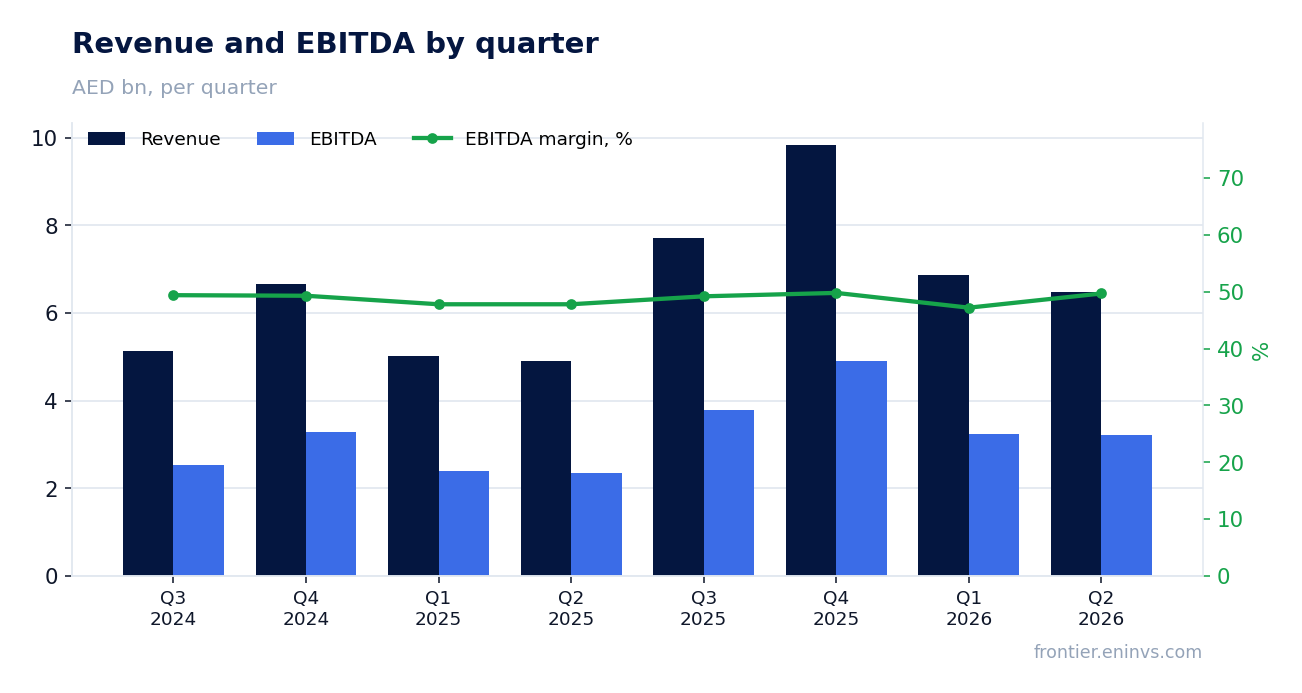
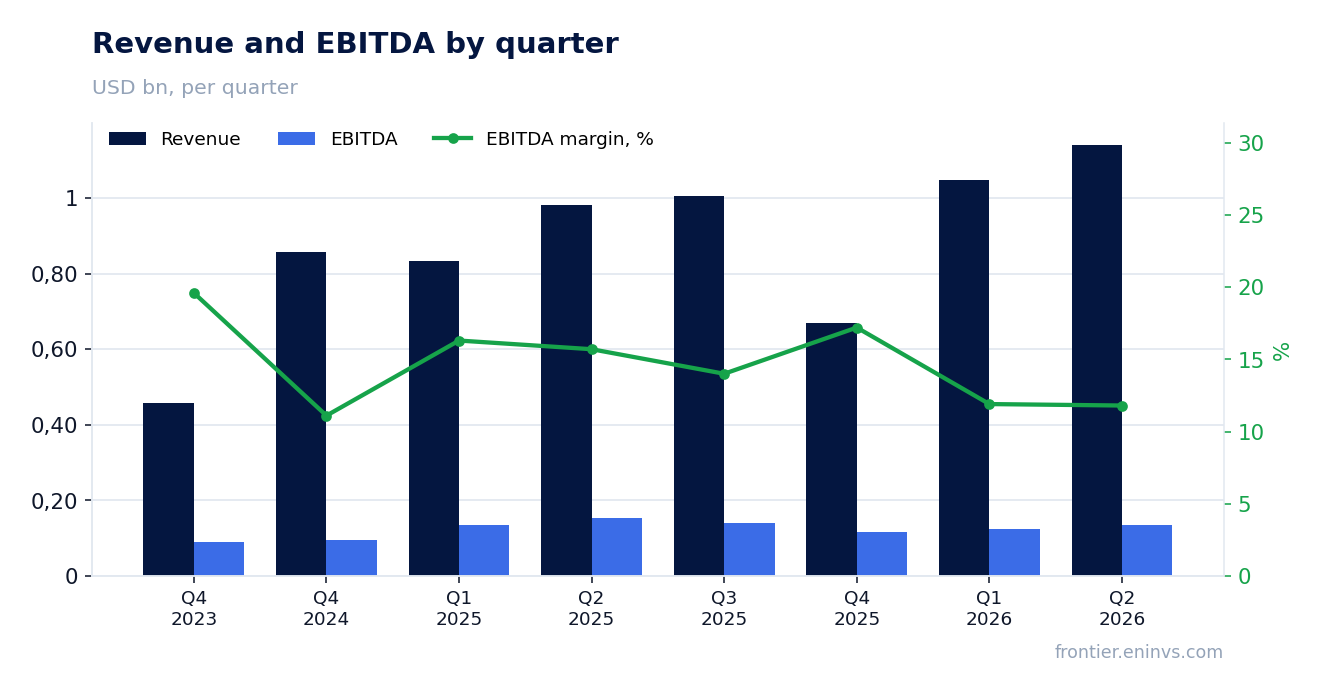
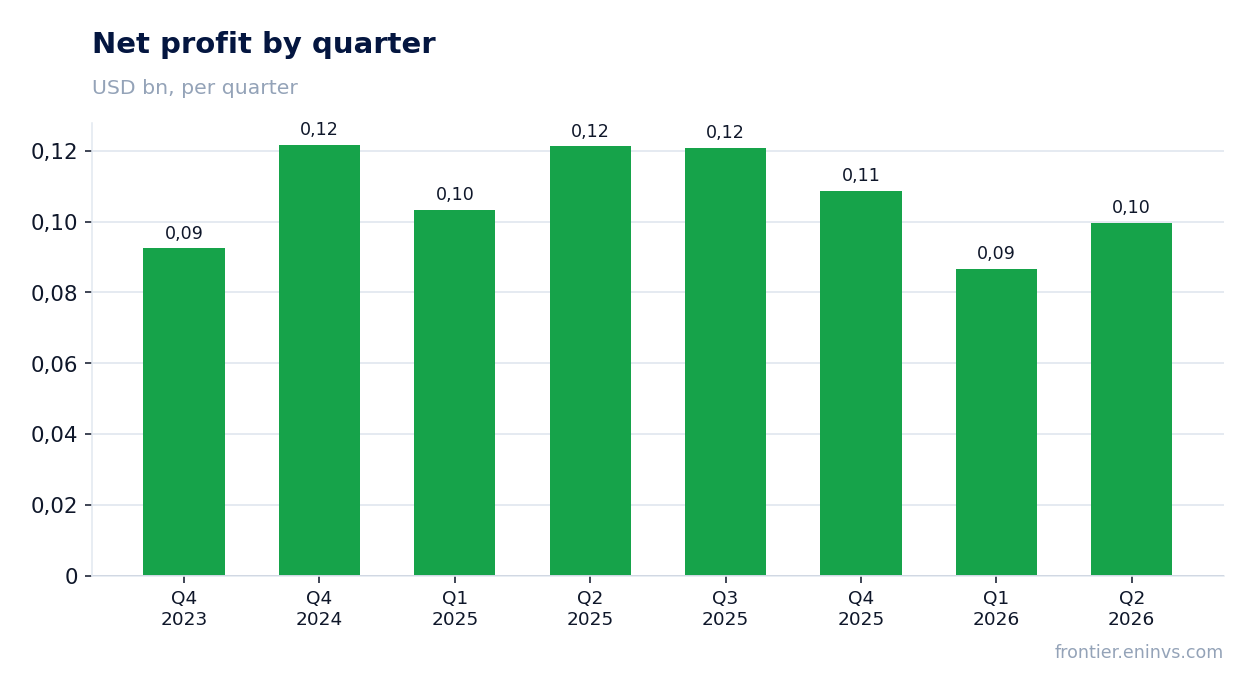
Quarterly revenue and profit, AED mn
Q1 2026 drivers: tariff reform and developer parking

Why Parkin and not Salik

Salik is a similar monopoly (road toll gates, concession to 2071), but its growth events are already in the base: dynamic pricing and two new gates went live in early 2025, and Q1 2026 revenue printed -3% y/y against that high base. Parkin's tariff reform only annualises from Q2 2026, its portfolio of spaces keeps growing, and the developer segment is scaling from a low base. Meanwhile Salik trades at ~27x earnings - more expensive than Parkin (~25x) with zero current growth. Salik remains a quality asset to buy on a dip, but here and now the growing monopoly of the two is Parkin.

Q1 2026: the momentum contrast between Dubai's two concessions

Dividend policy: the greater of 100% of profit or free cash flow

The policy is fixed in the prospectus: the minimum payout is the greater of 100% of net profit or FCFE. For 2025 the company paid AED 655.7mn (10.40 fils interim + 11.46 fils final) - ~3.9% yield on the current price. The beauty of the construction: the dividend grows mechanically with profit (+36%), UAE withholding tax is zero, and the currency is pegged to the dollar. It is a growing dollar coupon with a 20-30% annual indexation rate.

Valuation: quality at a reasonable price - but not a value idea

At ~25x earnings and a ~4% dividend Parkin is not cheap, and it is honest to call it a growth play, not value. Context: global infrastructure concessions (Vinci, Transurban, airports) trade at 15-25x earnings growing 5-10% a year; Parkin grows 30%+ with a clear normalisation path towards 15-20% and holds a longer concession than most peers. PEG is well below one. In a portfolio this fills the quality-compounder slot - like KSPI in our 13-ideas list, but without tenge currency risk.

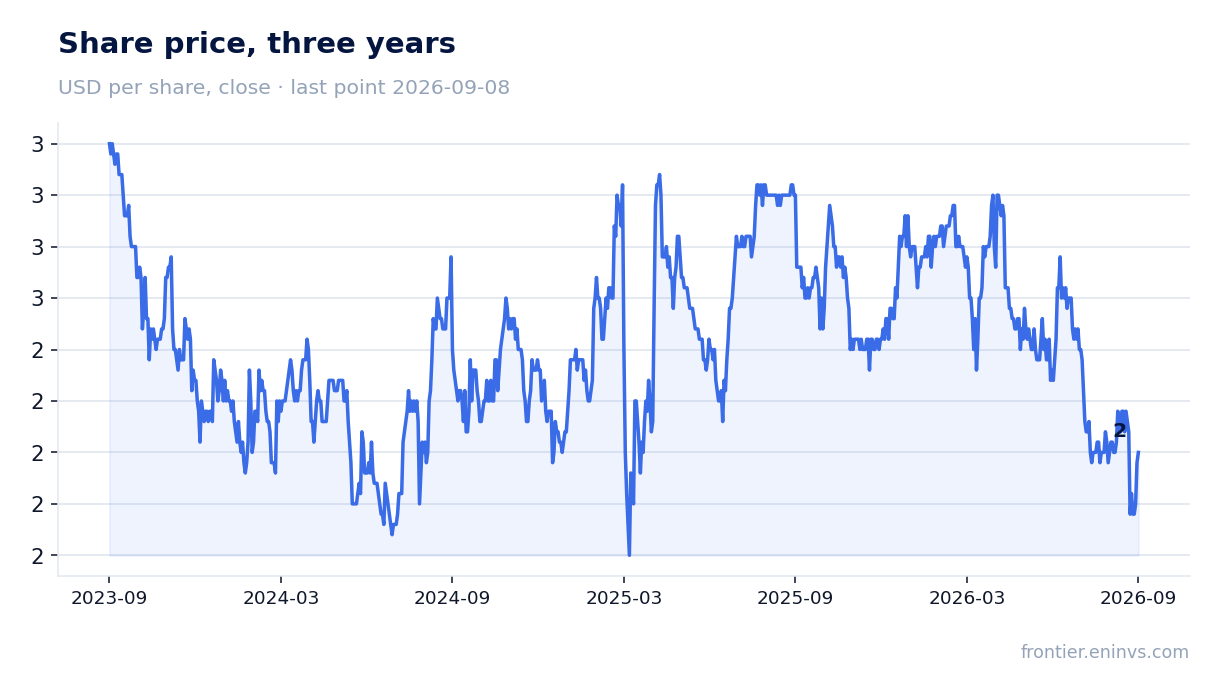
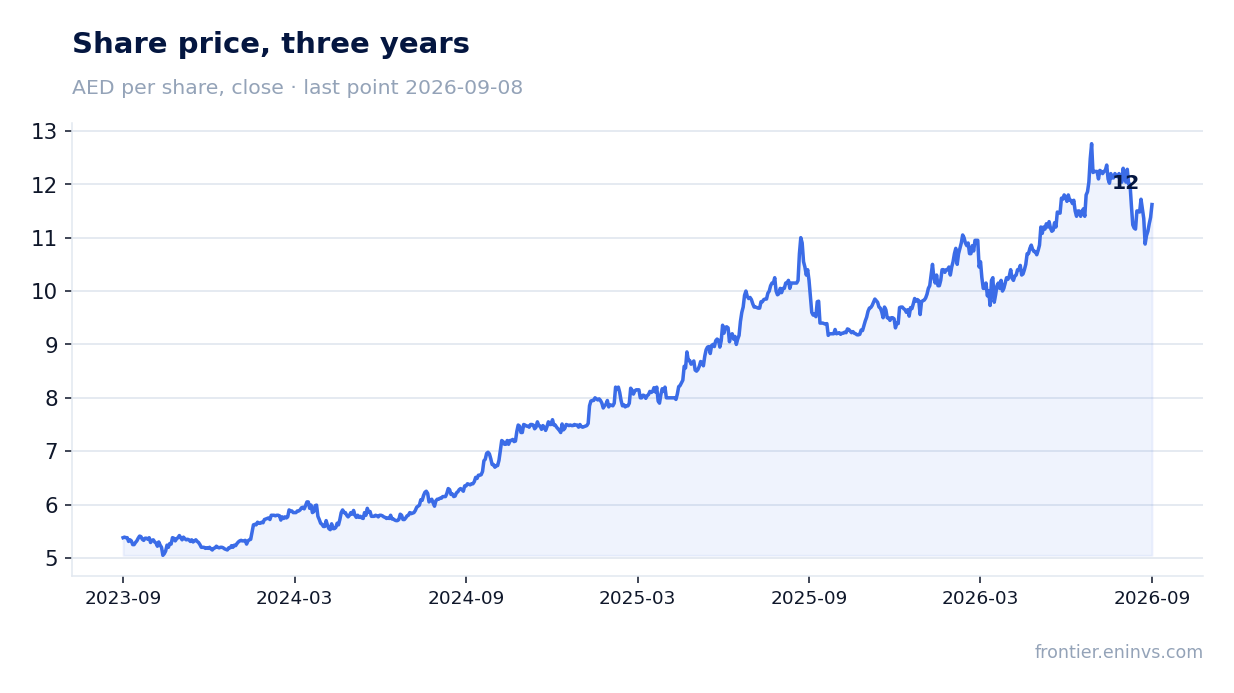
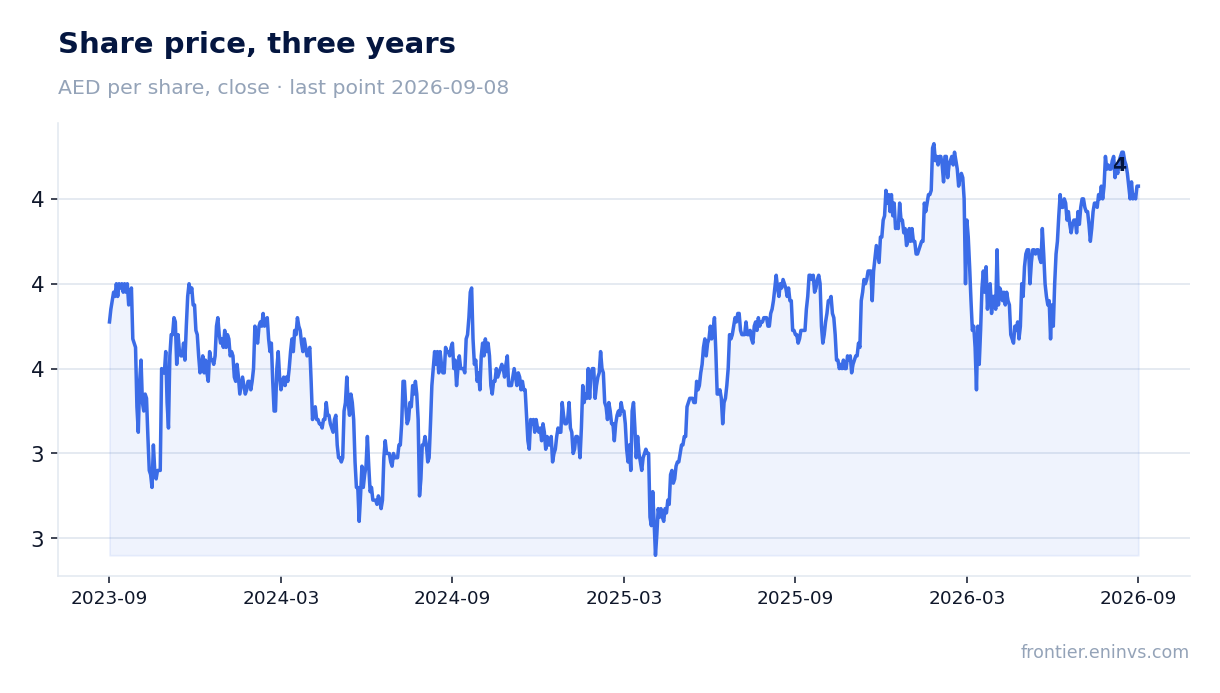
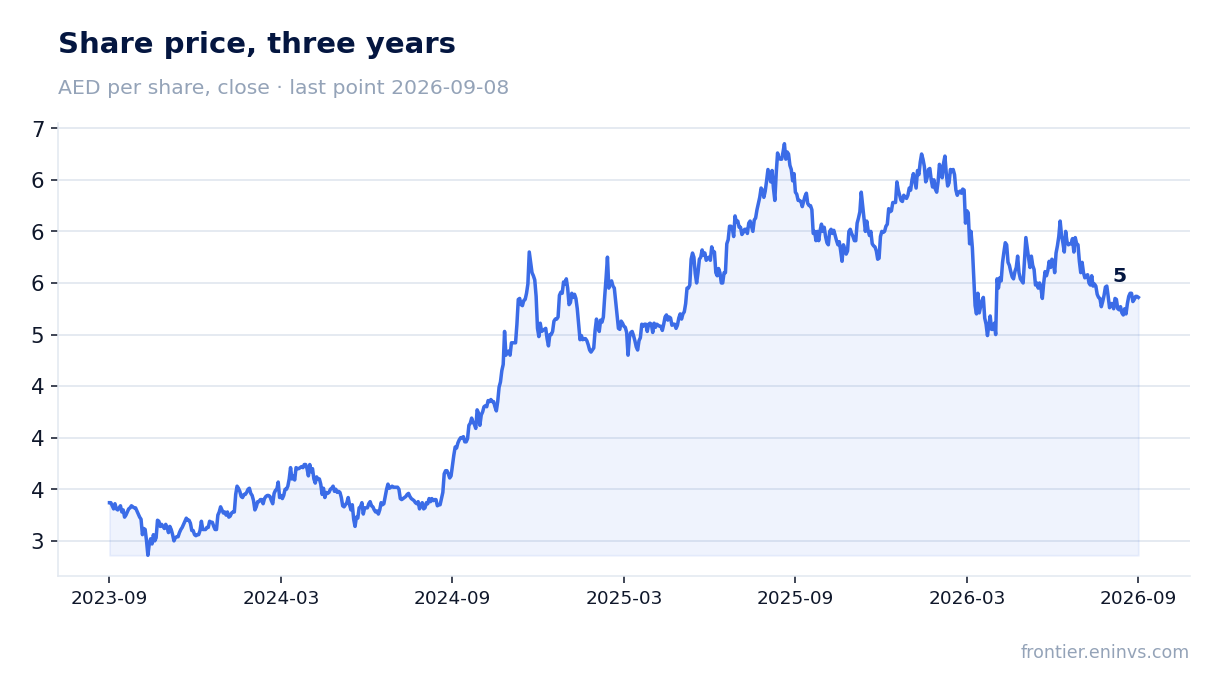
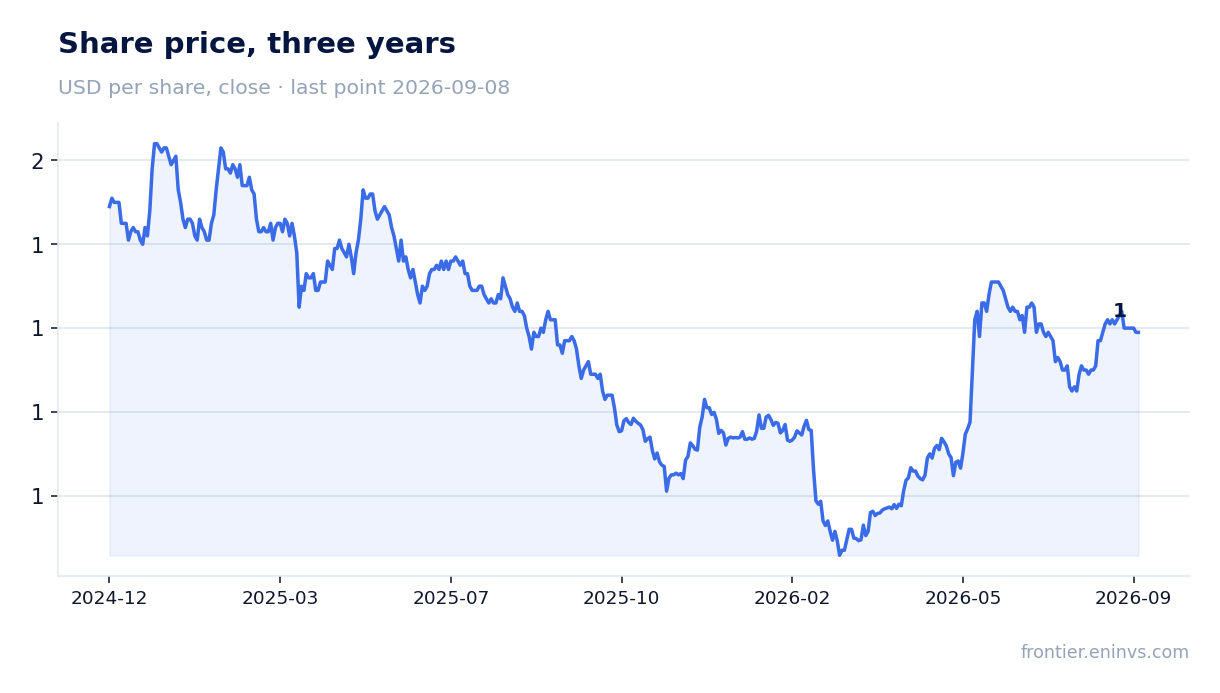
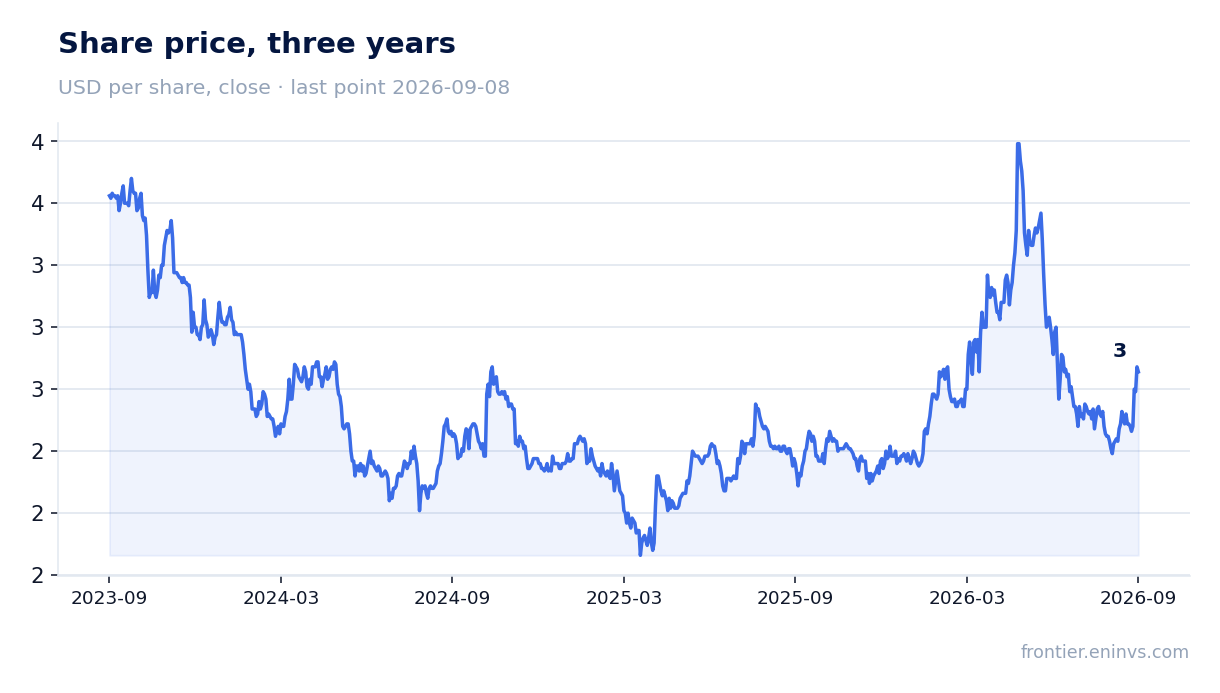
The stock since IPO: the market already recognises the quality - you enter for growth, not for a discount

Estimated upside: three scenarios over three years

The model is straightforward: profit grows as the reform normalises, payout is 100%, and the exit multiple depends on what the market decides the 'normal' pace is. Base: profit growth 13%/yr (spaces +8-10%, developer parking, enforcement), exit P/E 22 - +43% total return over 3 years, IRR ~12.6%/yr (of which ~15pp from dividends). Bull: growth 18%/yr (new tariff indexation plus a faster developer segment), P/E 25 - +82%, IRR ~22%. Bear: tariff freeze and a cooling city, growth 6%, de-rating to P/E 16 - minus 10% over three years, IRR -3%: the dividend nearly offsets the multiple compression. Probability-weighted (40/35/25) - roughly 12%/yr expected dollar return.

That is honestly below the estimated IRRs of our value ideas (Bank Mandiri ~32%, refiners ~45%) - the price of regulatory protection, non-cyclicality and the peg. Parkin is not for maximising upside: it is a portfolio stabiliser whose bear case sits near zero. If you want maximum estimated return, go to the value part of the list; if you are building a durable dollar income stream, this is the slot.

Growth and re-rating drivers

— Annualisation of the tariff reform: Q2-Q4 2026 still partly compare against the pre-reform base.

— Paid-zone expansion with the city's growth: +49,000 spaces in the last quarter alone; Dubai plans population growth from 3.8 to 5.8mn by 2040.

— Developer parking (+66%): moving private garages under Parkin management - asset-light, no concession fee, a long runway.

— Further tariff escalation: the RTA has already shown willingness to raise (the 2025 reform); globally, parking tariffs are indexed regularly.

— Rising UAE weight in EM indices and passive inflows into liquid DFM names.

Risks

— The tariff is a government decision. The 2025 reform worked in Parkin's favour, but the same hand can freeze tariffs or change concession terms; the RTA is both the regulator and the recipient of a variable concession fee.

— Growth normalisation. From Q2 2026 the reform effect leaves the comparison base - growth slows from +41% towards ~15-20%; at 25x earnings a pace disappointment hits the multiple.

— Exposure to the same Dubai cycle. Softer than for developers (parking is everyday demand), but population outflow or a slowdown in business activity would also reduce parking transactions.

— A technology tail. Robotaxis and car sharing within the concession horizon can change parking economics; Dubai is one of the most aggressive adopters of autonomous transport.

— Liquidity. Free float is ~25% and DFM volumes are moderate - use limit orders, no rush.

How to buy

Listed on the Dubai Financial Market, ticker PARKIN. Interactive Brokers offers DFM directly, settlement in AED; also available via brokers with UAE offices. Dividends twice a year, zero withholding tax.

Prepared by Enhanced Investments from Parkin Company PJSC quarterly reports and press releases, Dubai Financial Market, RTA and Savills/ValuStrat Dubai market data; July 2026. Not individual investment advice.