Lion Finance Group: profit up 21%, but the whole gain rests on interest income
BGEO →Lion Finance Group's third-quarter 2026 results showed net profit of GEL 661.9m and net interest income of GEL 1,318.8m. Interest income grew 21.6% year on year, accelerating from 20.8% in the second quarter, while reported-period profit rose 21.0%. Return on equity stands at 27.4% and the shares trade at a P/E of 8.2 – the market already prices in the durability of that return. Our conclusion: rather attractive – on the portal's model the upside to fair value is +46%. Our view: the share is rather attractive at the current price; upside on the portal model +46%.
Our view: is there upside
Our view in numbers
| Metric | Our read |
|---|---|
| Verdict | Rather attractive |
| Upside on the portal model | +46% |
| How the model works | financials model: annualised earnings to market cap, i.e. ROE against P/B |
| Dividend yield, 12m | 2.4% |
| Strongest case for | A **27.4%** return on equity against a P/E of **8.2** with accelerating interest income gives the portal's model a **46%** gap to fair value. |
| Strongest case against | The entire gain rests on interest income, and a slowdown from **21.6%** to single digits would quickly shrink both profit and the **46%** gap. |
| What would change the view | If interest-income growth accelerates for another quarter, the verdict rises to attractive; if it slows to single digits, it falls to fairly valued. |
Key takeaways
— Net interest income grew 21.6% year on year, and the acceleration from 20.8% in the second quarter shows the loan book is still speeding up
— Third-quarter profit rose 21.0% year on year, growing almost in line with interest income rather than through one-off items
— A 27.4% return on equity against a P/E of 8.2 means the market pays less per lari of profit than the bank earns on its capital
— Trailing twelve-month dividend yield is 2.35% – the payout is modest, which keeps capital inside the business
— On the portal's model the shares are 46% below fair value, and that gap is the main argument for the stock
Key figures, GEL bn
| Metric | Q3 2025 | Q3 2026 | Change |
|---|---|---|---|
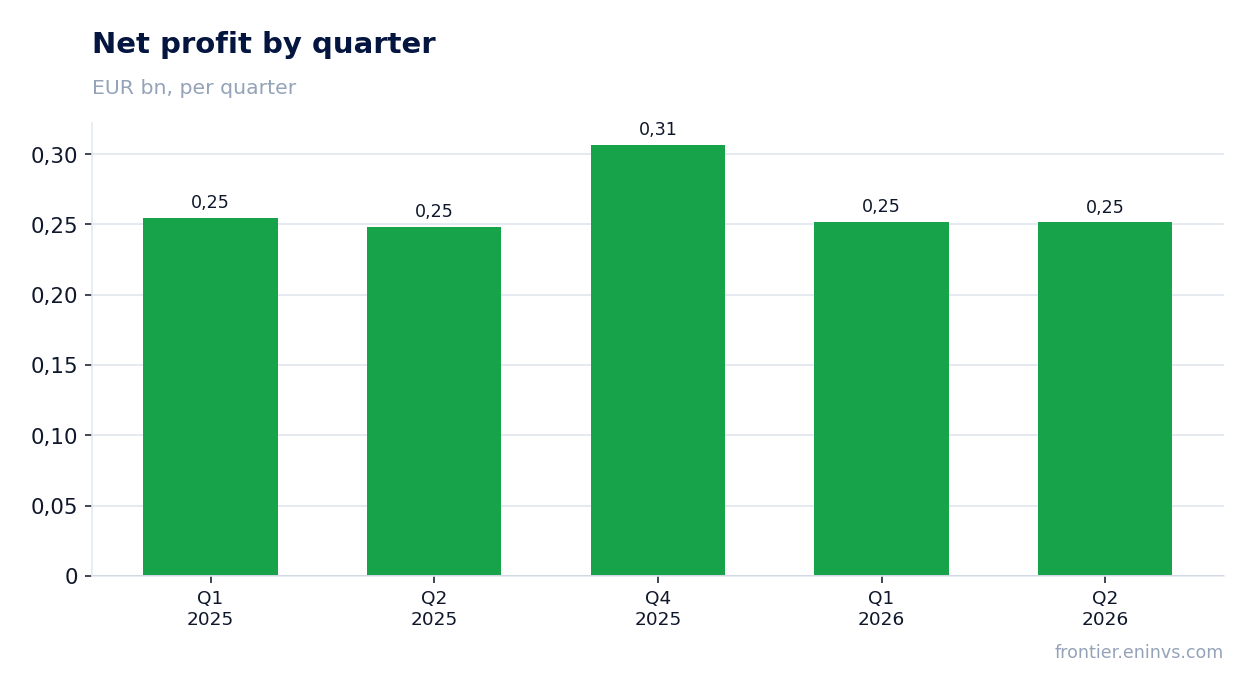
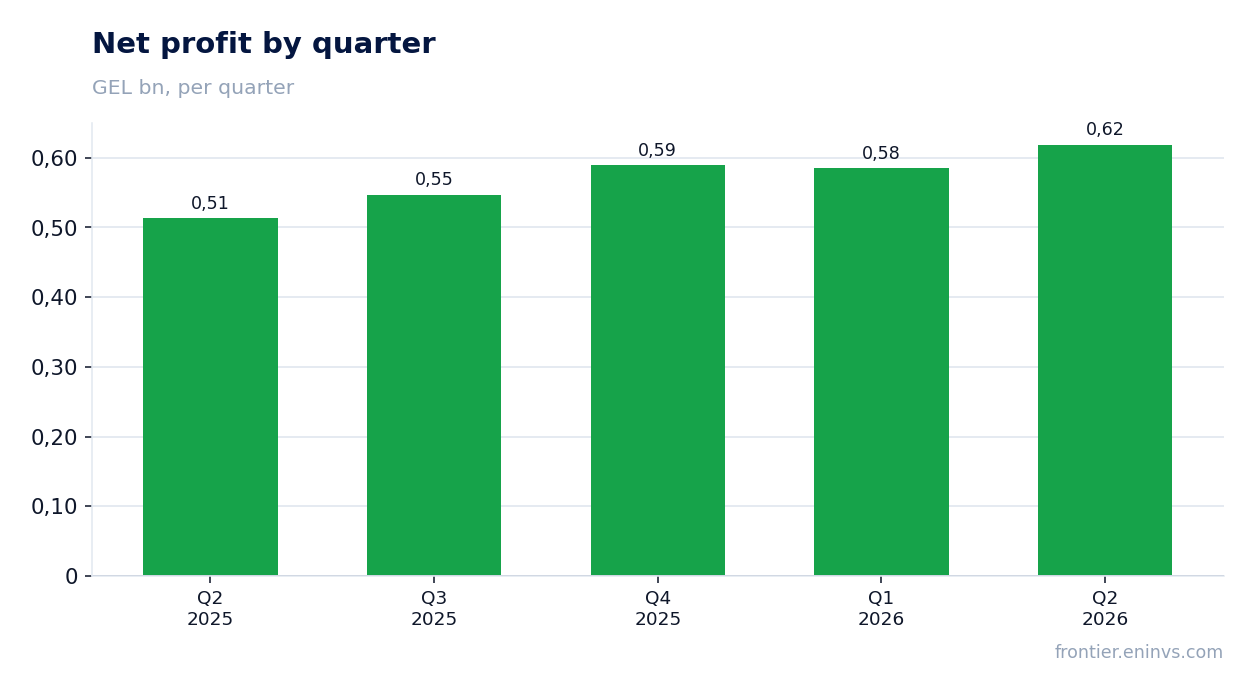
| Net profit | 0.55 | 0.66 | +21.0% |
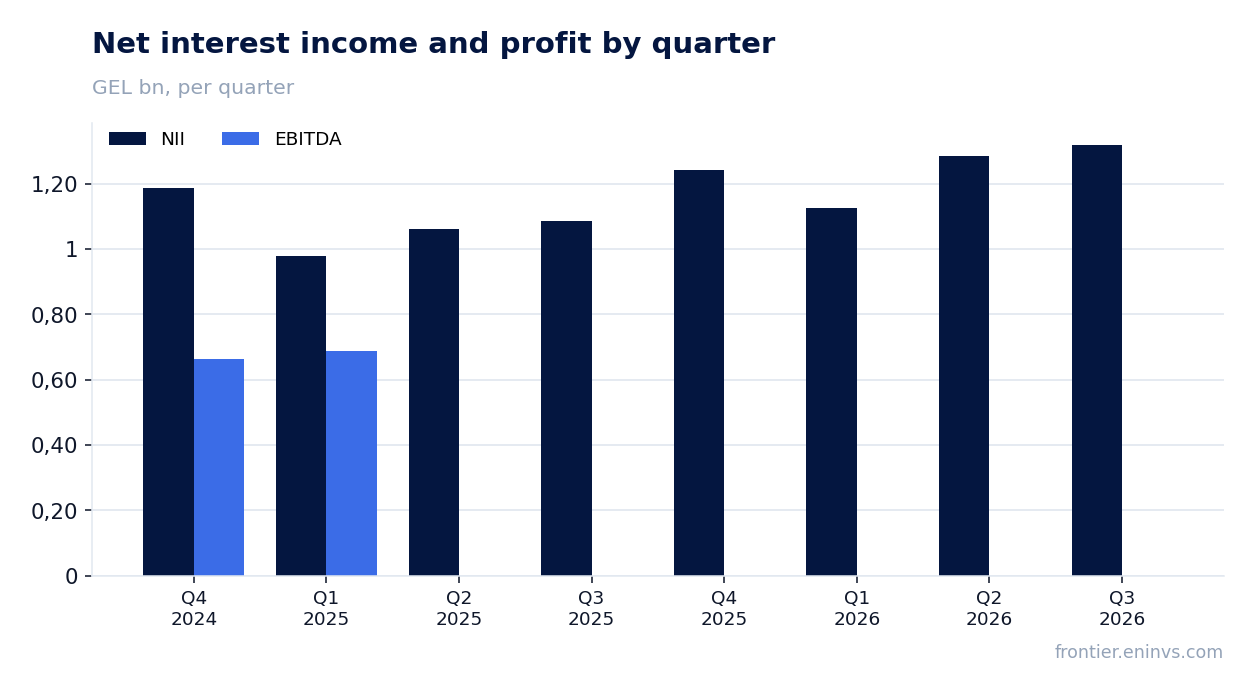
Net interest income grew 21.6% year on year, and the acceleration from 20.8% in the second quarter shows the loan book is still speeding up
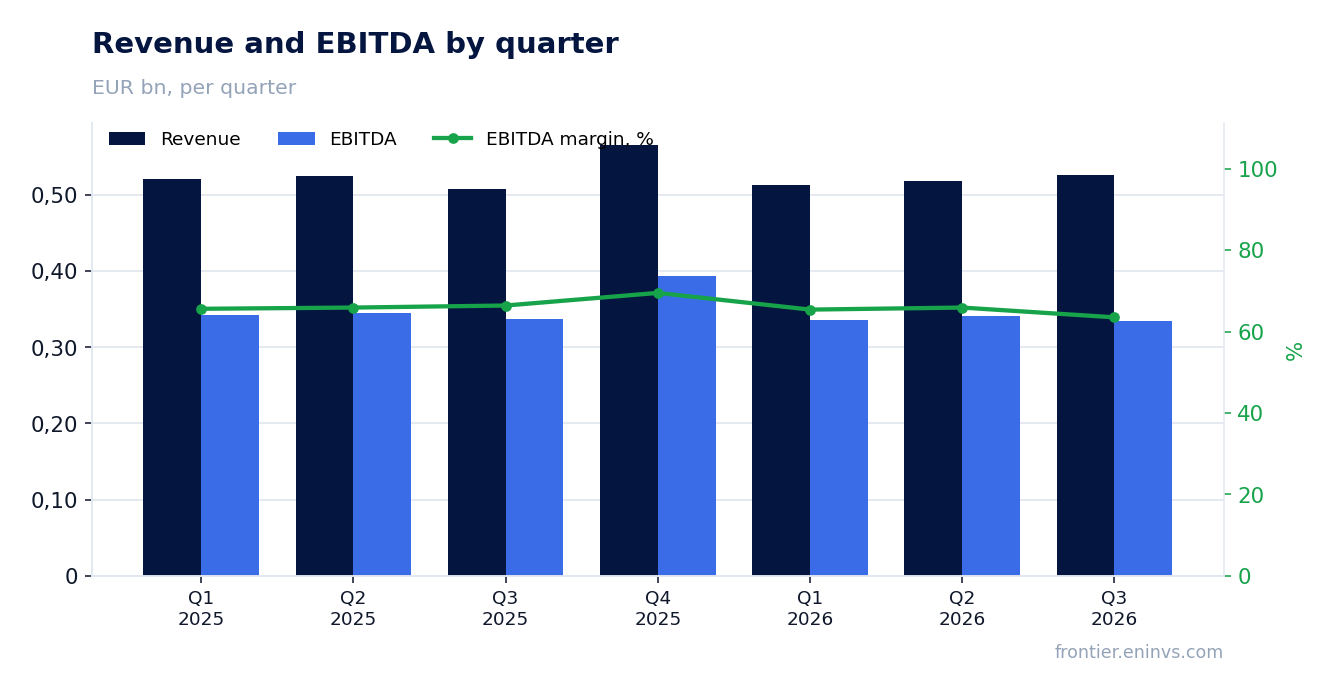
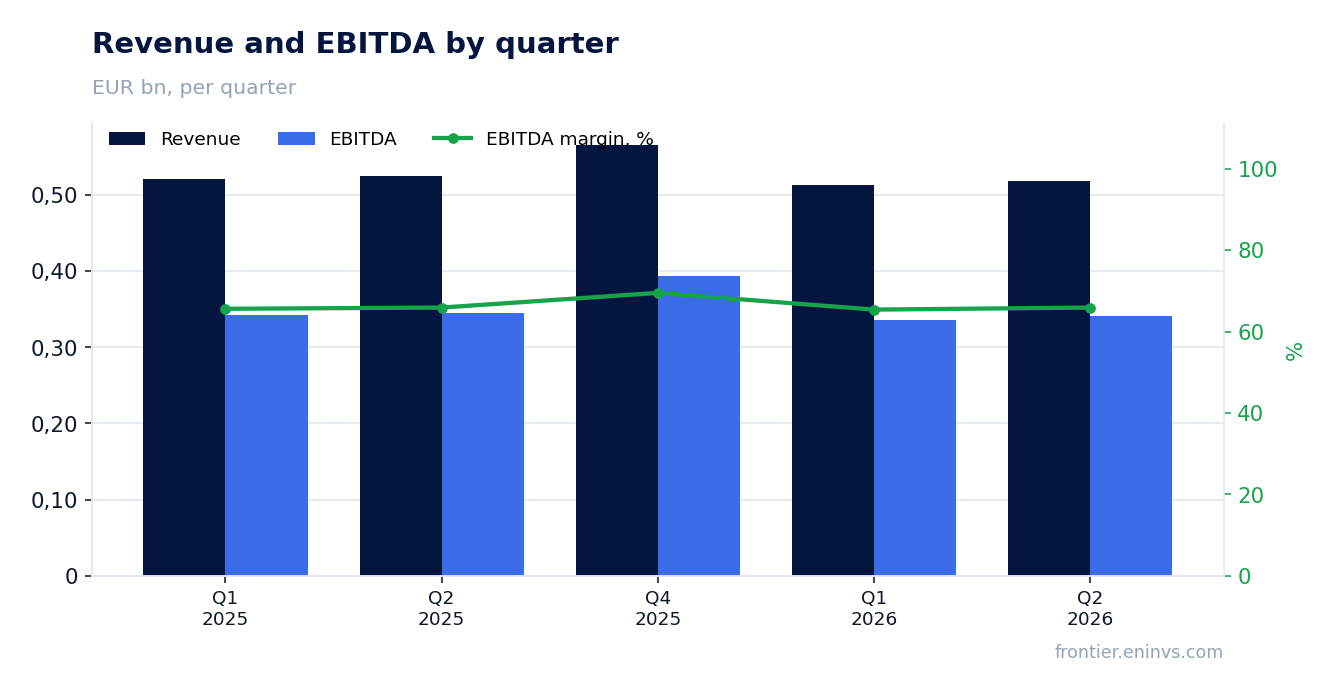
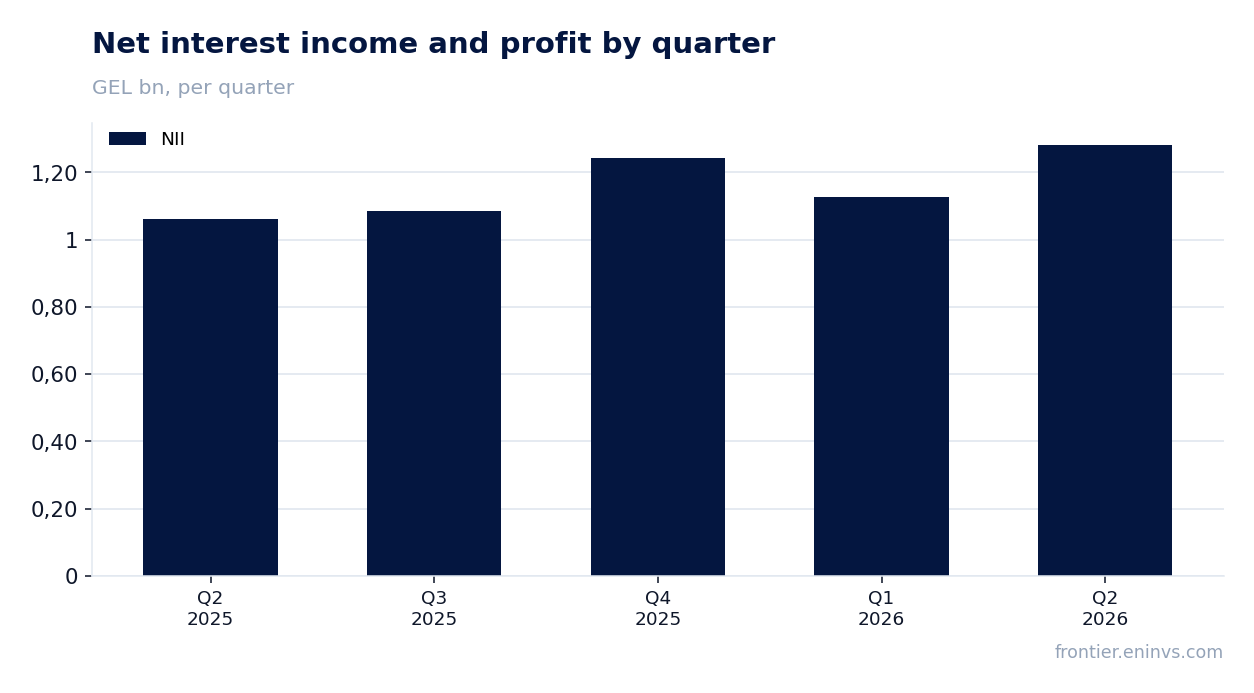
Net interest income in the third quarter of 2026 was GEL 1,318.8m against GEL 1,084.2m a year earlier. Growth of 21.6% year on year came in above the 20.8% of the second quarter – the trend accelerated rather than slowed. This is the key line of the report: the bank discloses almost no fee income, and the entire top line rests on interest.
The acceleration matters because it has now run for two quarters in a row: growth was 15.0% in the first quarter, 20.8% in the second and 21.6% in the third. That trajectory suggests either the loan book is growing faster or lending rates are holding above funding costs. The report does not say which of the two is driving income, but the fact of acceleration across three quarters is a strong signal.
For a shareholder this means profit is not yet hitting a ceiling. As long as interest income grows at over twenty percent, the bank can absorb both cost growth and provisioning without showing a profit decline.
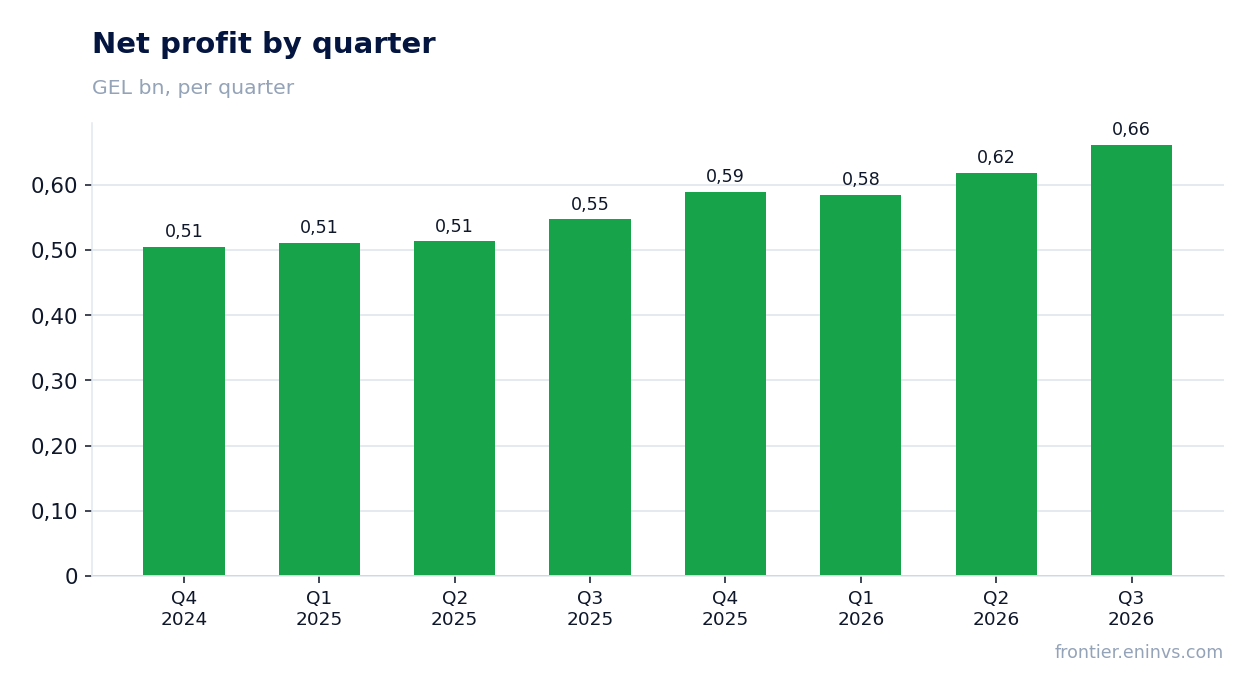
Third-quarter profit rose 21.0% year on year, growing almost in line with interest income rather than through one-off items
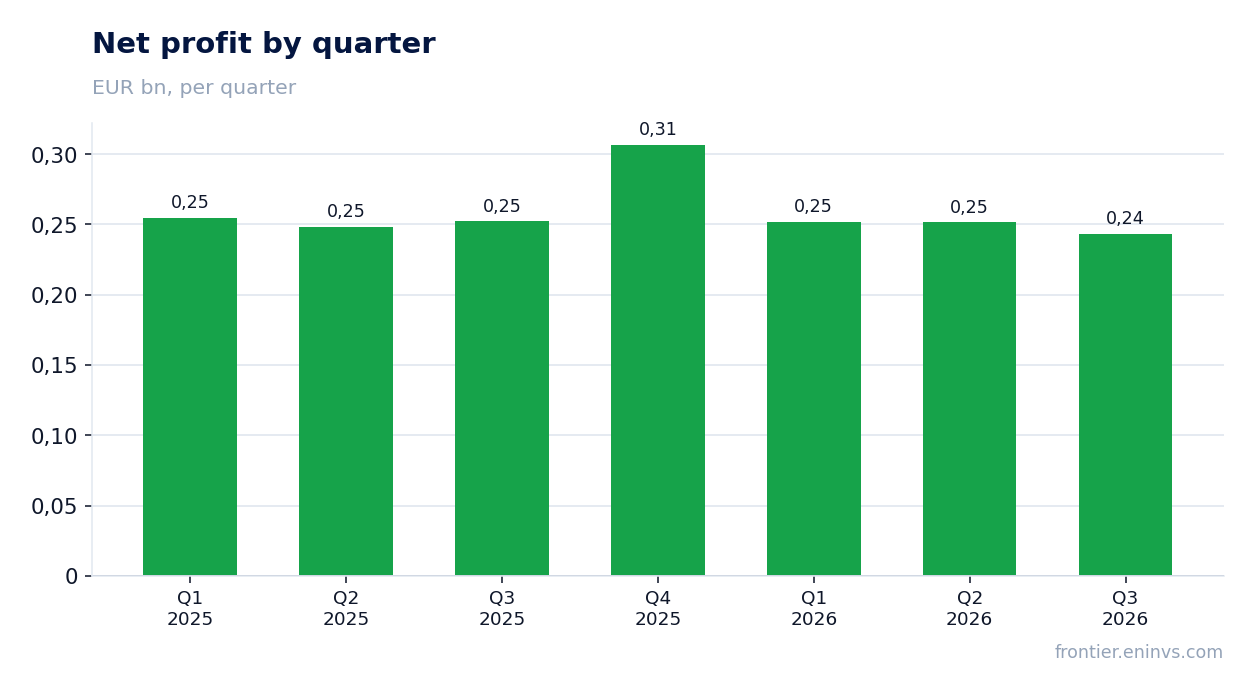
Net profit in the third quarter of 2026 was GEL 661.9m, 21.0% above the year-earlier level. Profit growth almost matched the 21.6% growth in interest income – a half-point gap is too small to point to any other driver. Profit grew with revenue, not through asset sales or one-off income.
This is an important difference from many bank reports, where quarterly profit jumps on reserve releases or a single transaction. Here profit grows exactly as much as core income grows – the quality of the result is high. There are no one-off items in the disclosure, and that is a plus: the result is repeatable.
At the same time, profit grows more slowly than interest income – meaning part of the gain is absorbed by costs or provisions. The report does not show how large that part is, but the half-point gap itself suggests cost control has not yet broken down.
A 27.4% return on equity against a P/E of 8.2 means the market pays less per lari of profit than the bank earns on its capital
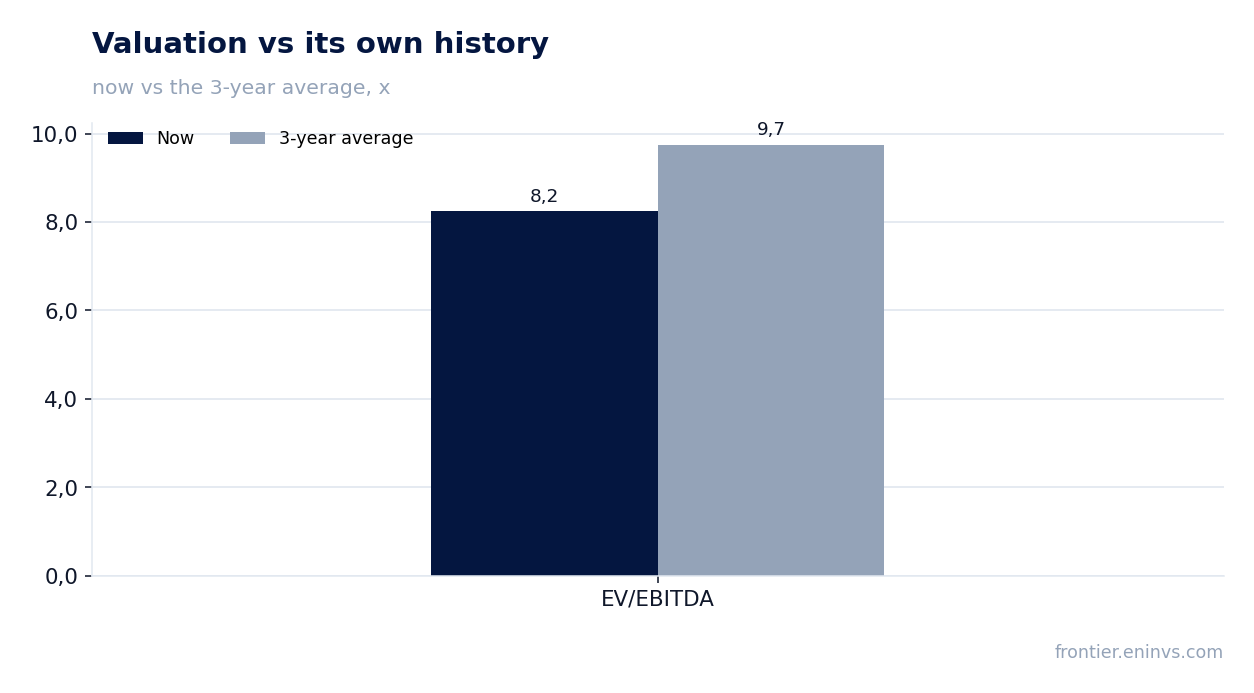
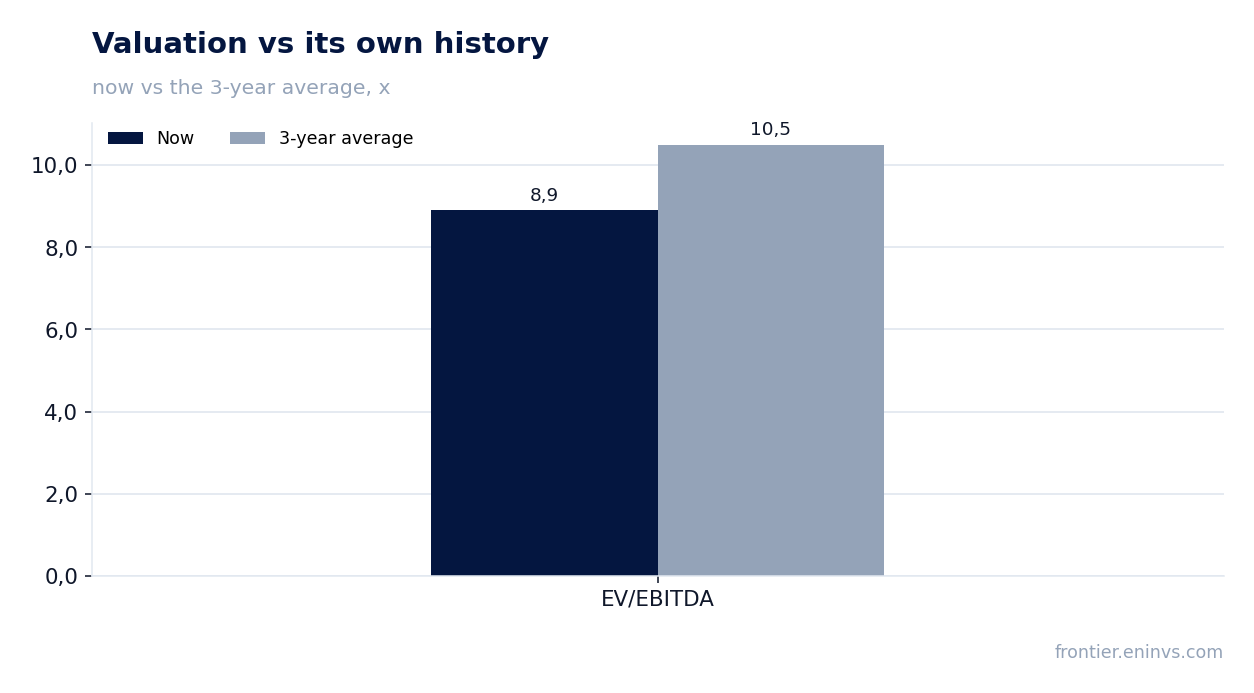
Lion Finance Group's return on equity is 27.4% – a very high figure for a bank. At the same time the trailing twelve-month P/E is 8.2 and market capitalisation is GEL 20,229.1m. The relationship is simple: the market values the bank at a little over eight times annual profit, while the bank itself earns more than a quarter of its capital each year.
That combination appears when investors do not believe in the durability of high returns. The Georgian market is small, and any slowdown in lending or rise in funding costs could quickly cut the margin. But trailing twelve-month profit is GEL 2,455.4m, and even if profitability halved, the P/E would stay within ten.
On the portal's model the fair value of the shares is 46% above the current price. This is our own estimate, not a market consensus, and it rests on current return on equity and profit. If profit holds at the trailing twelve-month level, the gap is real.
Trailing twelve-month dividend yield is 2.35% – the payout is modest, which keeps capital inside the business
The trailing twelve-month dividend yield is 2.35% – modest for a bank with a 27.4% return on equity. Trailing twelve-month profit is GEL 2,455.4m, and at that level of profitability payouts take only a small share of earnings. The rest stays in capital and works toward future growth.
For an investor this means the dividend is not the main source of return here. The bulk of the return comes from growth in the value of the business, not from current payouts. With a P/E of 8.2 and a return on equity of 27.4%, reinvesting profit delivers more than paying it out – and management, judging by the payout, follows the same logic.
What could reduce the payout: a fall in profit, higher capital requirements or a large acquisition. But at the current level of profitability and a modest payout, the risk of a dividend cut is small – if anything, the payout could rise once the bank hits a growth ceiling.
On the portal's model the shares are 46% below fair value, and that gap is the main argument for the stock
On the portal's model the fair value of Lion Finance Group shares is 46% above the current price. The model rests on current profit and return on equity – the very metrics that look stable in the third-quarter report. This is not a market forecast or a target price – it is our internal estimate, and it shows how far the current price diverges from the profitability of the business.
The main risk to that estimate is the durability of interest income. If growth slows from 21.6% to single digits, profit and return on equity will fall, and the 46% gap will narrow. But as long as acceleration has held for three quarters in a row, the model reflects current reality rather than hope.
The second argument is the dividend. At a 2.35% yield it does not decide the outcome, but it adds to the total return. If the bank keeps profit at the trailing twelve-month level and continues to pay, the shareholder gets both value growth and a small current yield.
Valuation on the latest reported figures
| Metric | Value |
|---|---|
| Market cap | 20.2 bn GEL |
| P/E (LTM) | 8.2 |
| P/B | 2.40 |
| ROE | 27.4% |
| Dividend yield (12m) | 2.4% |
Bottom line
The strong side of the report is the acceleration of interest income to 21.6% and profit growing almost in line with it, without one-off items. A 27.4% return on equity against a P/E of 8.2 leaves a gap that the portal's model puts at 46%. The weak spot is reliance on a single income source and a modest 2.35% dividend that will not save the day if growth slows. The question for a holder now is whether interest-income acceleration holds for at least two more quarters. Our conclusion: rather attractive – on the portal's model the upside is +46%. Our view: the share is rather attractive at the current price; upside on the portal model +46%.