Alcoa: record revenue and EBITDA tripling, but one-off writedowns ate the profit

On July 16, Alcoa Corporation reported second-quarter 2026 results. Revenue hit a record $3,966 million (+31.4% year-on-year), adjusted EBITDA rose to $901 million (2.9x year-on-year), and net income was $407 million (+148.2%). However, adjusted EPS exceeded reported EPS due to $155 million in special items, and the portal's model values the share 9% below the current price – with an EV/EBITDA multiple of 6.7 versus a historical average of 10.7, the stock looks rather attractive than not.
Key takeaways
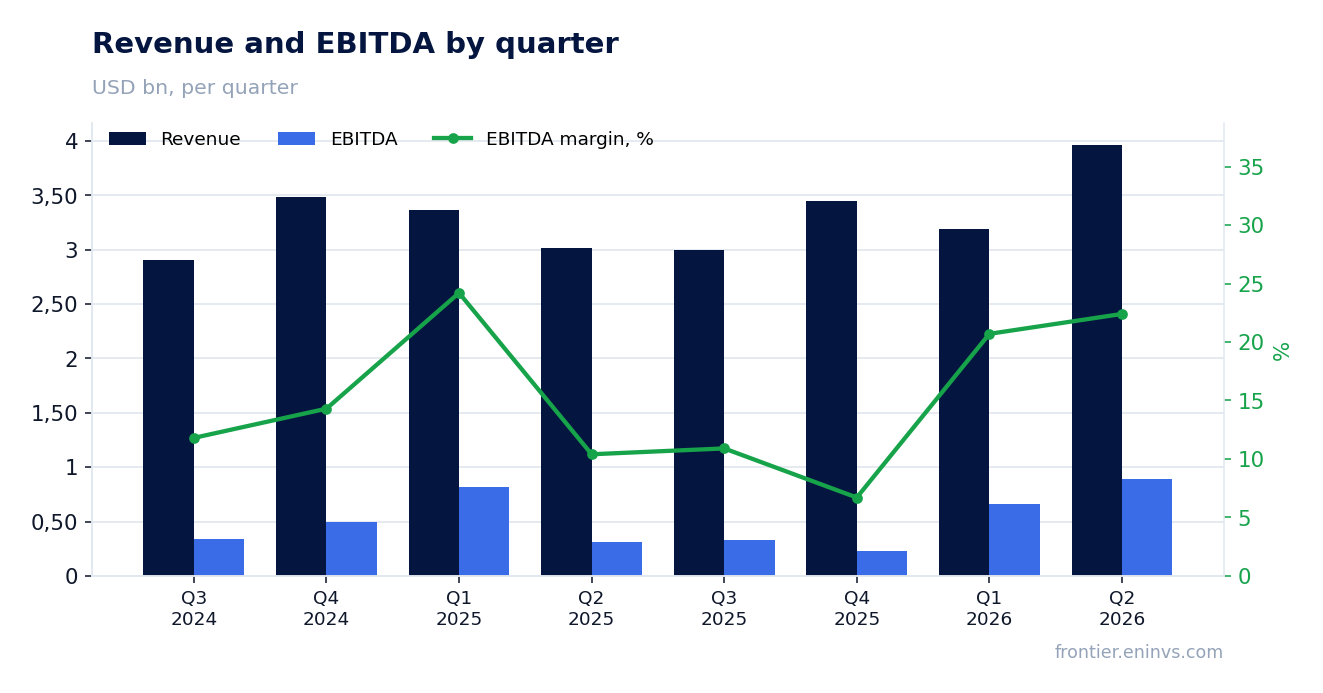
— Revenue rose 31.4% year-on-year to a record $3,966 million on aluminum strength
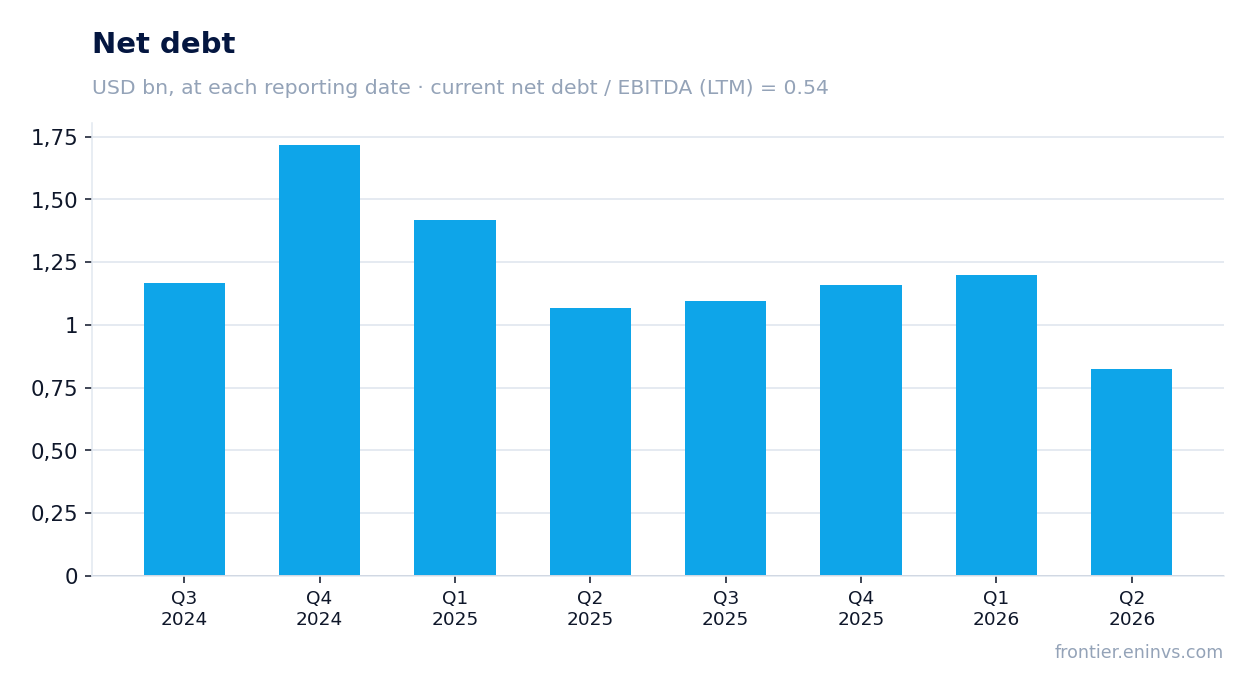
— Adjusted EBITDA tripled, but $155 million in special items ate almost all profit
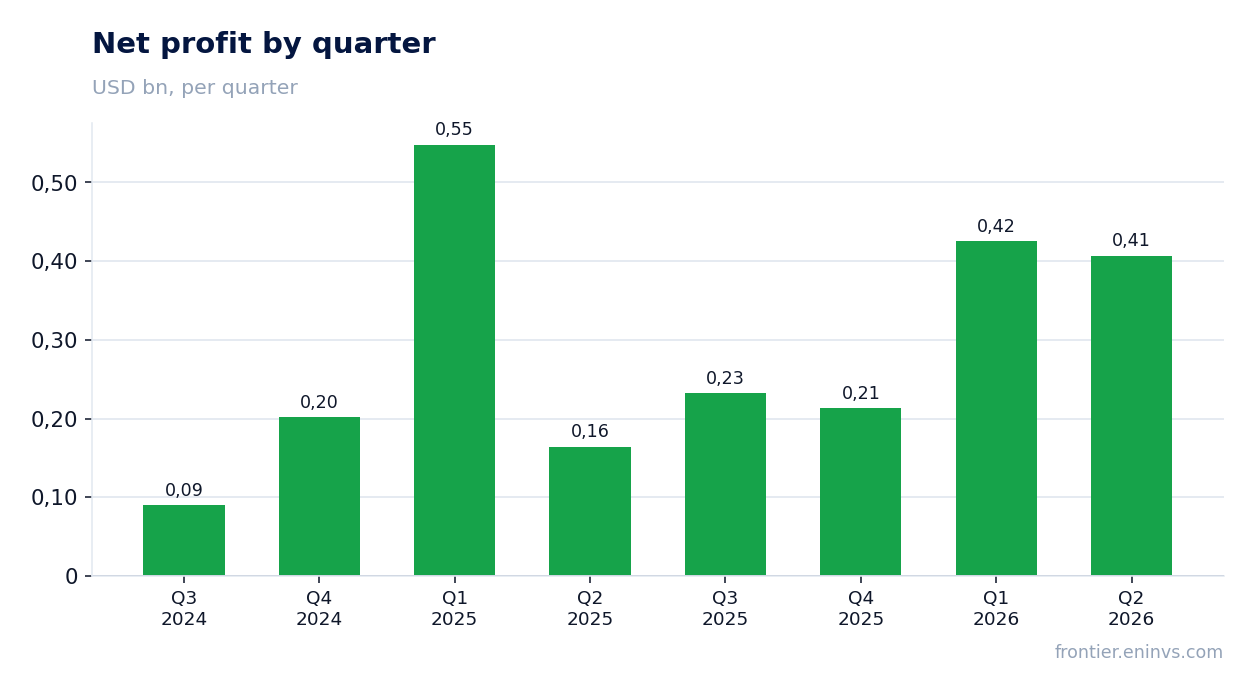
— Debt fell to $824 million, with net debt/EBITDA LTM at 0.54
— Free cash flow reached $422 million, but dividend yield is only 0.79%
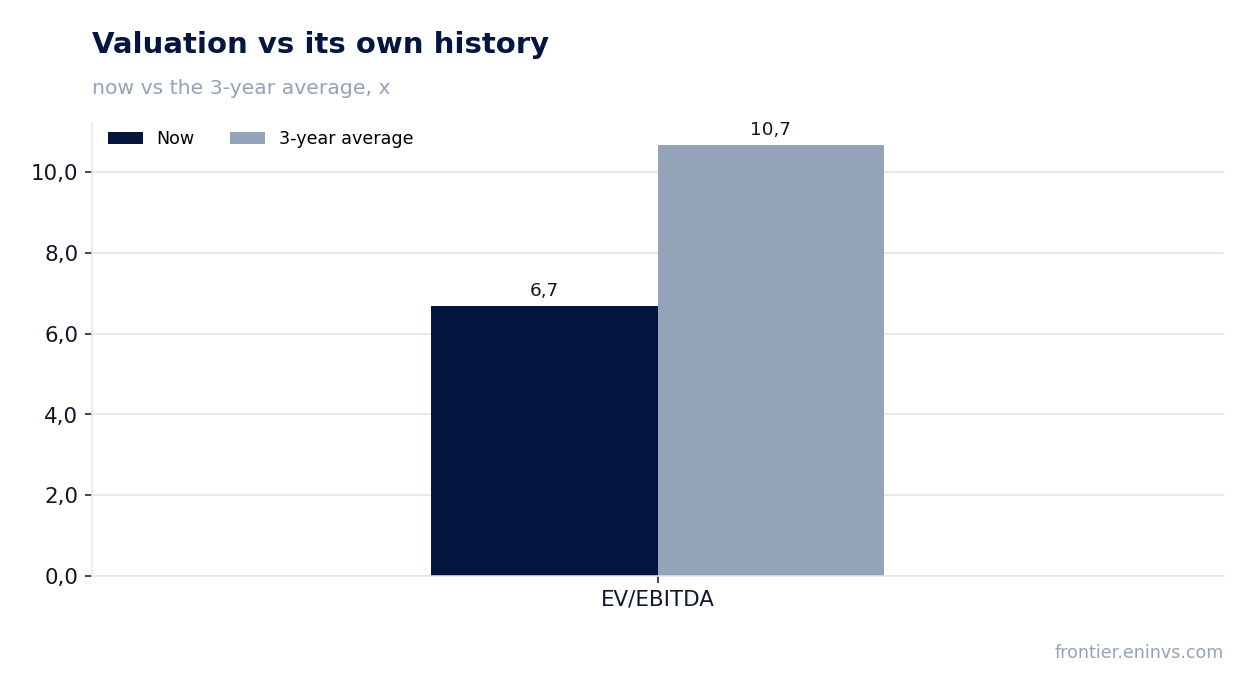
— EV/EBITDA of 6.7 versus historical average of 10.7 – the market undervalues the company
— Cutting alumina production guidance by 0.2–0.3 million tonnes is a warning sign
Attractiveness
Key figures, USD bn
| Metric | Q2 2025 | Q2 2026 | Change |
|---|---|---|---|
| Revenue | 3.02 | 3.97 | +31.4% |
| EBITDA | 0.31 | 0.90 | +186.9% |
| Operating profit | 0.16 | 0.71 | +343.5% |
| Net profit | 0.16 | 0.41 | +148.2% |
| Operating cash flow | 0.49 | 0.61 | +24.6% |
| Capex | 0.13 | 0.19 | +42.0% |
| EBITDA margin | 10.4% | 22.7% | +12.3 pp |
| Net margin | 5.4% | 10.3% | +4.9 pp |
Revenue rose 31.4% year-on-year to a record $3,966 million on aluminum strength
In the second quarter of 2026, Alcoa's revenue reached $3,966 million, up 31.4% year-on-year and 24% sequentially. This is a quarterly record for the company. The aluminum segment drove the growth: its third-party revenue rose 31% sequentially to $3,330 million on an 18% increase in shipments and a higher average realized price of $4,752 per tonne.
The alumina segment, by contrast, saw third-party revenue fall 3% sequentially to $552 million due to lower volumes and prices from bauxite offtake contracts. The average realized alumina price was $334 per tonne versus $378 a year earlier. Alumina production fell 6% sequentially to 2.2 million tonnes due to instability at the Pinjarra refinery in Australia, exacerbated by gas supply disruptions following Cyclone Narelle.
Revenue growth in aluminum was driven by both price and volume: aluminum shipments rose to 726 thousand tonnes thanks to the completion of the San Ciprián smelter restart in Spain, progress at Alumar in Brazil, and completion of capacity restarts at Lista in Norway and Portland in Australia. The company set year-to-date production records at four aluminum smelters and one alumina refinery.
Adjusted EBITDA tripled, but $155 million in special items ate almost all profit
Adjusted EBITDA in Q2 2026 was $901 million, 2.9 times higher than a year earlier ($313 million) and up 51% sequentially. The EBITDA margin reached 22.7% versus 10.4% a year earlier. The main driver was the aluminum segment, whose adjusted EBITDA rose to $1,073 million from $97 million a year earlier on higher prices and shipments.
However, reported net income was $407 million, or $1.53 per share, while adjusted net income was $562 million, or $2.12 per share. The $155 million difference is due to special items: a $123 million mark-to-market loss on Ma'aden shares, a $45 million loss on energy contracts, and $12 million in portfolio-related costs.
The alumina segment posted negative adjusted EBITDA of minus $96 million versus plus $139 million a year earlier. This was due to higher production costs at Pinjarra, lower alumina prices, and higher energy costs. Thus, all EBITDA growth came from aluminum, while the alumina business was a drag.
Debt fell to $824 million, with net debt/EBITDA LTM at 0.54
Alcoa's net debt at the end of Q2 2026 was $824 million, down $0.4 billion from the previous reporting date and $0.2 billion less than a year earlier. The net debt/EBITDA ratio for the trailing twelve months is 0.54 – a level the company did not disclose in prior periods, so we cannot judge its dynamics.
The debt reduction was due to the redemption of the remaining $219 million of 6.125% notes due 2028, funded from cash on hand. Cash at quarter-end was $1.4 billion. Interest expense fell to $36 million from $56 million a year earlier.
Operating cash flow in Q2 was $608 million versus $488 million a year earlier. Free cash flow reached $422 million. This allowed the company not only to repay debt but also to pay $26 million in dividends. Leverage remains low, providing a cushion to finance the South32 acquisition.
Free cash flow reached $422 million, but dividend yield is only 0.79%
Alcoa paid $26 million in dividends in Q2 2026. The trailing twelve-month dividend yield is 0.79% – a low figure, well below the key rate. The company did not increase dividends this quarter, and its capital return policy remains conservative.
Free cash flow of $422 million is more than 16 times the dividends paid. This means the company has significant room to increase payouts, but management prefers to direct funds toward strategic investments such as the $4.1 billion South32 acquisition and the gallium plant construction.
Capital expenditures in Q2 were $186 million, up 42% year-on-year. The company also announced a $65 million investment to expand foundry production at its Mosjøen smelter in Norway. These commitments limit the potential for dividend growth in the near term.
EV/EBITDA of 6.7 versus historical average of 10.7 – the market undervalues the company
The current trailing twelve-month EV/EBITDA multiple is 6.7, well below the three-year average of 10.7. This indicates the market values the company cheaper than its three-year average. P/E LTM is 10.4, and ROE is 22.9%.
According to the portal's model, which reprices EBITDA at current commodity prices at the target EV/EBITDA, the fair value of the share is 9% below the current market price. This means that even with a low multiple, the stock trades above our estimate. However, the model is based on current aluminum prices, which may change.
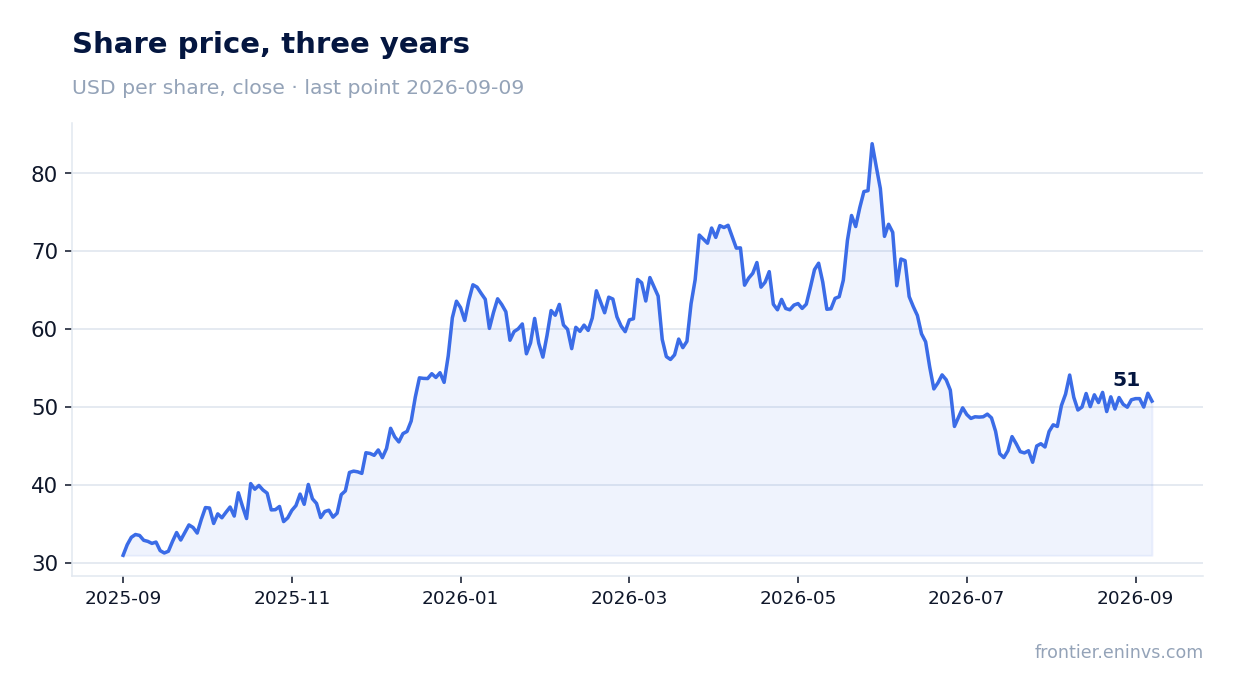
Since the report's publication, the stock has risen 4.4%, while on the release day it fell 3.6%. Market capitalization is $13.3 billion. The EV/EBITDA of 6.7 versus the historical average of 10.7 suggests potential for multiple expansion if the company can sustain current EBITDA levels.
Cutting alumina production guidance by 0.2–0.3 million tonnes is a warning sign
Alcoa cut its 2026 alumina production guidance to 9.5–9.6 million tonnes, down 0.2–0.3 million tonnes from the previous forecast. It also reduced alumina shipment guidance to 11.5–11.6 million tonnes (down 0.3–0.4 million tonnes). The reason is instability at the Pinjarra refinery in Australia, which began in late March and was exacerbated by gas supply disruptions after Cyclone Narelle.
Aluminum production and shipment guidance remained unchanged: 2.4–2.6 million tonnes and 2.6–2.8 million tonnes, respectively. In Q3 2026, the company expects a sequential improvement in the alumina segment of $10 million due to restored stability at Pinjarra and lower energy prices, partially offset by planned maintenance at Alumar and Juruti in Brazil.
In the aluminum segment, efficiencies at higher production rates are expected to fully offset higher carbon prices and seasonally lower third-party energy sales in Brazil. Section 232 tariff costs on U.S. aluminum imports from Canada are expected to decrease by $10 million sequentially. Operational tax expense in Q3 is expected to be $80–90 million.
Valuation on the latest reported figures
| Metric | Value |
|---|---|
| Market cap | 13.3 bn USD |
| P/E (LTM) | 10.4 |
| EV/EBITDA (LTM) | 6.7 |
| P/B | 2.17 |
| Net debt / EBITDA (LTM) | 0.54 |
| Operating cash flow (LTM) | 1.20 bn |
| ROE | 22.9% |
| Dividend yield (12m) | 0.8% |
| EV/EBITDA, 3-year average | 10.7 |
Bottom line
Bottom line: Alcoa delivered record revenue and a threefold increase in EBITDA, but net income was pressured by $155 million in special items. The aluminum segment was the engine, while the alumina business slipped into negative territory due to problems at Pinjarra. Leverage is low (0.54 net debt/EBITDA), and the EV/EBITDA multiple of 6.7 is well below the historical average of 10.7. However, the portal's model values the share 9% below the current price, and the 0.79% dividend yield does not compensate for risks. Verdict – rather attractive: the low valuation and strong cash flow outweigh one-off factors and weakness in alumina.
Open the company's financial profile AA →
See also: market overview · valuation map · stock screeners