Bunge Global: revenue doubled after the Viterra deal, but the portal's model sees 70% downside

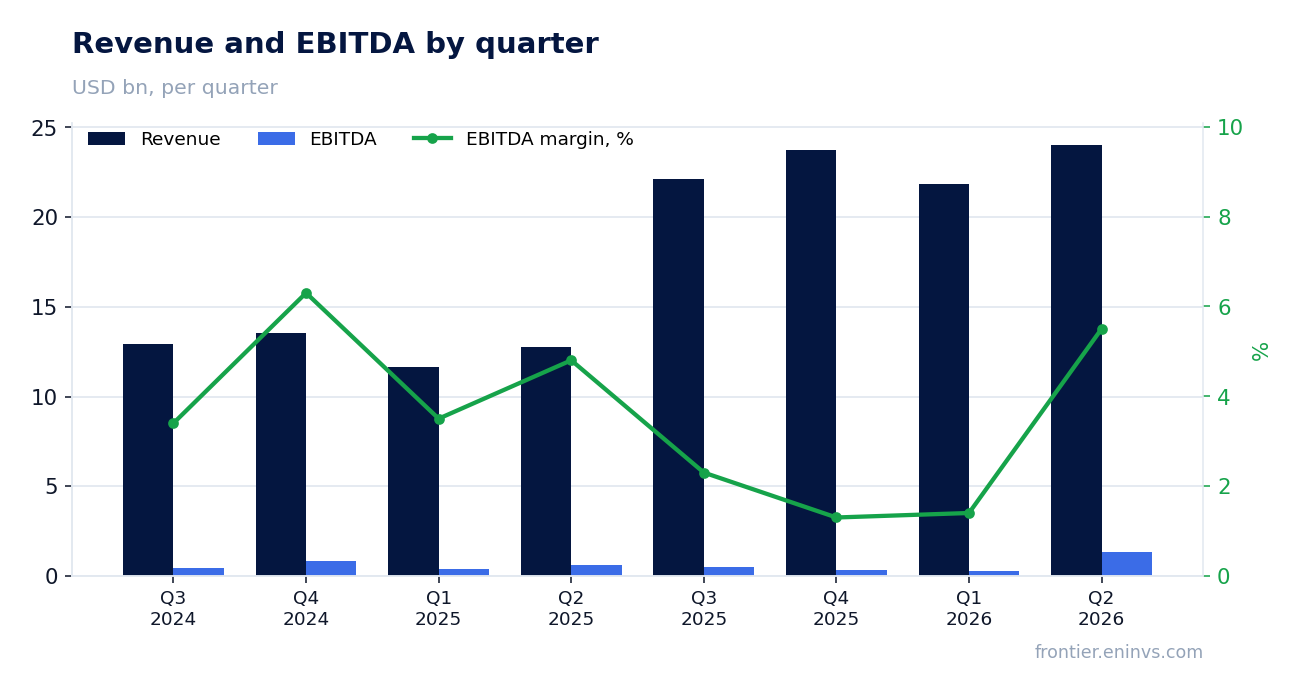
On July 29, Bunge Global reported second quarter 2026 results: revenue rose 88.3% year-on-year to $24,041 million, EBITDA grew 128.9% to $1,331 million, and net profit increased 91.5% to $678 million. The growth was driven by the consolidation of Viterra assets and strong oilseed processing, yet the stock fell 8.2% after the release, and the portal's model puts fair value 70% below current market cap. Verdict – unattractive: multiples are far above its own three-year history, and leverage remains high.
Key takeaways
— Revenue doubled thanks to Viterra consolidation, but organic growth slowed
— EBITDA rose 128.9% driven by soybean and softseed processing
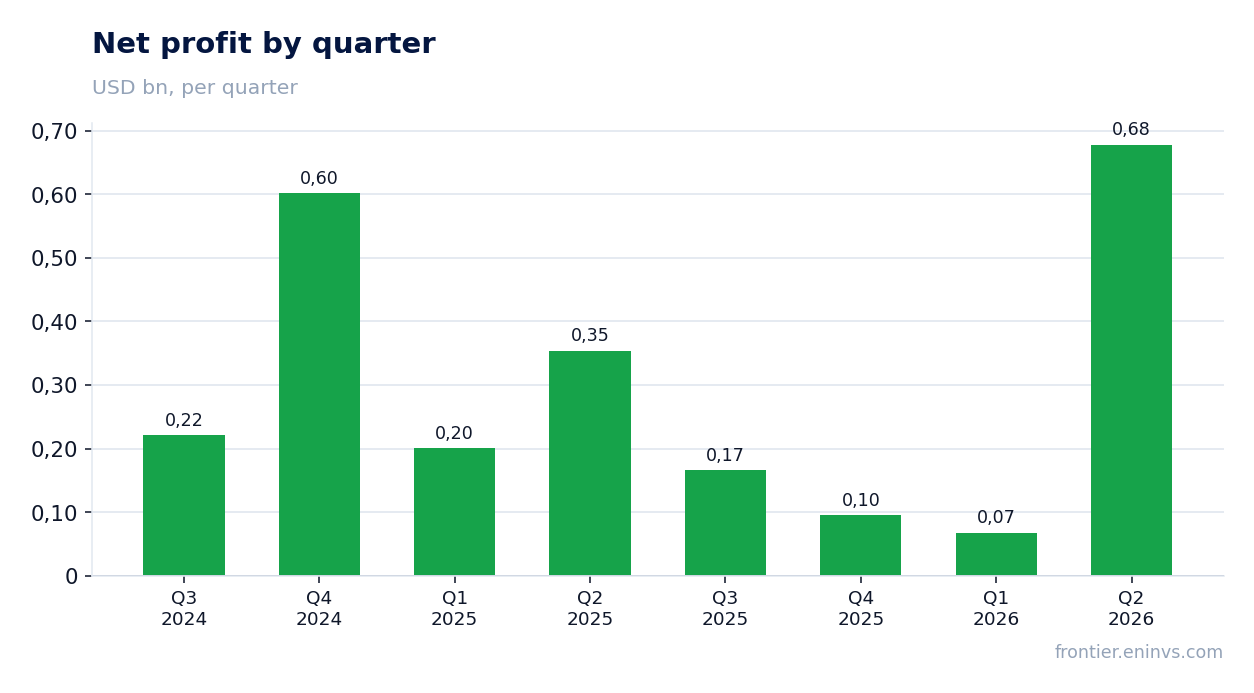
— Net profit grew 91.5%, but adjusted EPS was only $2.00
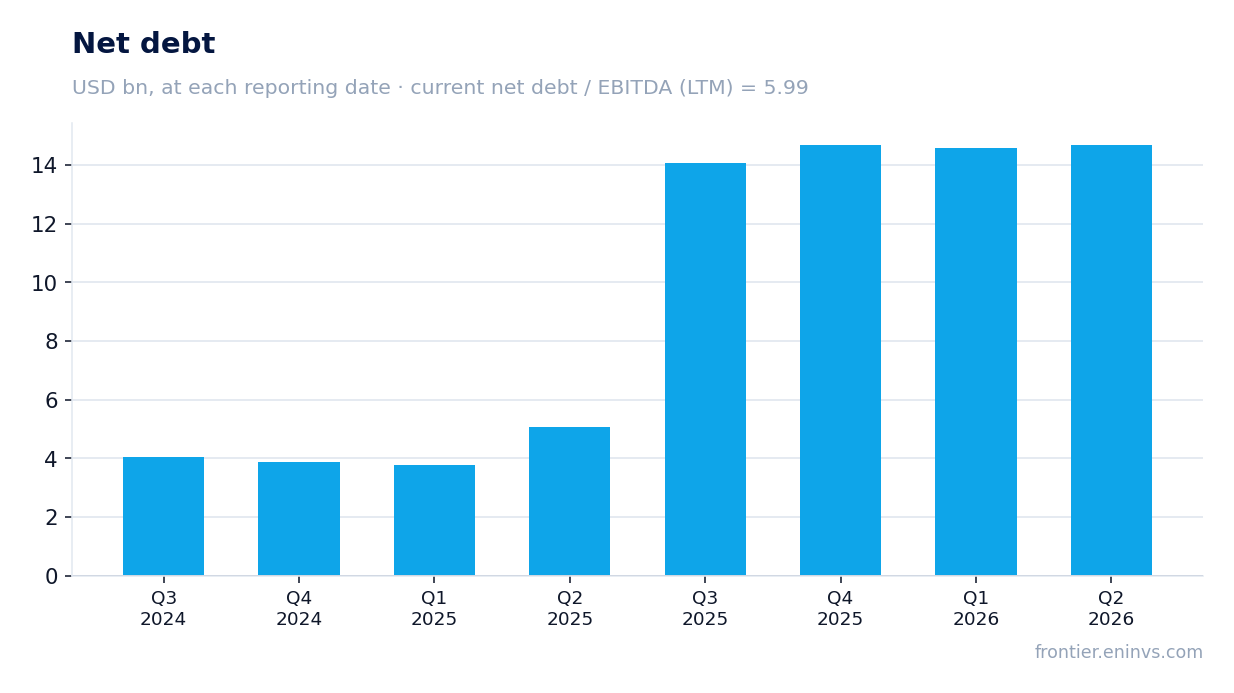
— Leverage remains high: net debt / EBITDA at 5.99
— Dividend yield of 2.3% is below historical, but payments continue
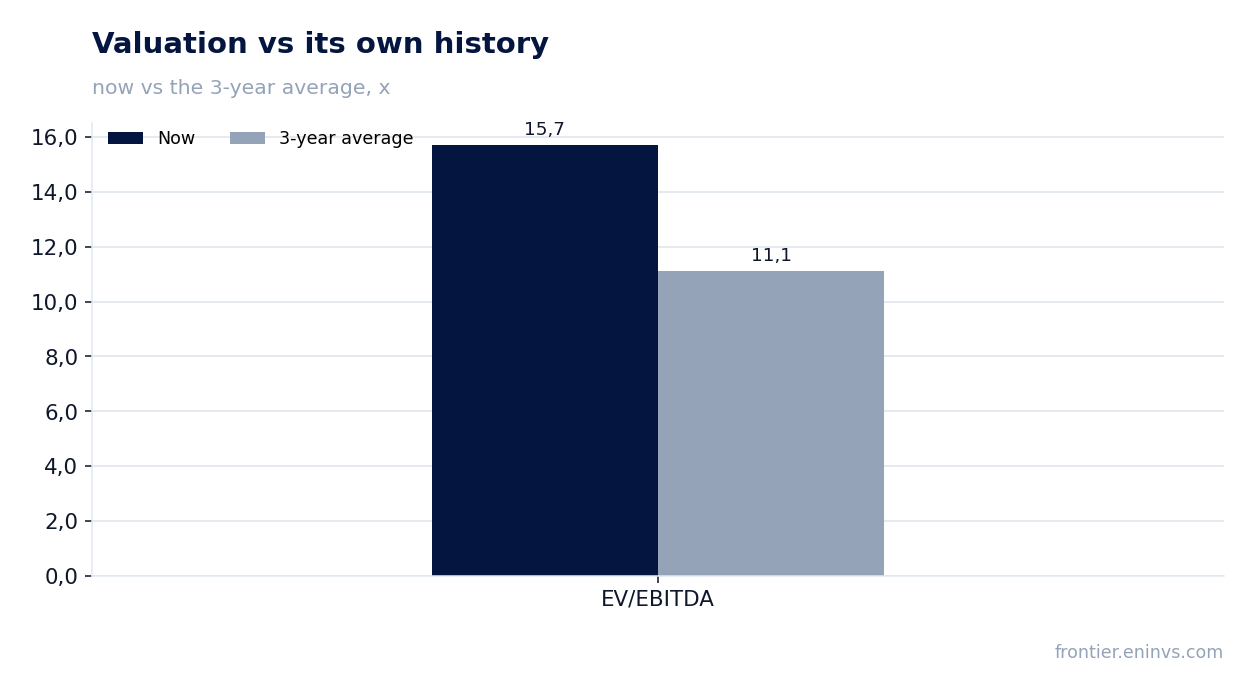
— Valuation: EV/EBITDA of 15.7 vs. three-year average of 11.1
— Portal's model points to 70% downside
Attractiveness
Key figures, USD bn
| Metric | Q2 2025 | Q2 2026 | Change |
|---|---|---|---|
| Revenue | 12.8 | 24.0 | +88.3% |
| EBITDA | 0.61 | 1.40 | +128.9% |
| Operating profit | 0.49 | 1.07 | +117.6% |
| Net profit | 0.35 | 0.68 | +91.5% |
| Operating cash flow | -1.07 | -0.58 | — |
| Capex | 0.41 | 0.44 | +9.1% |
| EBITDA margin | 4.8% | 5.8% | +1.0 pp |
| Net margin | 2.8% | 2.8% | +0.0 pp |
Revenue doubled thanks to Viterra consolidation, but organic growth slowed
In Q2 2026, Bunge Global's revenue reached $24,041 million, up 88.3% year-on-year. The main driver was the consolidation of Viterra assets, which expanded geography and grain trading volumes: soybean processing volumes rose from 9.3 to 11.5 million tons, and soybean merchandising volumes from 4.1 to 8.0 million tons.
However, organic growth slowed: in Q1 2026 revenue grew 87.8% year-on-year, but in Q2 the pace was 88.3% – virtually no acceleration. Excluding Viterra, growth would have been much more modest, as seen in the soybean processing segment: revenue rose from $7,750 million to $12,071 million, but this is largely due to capacity expansion and consolidation.
EBITDA rose 128.9% driven by soybean and softseed processing
EBITDA in Q2 2026 reached $1,331 million versus $610 million a year earlier, up 128.9%. The main contributors were the soybean processing segment (EBIT rose from $460 million to $804 million) and softseed processing (from $19 million to $273 million). The company attributes this to improved market conditions and strong execution in North and South America.
EBITDA margin increased from 4.8% to 5.8%, reflecting operating leverage after the deal. However, part of the growth is related to favorable price conditions and one-off factors, including positive foreign exchange gains in the softseed segment.
Net profit grew 91.5%, but adjusted EPS was only $2.00
Net profit in Q2 2026 was $678 million versus $354 million a year earlier, up 91.5%. However, GAAP profit includes significant items: mark-to-market adjustments of $437 million (negative impact) and certain gains and charges of $42 million. Excluding these, adjusted EPS would have been $2.00 versus $1.31 a year earlier.
The gap between GAAP and adjusted profit shows that part of the reported profit is temporary and may reverse in subsequent periods. The company raised its full-year 2026 adjusted EPS outlook to $9.25–$9.75, indicating management's confidence in sustainable results.
Leverage remains high: net debt / EBITDA at 5.99
As of the end of Q2 2026, Bunge Global's net debt stood at $14,692 million, corresponding to 5.99 times trailing twelve-month EBITDA. This is a high level for an agribusiness company, especially given commodity market volatility.
Over the past twelve months, net debt increased by $9.6 billion, reflecting financing of the Viterra deal and capital expenditures. Operating cash flow over the last twelve months was only $844 million, insufficient to service debt, and the company relies on refinancing and asset sales.
Dividend yield of 2.3% is below historical, but payments continue
Over the last twelve months, Bunge Global paid dividends totaling $275 million, corresponding to a yield of 2.3% at the current price. This is below the average yield of recent years, reflecting the rise in market capitalization after the deal and limited free cash flow.
The company continues payments, but with operating cash flow of $844 million over twelve months and capital expenditures of about $1.5–$1.7 billion per year, dividends are financed by debt. In 2026, the company repurchased shares for $250 million, completing the program related to the Viterra deal, which also limits the ability to increase dividends.
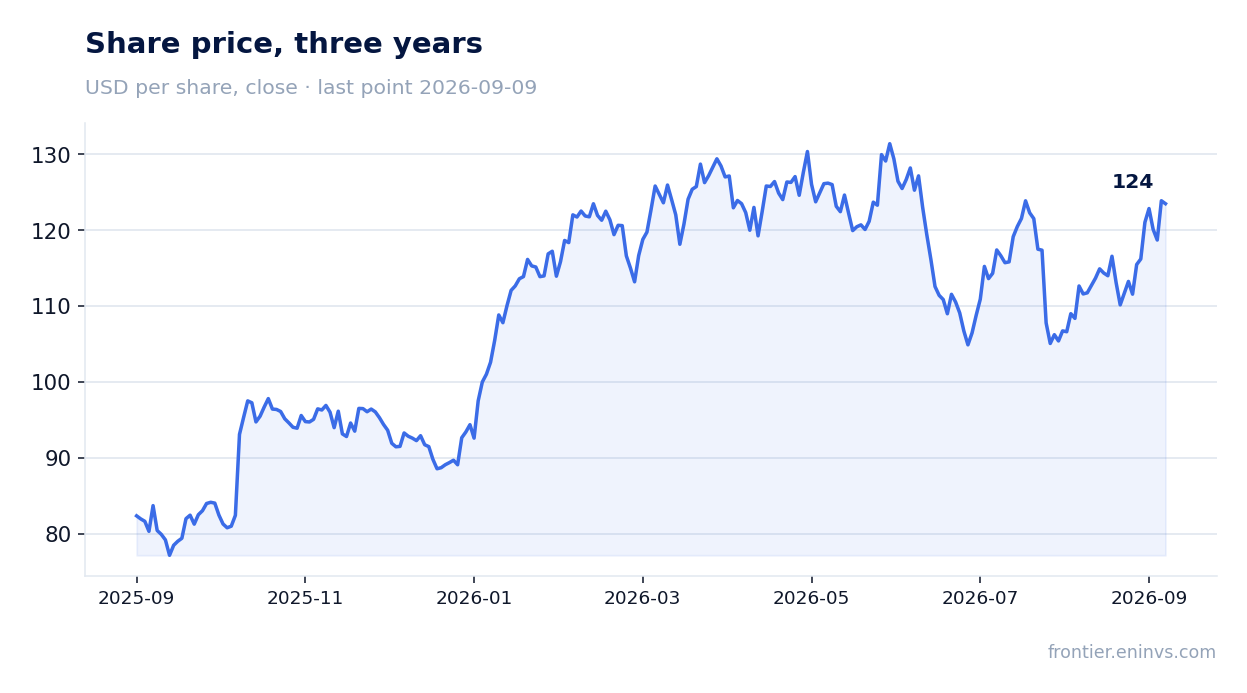
Valuation: EV/EBITDA of 15.7 vs. three-year average of 11.1
The current EV/EBITDA multiple is 15.7, significantly above the three-year average of 11.1. P/E LTM is 23.7, which also looks stretched for a company with a net margin of 2.8%.
The growth in revenue and EBITDA after the Viterra deal justifies part of the premium, but the market has already priced in significant expectations. If commodity market conditions deteriorate, multiples could compress quickly.
Portal's model points to 70% downside
According to the portal's model, which re-prices EBITDA at current commodity prices and applies a target EV/EBITDA, the fair value of the share is 70% below the current market capitalization. This means the market is paying for future growth that may not materialize.
The model is not a market consensus and reflects the portal's own calculation. Nevertheless, it signals that the current price implies high expectations for profit growth that may not be justified.
Valuation on the latest reported figures
| Metric | Value |
|---|---|
| Market cap | 23.9 bn USD |
| P/E (LTM) | 23.7 |
| EV/EBITDA (LTM) | 15.7 |
| P/B | 1.50 |
| Net debt / EBITDA (LTM) | 5.99 |
| Operating cash flow (LTM) | 0.84 bn |
| ROE | 17.0% |
| Dividend yield (12m) | 2.3% |
| EV/EBITDA, 3-year average | 11.1 |
Bottom line
In Q2, Bunge Global showed strong revenue and EBITDA growth thanks to Viterra consolidation and favorable oilseed market conditions. However, adjusted profit is significantly below reported, and leverage remains high. At the current valuation – EV/EBITDA of 15.7 versus a three-year average of 11.1 – the stock looks overvalued, and the portal's model points to 70% downside. Verdict – unattractive: a positive scenario would require sustained margin improvement and debt reduction, which are not yet visible.
Open the company's financial profile BG →
See also: market overview · valuation map · stock screeners