BHP Group: double-digit revenue and EBITDA growth, but net profit falls on one-offs
On August 25, BHP Group reported results for the second quarter of fiscal 2026. Revenue rose 18.3% year on year to $30,858 million, EBITDA grew 25.9% to $16,655 million, but net profit fell 8.9% to $4,193 million. Given the strong operating performance and low leverage, the share looks attractive, especially with a dividend yield of 3.7%.
Key takeaways
— Revenue rose 18.3% to $30,858 million, driven by strong commodity prices
— EBITDA margin expanded to 54.0% from 50.7% a year earlier, lifting EBITDA by 25.9%
— Net profit fell 8.9% to $4,193 million despite a 29.4% increase in operating profit
— Operating cash flow reached $12,406 million, funding capex of $4,994 million and reducing debt
— Net debt fell to $4,649 million, or 0.43 times trailing EBITDA
— Dividend yield of 3.7% looks attractive given strong cash generation
— The portal's model implies +3% upside to the current price
Attractiveness
Key figures, USD bn
| Metric | Q2 2025 | Q2 2026 | Change |
|---|---|---|---|
| Revenue | 26.1 | 30.9 | +18.3% |
| EBITDA | 13.2 | 16.7 | +25.9% |
| Operating profit | 10.3 | 13.4 | +29.4% |
| Net profit | 4.60 | 4.19 | -8.9% |
| Operating cash flow | 10.4 | 12.4 | +19.6% |
| Capex | 4.42 | 4.99 | +13.1% |
| EBITDA margin | 50.7% | 54.0% | +3.3 pp |
| Net margin | 17.6% | 13.6% | -4.0 pp |
Revenue rose 18.3% to $30,858 million, driven by strong commodity prices
In the second quarter of fiscal 2026, BHP Group's revenue reached $30,858 million, up 18.3% from the same quarter a year earlier. Growth accelerated compared with previous quarters: in the fourth quarter of fiscal 2025, revenue rose 10.8% year on year, while in the second quarter of fiscal 2025 it fell 8.2%.
The main driver was strong commodity prices, particularly for iron ore and copper. Production volumes remained stable, allowing the company to fully capture the price effect.
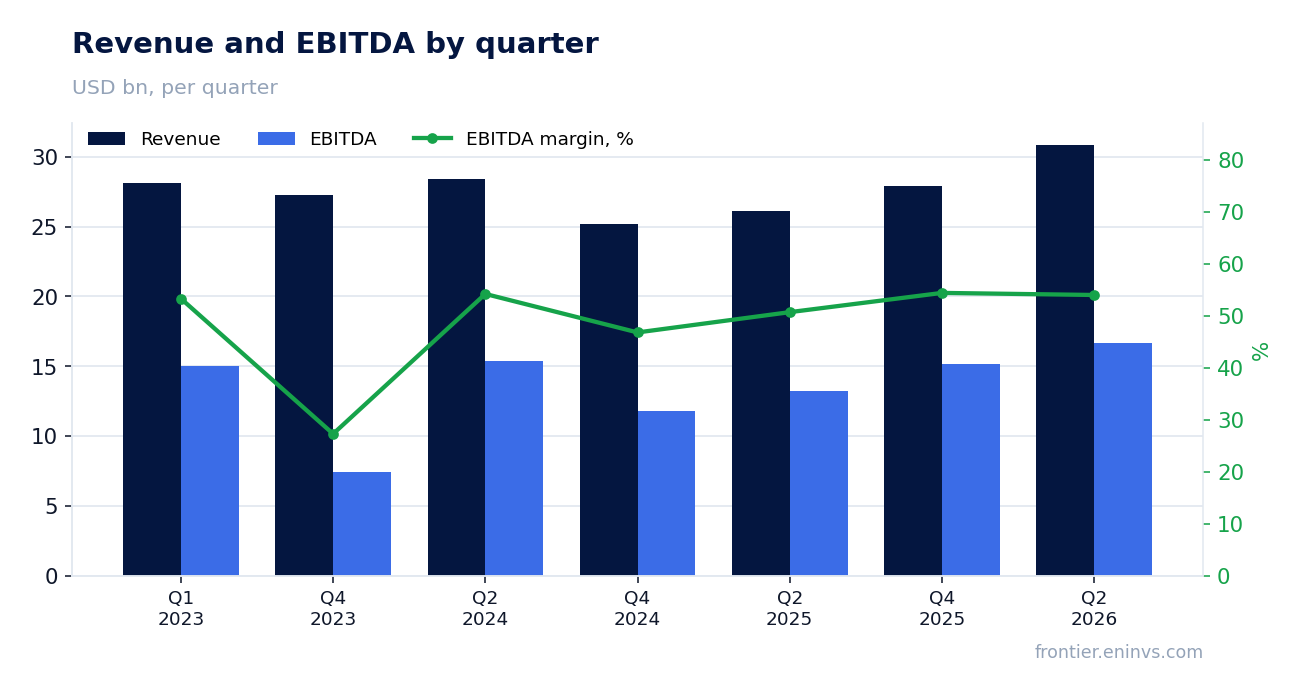
EBITDA margin expanded to 54.0% from 50.7% a year earlier, lifting EBITDA by 25.9%
EBITDA for the reported quarter rose 25.9% year on year to $16,655 million. The EBITDA margin reached 54.0% versus 50.7% in the second quarter of fiscal 2025. The margin expansion reflects operating leverage: with revenue up 18.3%, costs grew more slowly, typical for mining companies with a high share of fixed costs.
The improvement in margins also stems from favourable pricing and cost control. As a result, EBITDA grew faster than revenue, boosting cash flow.
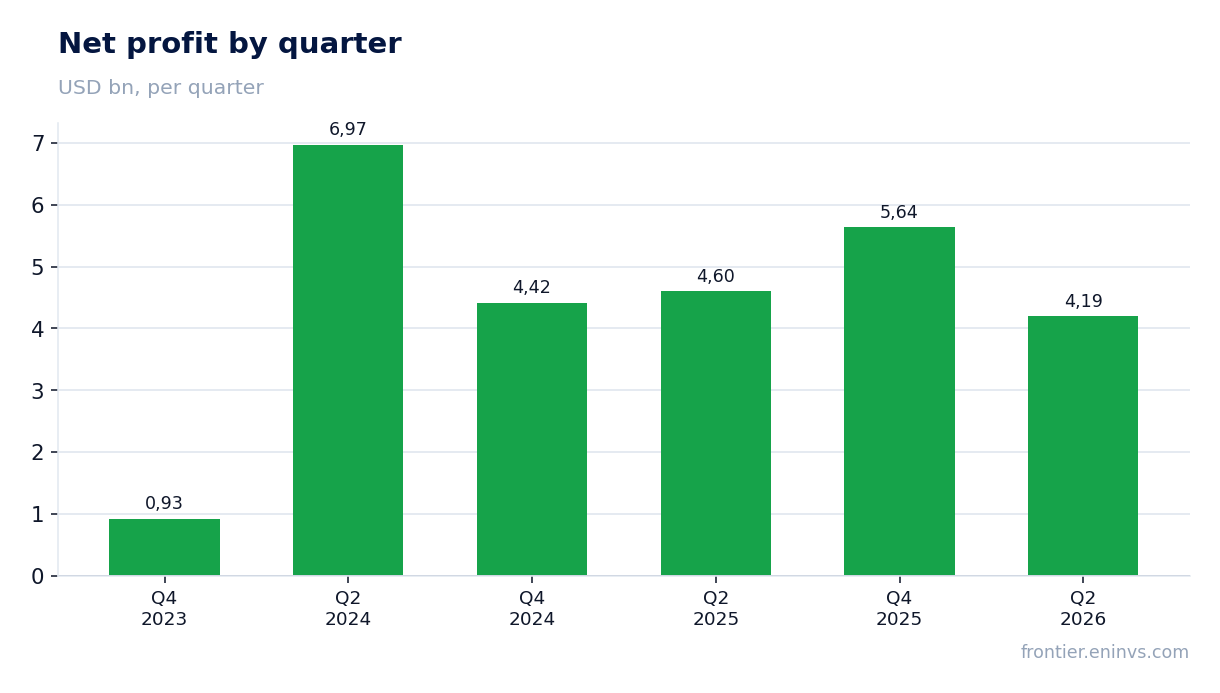
Net profit fell 8.9% to $4,193 million despite a 29.4% increase in operating profit
Operating profit in the second quarter of fiscal 2026 rose 29.4% year on year to $13,374 million, reflecting strong operational performance. However, net profit came in at $4,193 million, down 8.9% from the same quarter a year earlier.
The gap between operating and net profit is due to one-off items, likely including asset impairments or tax effects. The net margin contracted to 13.6% from 17.6% a year earlier, indicating a significant impact of these factors on the bottom line.
Operating cash flow reached $12,406 million, funding capex of $4,994 million and reducing debt
Operating cash flow for the quarter was $12,406 million, up 19.6% from $10,375 million a year earlier. Capital expenditure stood at $4,994 million, roughly 30% of EBITDA. Free cash flow after capex – about $7,412 million – funded dividends and reduced debt.
Over the last twelve months, operating cash flow reached $18,700 million, confirming the company's ability to generate sustainable cash flow even amid volatile commodity prices.
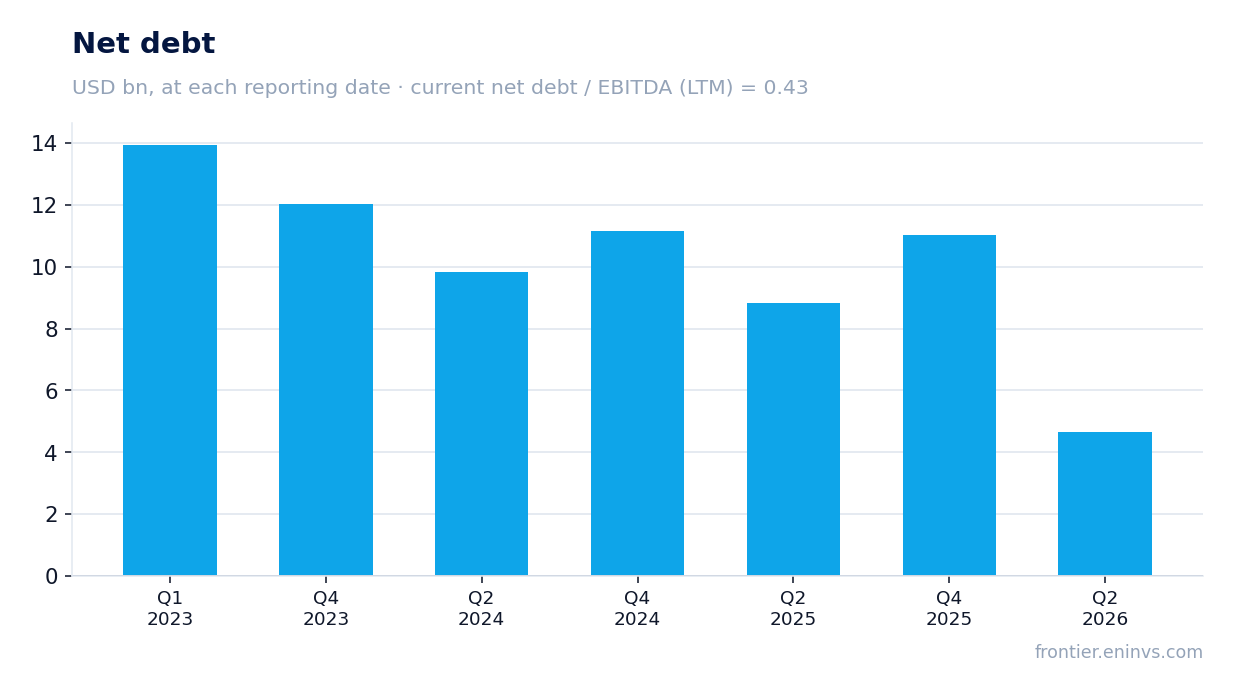
Net debt fell to $4,649 million, or 0.43 times trailing EBITDA
At the end of the reported quarter, BHP Group's net debt stood at $4,649 million, down $8.0 billion from the previous reporting date. Over the last twelve months, debt decreased by $4.2 billion. The net debt / EBITDA ratio for the last twelve months is 0.43, a low level for a mining company.
The debt reduction was driven by strong operating cash flow and moderate capital expenditure. The low leverage gives the company financial flexibility to sustain dividends and pursue potential acquisitions.
Dividend yield of 3.7% looks attractive given strong cash generation
Over the last twelve months, BHP Group paid dividends yielding 3.7% at the current price. The company follows a progressive dividend policy, paying out at least 50% of underlying profit. Given the current free cash flow and low debt, payments look sustainable.
We expect the dividend for the current fiscal year to be around 3.7% at the current price, consistent with the company's historical practice. The key risk to dividends is a decline in commodity prices, which could reduce profit and cash flow.
The portal's model implies +3% upside to the current price
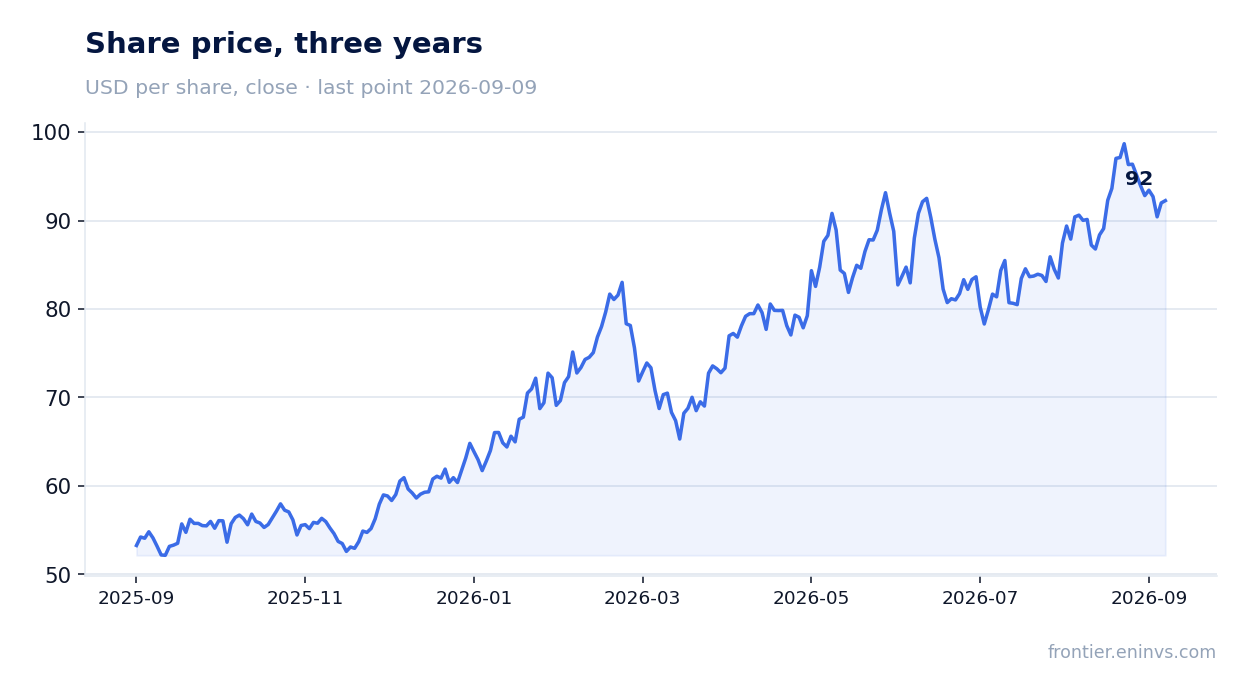
Our portal's model, which re-prices EBITDA at current commodity prices and applies a target EV/EBITDA, suggests the share trades 3% below fair value. This is moderate upside, complemented by a dividend yield of 3.7%.
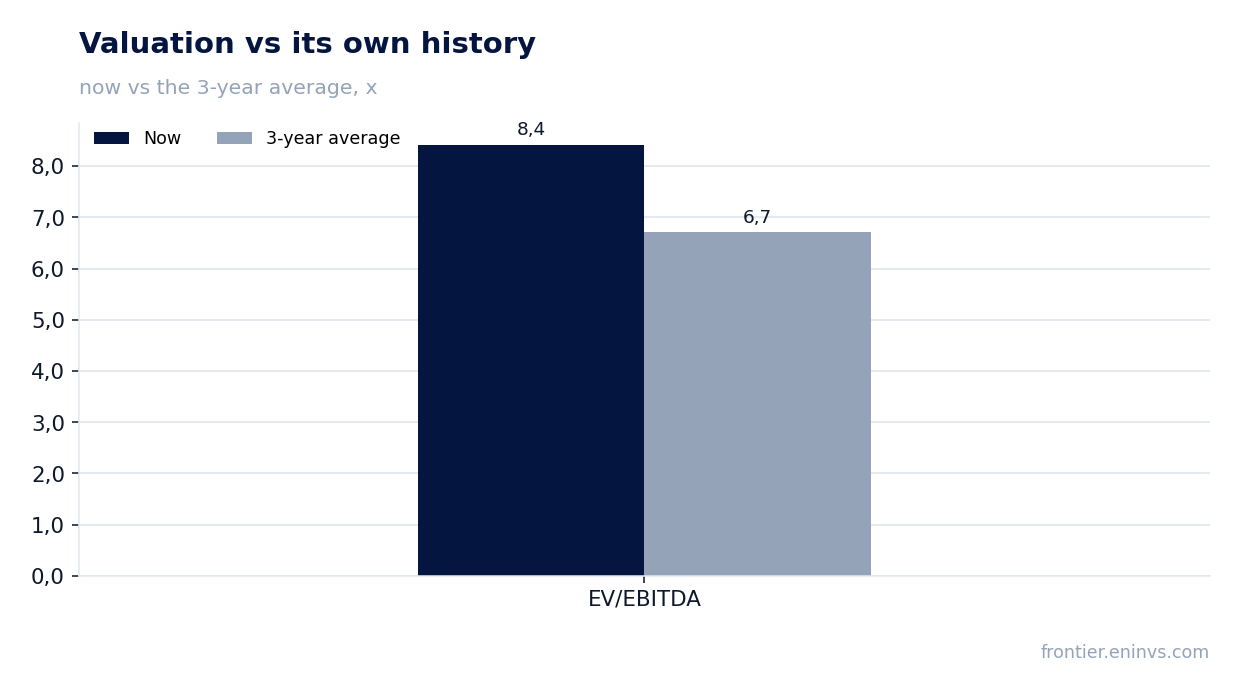
The current EV/EBITDA multiple is 8.42, above the three-year average of 6.71. This suggests the market has already priced in improved operating performance, but not fully.
Valuation on the latest reported figures
| Metric | Value |
|---|---|
| Market cap | 235 bn USD |
| P/E (LTM) | 21.9 |
| EV/EBITDA (LTM) | 8.4 |
| P/B | 4.92 |
| Net debt / EBITDA (LTM) | 0.43 |
| Operating cash flow (LTM) | 18.7 bn |
| ROE | 30.0% |
| Dividend yield (12m) | 3.7% |
| EV/EBITDA, 3-year average | 6.7 |
Bottom line
BHP Group reported strong revenue and EBITDA growth for the second quarter of fiscal 2026, margin expansion, and a significant reduction in debt. Net profit fell due to one-off items, but operating cash flow remains strong, supporting dividends and investment. The share trades at an EV/EBITDA of 8.42, above the three-year average, but the portal's model shows modest upside. The verdict is 'attractive': the combination of low debt, growing cash flow, and a dividend yield of 3.7% makes the stock interesting for long-term investors, although the potential for price appreciation is limited.
Open the company's financial profile BHP →
See also: market overview · valuation map · stock screeners