Cleveland-Cliffs: loss cut threefold, but debt still 27.6x LTM EBITDA

On 23 July Cleveland-Cliffs reported second-quarter 2026 results. Revenue rose 5.9% year on year to $5,226 million, adjusted EBITDA came in at $286 million against $94 million a year earlier, and the net loss narrowed to $145 million from $486 million. The company returned to positive operating cash flow of $230 million and guided third-quarter EBITDA to approximately $575 million. Yet net debt of $7,880 million equals 27.6x trailing-twelve-month EBITDA, and EV/EBITDA LTM stands at 51.7 – the stock looks unattractive at the current price until leverage starts to fall faster.
Key takeaways
— Revenue rose 5.9% year on year, but price rather than volume supported it
— Q2 EBITDA tripled, and half the gain came from one-off items
— Operating cash flow returned to positive, but capital expenditure absorbs almost the entire inflow
— Net debt of $7,880 million equals 27.6x LTM EBITDA – the main risk for a shareholder
— The company guides Q3 EBITDA to about $575 million and debt reduction by mid-2027
— EV/EBITDA LTM of 51.7 leaves no room for error in the forecast
Attractiveness
Key figures, USD bn
| Metric | Q2 2025 | Q2 2026 | Change |
|---|---|---|---|
| Revenue | 4.93 | 5.23 | +5.9% |
| EBITDA | -0.10 | 0.21 | to profit |
| Operating profit | -0.50 | -0.05 | — |
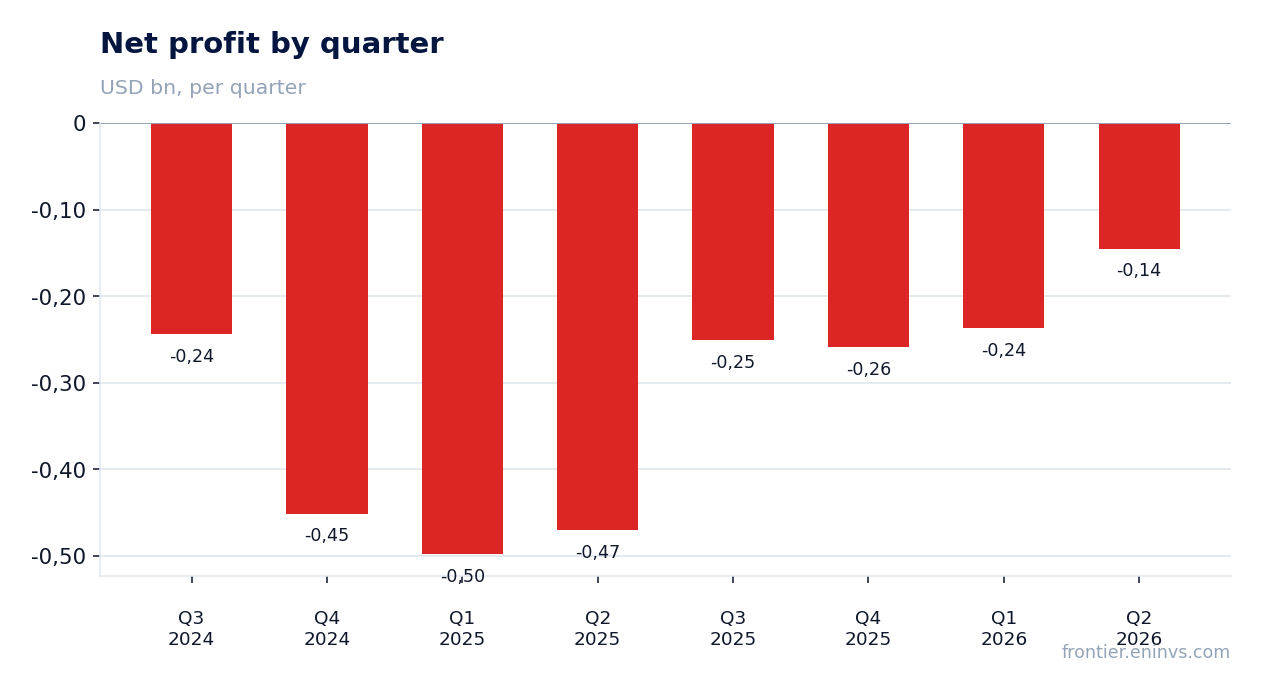
| Net profit | -0.47 | -0.14 | — |
| Operating cash flow | 0.04 | 0.23 | +411.1% |
| Capex | 0.11 | 0.16 | +40.2% |
| EBITDA margin | -2.1% | 4.1% | +6.2 pp |
| Net margin | -9.5% | -2.8% | +6.7 pp |
Revenue rose 5.9% year on year, but price rather than volume supported it
In the second quarter of 2026 Cleveland-Cliffs revenue reached $5,226 million, up 5.9% year on year. Growth accelerated from 6.3% in the first quarter – both quarters show positive dynamics after a decline at the end of 2025.
Price was the main driver. The average selling price of steel rose to $1,124 per net ton from $1,015 a year earlier. At the same time shipments fell to 4,025 thousand net tons from 4,290 thousand, meaning the company sold less metal but at a higher price.
The sales mix remains skewed towards distributors and converters – 33% of revenue, or $1.6 billion. Direct automotive sales accounted for 29%, infrastructure and manufacturing for 28%, and other steel producers for 10%. This diversification reduces dependence on a single channel, but not on the market price of steel.
Q2 EBITDA tripled, and half the gain came from one-off items
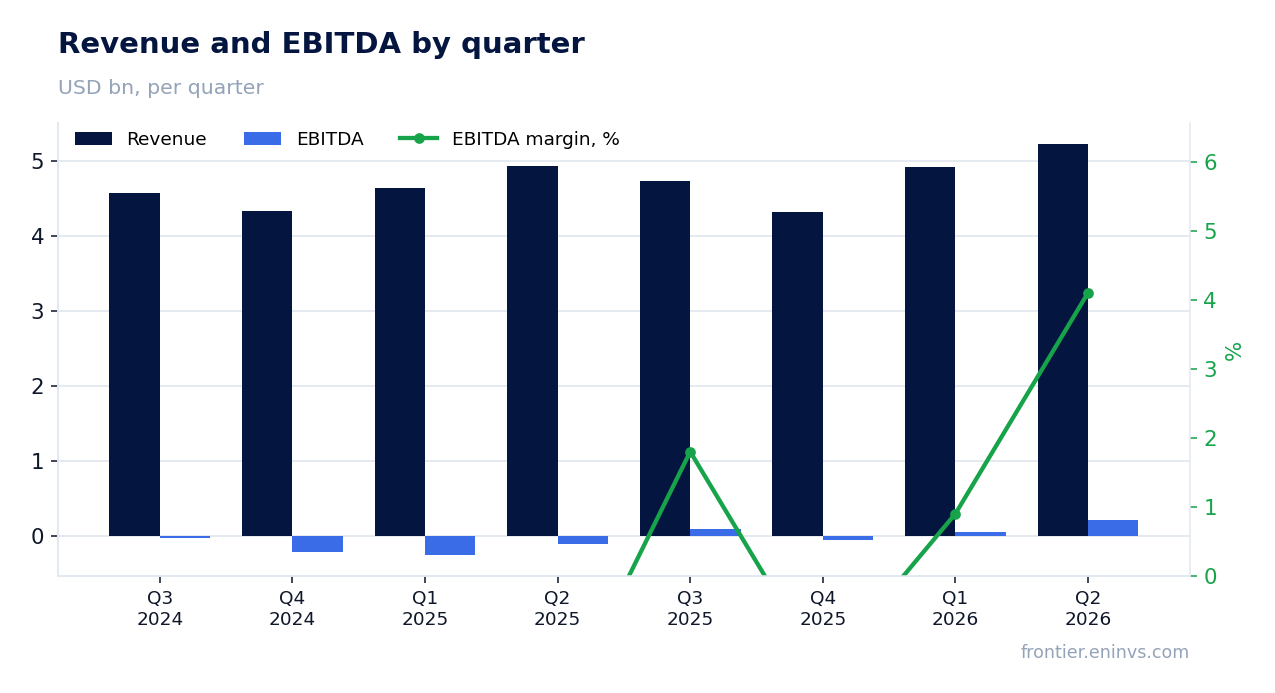
Adjusted EBITDA in the second quarter was $286 million against $94 million a year earlier. The threefold increase resulted from both better prices and reduced downtime: in April and May the company carried out scheduled maintenance that weighed on first-quarter results.
However, part of the gain came from one-off items. The report lists idled facilities credits of $5 million, currency exchange losses of $19 million, changes in fair value of derivatives of $12 million, and a loss on disposal of assets of $2 million. Without these adjustments EBITDA would have been lower.
The EBITDA margin in the second quarter was 4.1% against negative 2.1% a year earlier. This is still a low level for a steel company, but the move from negative to positive territory is an important step. The net margin improved to minus 2.8% from minus 9.5%.
Operating cash flow returned to positive, but capital expenditure absorbs almost the entire inflow
In the second quarter operating cash flow was $230 million against $45 million a year earlier. This is the first positive figure after negative values in the first quarter of 2026 and the fourth quarter of 2025. The improvement is due to higher revenue and working capital release: inventories fell by $55 million and accounts payable rose by $236 million.
Capital expenditure for the quarter was $157 million, up $45 million from a year earlier. Free cash flow therefore remains positive but small – about $73 million. The company maintained its full-year 2026 capex guidance at approximately $700 million.
For the first half of 2026 operating cash flow is still negative – minus $95 million, although a year earlier it was minus $306 million. To fully restore cash generation the company needs to keep EBITDA above $500 million per quarter, which corresponds to its third-quarter guidance.
Net debt of $7,880 million equals 27.6x LTM EBITDA – the main risk for a shareholder
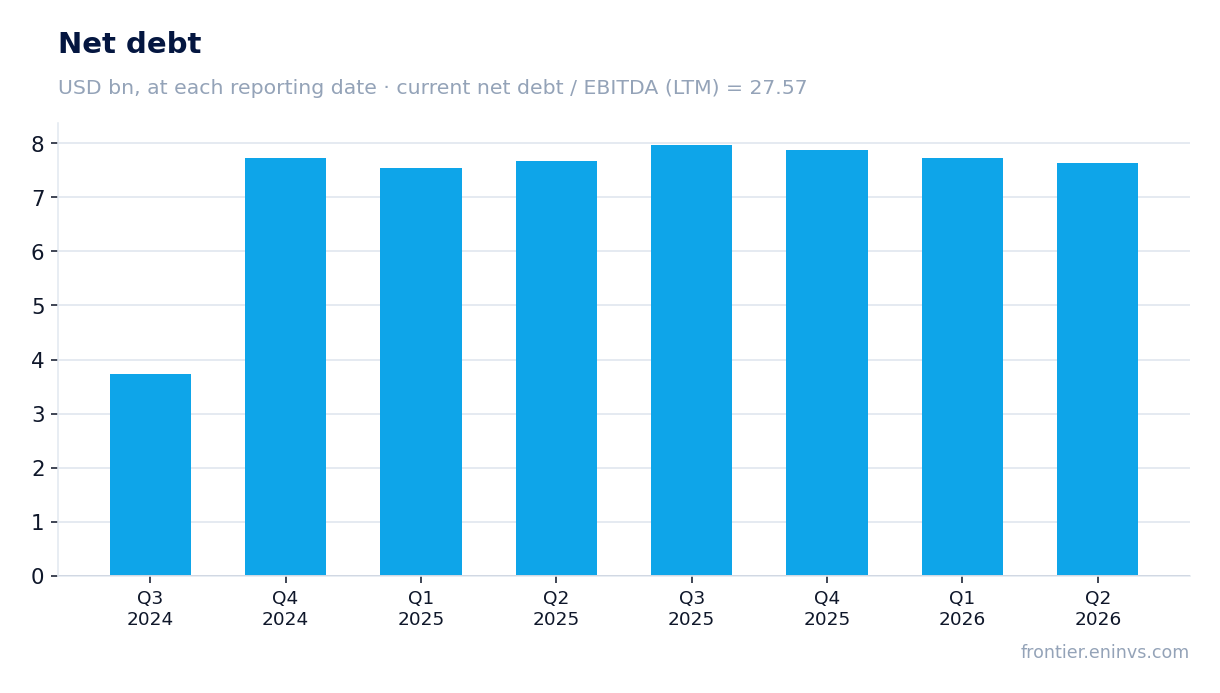
Net debt at the end of the second quarter was $7,880 million, virtually unchanged over the quarter. The ratio of net debt to trailing-twelve-month EBITDA is 27.6. This is a very high level, reflecting weak earnings over the past year rather than debt growth: the absolute amount of liabilities is stable.
Total debt on the balance sheet is $7,703 million, a significant portion of which is secured notes. Interest expense for the quarter was $156 million, comparable to annual EBITDA. Debt servicing remains a heavy burden.
The company targets reducing the debt-to-EBITDA ratio to below 2.5x by mid-2027. To achieve this, trailing-twelve-month EBITDA must rise to approximately $3.2 billion, more than a tenfold increase. This is an ambitious goal, but management has reaffirmed it for the second consecutive quarter.
The company guides Q3 EBITDA to about $575 million and debt reduction by mid-2027
In the report the company guided third-quarter 2026 adjusted EBITDA to approximately $575 million. This is more than double the second-quarter result and six times the first-quarter figure. CEO Lourenco Goncalves noted that demand continues to improve, imports remain subdued, and lead times are extending.
The company also reaffirmed its full-year 2026 guidance: steel shipments of 16.5–17.0 million net tons, capital expenditures of approximately $700 million, SG&A of approximately $575 million, depreciation of approximately $1.1 billion, and pension payments of approximately $125 million. These figures are unchanged from the previous quarter.
Goncalves stated that the second half should be the strongest since 2021, with fourth-quarter EBITDA expected to exceed the third-quarter guidance. If these expectations materialise, annual EBITDA could reach $1.5–2.0 billion, which would reduce leverage but still leave it above 4x.
EV/EBITDA LTM of 51.7 leaves no room for error in the forecast
Enterprise value to trailing-twelve-month EBITDA stands at 51.7. This is an extremely high multiple, reflecting the low EBITDA base over the past year. For comparison, Cleveland-Cliffs historically traded in the 5–10x EBITDA range, but the current level is not comparable to past periods due to losses.
Market capitalisation at the time of the report was $6,888 million, less than net debt. This means the market values the company's equity below its liabilities, which is typical for distressed situations in cyclical industries.
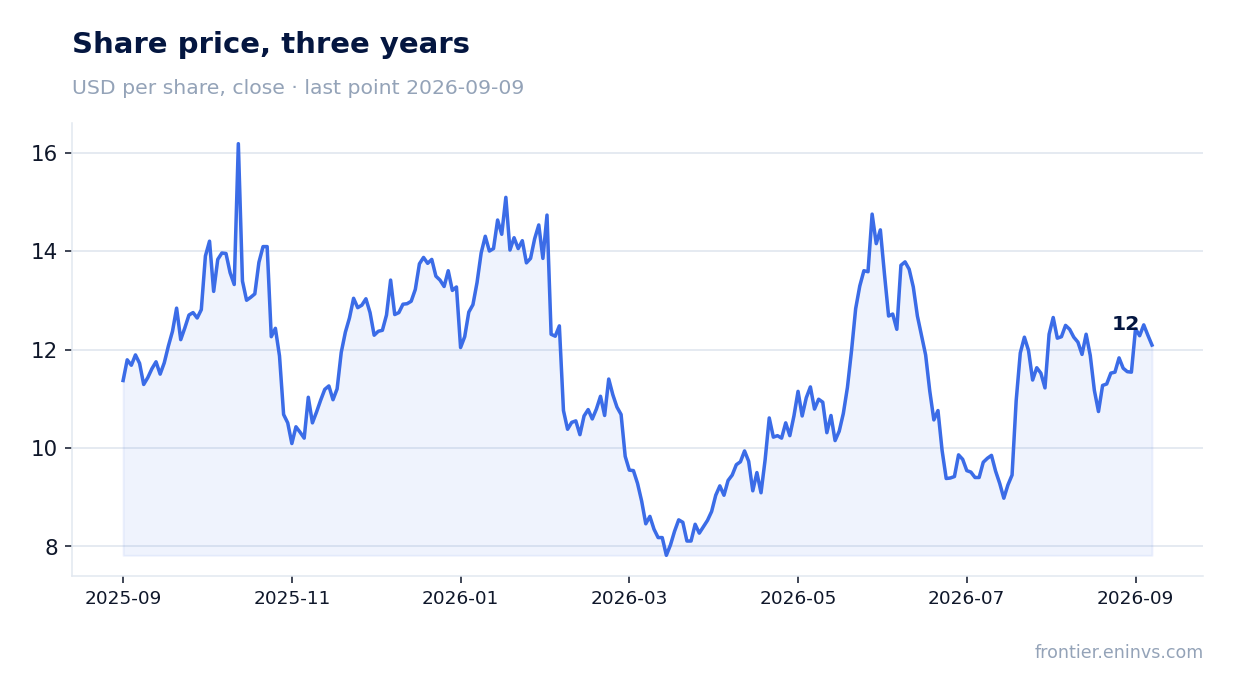
The stock reacted to the report with a 16.0% gain on the publication day and 27.9% from the release to 9 September. The market welcomed the return to positive cash flow and the EBITDA guidance, but the current valuation still prices in a very rapid earnings recovery.
Valuation on the latest reported figures
| Metric | Value |
|---|---|
| Market cap | 6.89 bn USD |
| EV/EBITDA (LTM) | 51.7 |
| P/B | 1.13 |
| Net debt / EBITDA (LTM) | 27.57 |
| Operating cash flow (LTM) | -0.46 bn |
| ROE | -10.2% |
Bottom line
In the second quarter Cleveland-Cliffs showed real progress: revenue rose 5.9%, EBITDA tripled, and operating cash flow returned to positive. However, much of the improvement came from one-off items and price recovery rather than sustainable volume growth. Leverage remains critical: 27.6x trailing EBITDA is a level at which even successful execution of the guidance leaves the company vulnerable. The stock has risen 27.9% since the report, but the current EV/EBITDA of 51.7 leaves no margin for error. For a cautious investor, risk still outweighs potential return.
Open the company's financial profile CLF →
See also: market overview · valuation map · stock screeners