PBF Energy: insurance proceeds and Martinez restart drive profit recovery, but shares have already priced it in

On July 30, PBF Energy reported Q2 2026 results: revenue rose 56.2% YoY to $11,678.3 million, and net income reached $906.4 million versus a loss a year earlier. The key drivers were insurance recoveries for the Martinez refinery fire and the successful restart of the plant in May. At the current price, the shares look attractive: multiples are below historical levels, and the portal's model suggests 113% upside.
Key takeaways
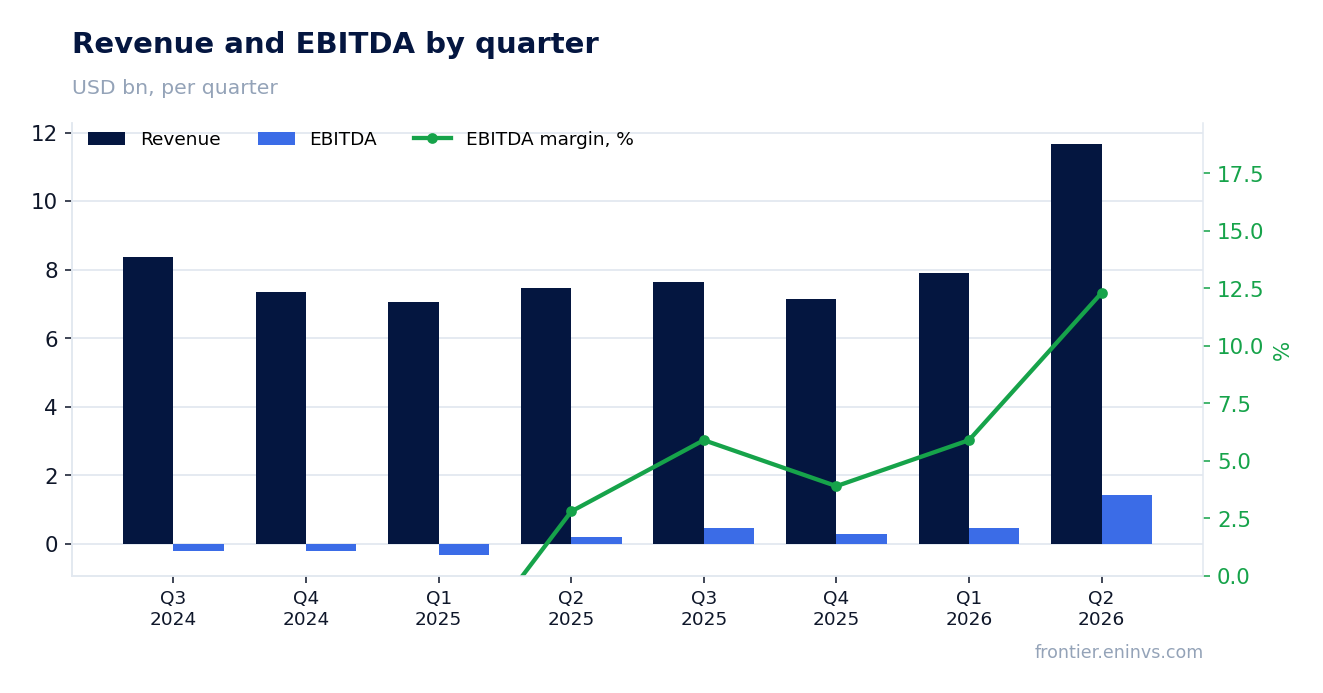
— Q2 revenue grew 56.2% thanks to Martinez restart and strong crack spreads
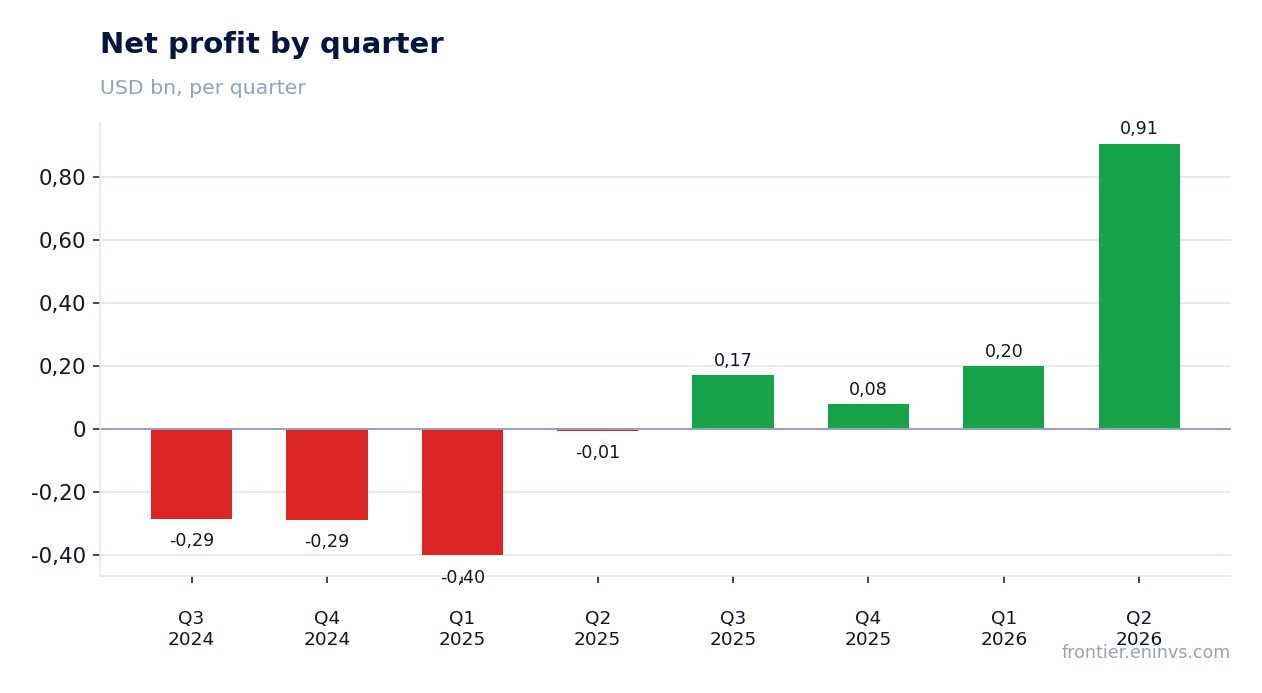
— Net income of $906.4 million includes insurance proceeds, but even without them the result is positive
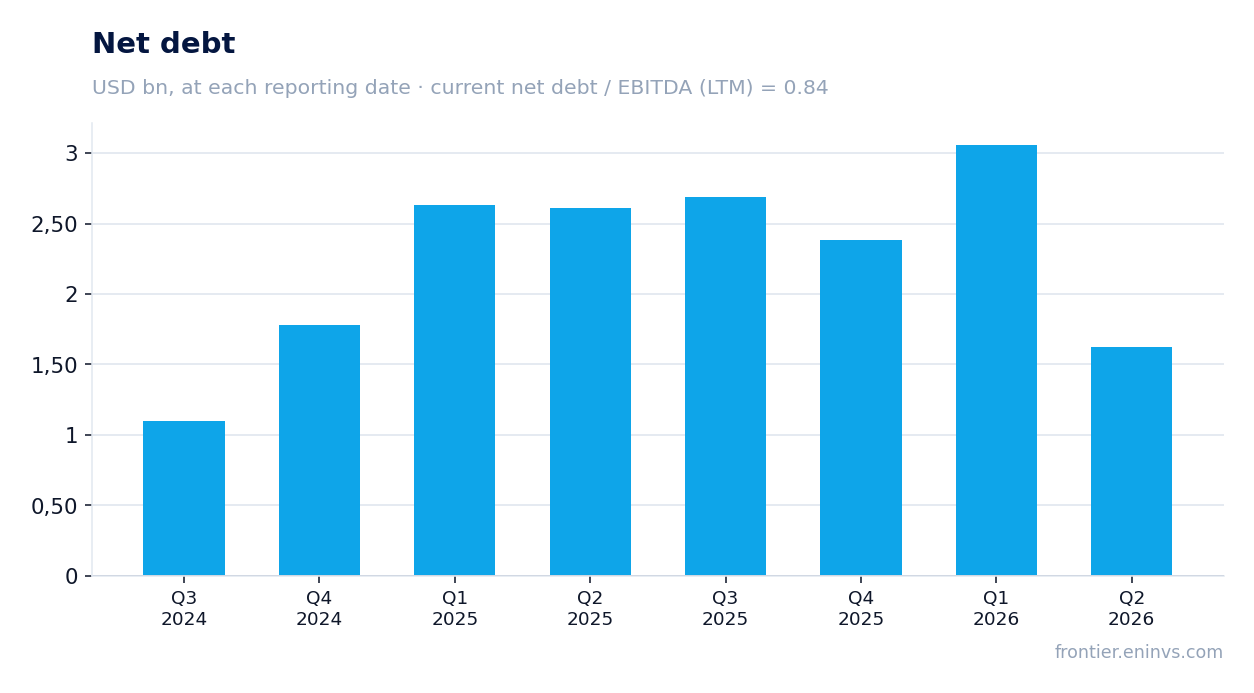
— Debt fell by $1.4 billion in the quarter to $1,620.9 million, driven by bond and ABL repayment
— LTM EBITDA reached $2,825.1 million, implying a low EV/EBITDA of 3.97
— Quarterly operating cash flow was $1,588.8 million, but LTM is negative due to working capital volatility
— 2026 capex guidance cut to $825–875 million, supporting free cash flow
— Dividend maintained at $0.275 per share, yield around 1.4%
Attractiveness
Key figures, USD bn
| Metric | Q2 2025 | Q2 2026 | Change |
|---|---|---|---|
| Revenue | 7.48 | 11.7 | +56.2% |
| EBITDA | 0.21 | 1.43 | +585.3% |
| Operating profit | 0.04 | 1.27 | +2858.4% |
| Net profit | -0.01 | 0.91 | to profit |
| Operating cash flow | 0.19 | 1.59 | +731.4% |
| Capex | 0.16 | 0.13 | -18.6% |
| EBITDA margin | 2.8% | 12.3% | +9.5 pp |
| Net margin | -0.1% | 7.8% | +7.9 pp |
Q2 revenue grew 56.2% thanks to Martinez restart and strong crack spreads
In Q2 2026, PBF Energy's revenue reached $11,678.3 million, up 56.2% YoY. The main driver was the Martinez refinery restart, which returned to full operations in May after a fire in February 2025. The company also benefited from strong crack spreads: for example, the Dated Brent (NYH) 2-1-1 spread rose from $22.24 to $43.48 per barrel YoY.
Throughput in Q2 reached 887.3 thousand barrels per day versus 839.1 thousand a year earlier. Higher utilization and margins drove EBITDA up nearly threefold to $1,434.3 million from $209.3 million in Q2 2025.
Net income of $906.4 million includes insurance proceeds, but even without them the result is positive
Net income attributable to PBF Energy shareholders in Q2 was $906.4 million versus a loss of $5.2 million a year earlier. The results include insurance recoveries of $250.0 million related to the Martinez fire, as well as expenses for the plant restoration and the Refinery Business Improvement (RBI) program. Excluding special items, adjusted net income was $753.1 million, or $6.22 per share.
Thus, even without insurance proceeds, the company is profitable, confirming the strength of its operations. However, investors should remember that part of the profit is one-off and will not repeat in coming quarters.
Debt fell by $1.4 billion in the quarter to $1,620.9 million, driven by bond and ABL repayment
At the end of Q2, PBF Energy's net debt stood at $1,620.9 million, down $1.4 billion from the previous reporting date. The company fully repaid its asset-backed lending (ABL) facility and repurchased part of its senior notes due 2028 for about $802 million, partially funded by issuing $500 million of new senior notes due 2034.
The debt reduction strengthened the balance sheet: net debt/EBITDA for the last twelve months is 0.84. This is a moderate level for a refiner, especially given the industry's volatility.
LTM EBITDA reached $2,825.1 million, implying a low EV/EBITDA of 3.97
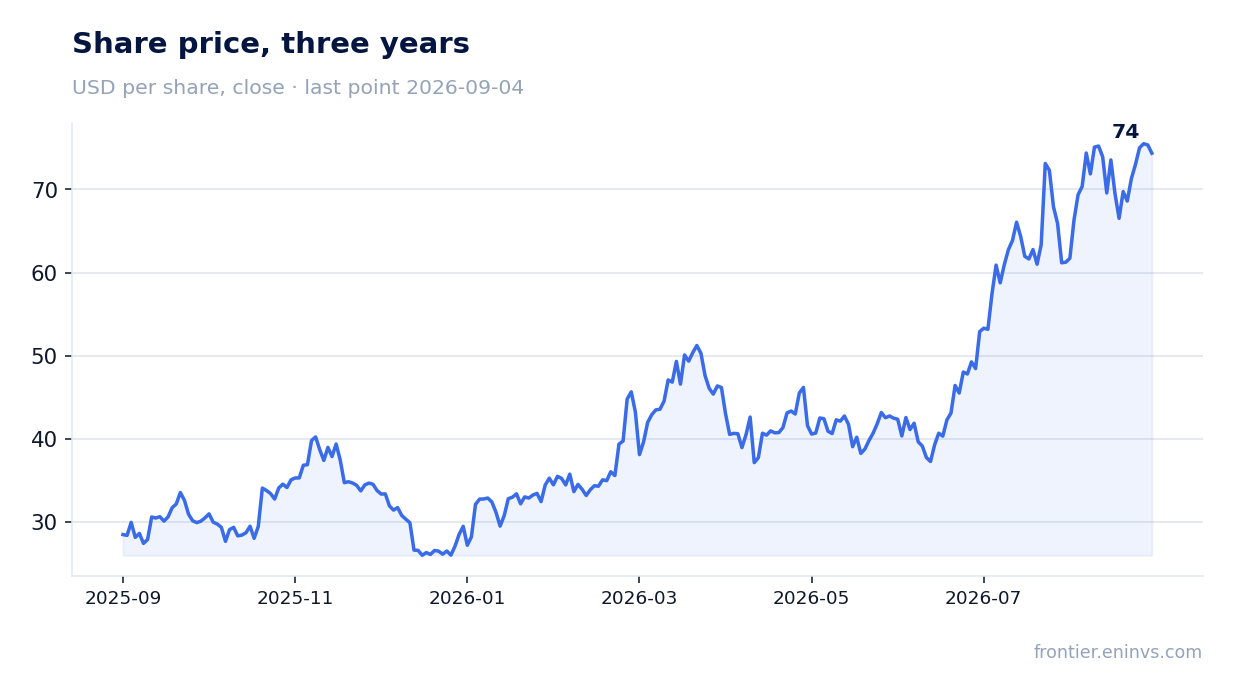
For the last twelve months (LTM), PBF Energy's EBITDA was $2,825.1 million. With a market cap of $8,841.6 million and net debt of $1,620.9 million, EV/EBITDA is 3.97. This is notably below the average for independent refiners and suggests the shares are undervalued.
LTM P/E is 6.53, also indicating a cheap valuation. According to the portal's model, repricing EBITDA at current commodity prices and target EV/EBITDA implies upside potential of +113%.
Quarterly operating cash flow was $1,588.8 million, but LTM is negative due to working capital volatility
In Q2 2026, PBF Energy's operating cash flow was $1,588.8 million – a record level, driven by high profits and working capital release. However, for the last twelve months, operating cash flow is negative: minus $78.0 million. This is due to sharp fluctuations in oil prices and inventories, which required significant investments in previous quarters.
Investors should look at cash flow over a full cycle, not a single quarter. The company confirms that working capital volatility is normal for refining, and its balance sheet is strong enough to withstand it.
2026 capex guidance cut to $825–875 million, supporting free cash flow
PBF Energy lowered its 2026 capital expenditure guidance to $825–875 million (excluding Martinez rebuild costs, which are covered by insurance). Previously, five major turnarounds were planned, but the company deferred some to 2027, reducing cash outflows this year.
Lower capex, combined with strong operating cash flow in Q2, will allow the company to generate free cash flow and continue reducing debt or returning capital to shareholders.
Dividend maintained at $0.275 per share, yield around 1.4%
The board declared a quarterly dividend of $0.275 per share, payable on August 28, 2026. Over the last twelve months, the dividend yield is 1.44% – a modest level, but the company prioritizes debt repayment and investments in its plants.
For income-focused shareholders, the potential for capital appreciation may be more important, given the low valuation. The company states it will continue returning capital, but primarily through debt reduction.
Valuation on the latest reported figures
| Metric | Value |
|---|---|
| Market cap | 8.84 bn USD |
| P/E (LTM) | 6.5 |
| EV/EBITDA (LTM) | 4.0 |
| P/B | 1.66 |
| Net debt / EBITDA (LTM) | 0.84 |
| Operating cash flow (LTM) | -0.08 bn |
| ROE | 60.8% |
| Dividend yield (12m) | 1.4% |
Bottom line
PBF Energy's Q2 2026 report was strong: revenue and EBITDA grew multifold, the company cut debt by $1.4 billion and brought Martinez back online. However, part of the profit is one-off (insurance proceeds), and LTM operating cash flow remains negative, reminding of business volatility. At the same time, the valuation is low: EV/EBITDA of 3.97 and P/E of 6.53 versus historical levels, and the portal's model suggests 113% upside. If crack spreads remain elevated and the company continues generating free cash flow, the shares look attractive. The key risk is normalization of refining margins.
Open the company's financial profile PBF →
See also: market overview · valuation map · stock screeners