SSR Mining: profit up 8%, but the $1.49bn from the Çöpler sale matters more than the quarter
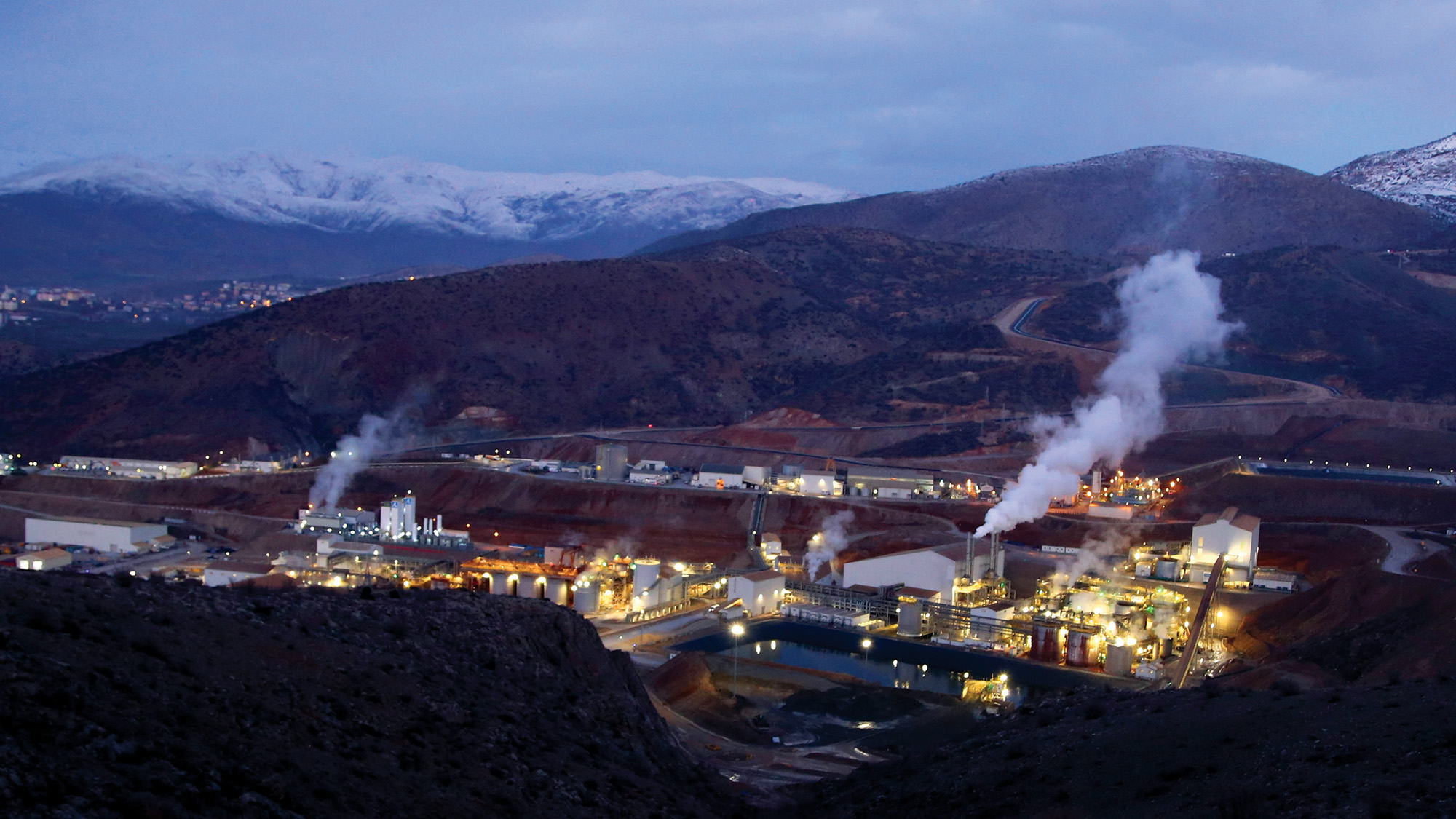
On August 4, SSR Mining reported second-quarter 2026 results. Revenue rose 9.5% year on year to $443.8 million, EBITDA by 60.4% to $224.7 million, and net profit by 8.0% to $97.3 million. The quarter's main event was the June 24 closing of the sale of its 80% stake in the Çöpler mine in Türkiye for $1.49 billion: cash rose to $1.78 billion, debt was eliminated, and the company repurchased 10.4 million shares for $337.8 million. Given the discount to its historical multiple and the buyback programme, the shares look attractive, but earnings sustainability depends on how long gold and silver prices hold up.
Key takeaways
— Revenue grew just 9.5% year on year as gold sales fell 18.7%
— EBITDA jumped 60.4% on higher gold and silver prices, not on volumes
— Net profit rose only 8.0% due to a $44.6 million loss from discontinued operations
— The $1.49 billion Çöpler sale turned the company into a zero-debt producer with $1.78 billion in cash
— Buybacks of $337.8 million in the quarter – nearly 8% of market cap – support the share price
— The $0.03 per share dividend yields a mere 0.08%, but buybacks matter more
— The EV/EBITDA multiple of 6.8x is below its historical average, leaving room for re-rating
Attractiveness
Key figures, USD bn
| Metric | Q2 2025 | Q2 2026 | Change |
|---|---|---|---|
| Revenue | 0.41 | 0.44 | +9.5% |
| EBITDA | 0.14 | 0.22 | +60.4% |
| Operating profit | 0.11 | 0.19 | +77.9% |
| Net profit | 0.09 | 0.10 | +8.0% |
| Operating cash flow | 0.16 | 0.10 | -37.4% |
| Capex | 0.06 | 0.03 | -45.9% |
| EBITDA margin | 33.3% | 48.8% | +15.5 pp |
| Net margin | 22.2% | 21.9% | -0.3 pp |
Revenue grew just 9.5% year on year as gold sales fell 18.7%
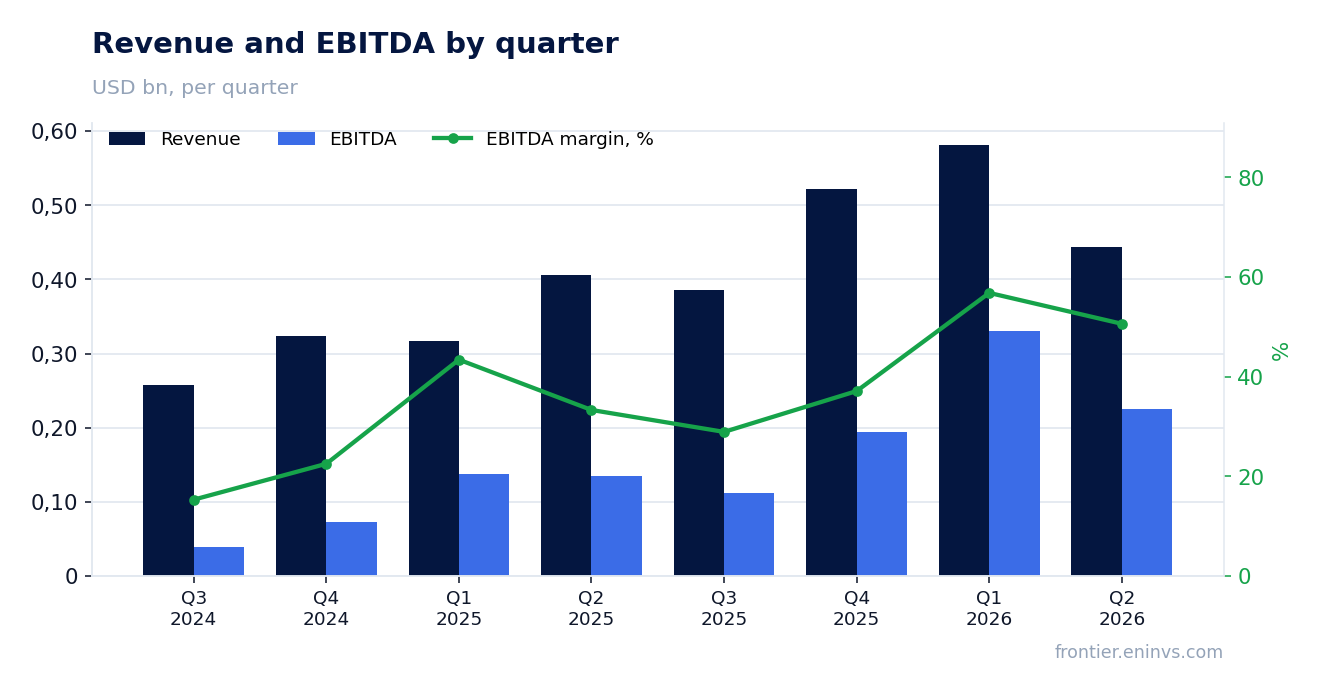
Revenue in the second quarter of 2026 was $443.8 million, up 9.5% year on year. Growth was modest compared to previous quarters: in the first quarter of 2026 revenue rose 83.7%, and in the fourth quarter of 2025 it rose 61.4%. The slowdown is explained by a drop in gold sales: the company sold 73,919 ounces versus 90,739 ounces a year earlier, a decline of 18.7%. Silver sales also fell to 1.5 million ounces from 2.5 million ounces.
The decline in sales volumes was partly offset by higher prices: the average realised gold price rose to $4,301 per ounce from $3,336 a year earlier, and silver to $74.24 per ounce from $35.24. However, this was not enough to sustain double-digit revenue growth. The drop in sales is due to planned production declines at the Marigold and CC&V mines, where gold output fell to 31,059 and 27,725 ounces respectively. The company expects production in the second half to be higher than in the first and reaffirms its full-year guidance of 450,000–535,000 gold equivalent ounces.
EBITDA jumped 60.4% on higher gold and silver prices, not on volumes
EBITDA in the second quarter of 2026 reached $224.7 million, up 60.4% year on year. The EBITDA margin jumped to 48.8% from 33.3% a year earlier. Such margin growth despite lower sales is explained solely by favourable pricing: the average gold price rose 28.9%, silver more than doubled. At the same time, cost of sales per gold equivalent ounce rose to $1,775 from $1,396, and all-in sustaining costs (AISC) to $2,622 from $1,858.
The cost increase is due to inflation and higher stripping volumes, as well as sustaining capital expenditures. Nevertheless, the price factor outweighed cost growth. Importantly, the company raised its growth capital guidance for several mines: Marigold from $48m to $65m, CC&V from $55m to $60m, Seabee from $15m to $35m, and Puna from $18m to $20m. This will increase spending in the second half but is aimed at extending mine lives.
Net profit rose only 8.0% due to a $44.6 million loss from discontinued operations
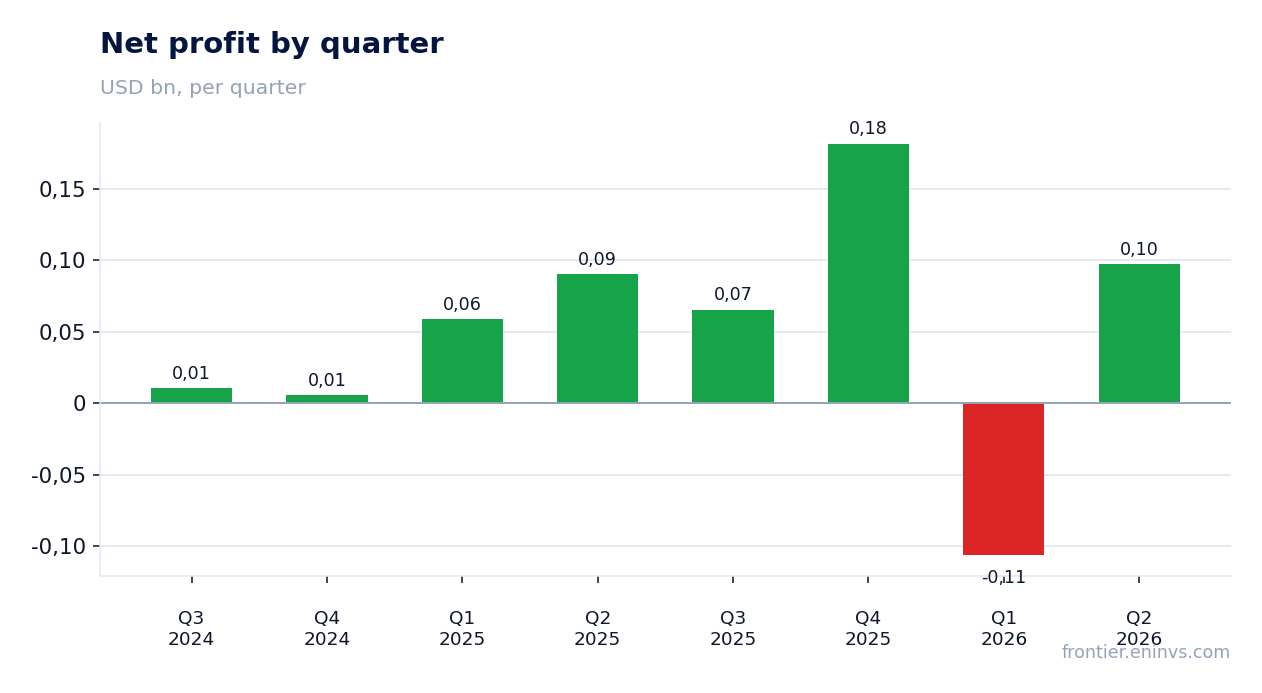
Net profit in the second quarter of 2026 was $97.3 million, up only 8.0% year on year. However, net income from continuing operations reached $137.0 million, up 3.8% from $132.0 million a year earlier. The difference is explained by a $44.6 million loss from discontinued operations related to the Çöpler sale. This loss is one-off and reflects transaction costs and asset revaluation.
The net margin declined to 21.9% from 22.2% a year earlier, as profit growth lagged revenue growth. Operating income rose to $191.7 million from $168.1 million, but net profit was hit by the loss from discontinued operations. In the first half of 2026, the company posted a net loss of $22.7 million due to a large $410.4 million loss from discontinued operations related to the Çöpler sale. This highlights that current profit from continuing operations remains healthy, while one-off write-offs distort the bottom line.
The $1.49 billion Çöpler sale turned the company into a zero-debt producer with $1.78 billion in cash
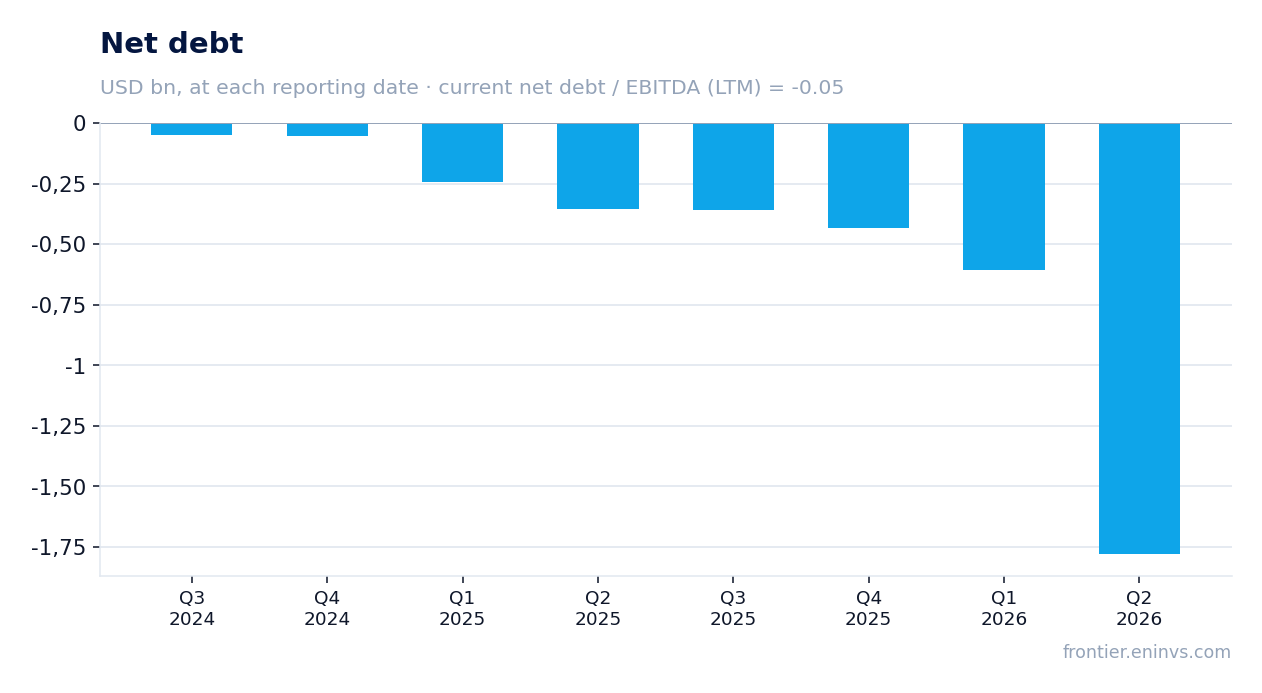
On June 24, 2026, SSR Mining closed the sale of its 80% stake in the Çöpler mine in Türkiye for $1.49 billion in cash. This event dramatically changed the company's financial position: at the end of the second quarter, cash and cash equivalents stood at $1.78 billion, with no long-term debt. Net debt turned negative – the company has a net cash position. This allows it to fund development without external borrowing and return capital to shareholders.
The deal completed the strategic refocus on the Americas: the company now has four operating mines in the USA, Canada, and Argentina. On July 17, 2026, SSR Mining also closed the sale of its 20% stake in the Hod Maden project, receiving an uncapped 4.0% net smelter return royalty. These transactions freed up significant capital, which the company directed to share buybacks and dividends. As a result of the Çöpler sale, the company also recognised a loss from discontinued operations, but the cash flow from the deal strengthened the balance sheet.
Buybacks of $337.8 million in the quarter – nearly 8% of market cap – support the share price
In the second quarter of 2026, SSR Mining repurchased 10.4 million shares for $337.8 million. Year to date, it has bought back 12.9 million shares for $409.2 million, representing nearly 8% of market capitalisation. The company also approved an additional $500 million buyback programme, of which $109.2 million had already been used by July 31, 2026. Such large-scale buybacks support the share price and boost earnings per share.
Since 2021, the company has returned nearly $900 million to shareholders through the repurchase of more than 32 million shares and over $170 million in dividends. The buyback is funded by cash from the Çöpler sale and operating cash flow, which in the second quarter was $100.3 million. Free cash flow for the quarter was $50.3 million, and for the first half – $299.1 million. The company continues to aggressively return capital, a strong signal for investors.
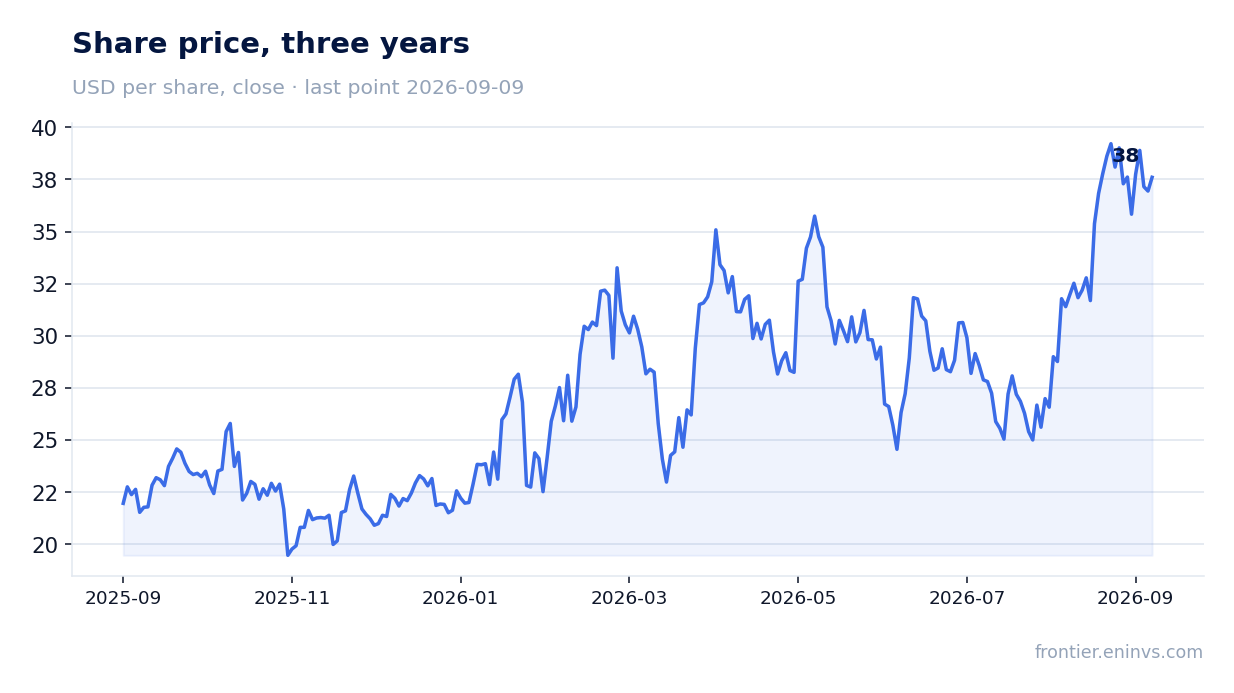
The $0.03 per share dividend yields a mere 0.08%, but buybacks matter more
The Board of Directors declared a quarterly dividend of $0.03 per share, payable on September 11, 2026. At the current share price of about $27, the dividend yield is only 0.08%. This is significantly below government bond yields and is not the main way of returning capital. The company positions itself as a free-cash-flow-focused producer and prefers buybacks, which in 2026 have already amounted to $409.2 million.
The dividend policy is likely to remain conservative, as the main emphasis is on buybacks. Our estimate for the 2026 dividend is $0.12 per share, based on quarterly payments of $0.03. This would give a yield of about 0.44% at the current price. However, if gold prices remain high, the company could increase payments. The risk of a dividend cut is minimal, as it is well covered by profit, but dividend growth is unlikely without a policy change.
The EV/EBITDA multiple of 6.8x is below its historical average, leaving room for re-rating
Based on the trailing twelve months, SSR Mining's EV/EBITDA is 6.8x, and P/E is 32.1. For comparison, the company has historically traded at higher multiples, but precise three-year data is not in the FACTS. The current level looks low for a producer with zero debt and rising margins. Market capitalisation is $7.63 billion, and net debt is negative, making EV lower than market cap. This creates preconditions for a re-rating, especially if gold prices remain high.
According to the portal's model, the upside to fair value is estimated at +17%. This is our own calculation, based on re-pricing EBITDA at current commodity prices at the target EV/EBITDA. Given the buybacks and strong balance sheet, the shares look attractive. However, it is worth noting that profit depends on gold and silver prices, which could decline. If prices fall, the multiple could rise and the upside could shrink.
Valuation on the latest reported figures
| Metric | Value |
|---|---|
| Market cap | 7.63 bn USD |
| P/E (LTM) | 32.1 |
| EV/EBITDA (LTM) | 6.8 |
| P/B | 2.46 |
| Net debt / EBITDA (LTM) | -0.05 |
| Operating cash flow (LTM) | 0.47 bn |
| ROE | 11.1% |
| Dividend yield (12m) | 0.1% |
Bottom line
SSR Mining ended the second quarter of 2026 with revenue up 9.5% and EBITDA up 60.4%, but net profit rose only 8.0% due to a one-off loss from the Çöpler sale. The main event was the sale of the Turkish asset for $1.49 billion, which turned the company into a zero-debt producer with $1.78 billion in cash. The company is actively buying back shares ($337.8 million in the quarter) and pays a token dividend. The shares trade at an EV/EBITDA of 6.8x, below historical levels, and according to the portal's model have an upside of +17%. Verdict – attractive: a strong balance sheet, generous buybacks, and a low valuation outweigh dependence on gold prices.
Open the company's financial profile SSRM →
See also: market overview · valuation map · stock screeners