Tyson Foods: profit tripled but revenue is flat and leverage sits at 3.07x EBITDA
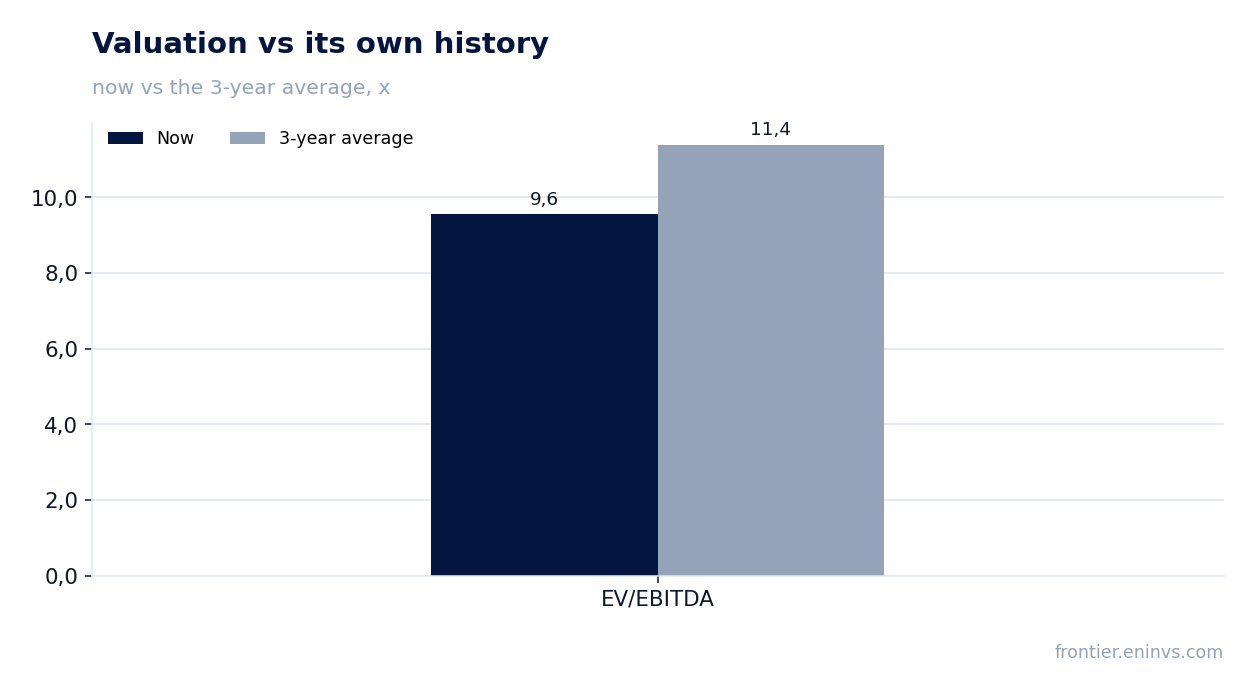
On 3 August Tyson Foods released its third-quarter fiscal 2026 results. Revenue was flat year on year at $13,868 million versus $13,884 million, but EBITDA rose 17.7% to $691 million and net profit nearly tripled to $182 million. The gap is explained by one-off charges a year earlier and a one-off legal charge now; without them the picture is far more modest. The stock trades at 9.6x EV/EBITDA against a three-year average of 11.4x, offering a discount to its own history, but weak revenue growth and leverage at 3.07x EBITDA keep the valuation in neutral territory.
Key takeaways
— Revenue stalled: down 0.1% year on year with a $98 million one-off legal charge
— EBITDA rose 17.7% but almost all of the gain is a low-base effect from last year
— Net profit of $182 million looks three times better than last year, but includes $73 million of one-off charges
— Chicken and Prepared Foods carry the company while Beef remains loss-making
— Leverage at 3.07x EBITDA and negative free cash flow for the nine months
— Dividend yield of 3.94% with a payout of $0.51 per Class A share
— Valuation at 9.6x EV/EBITDA against a three-year average of 11.4x – a discount to its own history
Attractiveness
Key figures, USD bn
| Metric | Q3 2025 | Q3 2026 | Change |
|---|---|---|---|
| Revenue | 13.9 | 13.9 | -0.1% |
| EBITDA | 0.59 | 0.69 | +17.7% |
| Operating profit | 0.26 | 0.36 | +39.2% |
| Net profit | 0.06 | 0.18 | +198.4% |
| Operating cash flow | 0.77 | 0.64 | -17.3% |
| Capex | 0.23 | 0.16 | -30.0% |
| EBITDA margin | 4.2% | 5.0% | +0.8 pp |
| Net margin | 0.4% | 1.3% | +0.9 pp |
Revenue stalled: down 0.1% year on year with a $98 million one-off legal charge
In the third quarter of fiscal 2026 Tyson Foods revenue was $13,868 million, down 0.1% from $13,884 million a year earlier. Excluding a one-off legal accrual of $98 million recognised as a reduction to sales, revenue would have risen 0.6%. So there is organic growth, but it is barely visible.
The main drag came from beef: segment sales fell 15.9% by volume to $5,391 million, although average price rose 12.1%. Chicken added 1.0% in volume and 2.2% in price to $4,255 million. Prepared Foods was virtually flat at $2,557 million. Pork rose 5.2% in volume but price slipped 0.3%.
The bottom line: the company is not growing but balancing between segments. Weak beef demand and lower international volumes (-3.5%) are offset by higher prices in chicken and pork. For an investor this means revenue is unlikely to accelerate without a recovery in consumer demand or a change in the portfolio mix.
EBITDA rose 17.7% but almost all of the gain is a low-base effect from last year
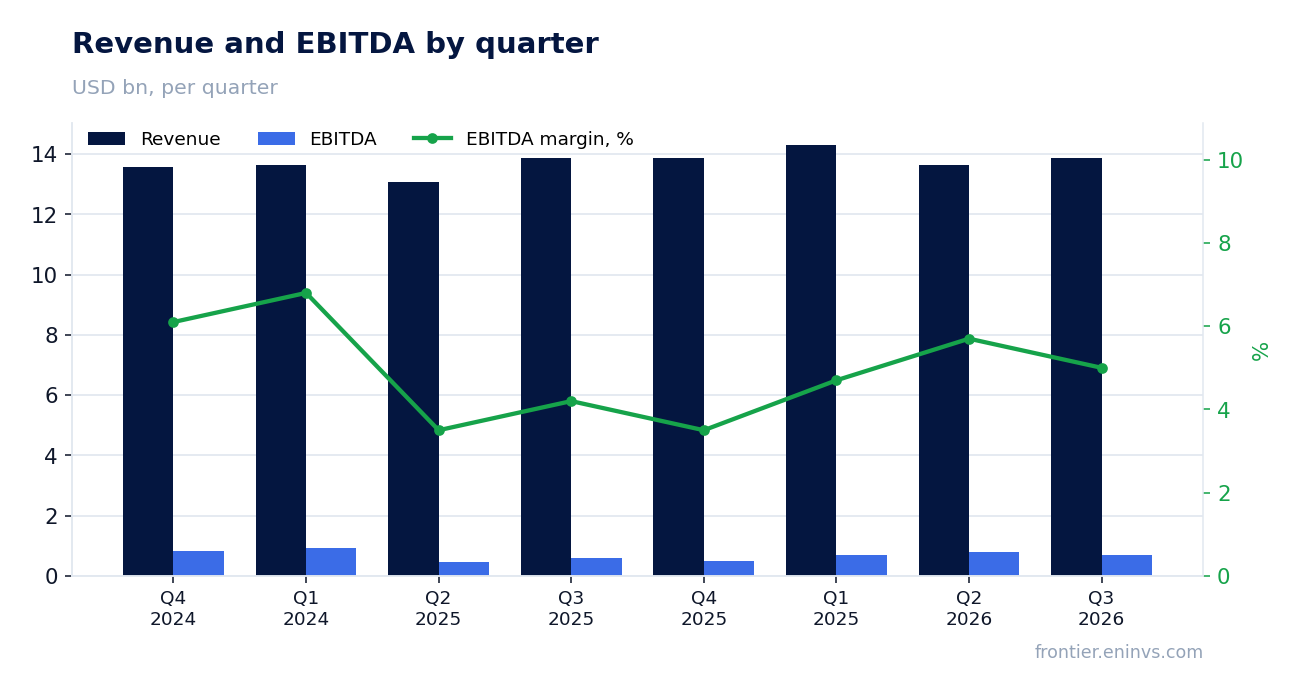
EBITDA in the reported quarter was $691 million, up 17.7% from $589 million a year earlier. However, a year ago the company incurred one-off charges: a $343 million goodwill impairment, plant closure and restructuring costs. Without them the base would have been higher and the current growth would look more modest.
EBITDA margin rose to 5.0% from 4.2% a year earlier. The margin improvement came mainly from chicken and prepared foods: adjusted operating margin in chicken rose to 11.2% from 10.6%, while prepared foods fell to 12.6% from 13.3%. Beef remains loss-making with a margin of -2.6%.
So the EBITDA growth is not the result of organic improvement but of a cleaned-up base. Next quarter the comparison will be against normalised figures, and to confirm the trend the company needs to show real revenue and margin growth.
Net profit of $182 million looks three times better than last year, but includes $73 million of one-off charges
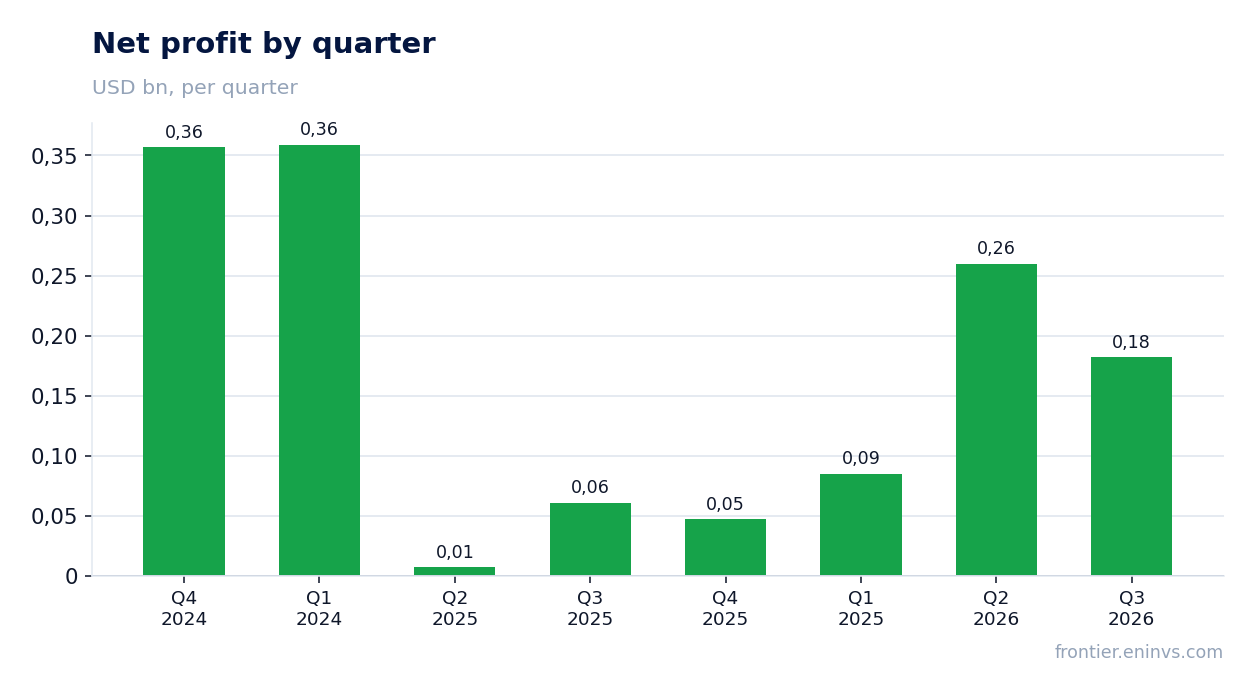
Net profit in the third quarter was $182 million versus $61 million a year earlier – nearly tripling. However, the current result includes one-off charges: $73 million for executive leadership transition, $98 million for legal contingency and $14 million for restructuring. Excluding them, adjusted EPS would have been $0.99 versus $0.91 a year earlier, a rise of just 9%.
One-off items distort the picture: a year ago profit was depressed by a $343 million goodwill impairment, now by legal and management expenses. Adjusted operating income rose 8% to $547 million, far more modest than the headline net profit growth.
For an investor the key point is that underlying profitability is improving, but slowly. The company still depends on one-off factors, and without them profit growth does not look explosive.
Chicken and Prepared Foods carry the company while Beef remains loss-making
The chicken segment delivered operating income of $389 million with a 9.1% margin, down from $475 million and 11.3% a year earlier. Adjusted margin rose to 11.2% from 10.6% on lower costs. This is the key driver: the segment has grown for seven consecutive quarters, as the CEO noted.
Prepared Foods generated $312 million in operating income, but margin fell to 12.2% from 15.5% a year earlier. Adjusted margin also declined to 12.6% from 13.3%. Cost inflation and competition are pressuring margins.
Beef remains the main problem: a loss of $142 million, though narrower than the $459 million loss a year earlier. The adjusted loss was $138 million. Pork and international are profitable but cannot offset beef weakness. The company expects a full-year beef loss of $500 million to $650 million.
Leverage at 3.07x EBITDA and negative free cash flow for the nine months
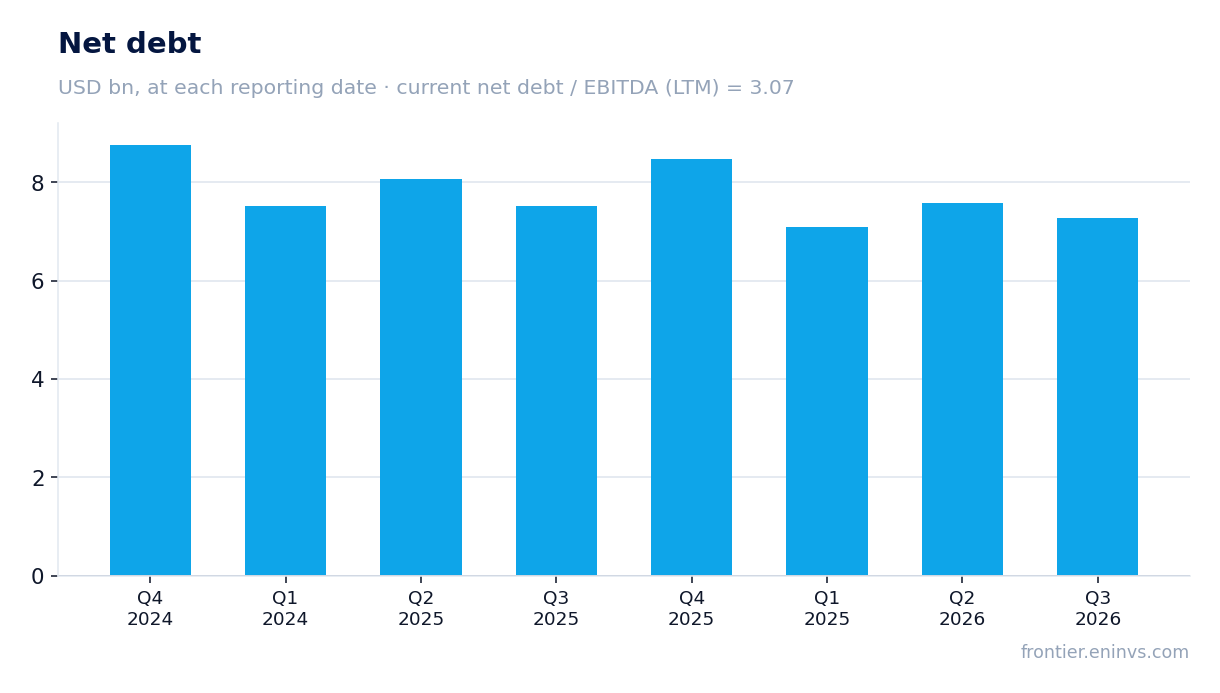
Net debt at the end of the quarter was $7,266 million, corresponding to a net debt/EBITDA LTM ratio of 3.07. This is a level the company considers acceptable, but it limits financial flexibility. Over nine months the company reduced total debt by $824 million, but net debt remains high.
Operating cash flow for the nine months was $1,469 million, down $151 million from a year earlier. Free cash flow was $913 million, also down $16 million. The main reason is higher costs and increased working capital.
In the reported quarter operating cash flow was positive at $640 million, but over nine months it does not cover capital expenditure and dividends. The company expects full-year free cash flow of $1.3–1.7 billion, implying improvement in the second half.
Dividend yield of 3.94% with a payout of $0.51 per Class A share
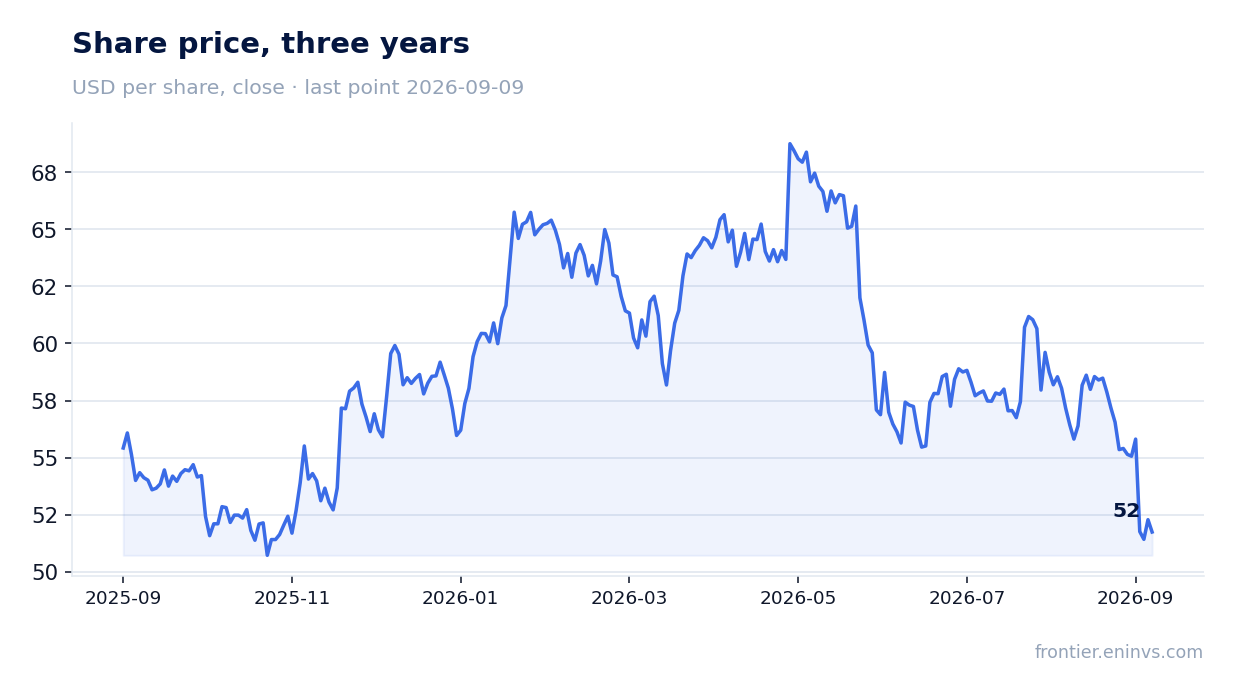
For the third quarter the company declared a dividend of $0.51 per Class A share, 2% higher than last year's $0.50. At the current share price the trailing 12-month dividend yield is 3.94%. This is above the yield of most industrial companies but below the key rate if compared with risk-free returns.
Dividend payments cost the company about $529 million over nine months. With free cash flow of $913 million this is covered, but with a small margin. If free cash flow does not improve, the company may need to increase debt to sustain payments.
Our estimate: for the full year the dividend could be around $2.04 per Class A share, consistent with the current yield. However, there is a risk of a cut if operating profit does not recover. The dividend policy does not imply sharp growth, but it does not signal a reduction either.
Valuation at 9.6x EV/EBITDA against a three-year average of 11.4x – a discount to its own history
At the current price the stock trades at EV/EBITDA LTM of 9.56 against a three-year average of 11.39. That is a discount of about 16% to its own history. P/E LTM is 31.2, reflecting a low profit base. Market capitalisation is $17.9 billion.
The discount is explained by weak revenue growth and high debt. However, if the company manages to improve margins and reduce debt, the multiple could return to historical levels. This requires sustained growth in operating profit, especially in beef.
Comparison with history shows the market is pricing in a continuation of current problems. At the same time, a dividend yield of 3.94% provides some support. The valuation looks fair but offers no clear advantage.
Valuation on the latest reported figures
| Metric | Value |
|---|---|
| Market cap | 17.9 bn USD |
| P/E (LTM) | 31.2 |
| EV/EBITDA (LTM) | 9.6 |
| P/B | 0.99 |
| Net debt / EBITDA (LTM) | 3.07 |
| Operating cash flow (LTM) | 2.20 bn |
| ROE | 1.3% |
| Dividend yield (12m) | 3.9% |
| EV/EBITDA, 3-year average | 11.4 |
Bottom line
Tyson Foods showed strong net profit improvement, but it is largely due to a low base last year and one-off items. Revenue is stagnant, debt remains high, and free cash flow over nine months is negative. The discount to the historical EV/EBITDA multiple looks justified but offers no clear advantage. A dividend yield of 3.94% supports the valuation, but the risk of a cut remains. The stock looks fairly valued, and growth requires sustained margin improvement and debt reduction.
Open the company's financial profile TSN →
See also: market overview · valuation map · stock screeners