Vale: revenue up 16.9%, but profit down 36.6% on one-off losses
On August 25, Vale released its results for the second quarter of 2026. Revenue rose 16.9% year on year to $10,439.3 million, EBITDA grew 13.7% to $3,140.0 million, but net profit fell 36.6% to $1,386.5 million. Given weak profit dynamics and a high valuation, the shares look unattractive.
Key takeaways
— Revenue in the second quarter grew 16.9% year on year to $10,439.3 million, driven by high iron ore prices
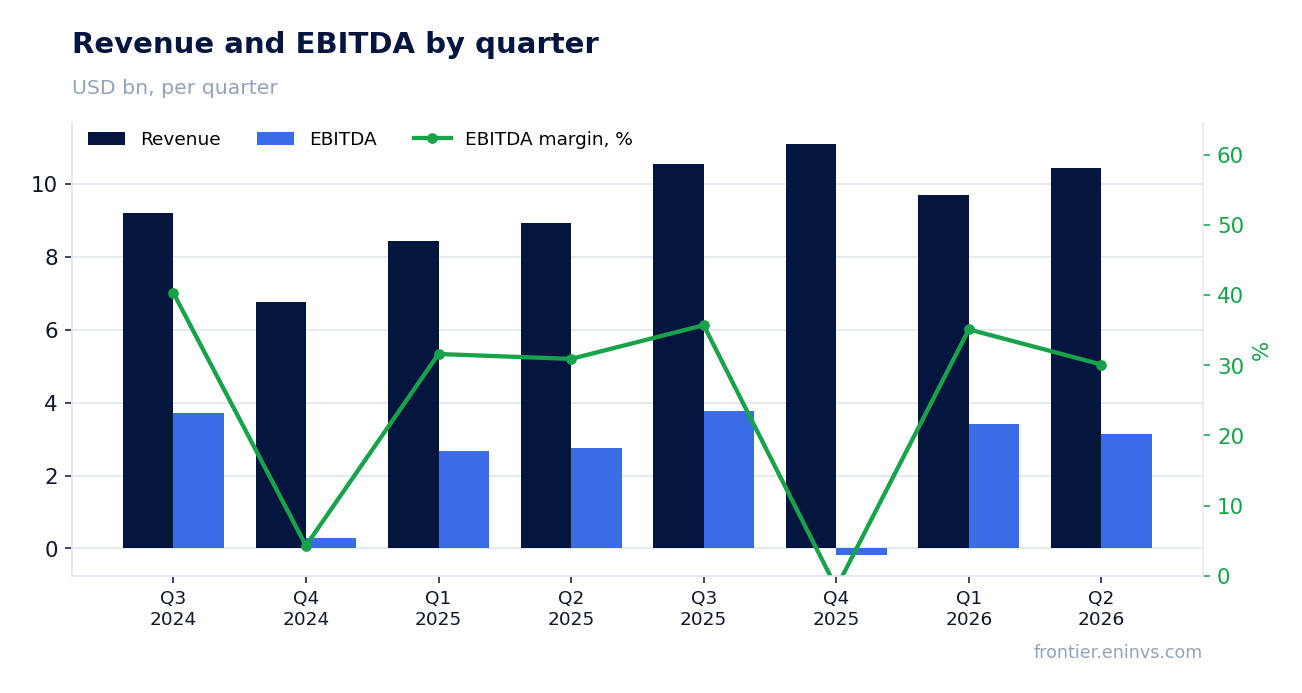
— EBITDA margin declined from 30.9% to 30.1%, reflecting cost inflation
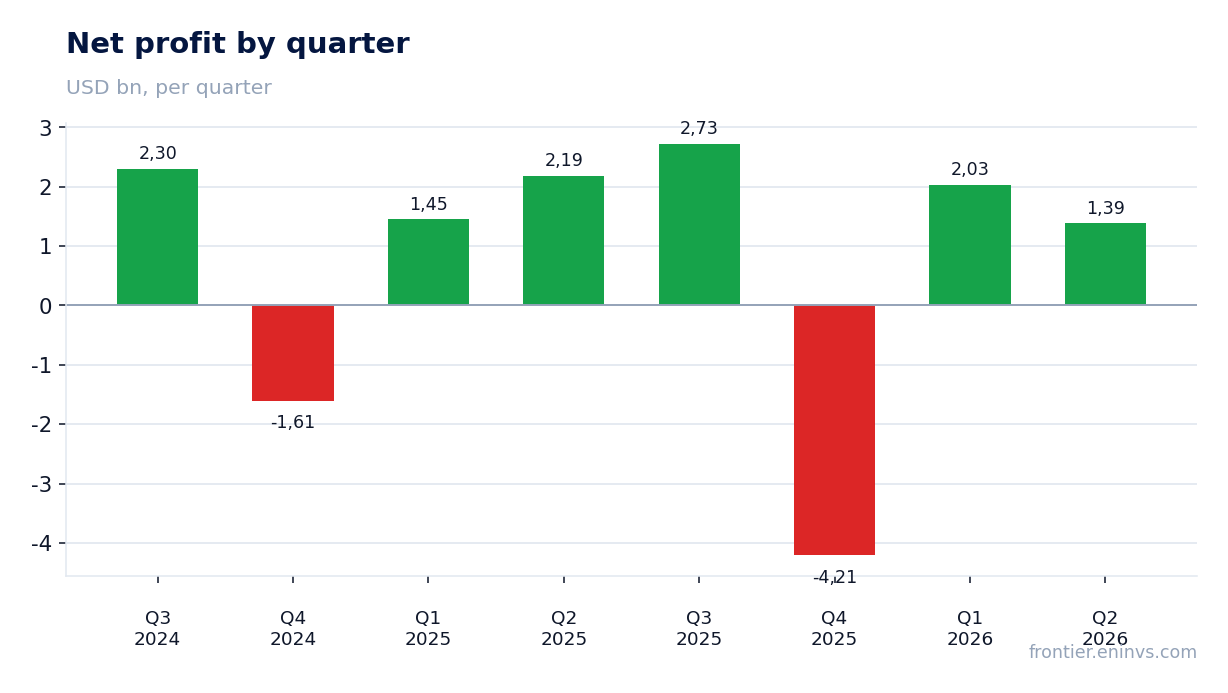
— Net profit fell 36.6% due to one-off losses, including asset impairments
— Operating cash flow rose to $2,431.8 million, but capital expenditures remained high
— Dividend yield over the last 12 months is 6.9%, above the market average
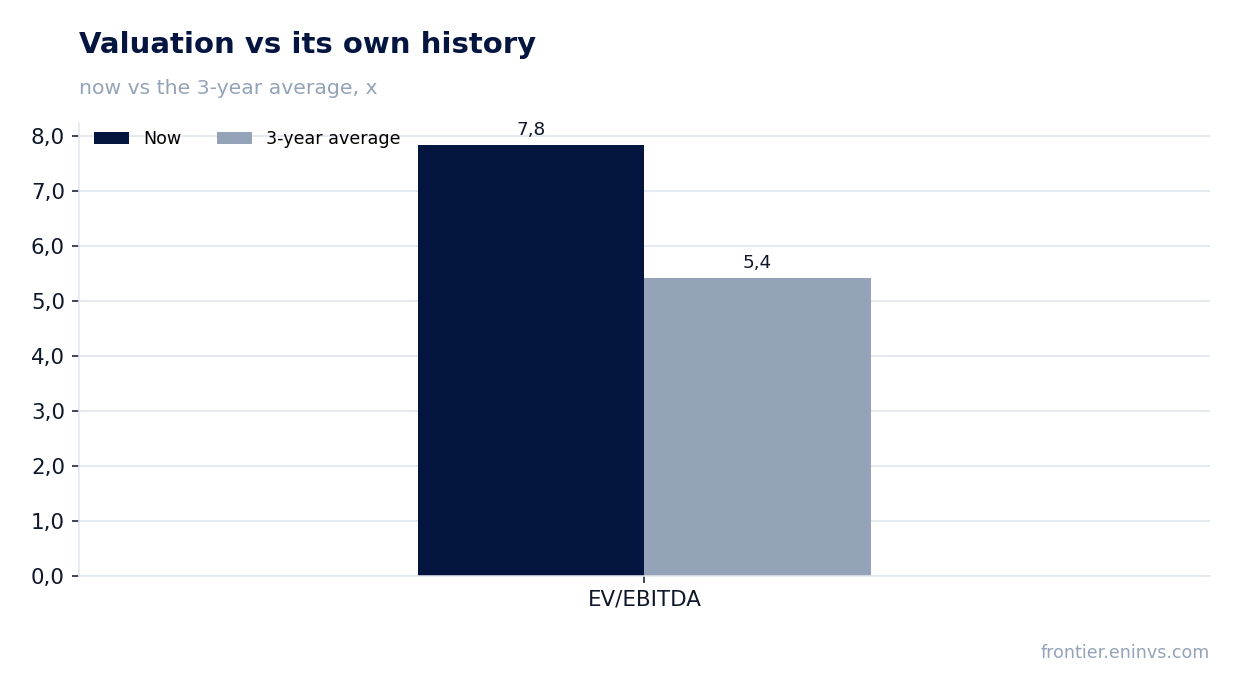
— EV/EBITDA stands at 7.8 versus the three-year average of 5.4, indicating overvaluation
— On the portal's model, the share's upside potential is -89%, signaling significant overvaluation
Attractiveness
Key figures, USD bn
| Metric | Q2 2025 | Q2 2026 | Change |
|---|---|---|---|
| Revenue | 8.93 | 10.4 | +16.9% |
| EBITDA | 2.76 | 3.14 | +13.7% |
| Operating profit | 1.97 | 2.23 | +13.4% |
| Net profit | 2.19 | 1.39 | -36.6% |
| Operating cash flow | 1.90 | 2.43 | +28.3% |
| Capex | 1.20 | 1.24 | +2.8% |
| EBITDA margin | 30.9% | 30.1% | -0.8 pp |
| Net margin | 24.5% | 13.3% | -11.2 pp |
Revenue in the second quarter grew 16.9% year on year to $10,439.3 million, driven by high iron ore prices
In the second quarter of 2026, Vale's revenue reached $10,439.3 million, up 16.9% from the same period last year. The growth was driven by favorable iron ore prices, the company's main product.
Quarterly dynamics are also positive: revenue rose from $9,702.0 million in the first quarter of 2026. This confirms steady demand from the steel industry, particularly in China.
EBITDA margin declined from 30.9% to 30.1%, reflecting cost inflation
EBITDA in the second quarter of 2026 reached $3,140.0 million, up 13.7% year on year. However, the EBITDA margin declined from 30.9% to 30.1%, indicating faster cost growth.
The main reasons were higher logistics and energy costs, as well as increased labor expenses. The company has so far managed to offset inflation through prices, but pressure on profitability persists.
Net profit fell 36.6% due to one-off losses, including asset impairments
Net profit in the second quarter of 2026 was $1,386.5 million, down 36.6% from a year earlier. The decline is due to one-off losses, including asset impairments, which did not affect operations.
Excluding these factors, profit would have been higher, but the company does not disclose the exact amount of adjustments. Investors should note that such losses may recur in the future.
Operating cash flow rose to $2,431.8 million, but capital expenditures remained high
Operating cash flow in the second quarter of 2026 was $2,431.8 million, up from $1,895.1 million in the same period last year. This provides a sufficient buffer to finance investments.
Capital expenditures amounted to $1,238.3 million, lower than the previous quarter's $1,244.4 million, but still significant. Free cash flow thus reached about $1,193.5 million, supporting dividend payments.
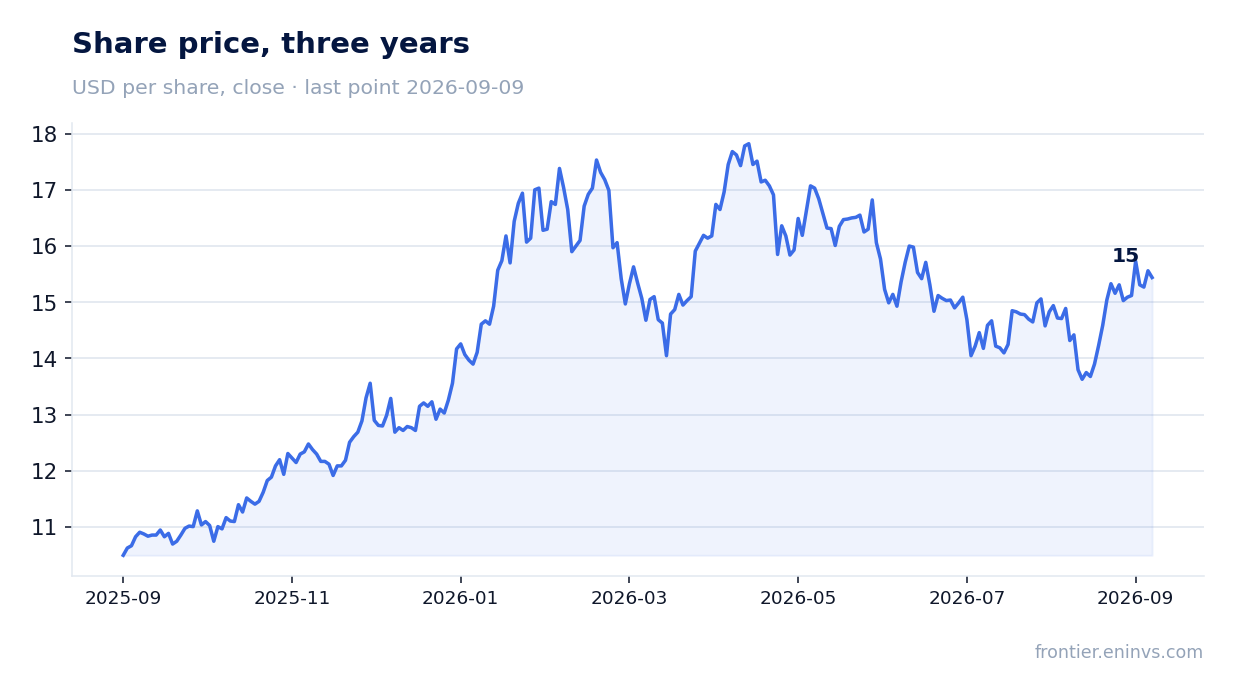
Dividend yield over the last 12 months is 6.9%, above the market average
Over the last 12 months, Vale paid dividends corresponding to a yield of 6.9% at the current price. This is above the market average and makes the shares attractive for income-oriented investors.
However, given the current valuation and uncertainty from one-off losses, future payouts may come under pressure. The company is likely to maintain its payout policy, but investors should watch free cash flow dynamics.
EV/EBITDA stands at 7.8 versus the three-year average of 5.4, indicating overvaluation
The current EV/EBITDA multiple stands at 7.8, well above the three-year average of 5.4. This suggests the market values the company more richly than the average over the past three years.
Even with revenue and EBITDA growth, such valuation leaves little room for further upside. Investors should be cautious, especially if iron ore prices start to decline.
On the portal's model, the share's upside potential is -89%, signaling significant overvaluation
According to the portal's model, the fair value of the share at current commodity prices and target EV/EBITDA is significantly below the market capitalization. The upside potential is -89%, indicating substantial overvaluation.
This means the current price embeds expectations that are unlikely to be met unless iron ore prices rise significantly. Investors should consider this signal when making decisions.
Valuation on the latest reported figures
| Metric | Value |
|---|---|
| Market cap | 65.9 bn USD |
| P/E (LTM) | 34.0 |
| EV/EBITDA (LTM) | 7.8 |
| P/B | 1.61 |
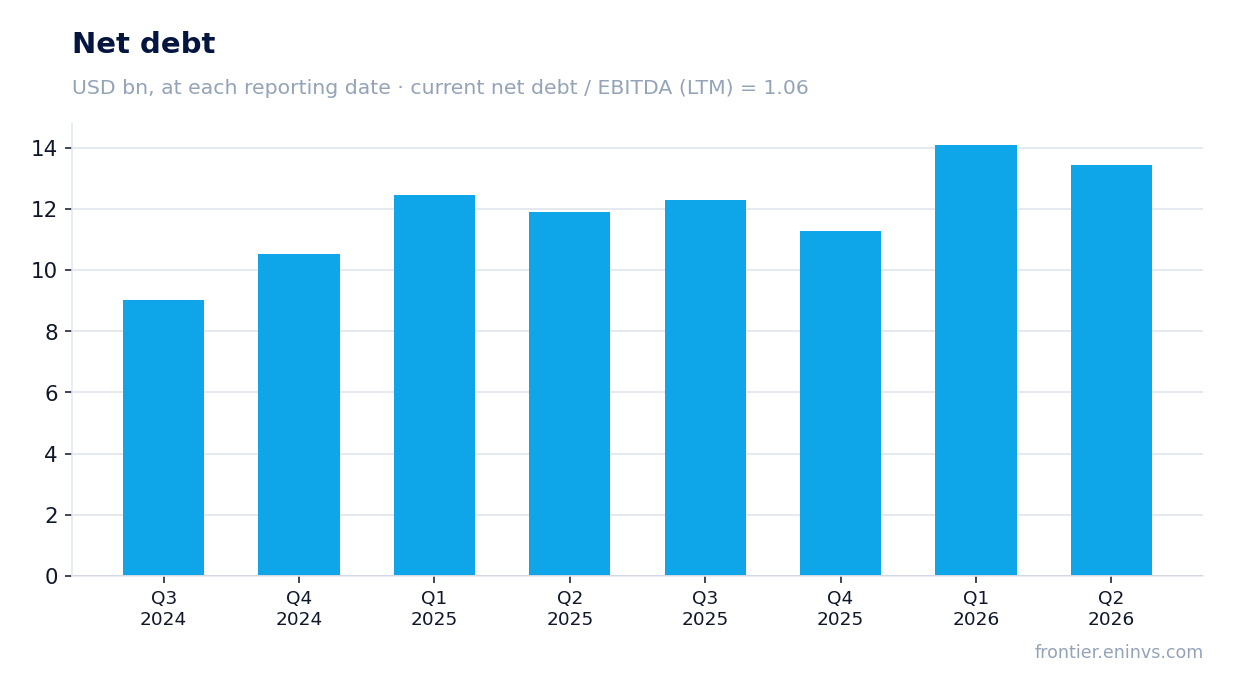
| Net debt / EBITDA (LTM) | 1.06 |
| Operating cash flow (LTM) | 8.90 bn |
| ROE | 14.1% |
| Dividend yield (12m) | 6.9% |
| EV/EBITDA, 3-year average | 5.4 |
Bottom line
In the second quarter of 2026, Vale showed solid revenue and EBITDA growth, but net profit fell due to one-off losses. Operating cash flow remains strong, supporting dividends. However, the current valuation (EV/EBITDA 7.8 vs. average 5.4) and the negative upside on the portal's model make the shares unattractive. Investors should wait for a lower price or improved market conditions.
Open the company's financial profile VALE →
See also: market overview · valuation map · stock screeners