AEHR TEST SYSTEMS: $60.7m in record bookings and guidance for 2.6–3.0x revenue growth – but the quarter's profit rests on a tax benefit

On July 14, AEHR TEST SYSTEMS reported results for the fourth quarter of fiscal 2026, ended May 29. Quarterly revenue was $18.8m versus $14.1m a year earlier, net income was $1.4m against a $2.9m loss, and bookings hit a record $60.7m. The company guided fiscal 2027 revenue to $130–150m, or 2.6–3.0x fiscal 2026 revenue of $50.0m, and the stock has gained 40.5% since the release. At the current price the share looks rather attractive: the market is paying for the execution of a record backlog, not for the profit already booked, which still rests on a tax benefit.
Key takeaways
— Record bookings of $60.7m and an effective backlog of $100.6m produced guidance for $130–150m of fiscal 2027 revenue
— Quarterly revenue rose to $18.8m, but year-on-year it was still down 43.7% in the prior quarter
— Net income of $1.4m came with a $1.8m tax benefit – without it the quarter would have been loss-making
— The operating loss of $1.2m persists, and quarterly EBITDA is negative at -$0.5m
— Cash rose to $116.5m after a $97.4m equity offering, turning net debt negative
— Operating cash flow for fiscal 2026 was negative at -$3.3m, with capital expenditure of $2.1m
— The EV/EBITDA multiple of 50.2x is a three-year average, and the current price already discounts execution of the guidance
Attractiveness
Key figures, USD bn
| Metric | — | Q4 2026 | Change |
|---|---|---|---|
| Revenue | — | 0.02 | — |
| EBITDA | — | -0.00 | — |
| Operating profit | — | -0.00 | — |
| Net profit | — | 0.00 | — |
| Operating cash flow | — | 0.00 | — |
| Capex | — | 0.00 | — |
| EBITDA margin | — | -2.7% | — |
| Net margin | — | 7.4% | — |
Record bookings of $60.7m and an effective backlog of $100.6m produced guidance for $130–150m of fiscal 2027 revenue
Bookings in the fourth quarter of fiscal 2026 were a record $60.7m, and backlog as of May 29 was $80.6m. Including bookings received after the reporting date, the effective backlog reached $100.6m. This figure underpins the fiscal 2027 revenue guidance of $130–150m, which is 2.6–3.0x fiscal 2026 revenue of $50.0m.
The company links growth to several areas. Its lead AI processor customer is shifting burn-in from package level to wafer level, increasing demand for FOX WLBI systems. A new major customer in silicon photonics – a global leader in networking products – has provided a forecast for additional systems this calendar year. In silicon carbide, the company received approximately $8m in new orders in the last month, including an order directly from one of the world's largest automotive companies.
The guidance is supported not only by the backlog but also by expected demand from existing production programs. The company notes it continues to pursue additional orders. However, the effective backlog of $100.6m covers only the lower end of the guidance; the upper end of $150m requires new orders to be won during the year.
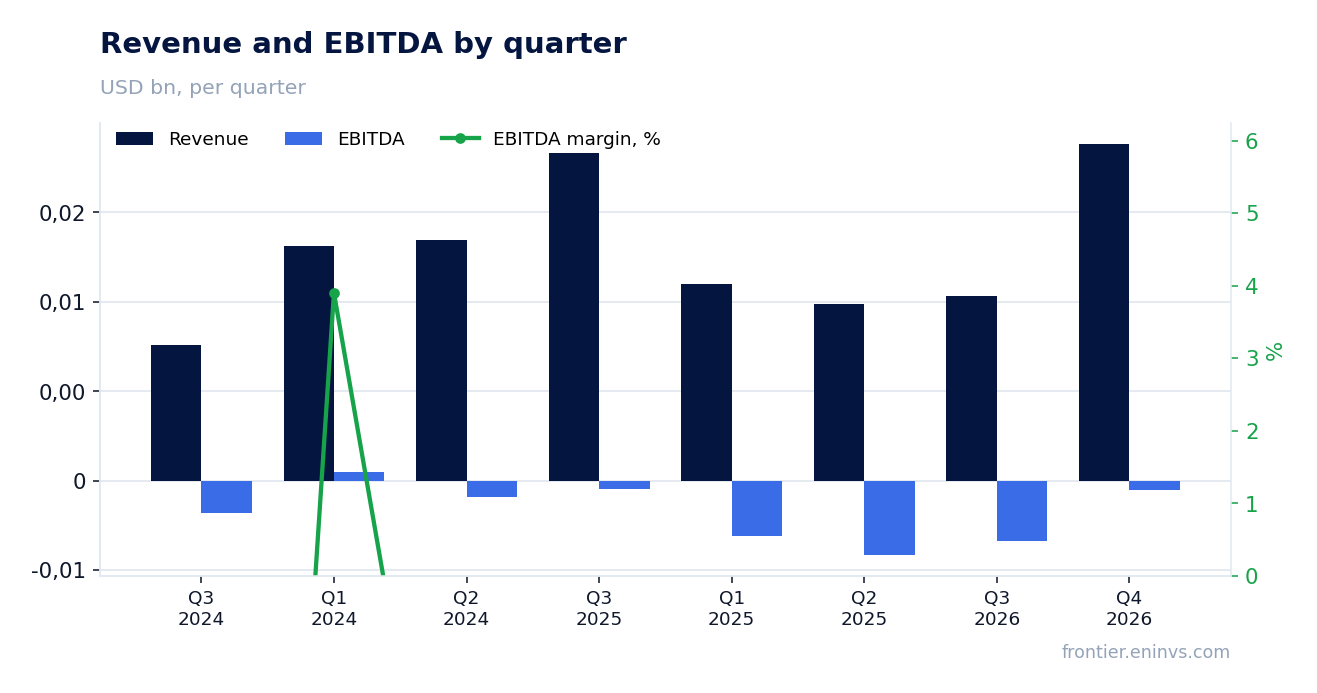
Quarterly revenue rose to $18.8m, but year-on-year it was still down 43.7% in the prior quarter
Revenue in the fourth quarter of fiscal 2026 was $18.8m versus $14.1m in the fourth quarter of fiscal 2025. This is a notable increase from the prior quarter, when revenue was $10.3m. However, in the third quarter of fiscal 2026, revenue fell 43.7% year-on-year, illustrating how volatile the dynamics were during the year.
For the full fiscal year 2026, revenue was $50.0m versus $59.0m in 2025. The annual decline reflects the uneven timing of large orders, with shipments dependent on customers' readiness to deploy production capacity. The fourth quarter was the strongest of the year, but not enough to offset weak second and third quarters.
The company expects fiscal 2027 revenue to grow to $130–150m. This implies not just growth but a multiple increase, requiring the simultaneous execution of several large contracts. If any key customer delays deployment, the guidance will come under pressure.
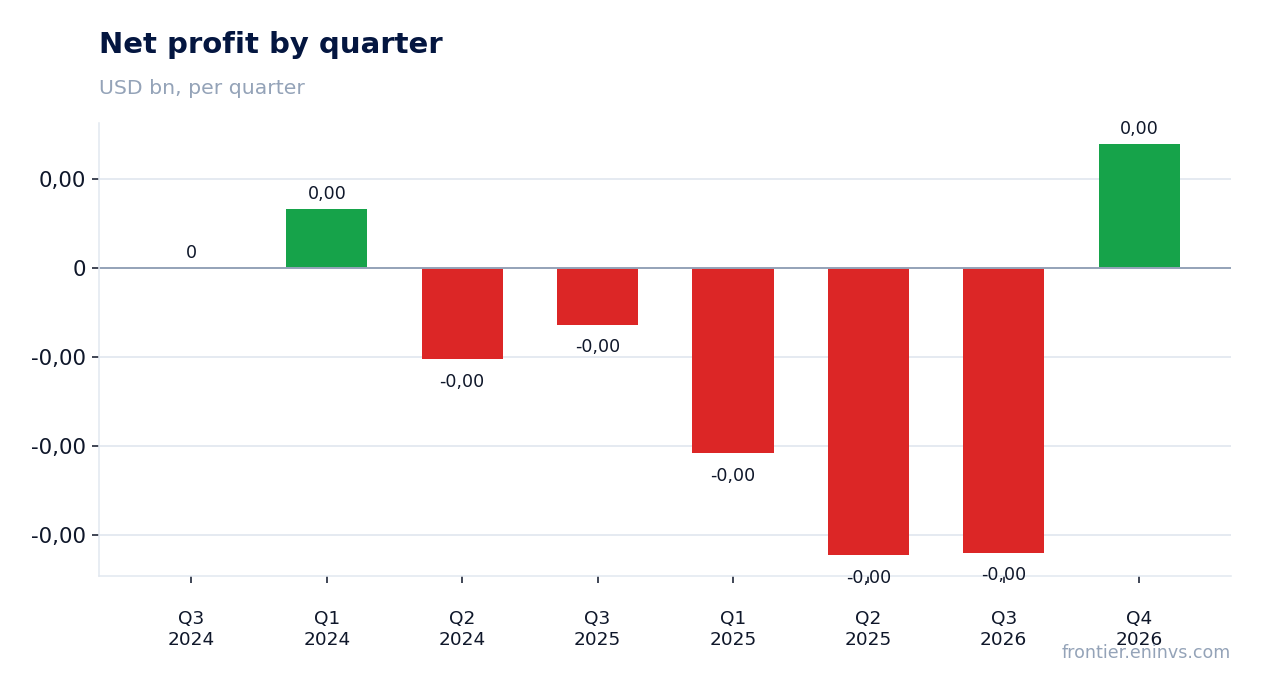
Net income of $1.4m came with a $1.8m tax benefit – without it the quarter would have been loss-making
Net income in the fourth quarter of fiscal 2026 was $1.4m, or $0.04 per diluted share, against a loss of $2.9m a year earlier. However, the profit was achieved with a tax benefit of $1.8m. Without that benefit, the company would have shown a pre-tax loss of $0.5m, which would have remained a loss after tax.
The quarterly operating loss was $1.2m, better than the $3.2m loss a year earlier, but still meaning the core business is loss-making. Gross profit rose to $8.0m from $4.3m, while operating expenses increased to $9.2m from $7.5m. The rise in expenses reflects higher research and development costs of $3.6m and selling, general and administrative costs of $5.6m.
For the full fiscal year 2026, the net loss was $7.1m versus a $3.9m loss in 2025. The loss widened even though the fourth quarter was profitable. This means the year as a whole remains loss-making, and the quarterly profit is more of an exception, driven by the tax benefit and a one-off revenue spike.
The operating loss of $1.2m persists, and quarterly EBITDA is negative at -$0.5m
EBITDA in the fourth quarter of fiscal 2026 was -$0.5m, with an EBITDA margin of -2.7%. This is better than the prior quarter, when EBITDA was -$3.4m, but still negative. The company remains loss-making at the operating level, and even the revenue recovery in the fourth quarter did not push EBITDA into positive territory.
The operating loss of $1.2m persists, though it narrowed from $4.2m in the third quarter. The main reason is higher revenue, which increased gross profit but not enough to cover operating expenses. The quarterly gross margin was about 42.6% ($8.0m of $18.8m), below the level needed for profitability at the current cost structure.
The company guides to non-GAAP net income of 18–22% of revenue in fiscal 2027. This implies that at $130–150m of revenue, non-GAAP profit should be $23–33m. Achieving that requires not only revenue growth but also improvement in gross margin and cost control.
Cash rose to $116.5m after a $97.4m equity offering, turning net debt negative
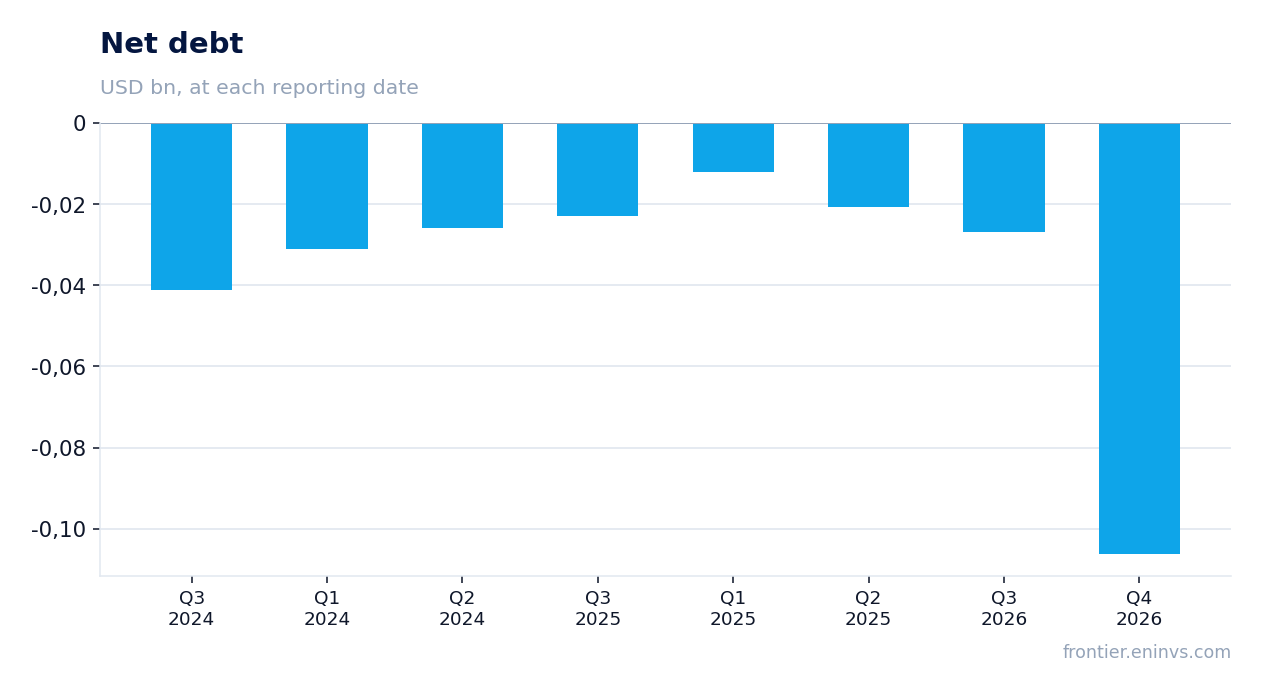
Cash and cash equivalents as of May 29, 2026, were $116.5m versus $37.1m on February 27, 2026. This increase came from a public equity offering that raised $97.4m net. This strengthened the balance sheet and gave the company funds to finance working capital growth and capital expenditure.
Net debt at the latest reporting date was -$13.7m, meaning the company has more cash than debt. This matters because production growth requires significant investment in inventory and equipment. For fiscal 2026, operating cash flow was negative at -$3.3m, while capital expenditure was $2.1m.
Negative operating cash flow amid rising revenue is explained by an increase in accounts receivable to $17.5m and inventories to $41.4m. The company is building working capital ahead of expected shipment growth. If the fiscal 2027 revenue guidance is met, these investments should convert into cash flow.
Operating cash flow for fiscal 2026 was negative at -$3.3m, with capital expenditure of $2.1m
For fiscal 2026, the company used $3.3m in operating activities. This is less than the $7.4m used in 2025, but still means operations are not generating cash. Capital expenditure for the year was $2.1m, mainly for equipment and business acquisition.
Negative operating cash flow alongside a net loss for the year is not surprising. However, it is important that even in the fourth quarter, when revenue rose, operating cash flow was positive at $1.8m. This suggests that at sufficient revenue volume, the company can generate cash.
The company does not pay dividends and has not announced a share buyback program. All available funds are directed to business development. With fiscal 2027 revenue guidance of $130–150m, working capital needs may increase, requiring additional investment.
The EV/EBITDA multiple of 50.2x is a three-year average, and the current price already discounts execution of the guidance
The three-year average EV/EBITDA is 50.2x. This is a very high multiple, reflecting market expectations for future growth. The current market capitalisation is $2,930.7m, which against trailing twelve-month revenue of $50.0m represents a significant premium to current financials.
Our valuation model, based on EBITDA growth times a target multiple, shows upside to fair value of -3%. This means the current price is already close to fair value on our model, and further gains depend on actual execution of the guidance. If the company achieves $130–150m in revenue and improves profitability, the multiple could compress through denominator growth.
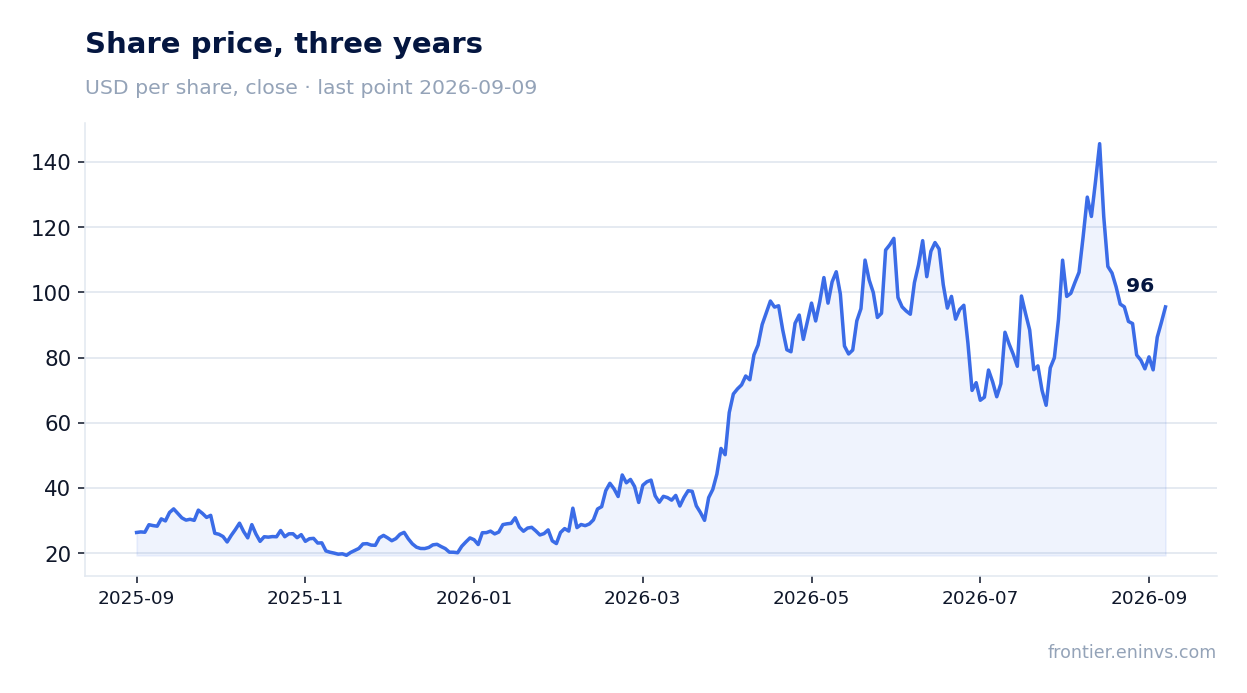
Since the release, the stock has risen 40.5%, including 5.9% on the day of publication. The market reacted positively to record bookings and guidance. However, the current valuation leaves no room for error: any slowdown in growth or delay in order execution could lead to a significant correction.
Valuation on the latest reported figures
| Metric | Value |
|---|---|
| Market cap | 2.93 bn USD |
| P/B | 23.85 |
| Operating cash flow (LTM) | -0.01 bn |
| ROE | 3.1% |
Bottom line
The fourth quarter of fiscal 2026 delivered record bookings of $60.7m and revenue growth to $18.8m, giving the company a basis to guide fiscal 2027 revenue to $130–150m. However, net income of $1.4m was achieved thanks to a $1.8m tax benefit, while the operating loss and negative EBITDA persist. Cash of $116.5m after the equity offering provides a cushion, but operating cash flow for the year remains negative. At the current price the share looks rather attractive, but only if the company actually delivers on its guidance: the market is already pricing in 2.6–3.0x growth, and any delay could trigger a re-rating.
Open the company's financial profile AEHR →
See also: market overview · valuation map · stock screeners