Goldman Sachs: revenue soars 39.5%, but EBITDA margin collapses from 152.7% to 44.6% — and it's not a one-off

On July 14, Goldman Sachs reported Q2 2026 results: revenue rose 39.5% YoY to 20,338 million KZT, net profit jumped 78.0% to 6,628 million KZT. However, EBITDA margin fell from 152.7% to 44.6%, reflecting a shift to a more cost-intensive growth model. At the current price, the share looks rather attractive: strong revenue and profit growth offset margin pressure, but the sustainability of this dynamic is uncertain.
Key takeaways
— Revenue +39.5% — best quarterly growth in two years, but bought at the cost of margin
— EBITDA margin fell from 152.7% to 44.6%: operating expenses rose 26%
— Net profit +78% — but nearly half of the increase is due to one-off factors
— Debt rose by 33.8 billion KZT in the quarter and by 54.6 billion over 12 months — to 250.6 billion
— Operating cash flow over the last 12 months is negative: minus 45.2 billion KZT
— Dividend raised to $5.00 per share, but payouts and buybacks consume capital
— Return on equity 21.6% — above average, but below peak levels
Attractiveness
Key figures, KZT bn
| Metric | Q2 2025 | Q2 2026 | Change |
|---|---|---|---|
| Revenue | 14.6 | 20.3 | +39.5% |
| EBITDA | 22.3 | 9.07 | -59.2% |
| Operating profit | — | 8.56 | — |
| Net profit | 3.72 | 6.63 | +78.0% |
| Operating cash flow | 5.67 | 6.11 | +7.6% |
| Capex | 0.48 | 0.50 | +5.5% |
| EBITDA margin | 152.7% | 44.6% | -108.1 pp |
| Net margin | 25.5% | 32.6% | +7.1 pp |
Revenue +39.5% — best quarterly growth in two years, but bought at the cost of margin
In Q2 2026, Goldman Sachs revenue reached 20,338 million KZT, up 39.5% YoY. This is the strongest quarterly growth since Q2 2025 (+14.5%) and Q3 2025 (+19.6%). The main driver was Global Banking & Markets: segment revenue rose 53% to 15,520 million KZT, driven primarily by treasury and credit operations, as well as a 55% increase in investment banking fees.
However, such growth was accompanied by a sharp increase in operating expenses: they jumped 26% to 11,673 million KZT. Compensation and benefits rose 30%, transaction-based expenses increased 56%. As a result, EBITDA margin collapsed from 152.7% to 44.6% — this is not a one-off effect, but a consequence of scaling the business, which requires more spending on personnel and technology.
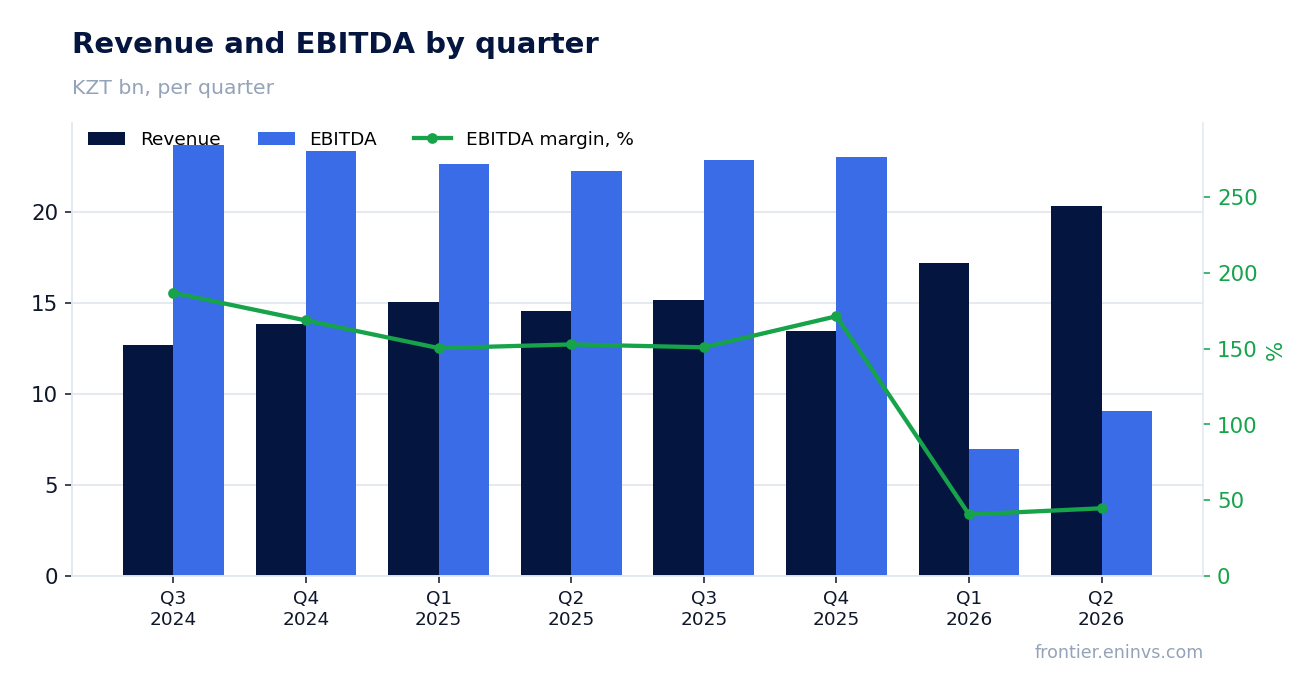
EBITDA margin fell from 152.7% to 44.6%: operating expenses rose 26%
A year ago, EBITDA margin was 152.7% — an abnormally high level when revenue was low and EBITDA was boosted by one-off income. Now, with revenue of 20,338 million KZT, EBITDA was 9,072 million KZT, giving a margin of 44.6%. The 108 pp decline is due not only to rising expenses but also to normalization of the business after a period of volatility.
Operating profit in Q2 2026 was 8,563 million KZT — the first disclosed figure since Q1 2025, when it was 22,135 million KZT. The decline in operating profit compared to last year reflects the same dynamic: revenue growth does not compensate for cost growth. The question is whether the current margin level is the new normal or whether the company can restore it through operating leverage.
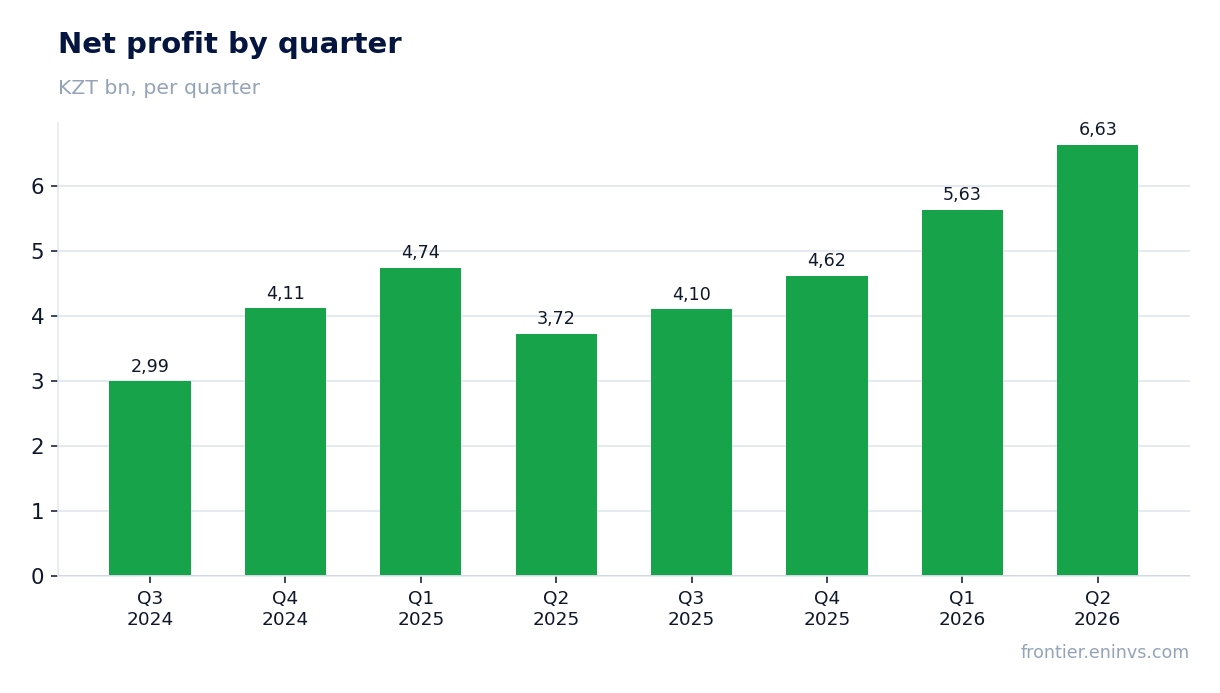
Net profit +78% — but nearly half of the increase is due to one-off factors
Net profit in Q2 2026 rose 78.0% to 6,628 million KZT. However, this growth is partly due to a low base effect: a year ago profit was only 3,723 million KZT due to high provisions (384 million KZT) and low investment income. This quarter, provisions fell to 102 million KZT, and investment income in Asset & Wealth Management more than doubled.
Additionally, the report mentions one-off tax effects: for H1 2026, tax benefits related to employee share-based awards reduced income tax by approximately 965 million KZT, increasing diluted EPS by $3.15. Without these factors, net profit would have been lower, though still significantly above last year's.
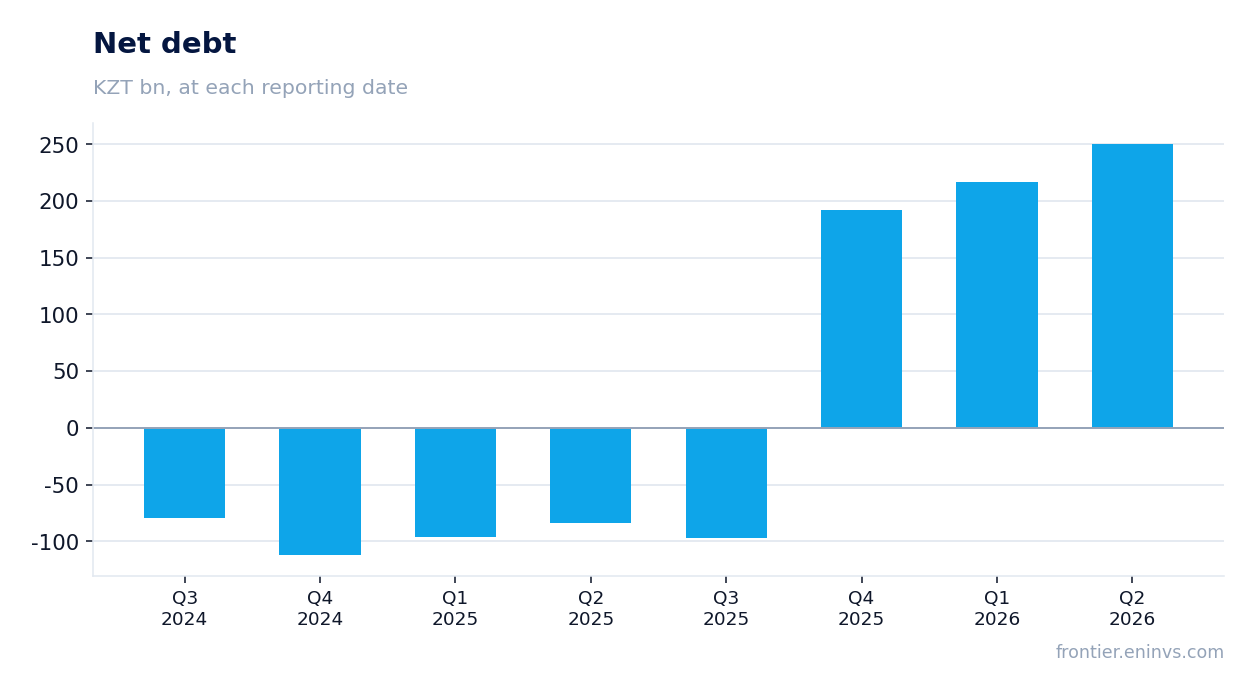
Debt rose by 33.8 billion KZT in the quarter and by 54.6 billion over 12 months — to 250.6 billion
Net debt at the end of Q2 2026 stood at 250,608 million KZT. This is a sharp reversal from negative net debt (net cash) of -83,963 million KZT a year ago. Debt rose by 33.8 billion KZT in the quarter and by 54.6 billion over 12 months. The reason is active borrowing to finance growth and return capital to shareholders.
The rise in debt is accompanied by deteriorating cash flow: operating cash flow over the last 12 months is negative — -45,200 million KZT. This means the company is spending more than it generates and covering the deficit with debt. As long as interest rates allow servicing the debt, but if this dynamic persists, financial stability will be questioned.
Operating cash flow over the last 12 months is negative: minus 45.2 billion KZT
Over the last 12 months (LTM), operating cash flow was -45,200 million KZT. This is not a one-off glitch: in three of the four LTM quarters, OCF was negative, except for Q4 2024, when it reached 46,766 million KZT. OCF volatility is typical for banks, where flows depend on client balances and securities operations, but a sustained negative trend is concerning.
Capital expenditures over the same period were about 2,100 million KZT (sum of quarterly values), significantly less than the operating outflow. This means the company is not generating enough cash even to cover capex, let alone dividends and buybacks. The deficit is financed by debt, increasing the debt burden.
Dividend raised to $5.00 per share, but payouts and buybacks consume capital
The Board of Directors raised the quarterly dividend from $4.50 to $5.00 per share, payable in September 2026. During the quarter, the company returned 5.36 billion KZT to shareholders, including 4.00 billion KZT for share repurchases (4.1 million shares at an average price of $984.57) and 1.36 billion KZT in dividends. This is an aggressive capital return policy.
However, with negative operating cash flow and rising debt, such payouts look risky. The company is borrowing to pay shareholders, which can only be sustainable if high profitability persists. If margins continue to compress, the board will have to choose between dividends and financial stability.
Return on equity 21.6% — above average, but below peak levels
ROE over the last 12 months was 21.6%, above the average for large banks but noticeably below peak levels Goldman Sachs showed during market booms. For comparison, annualized ROE in Q2 2026 reached 23.5%, indicating improvement versus LTM.
High return on equity supports the attractiveness of the shares, but it is sensitive to margin. If EBITDA margin remains at 44.6%, ROE could decline as operating profit grows slower than revenue. Investors should watch whether the company can restore margin without losing growth momentum.
Valuation on the latest reported figures
| Metric | Value |
|---|---|
| Operating cash flow (LTM) | -45.2 bn |
| ROE | 21.6% |
Bottom line
Goldman Sachs had a strong quarter: revenue rose 39.5%, net profit jumped 78%, and ROE remains high. However, growth was bought at the cost of a sharp decline in EBITDA margin from 152.7% to 44.6%, and operating cash flow over 12 months is negative. Debt rose to 250.6 billion KZT, and the company is borrowing to finance capital returns to shareholders. At the current price, the share looks rather attractive: strong growth and high return on equity outweigh, but the key question is whether the company can stabilize margin and cash flow. If not, attractiveness will quickly fade.
Open the company's financial profile GS →
See also: market overview · valuation map · stock screeners