JABIL INC: revenue up 11.8%, but the market punishes the stock — investors expected more from the AI boom
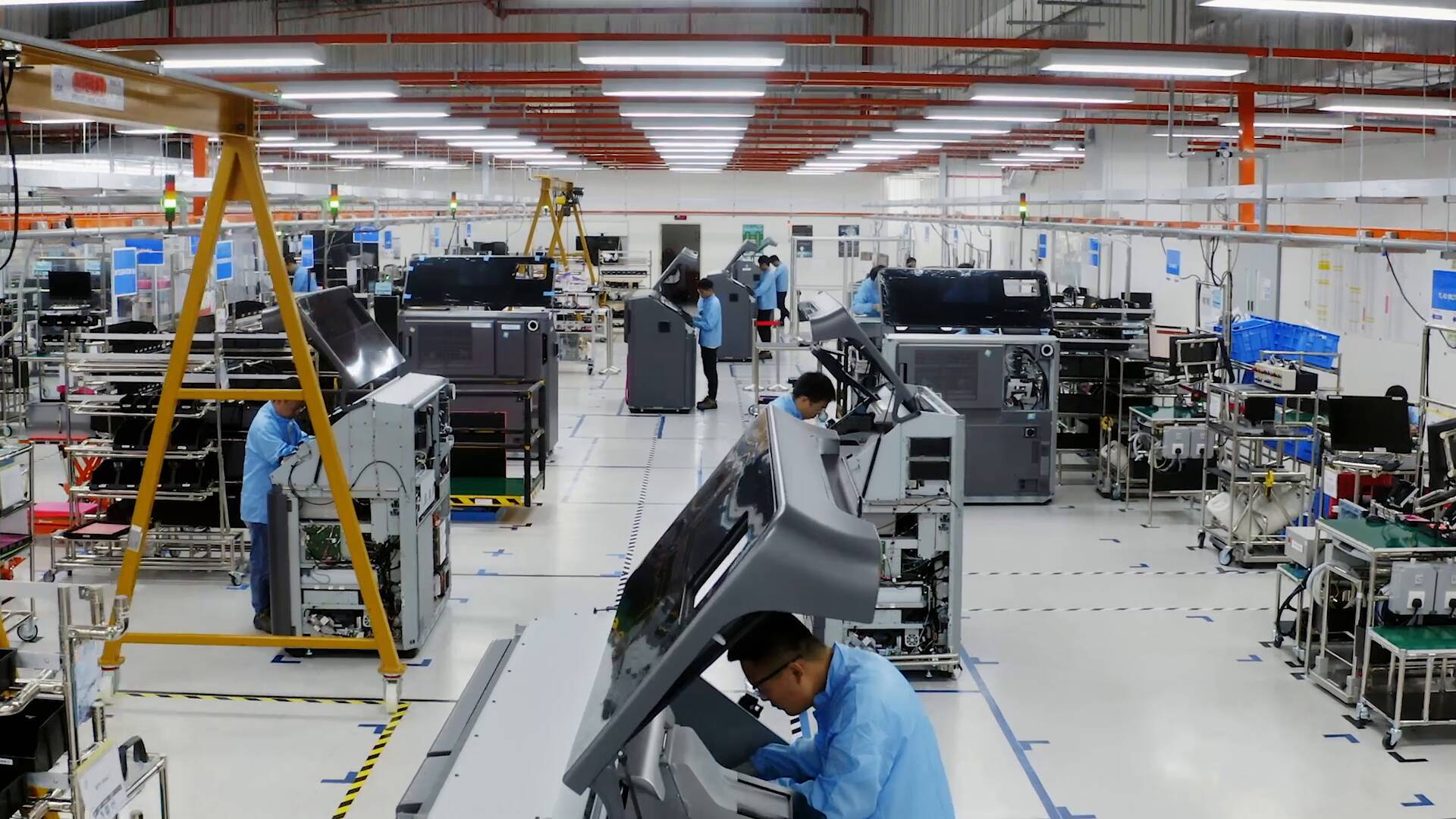
On June 17, 2026, JABIL INC reported results for the third quarter of fiscal 2026. Revenue grew 11.8% YoY to $8,751 million, net profit rose 23.9% to $275 million, yet the stock has fallen 17.1% since the release. Our verdict is 'neutral': the company is growing, but valuation remains high, and the market is disappointed with the pace of growth relative to expectations.
Key takeaways
— Q3 revenue grew 11.8% to $8,751 million, but this is a slowdown after +23.1% in the prior quarter
— EBITDA margin fell from 8.3% to 7.3% — revenue growth did not offset margin pressure
— Net profit rose 23.9% thanks to operating leverage and one-off items
— Leverage remains moderate: net debt/EBITDA LTM is 0.85
— Dividend yield is minimal at 0.1% — not a reason to invest
— Stock fell 17.1% after the report despite raised guidance — the market expected more
— On the portal's model, upside is -1% — valuation is close to fair
Attractiveness
Key figures, USD bn
| Metric | Q3 2025 | Q3 2026 | Change |
|---|---|---|---|
| Revenue | 7.83 | 8.75 | +11.8% |
| EBITDA | 0.65 | 0.64 | -1.7% |
| Operating profit | 0.40 | 0.45 | +10.4% |
| Net profit | 0.22 | 0.28 | +23.9% |
| Operating cash flow | 0.41 | 0.54 | +31.8% |
| Capex | 0.09 | 0.18 | +114.0% |
| EBITDA margin | 8.3% | 7.3% | -1.0 pp |
| Net margin | 2.8% | 3.1% | +0.3 pp |
Q3 revenue grew 11.8% to $8,751 million, but this is a slowdown after +23.1% in the prior quarter
In the third quarter of fiscal 2026 (ended May 31, 2026), JABIL INC's revenue was $8,751 million, up 11.8% YoY. However, in the prior quarter growth was +23.1% — meaning the pace nearly halved. The company attributes the growth to strong AI infrastructure demand and improvements in the automotive and Connected Living segments.
Over the trailing twelve months, revenue reached $33,600 million, confirming a solid upward trend. But the market, judging by the stock price action, expected higher growth rates — especially amid the AI boom, where JABIL is a key contract manufacturer.
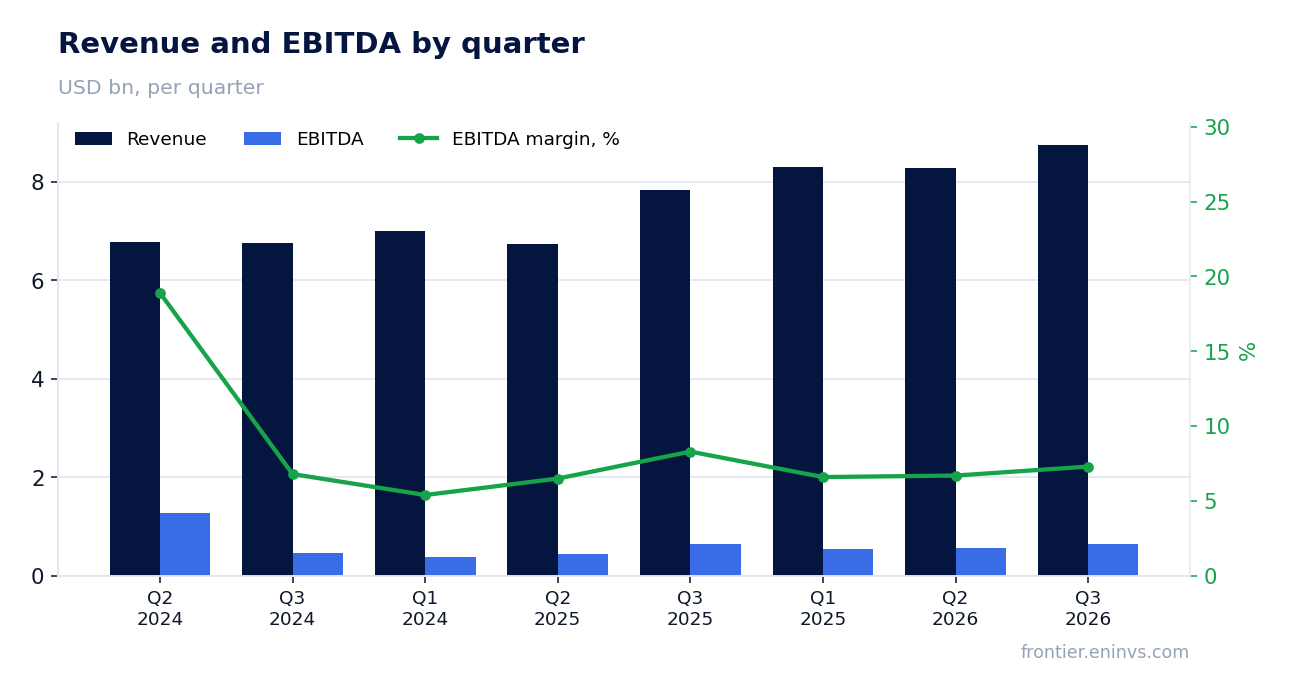
EBITDA margin fell from 8.3% to 7.3% — revenue growth did not offset margin pressure
EBITDA for the reported quarter was $641 million, down 1.7% YoY. EBITDA margin fell from 8.3% to 7.3%. This means the company is growing revenue but cannot proportionally increase profit — likely due to rising input costs, logistics, or changes in order mix.
Operating profit rose from $403 to $445 million, but operating margin remained modest at around 5%. The net profit increase to $275 million (+23.9%) was driven not so much by operational results as by a lower effective tax rate and one-off items.
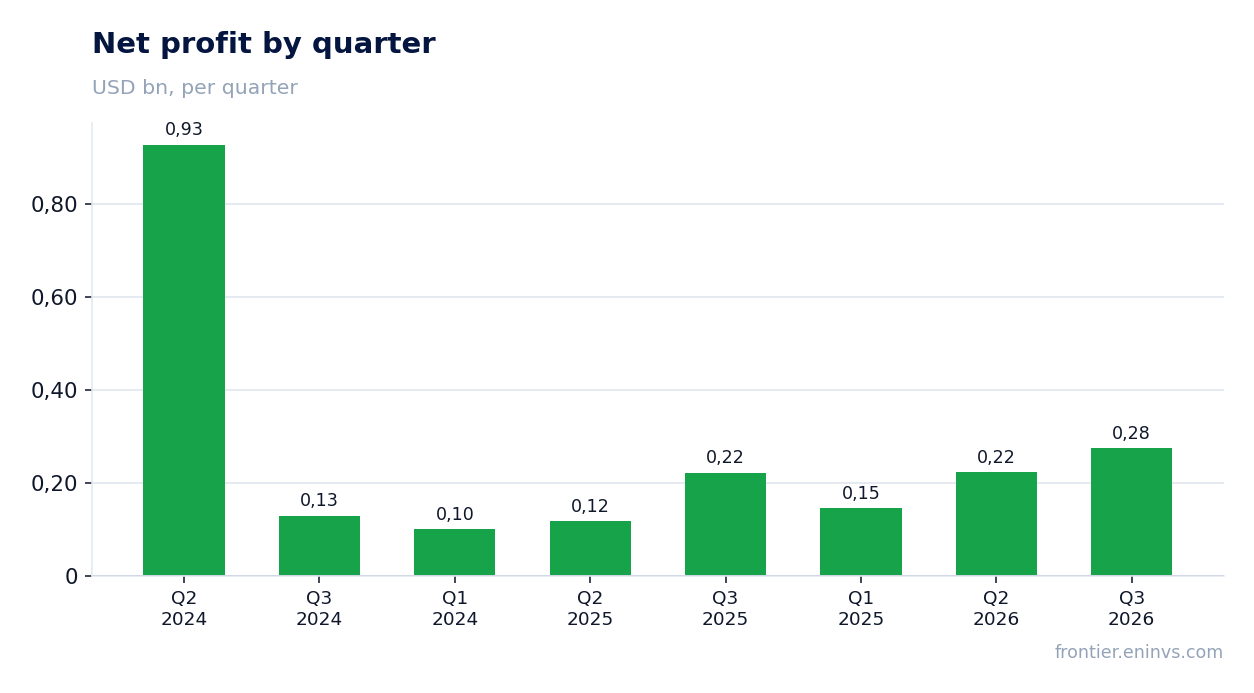
Net profit rose 23.9% thanks to operating leverage and one-off items
Net profit for the quarter was $275 million versus $222 million a year earlier. The 23.9% increase looks impressive, but it is partly due to one-off items: last year there was a $46 million loss on impairment of an investment in preferred stock, as well as restructuring charges. Without these items, growth would have been more modest.
Over the trailing twelve months, net profit reached $862 million, implying a net margin of about 2.6%. This is a low figure for a technology company, reflecting the nature of contract manufacturing with thin margins.
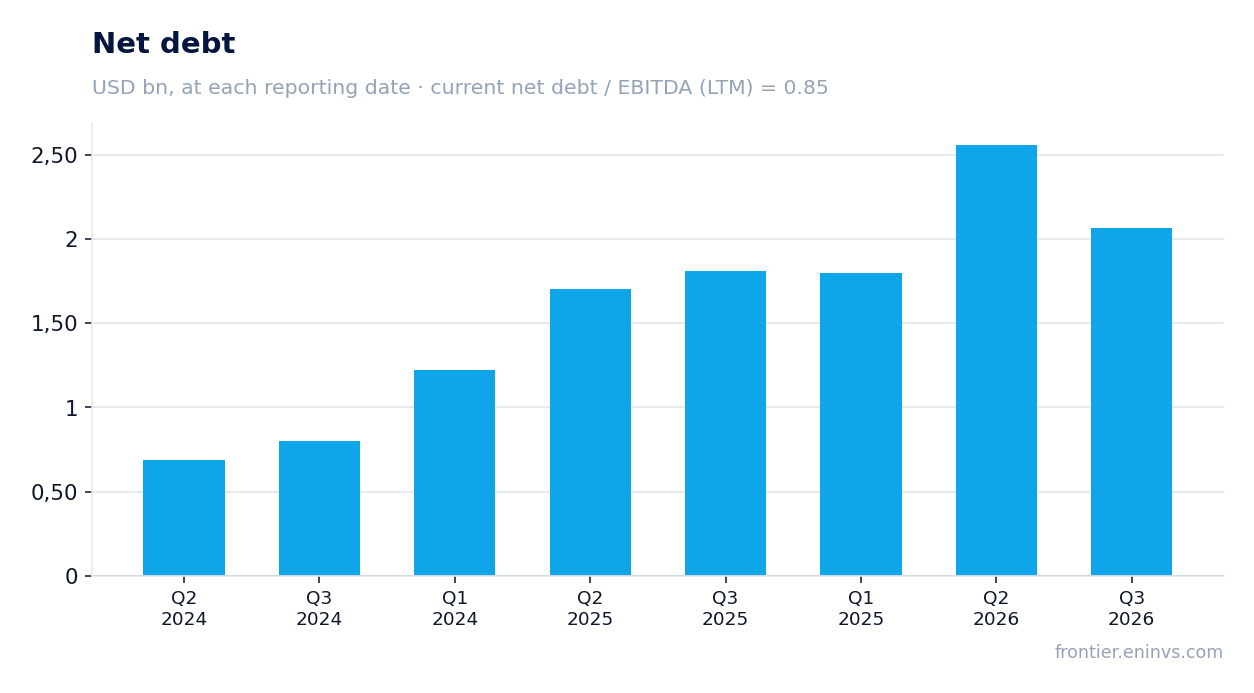
Leverage remains moderate: net debt/EBITDA LTM is 0.85
At the end of the quarter, net debt was $1,798 million, equivalent to 0.85 EBITDA over the trailing twelve months. This is a comfortable level, although net debt increased by $0.3 billion over the year. The company is actively investing in capacity expansion and acquisitions — over nine months, capital expenditures were $382 million, and $852 million was spent on business acquisitions.
Operating cash flow for nine months reached $1,269 million, covering investments, but free cash flow after capex was $991 million (adjusted figure). The company retains financial flexibility for further growth.
Dividend yield is minimal at 0.1% — not a reason to invest
Over the trailing twelve months, JABIL paid dividends of about $27 million (over nine months), corresponding to a yield of just 0.1% at the current price. The company pays dividends, but they are symbolic — the main return to shareholders comes through share buybacks: $891 million was spent on this over nine months.
At such a yield, the dividend does not affect investment attractiveness. For income-oriented investors, JABIL is not suitable — this is a growth story, not a dividend story.
Stock fell 17.1% after the report despite raised guidance — the market expected more
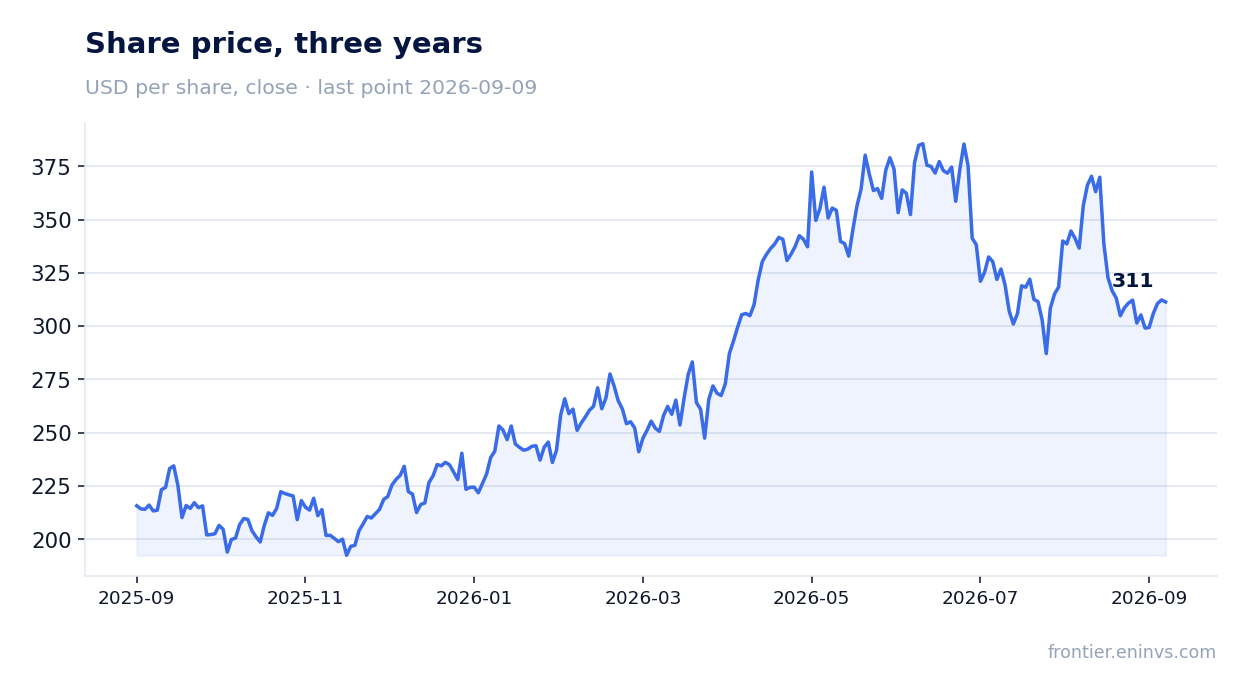
At the time of the report, shares traded at $375.51, the next day they fell 0.1%, and by September 9, 2026, they were down 17.1%. The company raised its full-year fiscal 2026 guidance: revenue of about $35 billion and adjusted EPS of $12.70, but the market apparently expected more aggressive growth.
A 17% drop in three months is a serious correction, especially after strong growth in previous periods. This suggests that investors had priced in very high expectations for the AI direction, and even good results were not enough.
On the portal's model, upside is -1% — valuation is close to fair
Our value model shows that at the current EBITDA level and target multiple, the shares are priced almost fairly: upside potential is -1%. This means the market has already priced in expected profit growth, and further upside would require either faster growth or a lower discount rate.
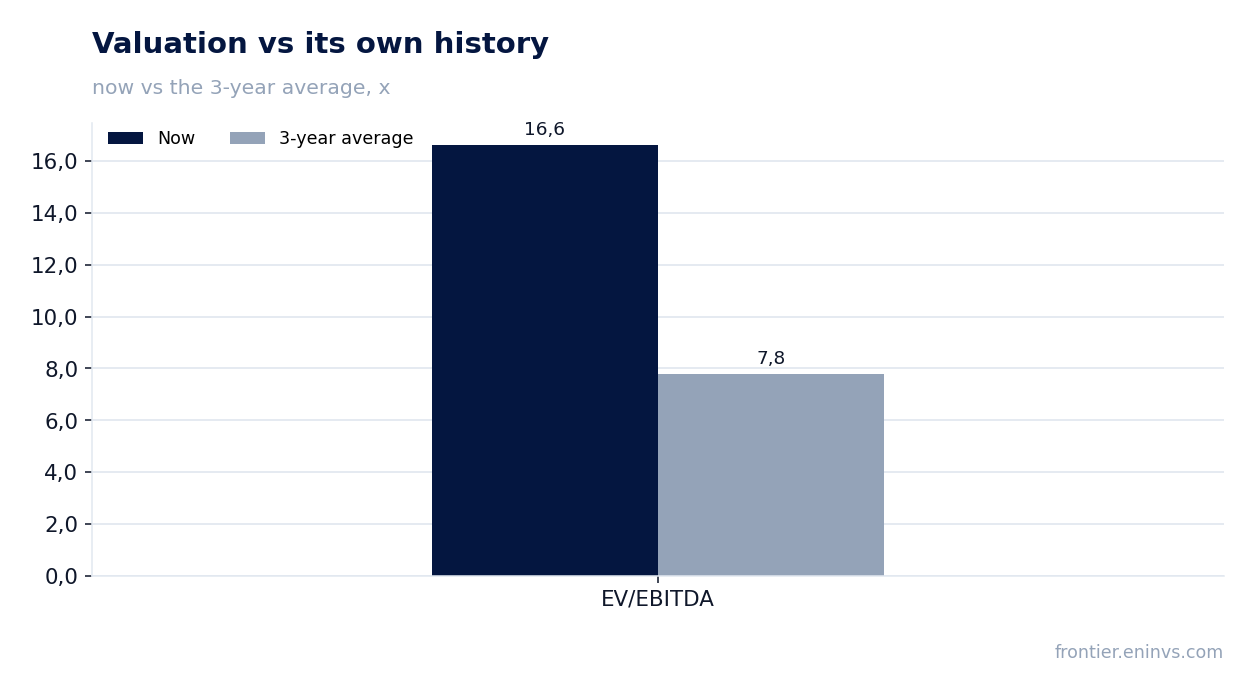
EV/EBITDA LTM is 16.6 versus the three-year average of 7.8 — the stock trades at more than double its own history. P/E LTM is 38.8, also significantly above historical levels. Even with strong growth, this makes the valuation vulnerable to disappointments.
Valuation on the latest reported figures
| Metric | Value |
|---|---|
| Market cap | 33.5 bn USD |
| P/E (LTM) | 38.8 |
| EV/EBITDA (LTM) | 16.6 |
| P/B | 22.12 |
| Net debt / EBITDA (LTM) | 0.85 |
| Operating cash flow (LTM) | 1.60 bn |
| ROE | 27.5% |
| Dividend yield (12m) | 0.1% |
| EV/EBITDA, 3-year average | 7.8 |
Bottom line
JABIL INC shows strong revenue and profit growth, but the pace is slowing and margins are declining. The market punished the stock with a 17% drop, reflecting overly high expectations. Valuation remains high relative to its own history, and upside on our model is negative. For a long-term investor, the key question is whether the company can accelerate growth and stabilize margins. For now, the verdict is 'neutral'.
Open the company's financial profile JBL →
See also: market overview · valuation map · stock screeners