Merck & Co., Inc.: revenue grows, but one-off charges drive a loss and make shares expensive

4 августа 2026 года Merck & Co., Inc. раскрыла результаты за второй квартал 2026 года. Выручка выросла на 5,1% год к году до 16 607 млн долларов, однако чистый убыток составил 1 335 млн долларов против прибыли 4 427 млн годом ранее из-за крупных списаний в R&D. При текущей цене акции выглядят скорее непривлекательно: мультипликаторы значительно выше исторических средних, а убыточность и высокий долг добавляют рисков.
Key takeaways
— Revenue grew 5.1% in Q2, driven by new drugs
— Net loss of $1,335 million due to one-off R&D charges
— Net margin fell from 28.0% to -8.0% on the loss
— Debt rose by $3.4 billion in the quarter to $46,765 million
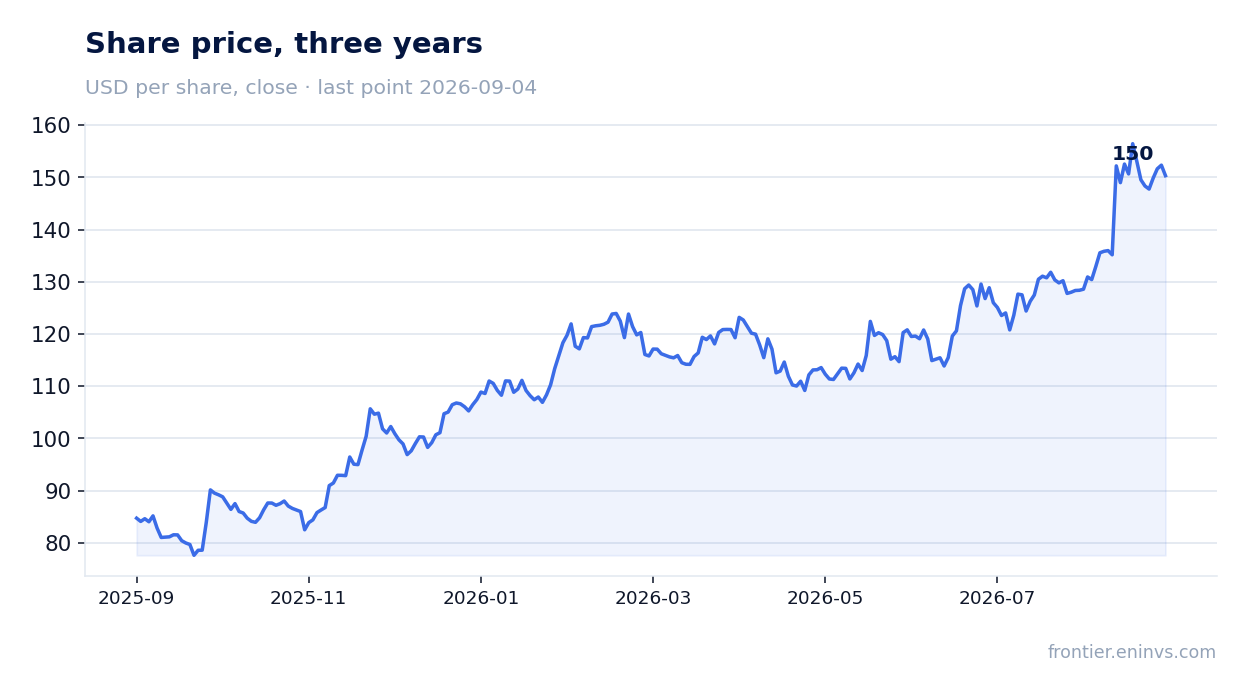
— Shares rose 17.7% after the report, but valuation remains high
— Dividend yield of 2.26% looks moderate amid losses
Attractiveness
Key figures, USD bn
| Metric | Q2 2025 | Q2 2026 | Change |
|---|---|---|---|
| Revenue | 15.8 | 16.6 | +5.1% |
| EBITDA | 5.52 | — | — |
| Operating profit | 5.00 | — | — |
| Net profit | 4.43 | -1.33 | -130.2% |
| Operating cash flow | 3.29 | 5.37 | +63.1% |
| Capex | 0.76 | 0.89 | +16.9% |
| EBITDA margin | 34.9% | — | — |
| Net margin | 28.0% | -8.0% | -36.0 pp |
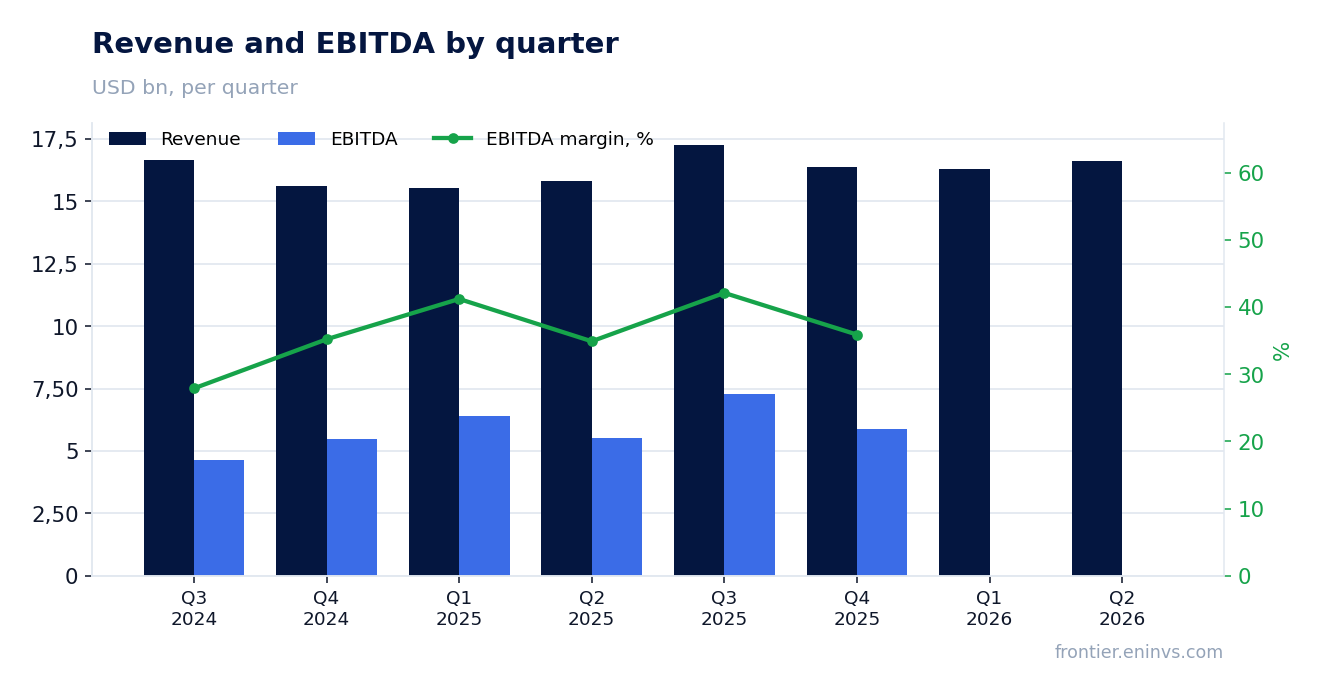
Revenue grew 5.1% in Q2, driven by new drugs
In Q2 2026, Merck & Co., Inc. sales reached $16,607 million, up 5.1% year-over-year. Key contributors were new drugs: Winrevair brought in $588 million (+75%), Ohtuvayre – $204 million (launched in 2025), Capvaxive – $184 million (+42%). The key drug Keytruda declined slightly by 1% to $7,904 million, but the pharmaceutical segment overall grew 5%.
Revenue growth accelerated compared to previous quarters: 4.9% in Q1 2026 and 5.1% in Q2. This confirms that the company is offsetting patent losses on older drugs with new products.
Net loss of $1,335 million due to one-off R&D charges
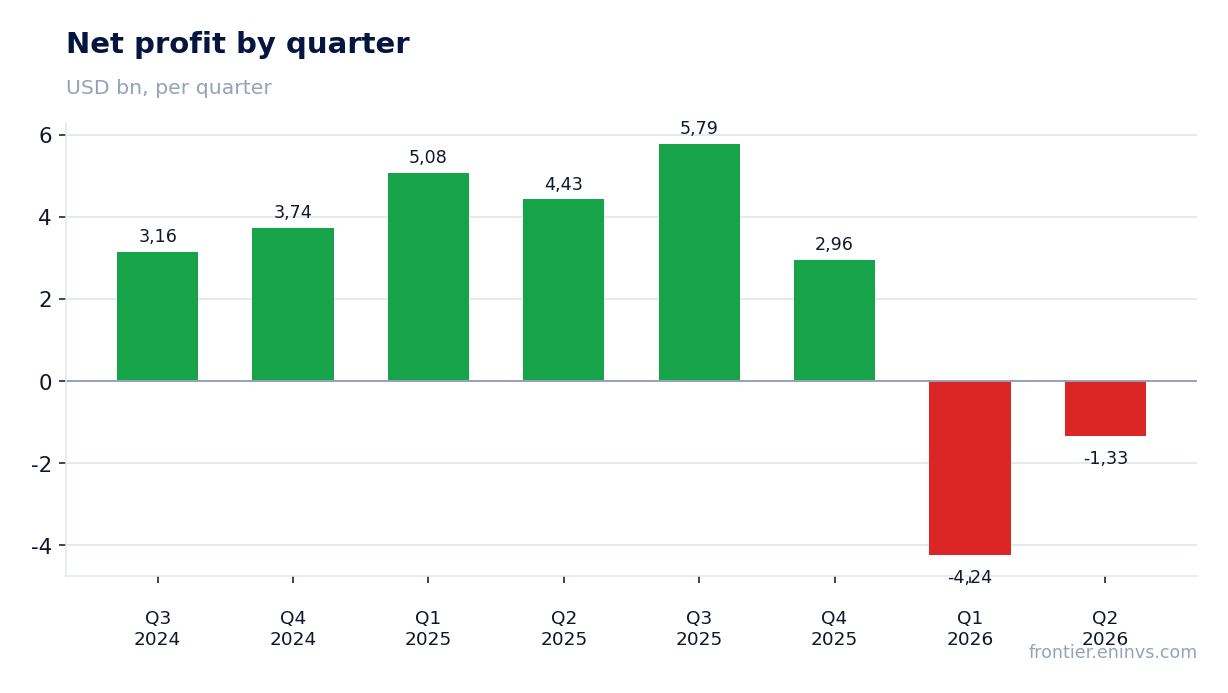
In Q2 2026, Merck & Co., Inc. reported a net loss of $1,335 million versus a profit of $4,427 million a year earlier. The cause is a sharp increase in R&D expenses: they reached $9,741 million versus $4,048 million in Q2 2025. The company notes in the report that this is due to one-off charges, including acquisitions and restructuring.
Excluding these items, adjusted profit would have been $5,366 million, above last year's $4,427 million. However, on a GAAP basis the company is loss-making, which affects balance sheet metrics.
Net margin fell from 28.0% to -8.0% on the loss
In Q2 2026, Merck & Co., Inc.'s net margin was -8.0% versus 28.0% a year earlier. This is a direct consequence of the loss: with revenue of $16,607 million, the net result is negative.
The margin decline is one-off, related to charges, but it shows how volatile the company's profit can be due to large R&D investments. Operating margin excluding charges remains high, but GAAP metrics deteriorated.
Debt rose by $3.4 billion in the quarter to $46,765 million
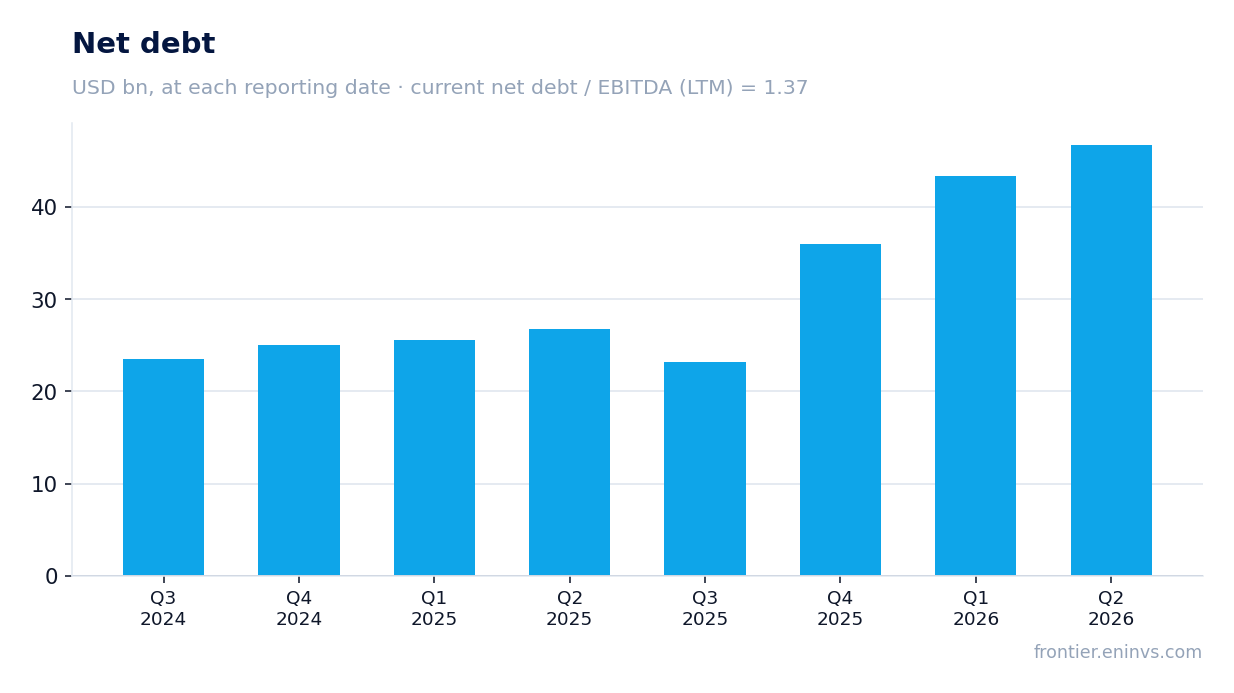
Net debt of Merck & Co., Inc. at the end of Q2 2026 stood at $46,765 million, up $3.4 billion from the previous reporting date. Over the past 12 months, debt increased by $20.0 billion – the company is actively financing R&D and acquisitions with borrowed funds.
Net debt to EBITDA for the trailing twelve months is 1.37 – a moderate level, but with losses and rising debt, financial flexibility is decreasing. The company continues to pay dividends, which also requires cash.
Shares rose 17.7% after the report, but valuation remains high
After the report on August 4, 2026, Merck & Co., Inc. shares rose 17.7% by September 4, with only 0.2% gain on the release day. Investors apparently viewed the prospects of new drugs positively despite the loss.
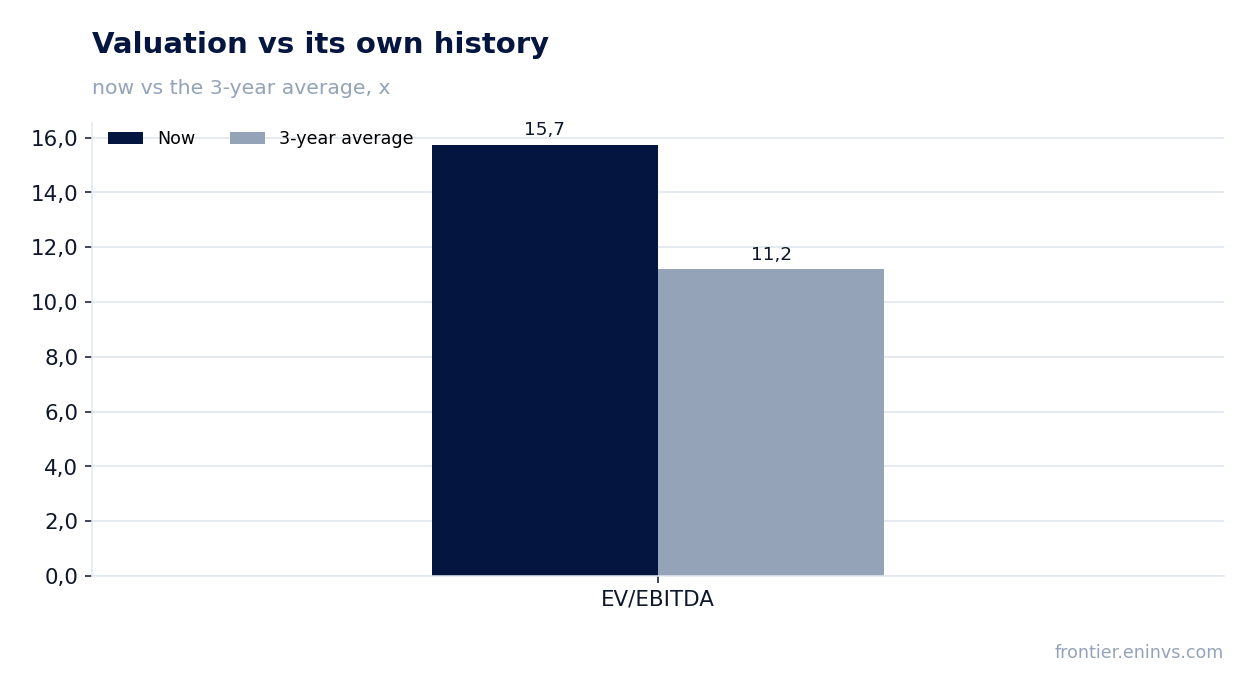
However, valuation remains high: P/E for the trailing twelve months is 118.8, and EV/EBITDA is 15.7 versus the three-year average of 11.2. The stock trades well above its own history, limiting upside potential.
Dividend yield of 2.26% looks moderate amid losses
Merck & Co., Inc.'s current dividend yield for the trailing twelve months is 2.26%. This is below the market average, but for a pharmaceutical company with losses and rising debt, such a level looks moderate.
The company continues to pay dividends, supporting shareholders, but with persistent losses and rising debt, this could become a burden on cash flow. Operating cash flow for the trailing twelve months was $16,500 million, covering dividends, but with capex and debt, the margin of safety is thin.
Valuation on the latest reported figures
| Metric | Value |
|---|---|
| Market cap | 377 bn USD |
| P/E (LTM) | 118.8 |
| EV/EBITDA (LTM) | 15.7 |
| P/B | 7.16 |
| Net debt / EBITDA (LTM) | 1.37 |
| Operating cash flow (LTM) | 16.5 bn |
| ROE | -12.2% |
| Dividend yield (12m) | 2.3% |
| EV/EBITDA, 3-year average | 11.2 |
Bottom line
In Q2 2026, Merck & Co., Inc. showed solid revenue growth of 5.1%, driven by new drugs, but net profit turned negative due to one-off charges of nearly $10 billion. Debt continues to rise, and the share valuation is well above historical averages. At the current price, shares look rather unattractive: investors are paying for future growth that has not yet materialized in profit. To change the assessment, the company needs to return to sustainable profitability and slow debt growth.
Open the company's financial profile MRK →
See also: market overview · valuation map · stock screeners