ORACLE CORP: revenue up 21%, but shares fell 23% – investors question the price of growth
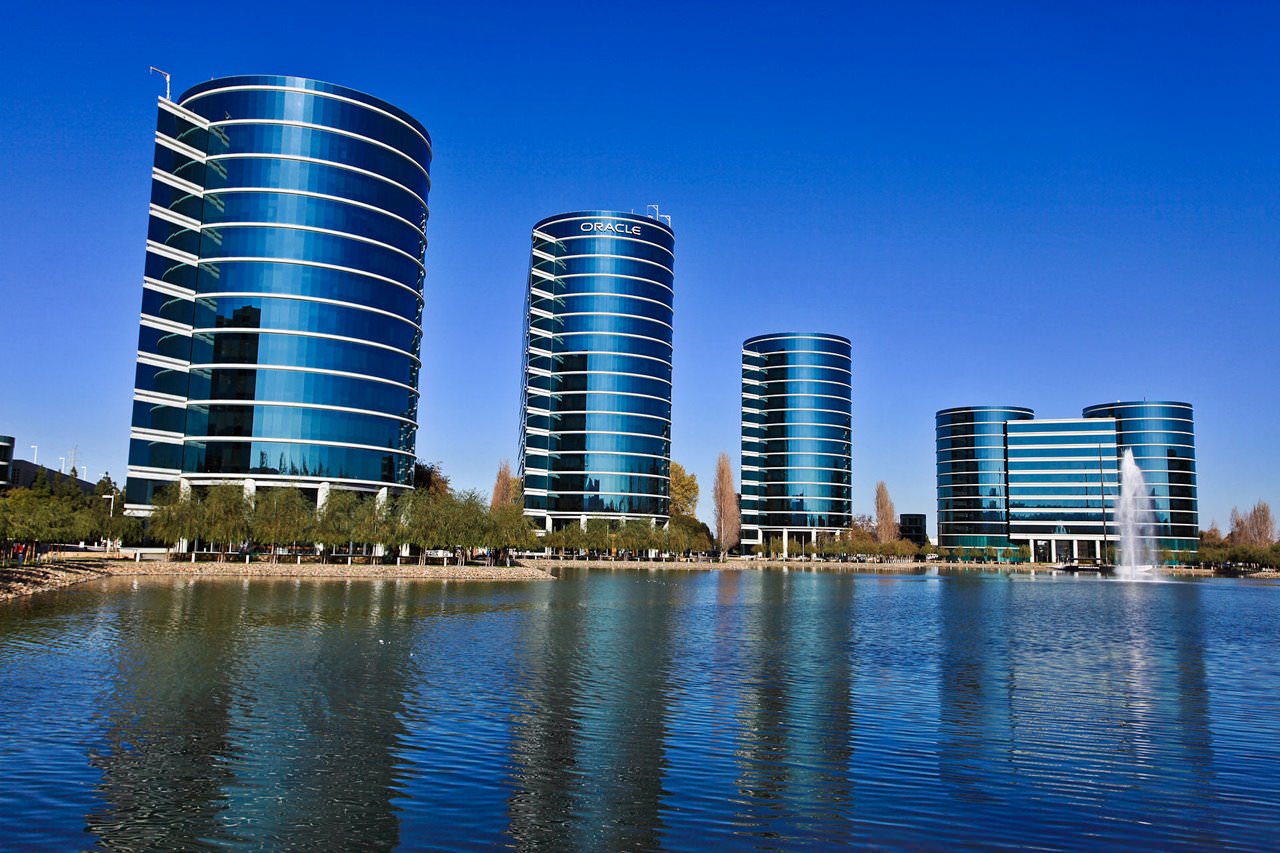
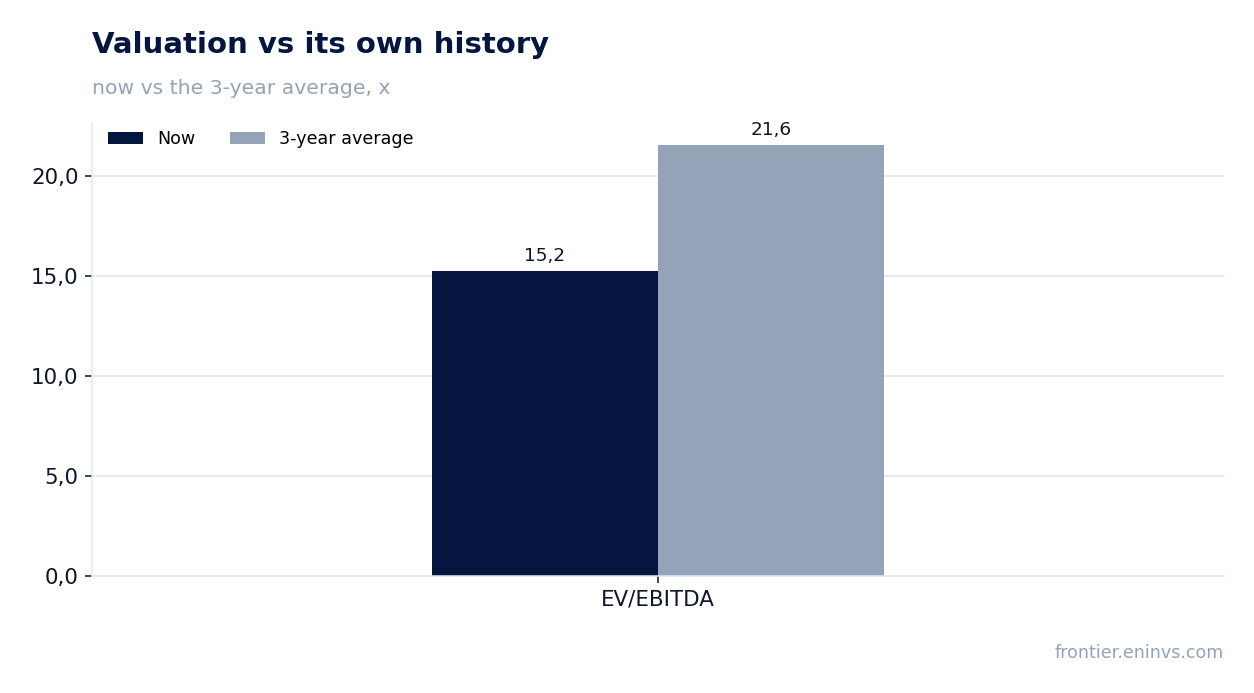
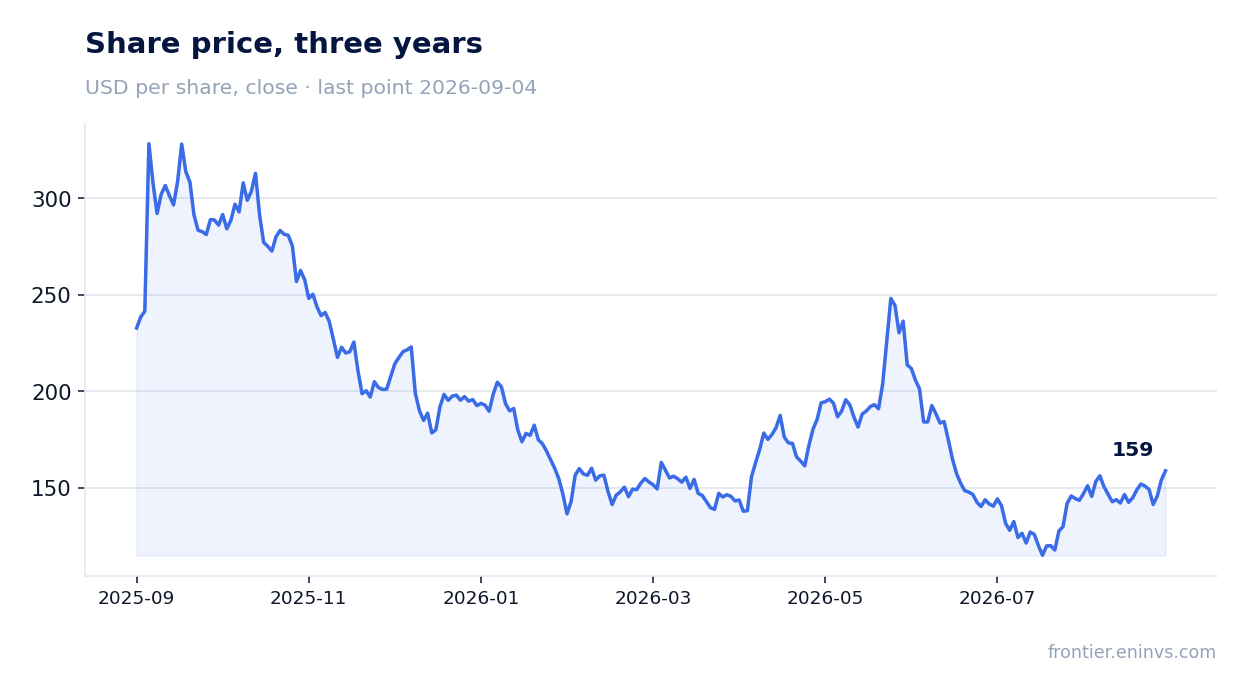
On June 10, 2026, ORACLE CORP reported Q4 FY2026 results: revenue grew 20.6% to $19,184 million, EBITDA rose 32.0% to $8,980 million, and net profit increased 23.2% to $4,223 million. Despite strong numbers, shares fell 2.2% on the release day and another 22.9% by September 4, reflecting concerns about valuation and growth sustainability. At the current price, the share looks rather attractive: EV/EBITDA of 15.25 is below the three-year average of 21.56, and the portal's model implies upside of +48%.
Key takeaways
— Q4 FY2026 revenue grew 20.6% to $19.2 billion, but cloud infrastructure surged 93%
— EBITDA margin reached 46.8% versus 42.8% a year earlier, helped by operational improvements
— RPO reached $638 billion, up $85 billion sequentially, but a large portion is prepaid GPU contracts
— Operating cash flow for the year was $32.0 billion, but free cash flow remained negative due to capex
— Net debt fell to -$24,090 million thanks to capital raises and customer prepayments
— The company reaffirmed its $90 billion revenue target for FY2027, raising non-GAAP EPS guidance to $8.05
— Shares fell 22.9% after the report despite strong results, due to valuation and growth sustainability concerns
Attractiveness
Key figures, USD bn
| Metric | Q4 2025 | Q4 2026 | Change |
|---|---|---|---|
| Revenue | 15.9 | 19.2 | +20.6% |
| EBITDA | 6.80 | 8.98 | +32.0% |
| Operating profit | 5.11 | 6.13 | +20.0% |
| Net profit | 3.43 | 4.22 | +23.2% |
| Operating cash flow | 6.16 | 14.6 | +137.5% |
| Capex | 9.08 | 16.5 | +81.6% |
| EBITDA margin | 42.8% | 46.8% | +4.0 pp |
| Net margin | 21.5% | 22.0% | +0.5 pp |
Q4 FY2026 revenue grew 20.6% to $19.2 billion, but cloud infrastructure surged 93%
In Q4 FY2026, ORACLE CORP's total revenue reached $19,184 million, up 20.6% year-over-year. The main driver was cloud services: revenue grew 47% to $9,913 million, with cloud infrastructure (IaaS) surging 93% to $5,787 million, while cloud applications (SaaS) grew only 10% to $4,126 million.
Traditional software continues to shrink: license revenue fell 6% to $1,881 million, while support remained nearly flat at $4,943 million, up less than 1%. This confirms the long-running shift of customers from on-premise to cloud, which the company explicitly cites as the reason for the software decline.
The 93% IaaS growth is not just a base effect: in the prior quarter (Q3 FY2026), cloud infrastructure grew 84%, and a year earlier 52%. Acceleration is evident, and it is supported by record RPO growth, discussed below.
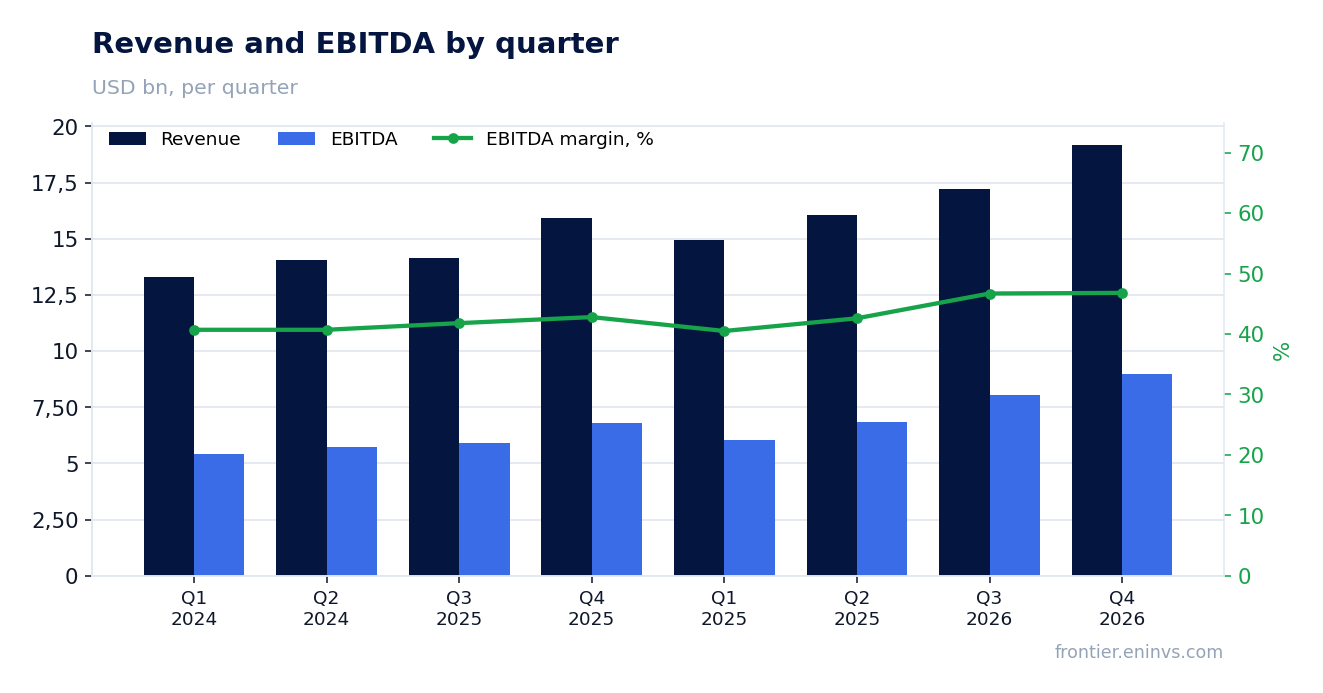
EBITDA margin reached 46.8% versus 42.8% a year earlier, helped by operational improvements
EBITDA in the reported quarter grew 32.0% to $8,980 million, significantly outpacing revenue growth. As a result, EBITDA margin expanded from 42.8% to 46.8% – a record level for the company, achieved amid the scaling of the cloud business.
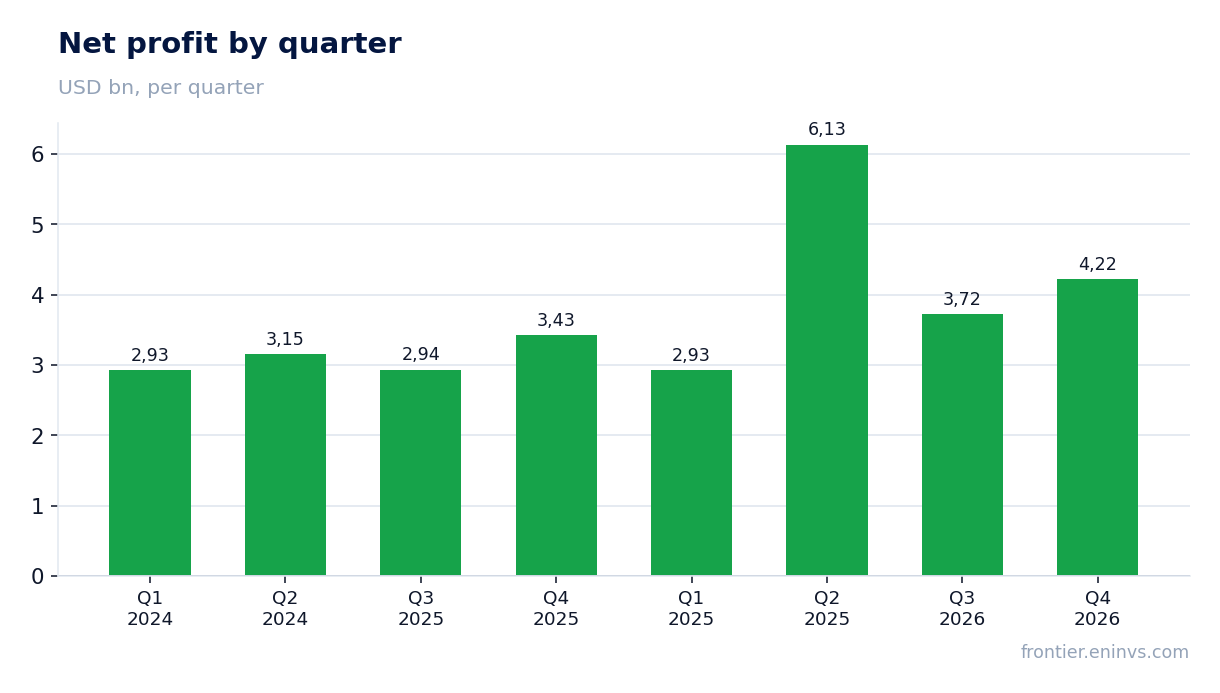
GAAP operating profit grew 20% to $6,133 million, but included one-off restructuring charges of $823 million – nearly ten times higher than a year earlier. Excluding these costs, non-GAAP operating profit would have been $8,590 million, up 22% year-over-year.
Margin expansion is a key signal for investors: cloud infrastructure, despite huge capex, is beginning to deliver operational efficiency. However, part of the profit growth was driven by one-off investment gains: without them, non-GAAP EPS would have been $2.03, not $2.11.
RPO reached $638 billion, up $85 billion sequentially, but a large portion is prepaid GPU contracts
Remaining performance obligations (RPO) at quarter-end reached $638 billion, up $85 billion sequentially and 363% year-over-year. This is a record level that formally provides revenue visibility for years ahead.
However, the company explicitly discloses that a significant portion of the RPO increase in Q3 and Q4 came from large AI contracts where customers either prepaid for GPU purchases or supplied the GPUs themselves. Such prepayments and customer-supplied hardware reached $75 billion, reducing Oracle's need for external financing of data centers.
For investors, this is a double-edged signal: on one hand, demand for AI infrastructure is huge and backed by cash; on the other, part of RPO will not translate into proportional revenue growth, as hardware does not generate cloud margins. Nevertheless, prepayments improve cash flow and reduce debt burden.
Operating cash flow for the year was $32.0 billion, but free cash flow remained negative due to capex
Over the trailing twelve months, ORACLE CORP's operating cash flow reached $32,000 million, up 54% year-over-year. This is a record result, which the company attributes to profit growth and customer prepayments on AI contracts.
However, capital expenditures for the same period totaled $55,663 million (per the FY2026 cash flow statement), resulting in negative free cash flow of -$23,686 million. The company continues to aggressively invest in data center construction, a deliberate choice by management for future growth.
For shareholders, this means dividends and debt service are funded by capital raises, not free cash flow. In FY2026, Oracle raised $43 billion in debt financing and $5 billion in equity, and plans approximately $40 billion more in FY2027.
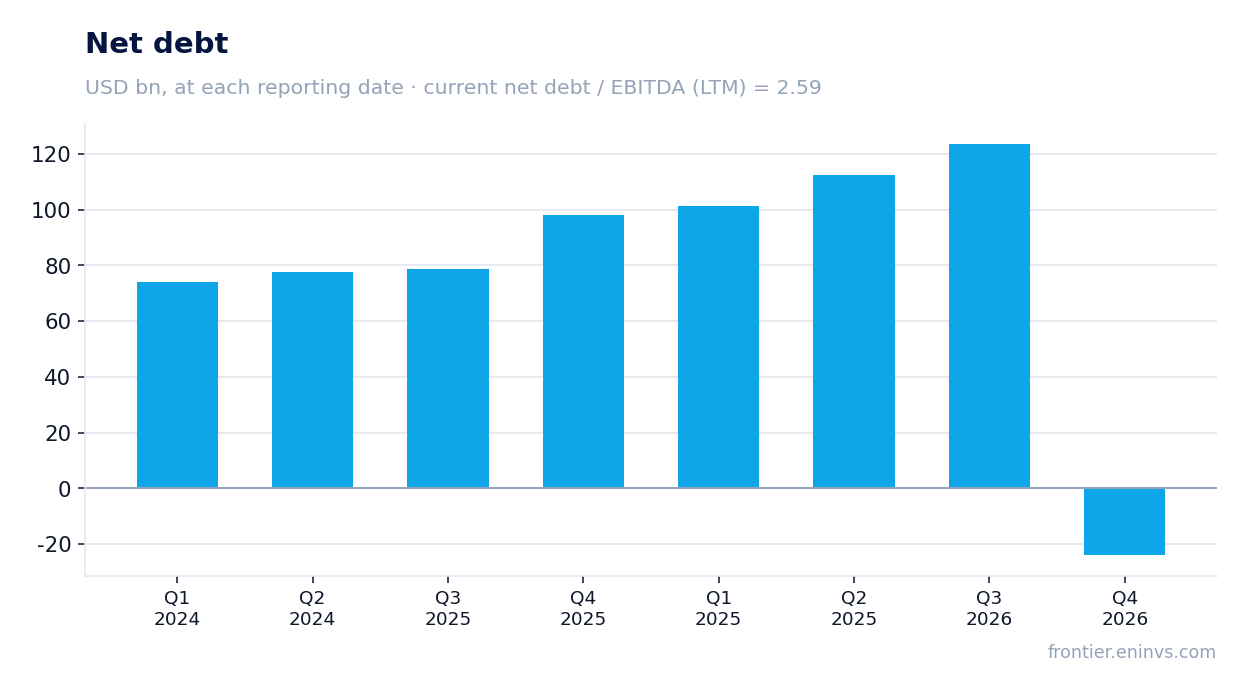
Net debt fell to -$24,090 million thanks to capital raises and customer prepayments
At the latest balance sheet date, the company's net debt stood at -$24,090 million, meaning cash and liquid investments exceeded debt. This is a sharp improvement from the prior quarter, when net debt was $123,710 million.
The jump is explained by a combination of factors: the company raised significant funds through debt and equity issuances, and received large customer prepayments on AI contracts. At year-end, cash and equivalents totaled $31,289 million versus $10,786 million a year earlier.
Net debt to EBITDA for the trailing twelve months is 2.59 – a level the company can service without difficulty, especially given that part of the debt is effectively backed by future prepayments. Nevertheless, plans to raise another $40 billion in FY2027 mean leverage could rise again.
The company reaffirmed its $90 billion revenue target for FY2027, raising non-GAAP EPS guidance to $8.05
In the report, management reaffirmed its FY2027 total revenue target of $90 billion, implying growth of approximately 34% over the actual FY2026 result ($67,357 million). The non-GAAP EPS forecast was raised to $8.05, up 18% from the adjusted FY2026 figure.
For Q1 FY2027, the company expects revenue growth of 27–29% year-over-year, with cloud revenue growing 57–63% in constant currency. This indicates management's confidence in sustaining high growth rates, especially in IaaS.
For investors, the FY2027 revenue target looks ambitious but achievable given current RPO levels. However, part of RPO is tied to prepaid hardware that will not yield high margins, so actual revenue growth may be accompanied by margin pressure.
Shares fell 22.9% after the report despite strong results, due to valuation and growth sustainability concerns
ORACLE CORP's share price before the release was $205.81, fell 2.2% on the release day, and dropped 22.9% from the post-release level by September 4, 2026. Thus, the market reacted negatively to the report despite record results.
The reason for this divergence likely lies in valuation: even after the decline, market capitalization is $480,038 million, and trailing P/E is 28.23. This is a high multiple that suggests investors had already priced in significant growth, and any doubt about its sustainability triggers a correction.
On the other hand, EV/EBITDA currently stands at 15.25, below the three-year average of 21.56. This indicates the stock is trading at a discount to its own history, and if the company continues to meet forecasts, the potential for a recovery is significant.
Valuation on the latest reported figures
| Metric | Value |
|---|---|
| Market cap | 480 bn USD |
| P/E (LTM) | 28.2 |
| EV/EBITDA (LTM) | 15.2 |
| P/B | 23.47 |
| Net debt / EBITDA (LTM) | 2.59 |
| Operating cash flow (LTM) | 32.0 bn |
| ROE | 41.4% |
| Dividend yield (12m) | 1.2% |
| EV/EBITDA, 3-year average | 21.6 |
Bottom line
ORACLE CORP's Q4 FY2026 report was strong: revenue and EBITDA grew at double-digit rates, margin expanded to a record 46.8%, and RPO reached $638 billion, confirming huge demand for AI infrastructure. However, behind these figures are one-off factors: customer prepayments for GPUs, investment gains, and massive borrowings that finance negative free cash flow. Shares fell 22.9% after the report, and now EV/EBITDA stands at 15.25 versus the three-year average of 21.56, offering potential for recovery if the company continues to meet its ambitious forecasts. The main question for holders is whether ORACLE CORP can convert its huge capex into sustainable profit and cash flow growth without excessively increasing debt. In our view, at the current price the share is rather attractive: the portal's model implies upside of +48%, and risks are partially priced in.
Open the company's financial profile ORCL →
See also: market overview · valuation map · stock screeners