Progressive: growth slowed to 7.3%, but underwriting remains strong, while debt rose by $8.3 billion

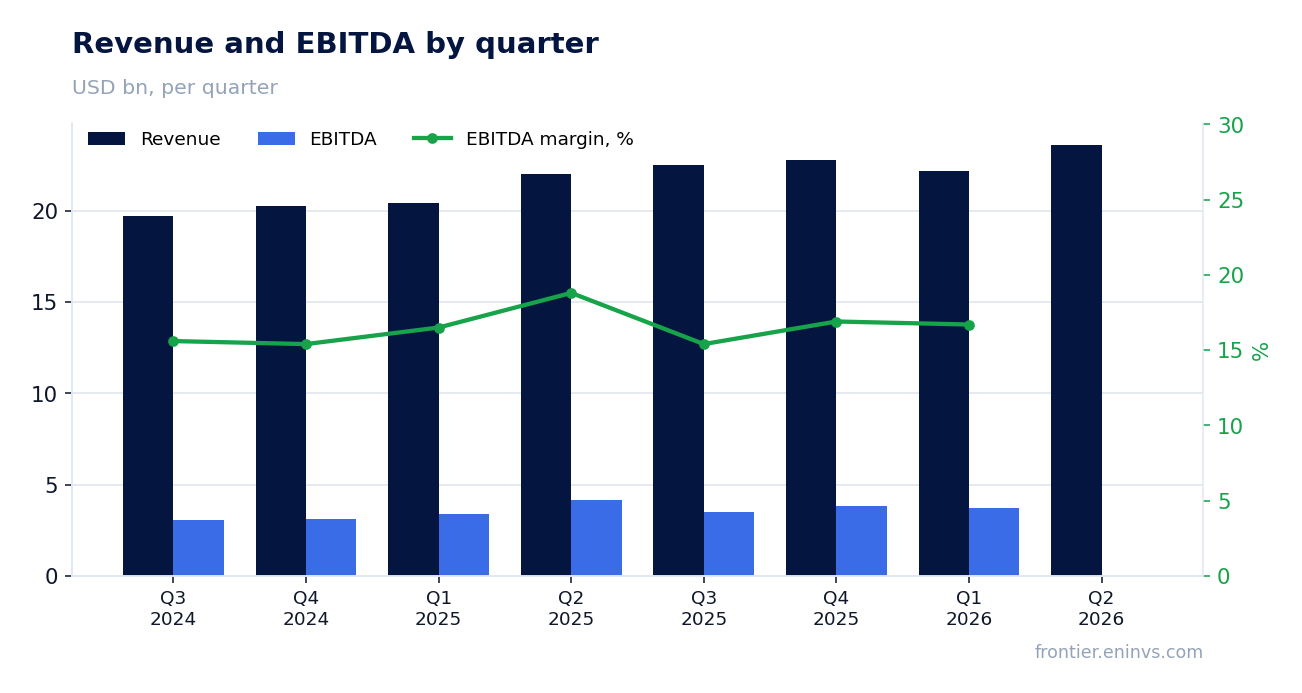
15 июля Progressive раскрыла результаты за второй квартал 2026 года: выручка выросла на 7,3% год к году, до 23 609 млн долларов, чистая прибыль – на 4,3%, до 3 311 млн. Рост замедлился почти втрое по сравнению с пиком годичной давности, но combined ratio 87,3% за квартал остаётся сильным. При текущей цене акция выглядит скорее привлекательно: замедление темпов уже отражено в котировках, а качество андеррайтинга и высокая рентабельность собственного капитала поддерживают оценку.
Key takeaways
— Выручка во втором квартале выросла на 7,3%, но это вдвое медленнее, чем год назад
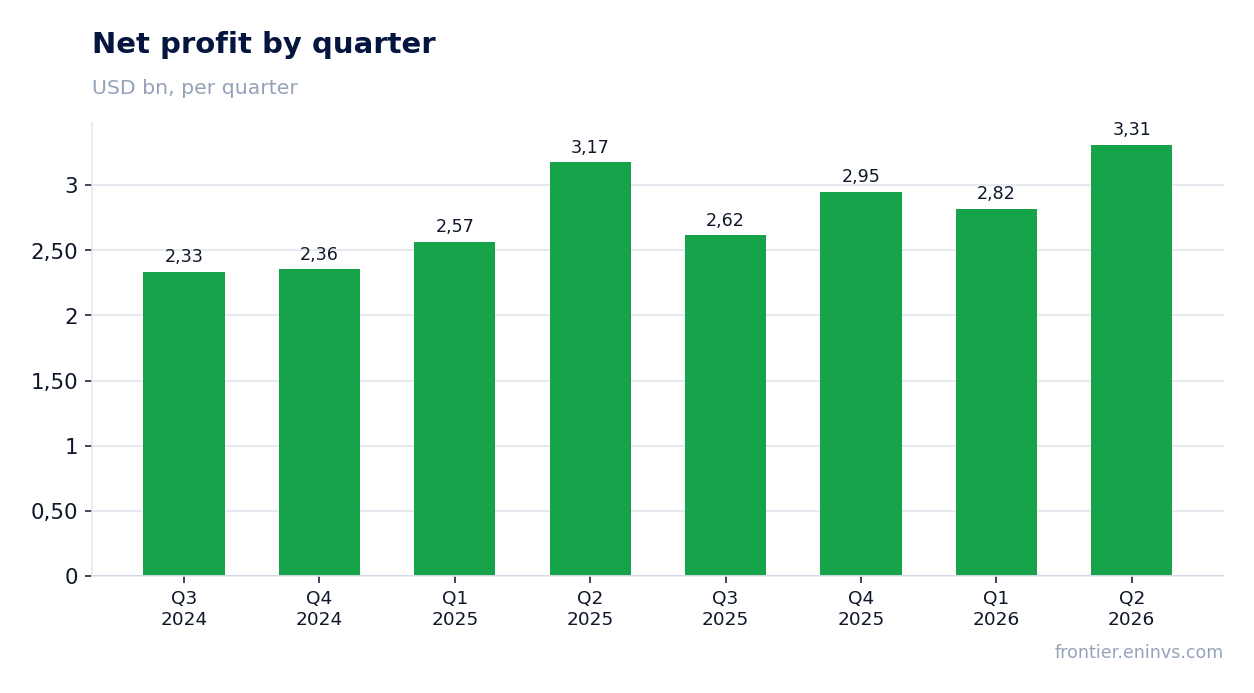
— Чистая прибыль выросла лишь на 4,3% из-за роста расходов на урегулирование убытков
— Combined ratio 87,3% – андеррайтинг остаётся сильным, несмотря на замедление
— Чистый долг вырос на 8,3 млрд долларов за год – компания привлекла заимствования
— Рентабельность собственного капитала 39,9% – почти вдвое выше средней по рынку
— Операционный денежный поток за 12 месяцев – 17,5 млрд долларов, капитальные затраты минимальны
Attractiveness
Key figures, USD bn
| Metric | Q2 2025 | Q2 2026 | Change |
|---|---|---|---|
| Revenue | 22.0 | 23.6 | +7.3% |
| EBITDA | 4.13 | — | — |
| Net profit | 3.17 | 3.31 | +4.3% |
| Operating cash flow | 4.04 | 3.61 | -10.7% |
| Capex | 0.10 | 0.14 | +35.3% |
| EBITDA margin | 18.8% | — | — |
| Net margin | 14.4% | 14.0% | -0.4 pp |
Revenue grew 7.3% in Q2, but that is half the pace of a year ago
In Q2 2026, Progressive's revenue reached $23,609 million, up 7.3% from the same period a year earlier. A year ago, growth was 21.3% – a slowdown of more than half. Quarterly momentum has steadily declined from +18.4% in Q1 2025 to +7.3% now.
The main revenue driver is insurance premiums: net premiums earned rose 6% to $21,573 million in the quarter. The company continues to expand its policy portfolio, up 7% year-over-year to 40.1 million policies. But growth is decelerating, as reflected in both premium trends and new policy counts.
Net profit rose only 4.3% due to higher loss adjustment expenses
Net profit for Q2 reached $3,311 million, up 4.3% year-over-year. Profit growth lags revenue growth: net margin fell from 14.4% to 14.0%.
The main reason is faster growth in loss adjustment expenses: they rose 8.5% to $4,937 million in the quarter, while revenue grew only 7.3%. The report also shows net realized losses on securities of $13 million versus gains of $179 million a year ago, further reducing profit.
Combined ratio of 87.3% – underwriting remains strong despite slowdown
The combined ratio for the quarter was 87.3%, versus 86.2% a year ago. The deterioration of 1.1 percentage points is moderate, and the ratio remains well below 100%, meaning the company earns from underwriting, not just investments.
In June, the combined ratio was worse – 90.0% versus 86.6% a year ago, reflecting higher catastrophe losses: the net catastrophe loss ratio for the month was 2.4% versus 0.6% a year ago. However, for the quarter as a whole, catastrophe impact was limited – 2.4% versus 0.4% a year ago, and the company saw favorable prior-year reserve development of $236 million for the month.
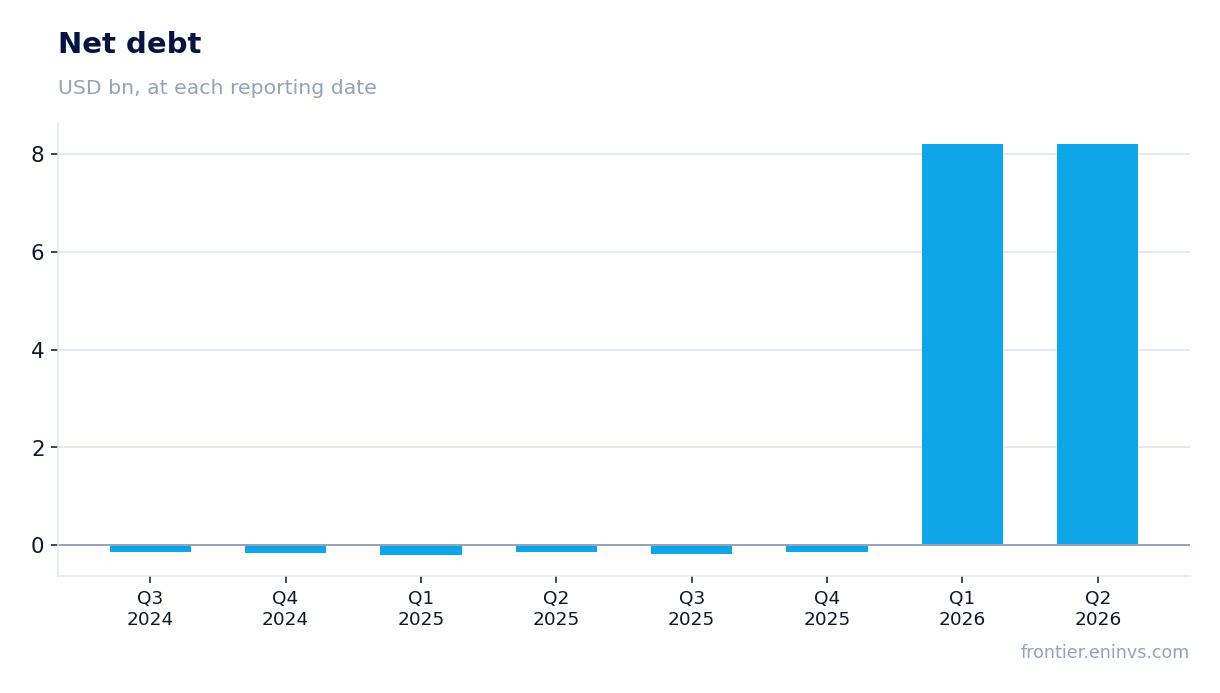
Net debt rose by $8.3 billion over the year – the company took on borrowings
On the balance sheet at end-June 2026, net debt stood at $8,194 million, versus negative net debt of -$138 million a year earlier. Over the year, the company took on significant borrowings: debt on the balance sheet rose to $8,387 million, while cash and investments considered in net debt changed less.
The debt increase likely relates to investments in a subsidiary – the report mentions $7 billion of investments in a consolidated, non-insurance subsidiary of the holding company. The debt-to-total capital ratio is 19.6% – a moderate level for an insurer, and quarterly interest expense rose only $3 million year-over-year.
ROE of 39.9% – nearly double the market average
Return on equity for the trailing twelve months was 39.9% – an exceptionally high figure, reflecting both strong underwriting and efficient capital use. Shareholders' equity at quarter-end was $34,333 million, with book value per share of $59.05.
High profitability supports the company's ability to generate earnings without raising additional capital, which is important amid slowing growth. Even with decelerating premium growth, Progressive maintains the ability to earn well above its cost of capital.
Operating cash flow of $17.5 billion over 12 months, with minimal capex
Over the trailing twelve months, Progressive's operating cash flow was $17,500 million – well above net profit for the same period (about $11.7 billion, summing quarterly figures). Capital expenditures for the year were about $388 million, meaning the company converts almost all operating profit into free cash flow.
Such cash flow provides resources for dividends and share buybacks: in June alone, the company repurchased 845,952 shares at an average price of $201.16. The ability to generate cash remains a key factor in investment attractiveness, even as growth slows.
Valuation on the latest reported figures
| Metric | Value |
|---|---|
| Operating cash flow (LTM) | 17.5 bn |
| ROE | 39.9% |
Bottom line
Progressive reported a quarter with slowing growth but no signs of deteriorating business quality: a combined ratio of 87.3% remains strong, ROE is 39.9%, and operating cash flow of $17.5 billion over 12 months comfortably covers minimal capex. The $8.3 billion rise in net debt is the main new factor, but at 19.6% of capital, it is not yet a concern. The share looks rather attractive: the market has already priced in the slowdown, and the company's ability to earn above its cost of capital persists. The key question for holders is not the slowdown itself, but whether Progressive can maintain underwriting discipline amid intensifying competition.
Open the company's financial profile PGR →
See also: market overview · valuation map · stock screeners