Lojas Renner: revenue up 10.7% but EBITDA margin compressed to 20.4%
On August 13, Lojas Renner reported results for the second quarter of 2026. Revenue rose 10.7% year-on-year to USD 827.4 million, EBITDA added 5.2% to USD 168.4 million, and net profit increased 9.8% to USD 79.7 million. The EBITDA margin narrowed to 20.4% from 21.4% a year earlier, while the net margin was almost unchanged at 9.6%. With an EV/EBITDA multiple of 3.2 and a dividend yield of 8.1%, the stock looks attractive, but margin compression and the absence of a clear catalyst for its recovery keep us from a higher rating.
Key takeaways
— Revenue rose 10.7% year-on-year to USD 827.4 million but slowed from 15.7% in the first quarter
— EBITDA added only 5.2%, and its margin compressed to 20.4% from 21.4% a year earlier
— Net profit increased 9.8% to USD 79.7 million, while the net margin was almost unchanged at 9.6%
— Operating cash flow for the quarter was USD 126.6 million, 3.9 times capital expenditure of USD 32.9 million
— Net debt is negative: a cash cushion of USD 228.3 million exceeds debt obligations
— The trailing 12-month dividend yield is 8.1%, above the key rate
— The portal's model estimates upside to fair value at 8%
Attractiveness
Key figures, USD bn
| Metric | Q2 2025 | Q2 2026 | Change |
|---|---|---|---|
| Revenue | 0.75 | 0.83 | +10.7% |
| EBITDA | 0.16 | 0.17 | +5.2% |
| Operating profit | 0.10 | 0.10 | +3.6% |
| Net profit | 0.07 | 0.08 | +9.8% |
| Operating cash flow | 0.07 | 0.13 | +75.5% |
| Capex | 0.03 | 0.03 | -0.1% |
| EBITDA margin | 21.4% | 20.4% | -1.0 pp |
| Net margin | 9.7% | 9.6% | -0.1 pp |
Revenue rose 10.7% year-on-year to USD 827.4 million but slowed from 15.7% in the first quarter
In the second quarter of 2026, Lojas Renner's revenue reached USD 827.4 million, up 10.7% from the same period last year. This is a slowdown from 15.7% growth in the first quarter of 2026. Nevertheless, the absolute revenue level was the highest in at least five quarters, exceeding the previous peak of USD 747.5 million in the second quarter of 2025.
The slowdown may reflect a high base effect: in the second quarter of 2025, revenue grew 19.1% year-on-year. At the same time, sequential growth to the second quarter of 2026 was 23.3% versus the first quarter, indicating continued positive momentum.
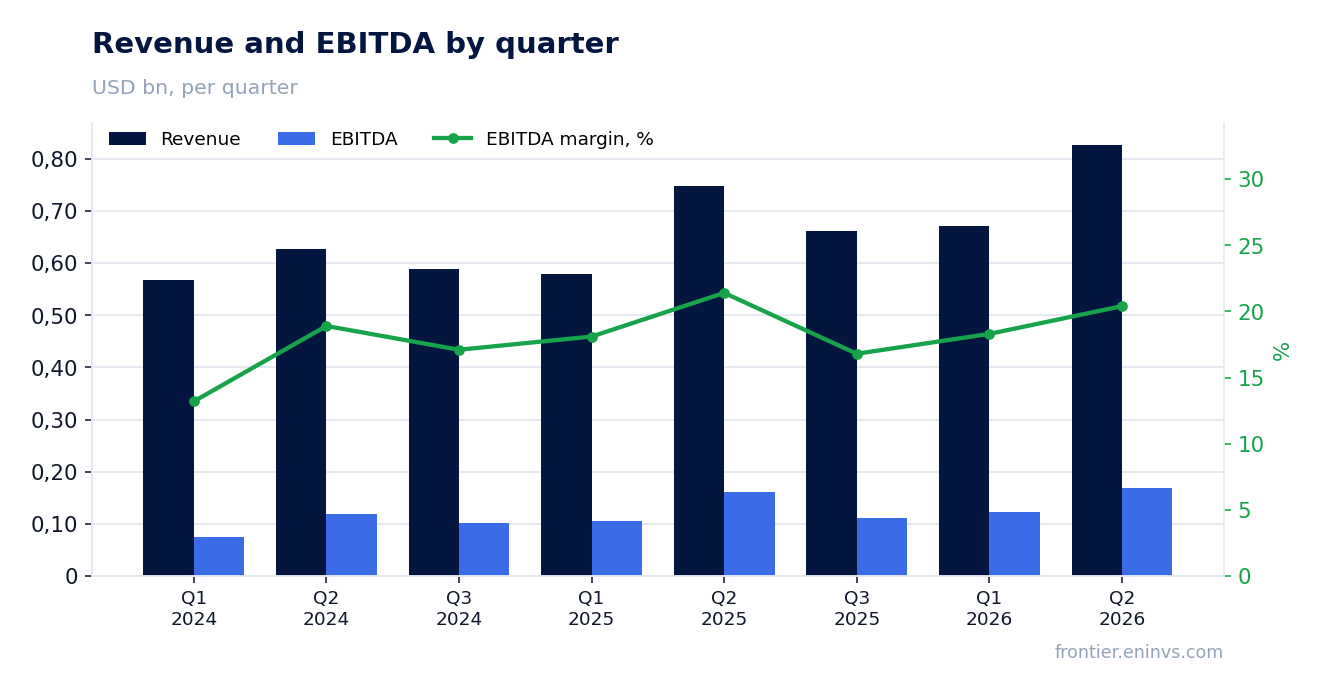
EBITDA added only 5.2%, and its margin compressed to 20.4% from 21.4% a year earlier
EBITDA in the second quarter of 2026 was USD 168.4 million, up 5.2% year-on-year. However, the EBITDA margin declined to 20.4% from 21.4% in the second quarter of 2025. This means cost growth outpaced revenue growth.
A 1 percentage point margin contraction with revenue up 10.7% indicates that operating expenses grew faster. Possible reasons include higher raw material, logistics, or selling expenses. In the absence of detailed company disclosure, we can only note the fact of margin decline.
For investors, this signals potential pressure on profitability going forward if the trend persists. However, the absolute EBITDA level remains high, and the company continues to generate significant operating cash flow.
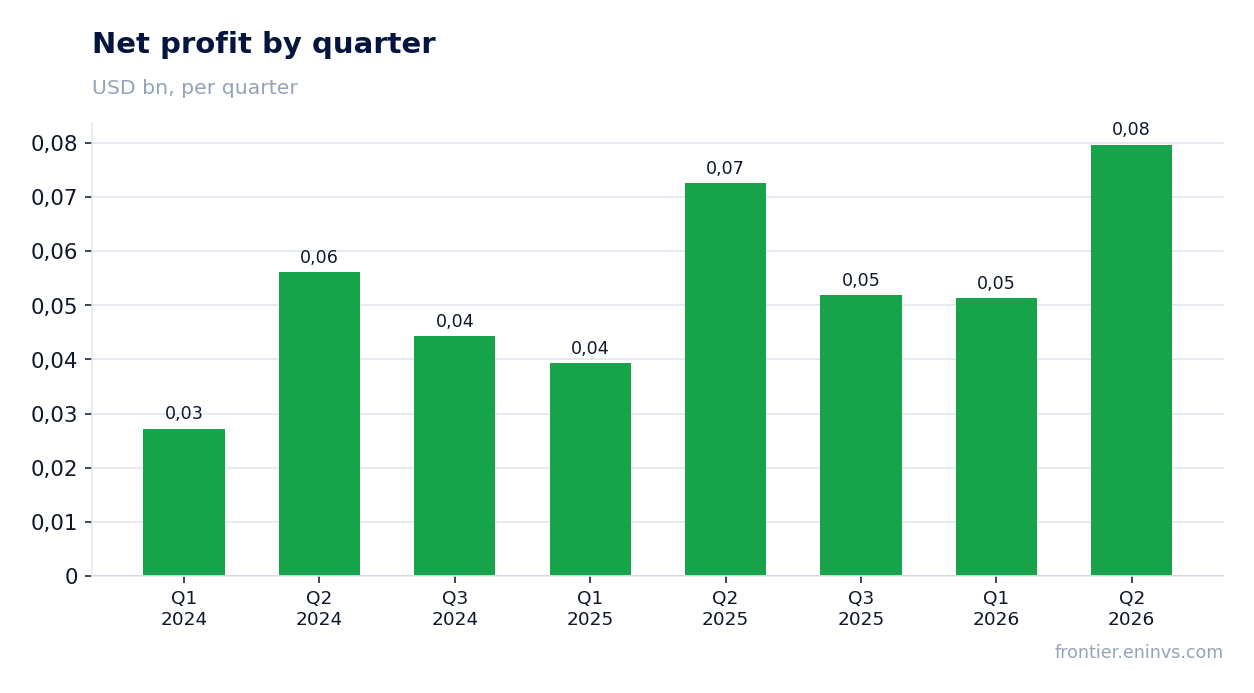
Net profit increased 9.8% to USD 79.7 million, while the net margin was almost unchanged at 9.6%
Net profit in the second quarter of 2026 was USD 79.7 million, up 9.8% from a year earlier. The net margin was virtually unchanged at 9.6% versus 9.7% in the second quarter of 2025.
Net profit growth (9.8%) outpaced EBITDA growth (5.2%), which may be explained by a lower effective tax rate or reduced interest expenses. At the same time, the net margin remained stable, indicating control over operating and non-operating costs.
The stability of the net margin amid EBITDA margin contraction may point to one-off factors or to the company offsetting pressure on operating efficiency through financial activities.
Operating cash flow for the quarter was USD 126.6 million, 3.9 times capital expenditure of USD 32.9 million
In the second quarter of 2026, operating cash flow was USD 126.6 million, while capital expenditure was USD 32.9 million. Thus, free cash flow (before changes in working capital and other items) was about USD 93.7 million.
The ratio of operating cash flow to capital expenditure at 3.9 times indicates a high ability to fund investments from own operations. This also provides a basis for dividend payments.
Over the trailing 12 months, operating cash flow was USD 511.7 million, significantly exceeding capital expenditure, estimated at approximately USD 109.2 million (sum of quarterly figures). This confirms the resilience of the business model in terms of cash generation.
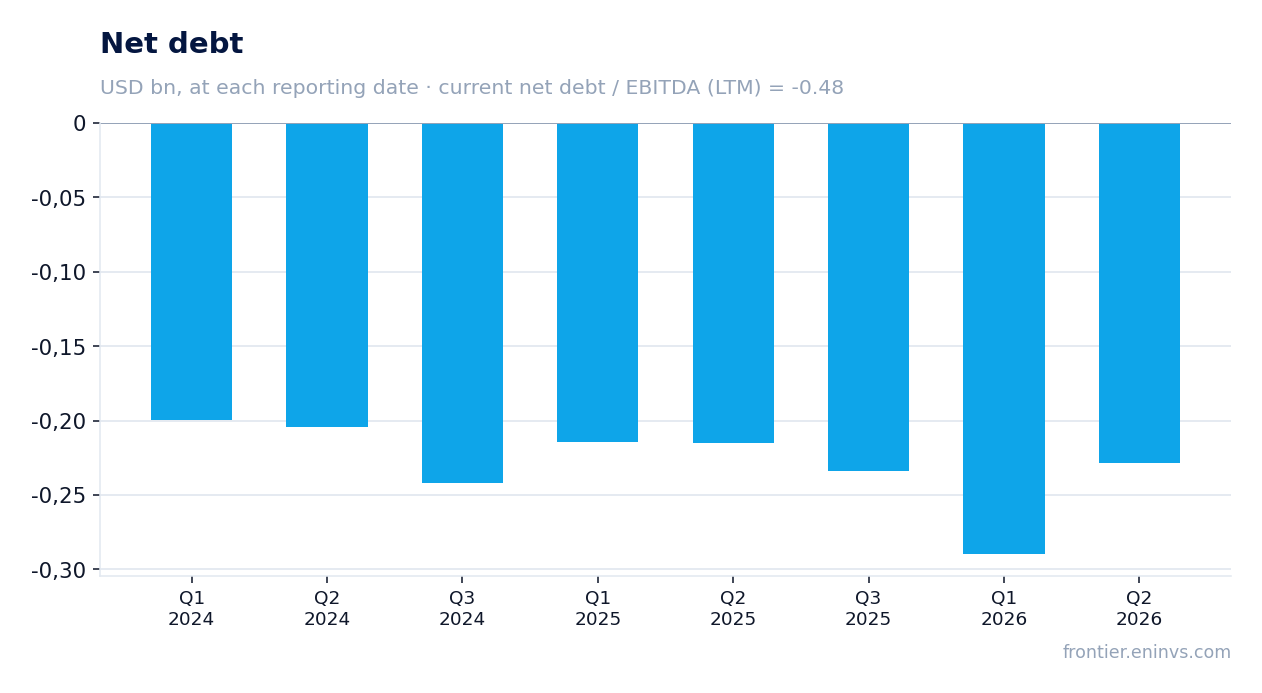
Net debt is negative: a cash cushion of USD 228.3 million exceeds debt obligations
As of the end of the second quarter of 2026, Lojas Renner's net debt was minus USD 228.3 million, meaning cash and equivalents exceed debt obligations. This indicates a net cash position.
The net debt to EBITDA ratio for the trailing 12 months is minus 0.48. The negative value confirms the absence of debt burden and the presence of significant liquidity reserves.
A net cash position reduces financial risks and gives the company flexibility for investments or additional shareholder returns. In the context of emerging market volatility, this is an important advantage.
The trailing 12-month dividend yield is 8.1%, above the key rate
Lojas Renner's trailing 12-month dividend yield is 8.1%. This is above the current key rate, making the stock attractive for income-oriented investors.
The company does not disclose the exact dividend for 2025 in the provided facts, but a yield of 8.1% at the current share price implies substantial payments. With a payout ratio of about 50% of net profit and trailing 12-month profit of USD 285.2 million, the dividend fund could be approximately USD 142.6 million, corresponding to a yield of about 6.7% to the current market capitalisation. However, the actual yield is higher, which may indicate a higher payout ratio or one-off dividends.
Dividend stability depends on the company's ability to generate free cash flow. With current operating cash flow and low capital expenditure, payments appear sustainable. A risk is a potential decline in profit if margin pressure persists.
The portal's model estimates upside to fair value at 8%
According to our model, the fair value of Lojas Renner shares implies 8% upside from the current price. The model takes into account EBITDA growth, a target multiple, and the current market capitalisation.
The current trailing 12-month EV/EBITDA multiple is 3.2. For comparison, the three-year average is not provided, so we cannot assess whether the current level is above or below its historical average. However, the absolute value of 3.2 appears low, which may indicate undervaluation.
The trailing 12-month P/E is 7.45. This is also a low level, especially considering the dividend yield of 8.1%. The combination of low multiples and high yield makes the stock interesting for investors willing to accept emerging market risks.
Valuation on the latest reported figures
| Metric | Value |
|---|---|
| Market cap | 2.13 bn USD |
| P/E (LTM) | 7.5 |
| EV/EBITDA (LTM) | 3.2 |
| P/B | 1.11 |
| Net debt / EBITDA (LTM) | -0.48 |
| Operating cash flow (LTM) | 0.51 bn |
| ROE | 15.5% |
| Dividend yield (12m) | 8.1% |
Bottom line
Lojas Renner reported second-quarter 2026 results with revenue up 10.7% and net profit up 9.8%, but the EBITDA margin declined to 20.4%. The company maintains a negative net debt position and generates strong operating cash flow, covering capital expenditure almost four times over. A dividend yield of 8.1% and low multiples (EV/EBITDA 3.2, P/E 7.45) make the stock attractive for income-oriented investors. The key question is whether the company can restore its margin; without that, upside potential is limited.
Open the company's financial profile LREN →
See also: market overview · valuation map · stock screeners