Mercer International: loss narrowed to $76 million, but $29 million of it is a non-cash inventory write-down and net debt reached $1.58 billion
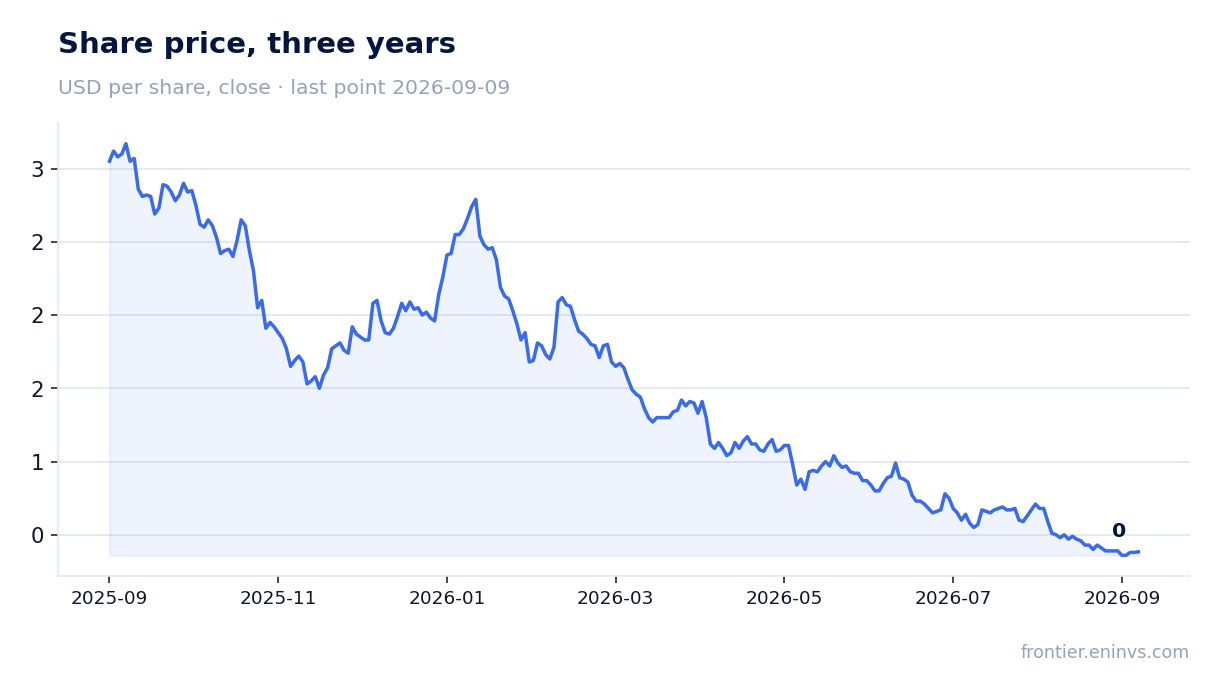
On August 6, Mercer International reported second-quarter 2026 results. Revenue came in at $460.3 million, up 1.5% year on year; operating EBITDA remained negative at -$21.0 million versus -$20.9 million a year earlier, and the net loss narrowed to $76.0 million from $86.1 million. The result includes a non-cash inventory write-down of $29.0 million, while net debt rose to $1,576.4 million. At the current price of $0.68 and a market capitalisation of $25.7 million, the stock looks unattractive: the company is loss-making at the operating level, the balance sheet is heavily indebted, and no dividend is being paid.
Key takeaways
— Revenue grew 1.5% year on year, the first increase after four quarters of decline
— Operating EBITDA remained negative at -$21.0 million, including a $29.0 million non-cash inventory write-down
— Net loss narrowed to $76.0 million, but interest expense consumed $30.9 million
— Net debt rose to $1,576.4 million against a market capitalisation of $25.7 million – debt is 61 times the company's value
— Operating cash flow over the trailing twelve months was only $8.6 million, while capital expenditure was $12.2 million in the quarter
— No dividend is being paid, and given losses and debt load, resumption is unlikely
— The 'One Goal One Hundred' programme delivered $13.0 million in savings in the quarter, but this is not enough to return to profit
Attractiveness
Key figures, USD bn
| Metric | Q2 2025 | Q2 2026 | Change |
|---|---|---|---|
| Revenue | 0.45 | 0.46 | +1.5% |
| EBITDA | -0.02 | -0.02 | — |
| Operating profit | -0.06 | -0.06 | — |
| Net profit | -0.09 | -0.08 | — |
| Operating cash flow | -0.00 | -0.02 | — |
| Capex | 0.02 | 0.01 | -49.9% |
| EBITDA margin | -4.6% | -4.6% | +0.0 pp |
| Net margin | -19.0% | -16.5% | +2.5 pp |
Revenue grew 1.5% year on year, the first increase after four quarters of decline
In the second quarter of 2026, Mercer International's revenue reached $460.3 million, up 1.5% year on year. This is the first quarterly increase after four quarters of decline: in Q1 2025 the drop was 8.4%, in Q2 – 9.2%, in Q3 – 8.8%, in Q4 – 8.0%, and in Q1 2026 – 3.5%. Thus, the current growth is more a stabilisation after a long slump than a reversal of the trend.
The solid wood segment supported revenue: its revenues grew 14% to $134.2 million due to higher sales in all product categories except lumber. CLT and glulam production increased revenue to $25.8 million from $12.4 million a year earlier, with average realisations up 67% to $2,206 per cubic metre. Pallets added $31.9 million versus $26.6 million a year earlier, biofuels – $10.7 million versus $5.1 million.
The pulp segment, by contrast, reduced revenue to $325.1 million from $332.3 million a year earlier. NBSK sales realisations fell 10% to $682 per tonne from $758, partially offset by a 6% increase in sales volumes to 450,329 tonnes. NBHK prices rose 6% to $607 per tonne. Overall, revenue is growing slowly, and without an improvement in pulp prices, sustainable growth is unlikely.
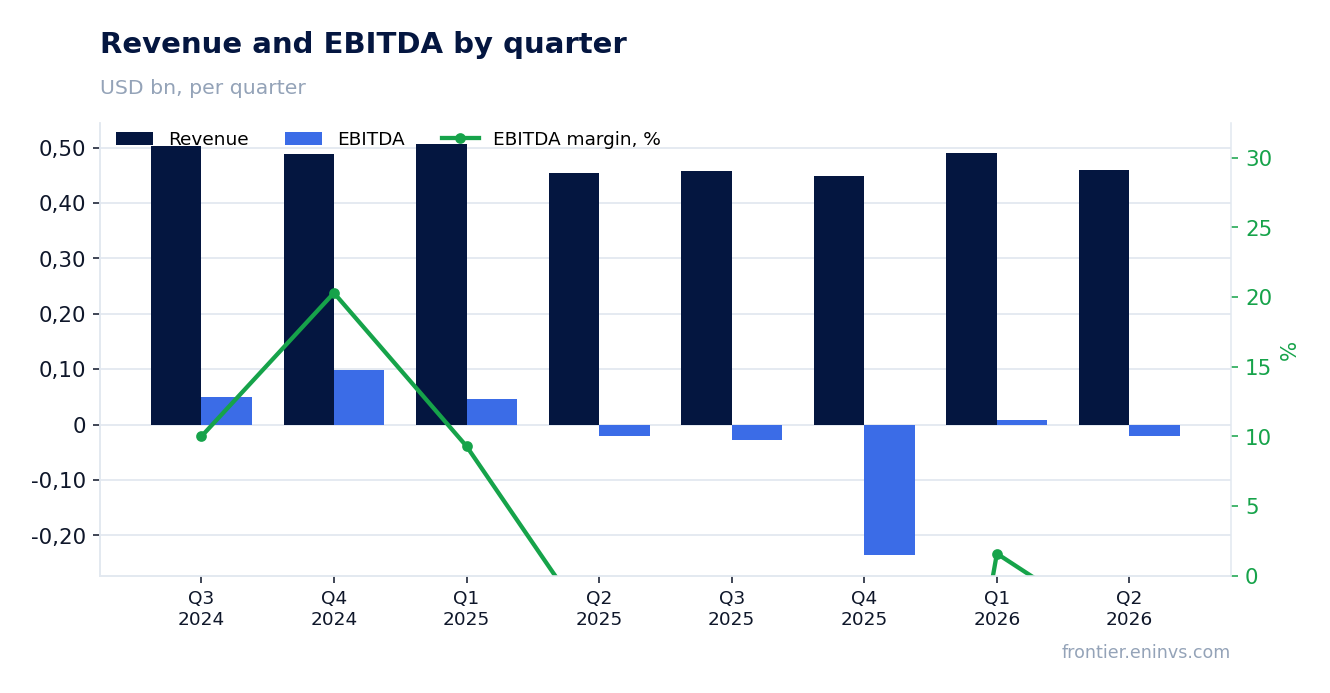
Operating EBITDA remained negative at -$21.0 million, including a $29.0 million non-cash inventory write-down
Operating EBITDA in Q2 2026 was -$21.0 million, virtually unchanged from -$20.9 million a year earlier. However, this result includes a non-cash inventory write-down of $29.0 million related to low pulp prices and high fibre costs. Excluding this write-down, EBITDA would have been positive at around $8.0 million, but the company has now posted negative operating profit for two consecutive quarters.
The main pressure on margin came from high fibre costs: average unit fibre costs in the pulp segment rose 14% year on year due to limited supply and strong demand for wood as an energy source. In solid wood, fibre costs increased 28%, reaching 85% of lumber cash production costs. These factors were partially offset by lower planned maintenance downtime (zero days versus 23 days a year earlier) and savings from the 'One Goal One Hundred' programme.
The EBITDA margin remains negative at -4.6%, same as a year earlier. The company still cannot generate positive operating profit even with stable revenue, making the shares vulnerable to further cost increases.
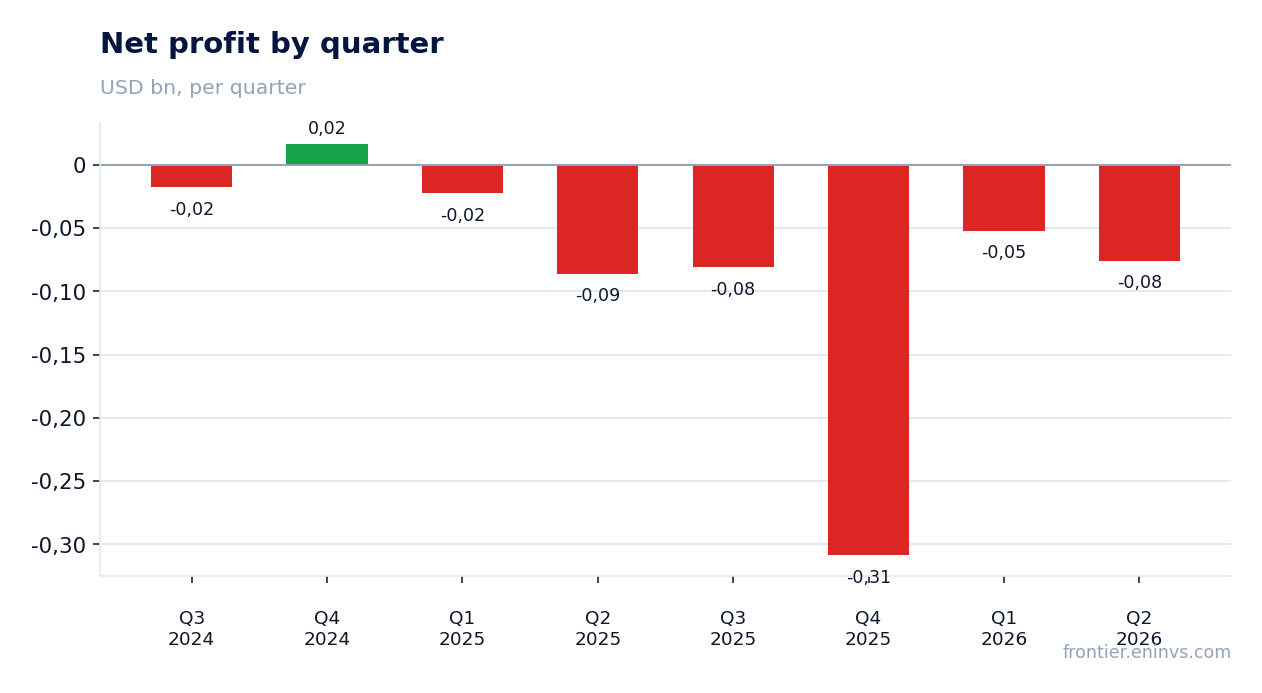
Net loss narrowed to $76.0 million, but interest expense consumed $30.9 million
The net loss in Q2 2026 was $76.0 million, or $1.13 per share, versus $86.1 million ($1.29 per share) a year earlier. The reduction was mainly due to a tax recovery of $13.4 million, compared with only $1.9 million a year earlier. Without this one-off factor, the loss would have narrowed only marginally.
Interest expense rose to $30.9 million from $28.4 million a year earlier, reflecting increased debt load. For the first half of 2026, interest expense was $60.0 million, comparable to the company's market capitalisation of $25.7 million. Debt servicing is becoming increasingly burdensome.
The operating loss in Q2 was $59.0 million, virtually unchanged from $58.4 million a year earlier. Thus, despite a slight reduction in net loss, operating activities remain deeply loss-making.
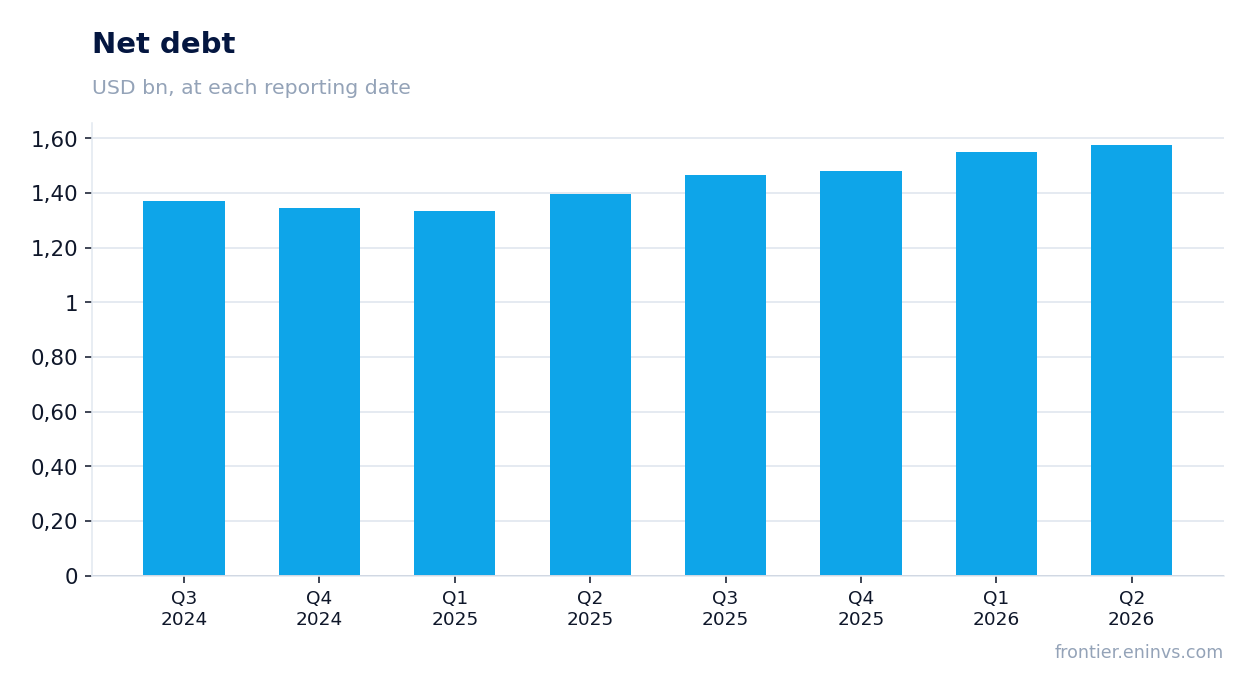
Net debt rose to $1,576.4 million against a market capitalisation of $25.7 million – debt is 61 times the company's value
Net debt at the end of Q2 2026 reached $1,576.4 million, up from $1,550.4 million at the end of Q1 and $1,394.9 million a year earlier. Debt continues to grow despite the company's efforts to improve its balance sheet. With a market capitalisation of $25.7 million, debt exceeds the company's value by 61 times, making equity extremely vulnerable.
The company is in discussions with holders of its 2028 and 2029 senior notes, as well as other stakeholders, regarding potential financing and liquidity-enhancing transactions. As of June 30, 2026, cash stood at $78.8 million, with available liquidity of about $191.7 million after the reduction in borrowing capacity. This may not be enough to cover upcoming debt payments.
Shareholders' equity turned negative at -$98.0 million at the end of the quarter, compared with positive $68.1 million at the end of 2025. Negative equity and massive debt create serious risks for shareholders.
Operating cash flow over the trailing twelve months was only $8.6 million, while capital expenditure was $12.2 million in the quarter
Operating cash flow over the trailing twelve months was only $8.6 million, extremely low for a company with revenue of about $1.9 billion. In Q2 2026, operating cash flow was negative at -$15.1 million, as in Q1 (-$85.7 million). The company is burning cash despite savings from the 'One Goal One Hundred' programme.
Capital expenditure in Q2 was $12.2 million, down from $24.3 million a year earlier, as the company cuts investment to preserve liquidity. For H1 2026, capex was $25.3 million versus $44.4 million a year earlier. Reduced investment helps contain cash outflow but may limit future growth.
Negative operating cash flow and limited liquidity are forcing the company to borrow: in Q2 it drew $24.2 million under revolving credit facilities. This increases debt and interest expense, creating a vicious circle.
No dividend is being paid, and given losses and debt load, resumption is unlikely
No dividends were paid in Q2 2026, as in Q1. A year earlier, the company paid $0.075 per share per quarter. The suspension is a forced measure to preserve cash amid losses and the need to service debt.
With a net loss of $76.0 million in the quarter and negative operating cash flow, paying dividends would be impossible without additional borrowing. The company is already drawing on credit facilities, and paying dividends would only worsen liquidity.
Resumption of dividends is possible only after a sustainable return to profit and a reduction in debt load. Given current market conditions and high fibre costs, this appears unlikely in the coming quarters. For income-oriented investors, Mercer International shares are of no interest.
The 'One Goal One Hundred' programme delivered $13.0 million in savings in the quarter, but this is not enough to return to profit
The 'One Goal One Hundred' programme, launched in April 2025, delivered $13.0 million in savings in Q2 2026, bringing total savings to about $54.0 million. The target is to achieve $100 million in savings by year-end. The company confirms the programme is on track.
However, even if the $100 million target is met, annual savings would be less than 25% of the current quarterly loss. To return to profit, the company needs either a significant increase in pulp prices or further cost reductions. Pulp prices remain weak: a slight decline in NBSK and NBHK prices is expected in Q3.
An additional pressure factor is high fibre costs in Germany, where the company had to cut production by 26,000 tonnes due to raw material shortages. Another 40 days of planned maintenance downtime at pulp mills is expected in Q3, which will also limit production.
Valuation on the latest reported figures
| Metric | Value |
|---|---|
| Market cap | 0.03 bn USD |
| P/B | 0.38 |
| Operating cash flow (LTM) | 0.01 bn |
| ROE | -232.9% |
Bottom line
In Q2 2026, Mercer International showed its first revenue growth in a year, but operating EBITDA remained negative, and the net loss narrowed only due to a tax recovery. The company continues to burn cash, debt is growing, and shareholders' equity has turned negative. The cost-saving programme is delivering results, but not enough to return to profit. At the current price, the shares look unattractive: a market capitalisation of $25.7 million is dwarfed by debt of $1,576.4 million, and prospects depend on a recovery in pulp prices, which appears unlikely in the coming quarters.
Open the company's financial profile MERC →
See also: market overview · valuation map · stock screeners