Rio Tinto: Q4 revenue up 14.6% but profit barely moved as margin fell to 18.6%
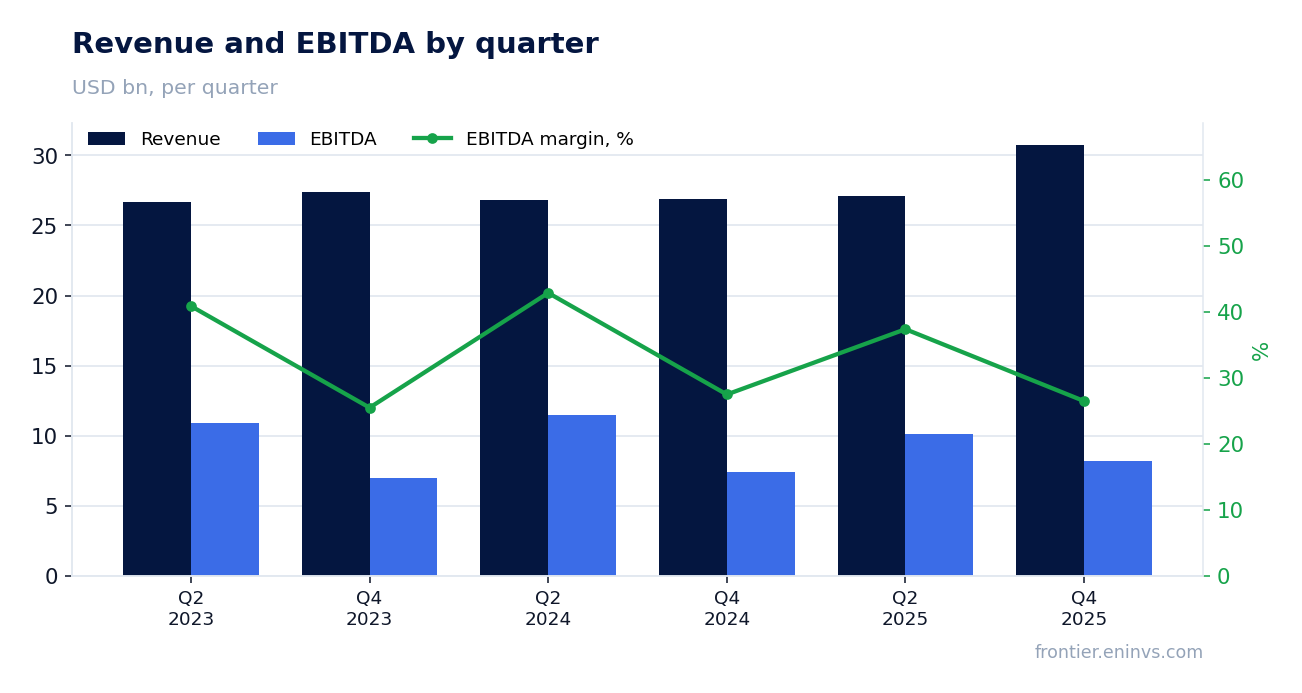
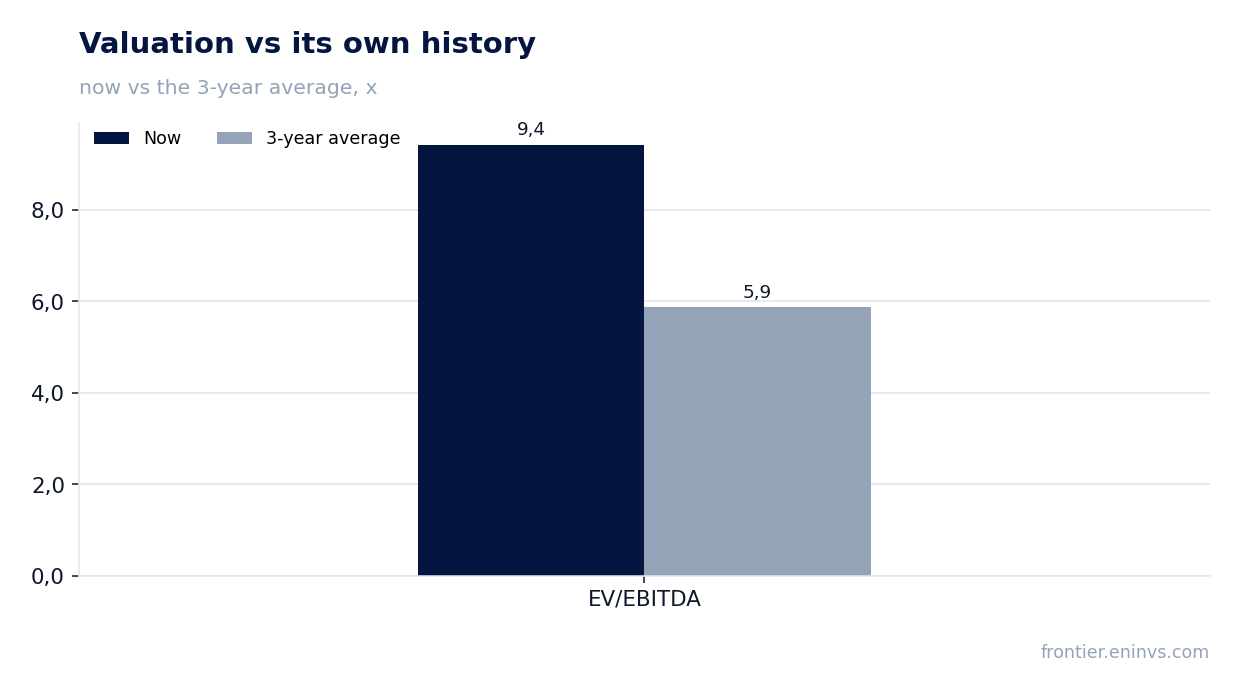
On 25 February Rio Tinto reported fourth-quarter 2025 results. Revenue rose 14.6% year on year to $30,765 million, but net profit added only 0.5% to $5,713 million, and the net margin fell to 18.6% from 21.2% a year earlier. Over the trailing twelve months the company earned $10,279.9 million of net profit on revenue of $57,900 million, while the EV/EBITDA multiple of 9.42x is well above its own three-year average of 5.88x. Given that valuation and a dividend yield of 4.76%, the share looks neutral: revenue growth is not converting into profit, and the multiple is already above its historical level.
Key takeaways
— Q4 revenue rose 14.6% year on year to $30,765 million, but net profit added only 0.5%
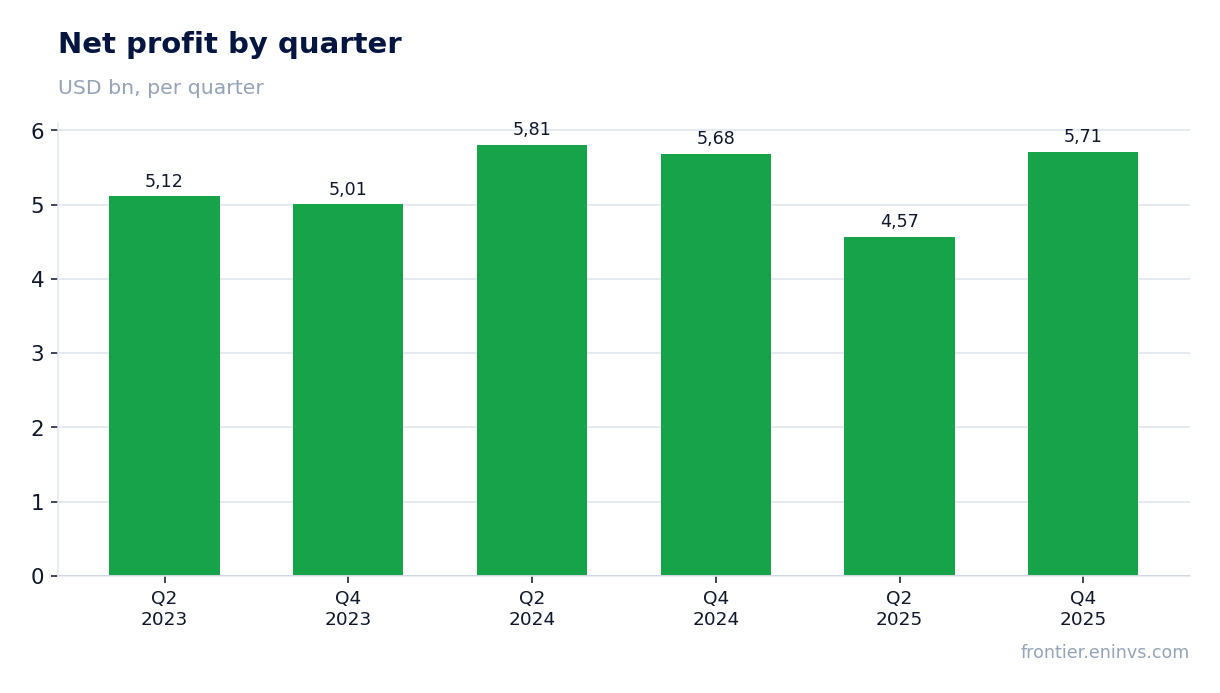
— Net margin fell to 18.6% from 21.2% a year earlier – revenue growth did not reach the bottom line
— Operating cash flow for the quarter was $9,908 million, but capital expenditure rose to $7,601 million
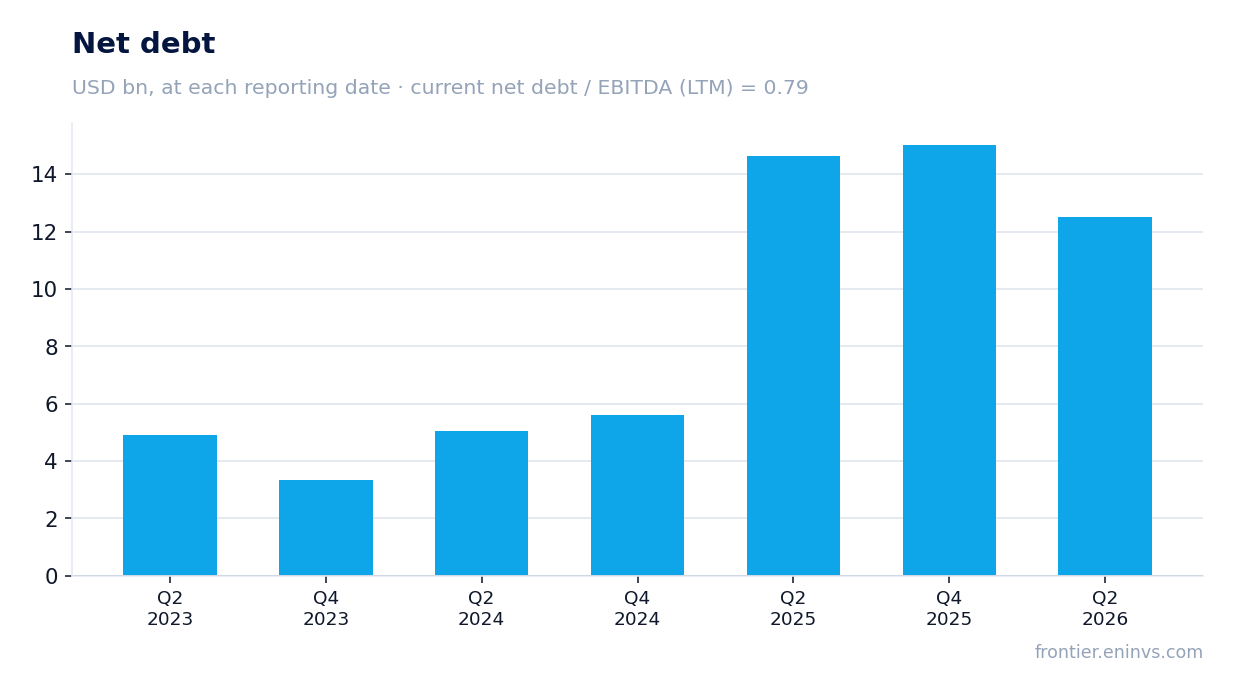
— Net debt over the last 12 months decreased by RUB 2.1 billion to $14,645 million, and net debt / EBITDA LTM stands at 0.79
— Trailing twelve-month dividend yield is 4.76%, above the key rate, but the payout may suffer from falling profit
— EV/EBITDA LTM of 9.42x is well above its own three-year average of 5.88x – the valuation no longer looks cheap
— The share is held in the Global Commodities model portfolio, but that is a fact, not an argument to buy
Attractiveness
Key figures, USD bn
| Metric | Q4 2024 | Q4 2025 | Change |
|---|---|---|---|
| Revenue | 26.9 | 30.8 | +14.6% |
| Operating profit | 7.39 | 8.16 | +10.4% |
| Net profit | 5.68 | 5.71 | +0.5% |
| Operating cash flow | 8.54 | 9.91 | +16.0% |
| Capex | 5.60 | 7.60 | +35.7% |
| Net margin | 21.2% | 18.6% | -2.6 pp |
Q4 revenue rose 14.6% year on year to $30,765 million, but net profit added only 0.5%
In Q4 2025 Rio Tinto's revenue reached $30,765 million, up 14.6% year on year. This is the highest quarterly figure in two years: for comparison, Q4 2024 revenue was $26,856 million, and Q4 2023 was $27,374 million. Growth accelerated from a modest 1.1% in Q2 2025.
However, net profit in Q4 was $5,713 million, up only 0.5% year on year. This contrasts sharply with revenue growth: if the margin had stayed at last year's level, profit would have been significantly higher. The reason is margin compression, not one-off write-offs, as operating profit also grew weakly.
Over the trailing twelve months, revenue reached $57,900 million and net profit $10,279.9 million. These figures include both a strong second quarter and a weak fourth. The annual revenue growth in Q4 should not mislead: it is not accompanied by proportional profit growth, indicating cost pressure.
Net margin fell to 18.6% from 21.2% a year earlier – revenue growth did not reach the bottom line
The net profit margin in Q4 2025 was 18.6% versus 21.2% in Q4 2024. The 2.6 percentage point decline explains why, with revenue up 14.6%, profit rose only 0.5%. Each percentage point of margin at current volumes is worth about $300 million of profit.
Operating profit in Q4 was $8,163.281 million, also indicating margin compression. For comparison, in Q2 2025 operating profit was $6,772.719 million on revenue of $27,103.989 million, so the margin was higher. In Q4, despite higher revenue, operating profit was only slightly larger.
The margin pressure is likely linked to rising costs – possibly energy, logistics or labour. However, the provided data does not break down expenses, so the exact cause is not specified. Importantly, the margin decline is not one-off: it reflects a persistent mismatch between revenue and profit growth.
Operating cash flow for the quarter was $9,908 million, but capital expenditure rose to $7,601 million
In Q4 2025 Rio Tinto's operating cash flow was $9,908 million, significantly higher than $8,543 million in Q4 2024. This is the highest quarterly figure in two years. However, capital expenditure rose to $7,601 million from $5,603 million a year earlier.
Thus, free cash flow before dividends was about $2,307 million ($9,908 minus $7,601). This is substantially lower than in Q4 2024, when with operating cash flow of $8,543 million and capex of $5,603 million, free cash flow was about $2,940 million. The 35.7% year-on-year increase in capex consumed most of the operating cash flow growth.
Over the trailing twelve months, operating cash flow was $16,800 million. Meanwhile, capital expenditure for the same period, based on quarterly data, exceeded $12,000 million. This means free cash flow for the year was significantly lower than operating cash flow, limiting the ability to pay dividends and reduce debt.
Net debt over the last 12 months decreased by RUB 2.1 billion to $14,645 million, and net debt / EBITDA LTM stands at 0.79
Rio Tinto's net debt at the latest reporting date was $14,645 million. Compared to the previous reporting date, it decreased by RUB 2.5 billion, and over the last 12 months by RUB 2.1 billion. However, these changes are expressed in rubles, which does not match the reporting currency (US dollars), and may reflect conversion or other adjustments.
The net debt to EBITDA ratio for the trailing twelve months is 0.79. This is a moderate level that does not raise concerns. However, the facts do not provide the previous value of this ratio, so it cannot be stated that leverage decreased or increased – only the current level can be noted.
EBITDA for the trailing twelve months was $18,528.2 million. With net debt of $14,645 million, the ratio of 0.79 is confirmed. For comparison, the company's market capitalisation is $159,940.87 million, which is 10.9 times net debt. This suggests that debt is not a major risk for the company at present.
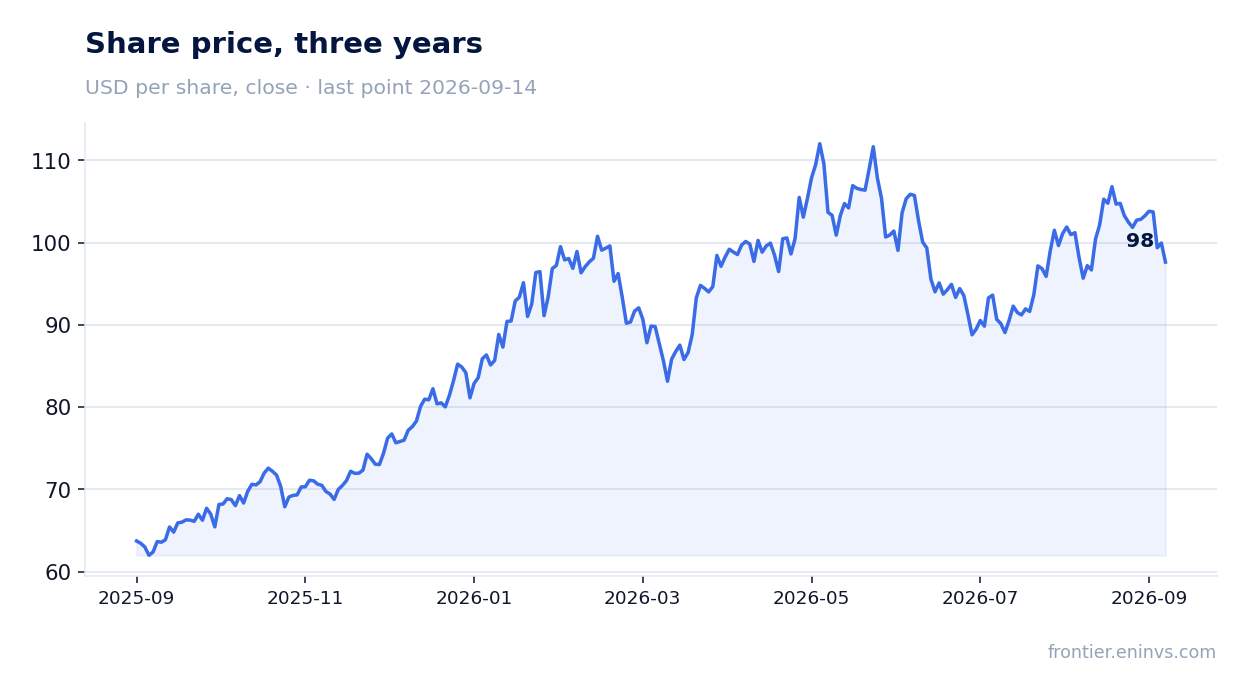
Trailing twelve-month dividend yield is 4.76%, above the key rate, but the payout may suffer from falling profit
Rio Tinto's trailing twelve-month dividend yield is 4.76%. This is above the current key rate, making the share attractive for income investors. However, the company does not disclose the exact amount of the latest dividend and the year for which it was paid in the provided facts.
Our estimates for the current year assume the payout ratio remains at historical levels. Net profit over the trailing twelve months was $10,279.9 million. If the company allocates about 50% of profit to dividends, as it has historically, dividend payments could be around $5,140 million, which at the current market capitalisation gives a yield of about 3.2%. However, this estimate is ours and depends on the actual decision of the board.
The risk of a dividend cut is linked to the fall in net profit in Q4 and rising capital expenditure. If profit remains under pressure and capex continues to grow, the company may revise the payout. Nevertheless, the current yield of 4.76% looks sustainable, given the low debt level and stable operating cash flow.
EV/EBITDA LTM of 9.42x is well above its own three-year average of 5.88x – the valuation no longer looks cheap
The EV/EBITDA multiple for the trailing twelve months is 9.42. This is significantly above its own three-year average of 5.88. The 1.6x gap indicates that the market values the company more expensively than on average over the last three years. This may be due to expectations of profit recovery or a general rise in commodity prices.
For comparison, the P/E for the trailing twelve months is 15.56. This is also above historical levels, although we do not have a three-year average for P/E. Return on equity (ROE) is 36.74%, which is very high and supports the valuation. However, high ROE may be a consequence of a low equity base rather than only high profit.
The current valuation does not leave much room for error. If profit does not start growing, the multiple could correct downwards. On the other hand, a dividend yield of 4.76% and low debt provide some support. But overall, the share looks fairly valued rather than undervalued.
The share is held in the Global Commodities model portfolio, but that is a fact, not an argument to buy
Rio Tinto shares are included in the Global Commodities model portfolio on the «Усиленные Инвестиции» portal. This means the share passed the strategy's filters, but it is not a buy recommendation. The inclusion decision is based on quantitative criteria, not fundamental analysis.
Inclusion in the portfolio may support investor interest, but it does not change the company's valuation. We view this fact as neutral for the verdict. The main focus should be on financial performance and valuation, not portfolio composition.
Valuation on the latest reported figures
| Metric | Value |
|---|---|
| Market cap | 160 bn USD |
| P/E (LTM) | 15.6 |
| EV/EBITDA (LTM) | 9.4 |
| P/B | 2.57 |
| Net debt / EBITDA (LTM) | 0.79 |
| Operating cash flow (LTM) | 16.8 bn |
| ROE | 36.7% |
| Dividend yield (12m) | 4.8% |
| EV/EBITDA, 3-year average | 5.9 |
Bottom line
In Rio Tinto's Q4 2025 report, the strengths remain revenue growth of 14.6% and operating cash flow of $9,908 million. However, profit barely grew and the margin fell to 18.6% – revenue growth is not converting into profit. The valuation is already above its own three-year average on EV/EBITDA, limiting upside. The dividend yield of 4.76% supports the share, but its sustainability is questionable due to rising capex. Overall, the share looks neutral: the current price fairly reflects both strong cash flows and weak profit dynamics.
Open the company's financial profile RIO →
See also: market overview · valuation map · stock screeners