JG Summit: profit up 19x, but paper revaluation and one-offs carried the entire gain
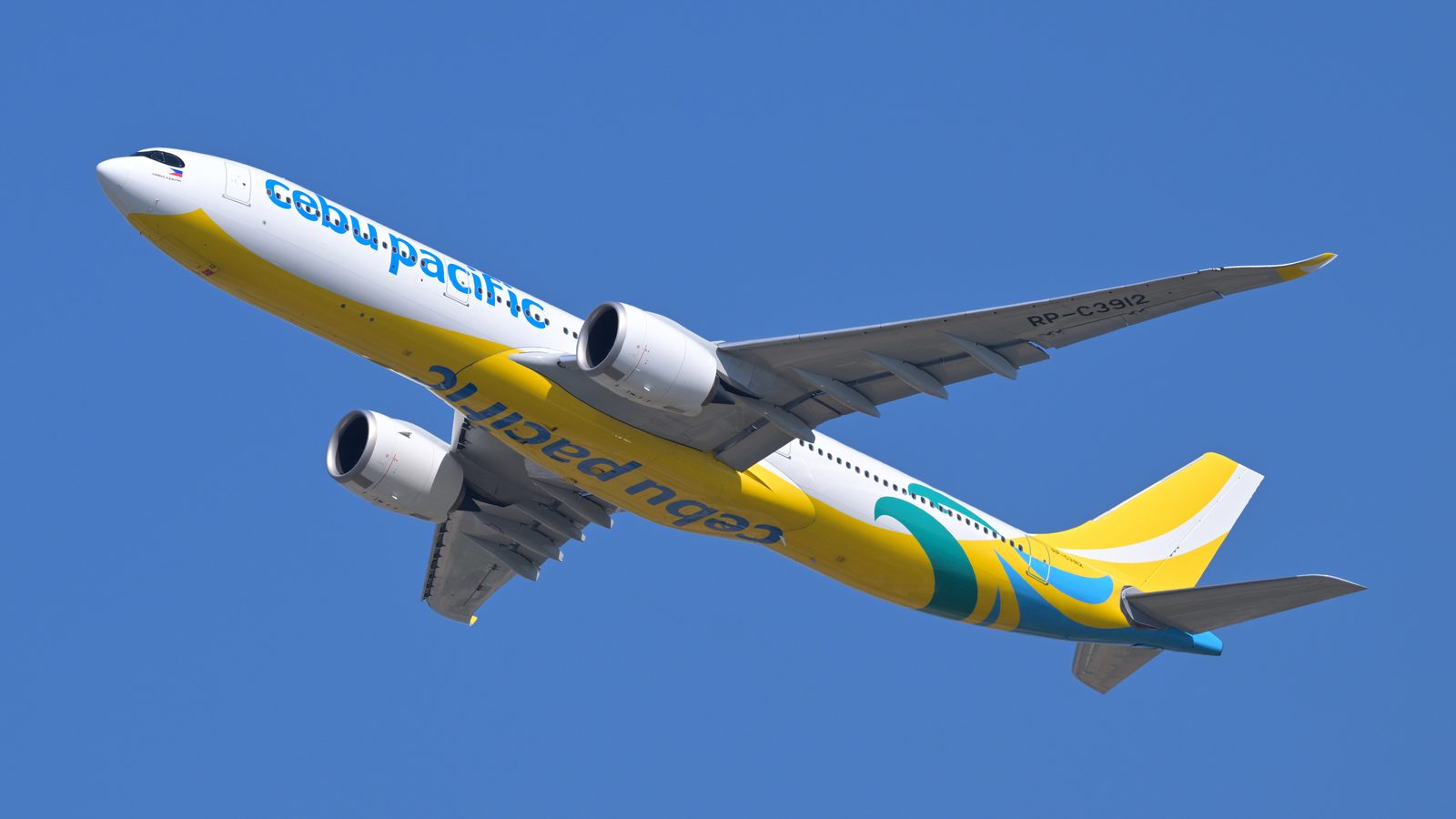
On 13 May JG Summit Holdings released its first-quarter 2026 results. Revenue rose 7% to PHP 99.9 bn, operating profit grew 9% to PHP 17.1 bn, and net profit attributable to shareholders jumped 19% to PHP 5.2 bn. Yet the entire gain came from a narrower loss in discontinued operations and one-off items rather than from operations; with leverage at 2.02x EBITDA and negative trailing-twelve-month cash flow, the stock looks neutral rather than attractive at current levels.
Key takeaways
— Revenue rose 7%, with air transport and food accounting for almost all of the increase
— Operating profit grew 9%, but the margin stayed flat at 17%
— Net profit rose 19% solely because the discontinued-operations loss shrank
— Leverage at 2.02x EBITDA and negative trailing-twelve-month cash flow are the key risks
— Capex of PHP 11.1 bn consumes almost the entire operating cash flow
— A 2.35% dividend yield against a higher policy rate offers little compensation for the risk
— At 3.2x EBITDA, the portal model implies 15% downside to fair value
Attractiveness
Key figures, PHP bn
| Metric | Q2 2025 | Q2 2026 | Change |
|---|---|---|---|
| Revenue | 0.10 | 0.10 | +4.5% |
| EBITDA | 0.03 | — | — |
| Operating profit | 0.02 | 0.01 | -21.8% |
| Net profit | 10.6 | 0.01 | -99.9% |
| Operating cash flow | 0.02 | — | — |
| Capex | 5.36 | — | — |
| EBITDA margin | 27.9% | — | — |
| Net margin | 11110.4% | 7.6% | -11102.8 pp |
Revenue rose 7%, with air transport and food accounting for almost all of the increase
Consolidated revenue for the first quarter of 2026 was PHP 99.9 bn against PHP 93.3 bn a year earlier. The main contributors were CEB air transport, where revenue rose 9.5% to PHP 33.3 bn on record passenger numbers, and URC food, which added 5.8% to PHP 47.9 bn on volume growth in the branded segment.
Real estate and hotels at RLC also grew 11% to PHP 12.0 bn, above the group average. The only large segment missing from the overall dynamic was petrochemicals: JGSOC has been shut down for a second year and generated no revenue, whereas a year earlier it contributed PHP 4.8 bn from selling off remaining inventory.
So the group's organic growth excluding the dropped petrochemicals looks stronger than the headline figure. However, the gap between 7% revenue growth and 9% operating profit growth suggests weak operating leverage: costs are rising almost as fast as income.
Operating profit grew 9%, but the margin stayed flat at 17%
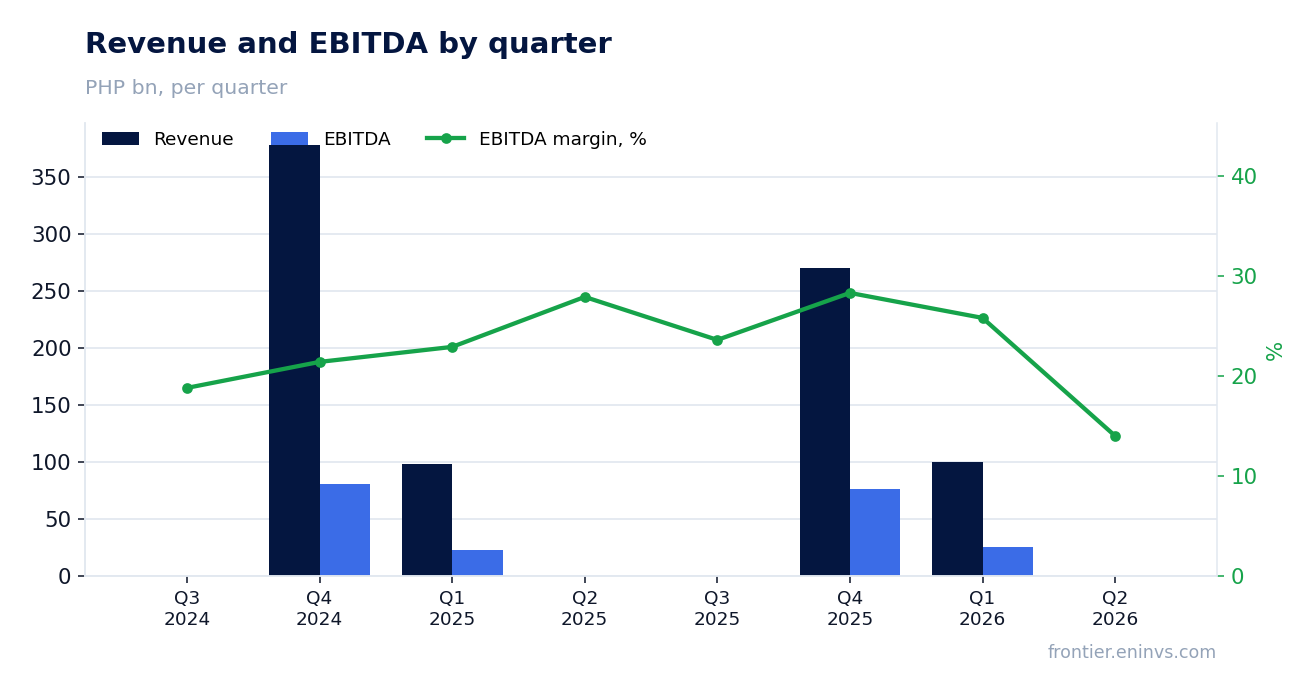
Operating profit rose 9% to PHP 17.1 bn, with the operating margin flat at 17%. Cost of sales and services increased 6% to PHP 70.1 bn, in line with revenue, but general and administrative expenses grew faster — 13% to PHP 12.6 bn.
The main driver of the faster growth in administrative expenses was higher advertising and promotion costs at URC, as well as increased staff and rental costs at CEB. This means the company is spending more on promotion and maintaining operations without a proportional return in revenue.
Group EBITDA was PHP 25.6 bn, up 10% year on year. The gap between EBITDA growth and operating profit growth is explained by depreciation rising more slowly than revenue, reflecting CEB's recent fleet renewal and RLC's new floor space.
Net profit rose 19% solely because the discontinued-operations loss shrank
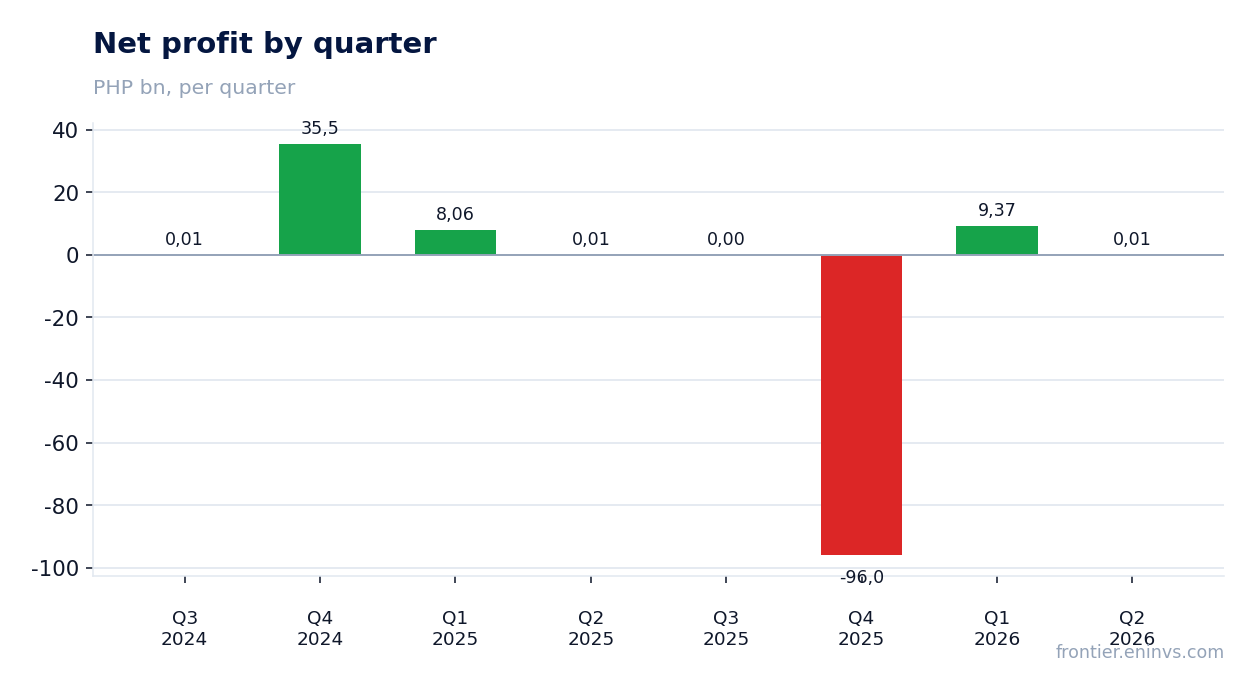
Net profit attributable to shareholders rose 19% to PHP 5.2 bn. However, profit from continuing operations fell 27% to PHP 5.5 bn, and the overall increase was driven by a narrower loss from discontinued operations, which shrank from PHP 3.3 bn to PHP 0.3 bn after the full shutdown of the petrochemical business in the third quarter of 2025.
At the continuing-operations level, pressure came from higher financing costs — up 24% to PHP 4.4 bn — due to the assumption of debt from the petrochemical unit, as well as net foreign exchange losses of PHP 2.1 bn against a gain a year earlier. The weakening of the peso against the dollar and yen was the main cause of this reversal.
So the headline 19% profit growth does not reflect the state of the core business. Excluding the one-off reduction in the discontinued petrochemical loss and foreign exchange movements, profit from continuing operations declined, making the quality of reported earnings low.
Leverage at 2.02x EBITDA and negative trailing-twelve-month cash flow are the key risks
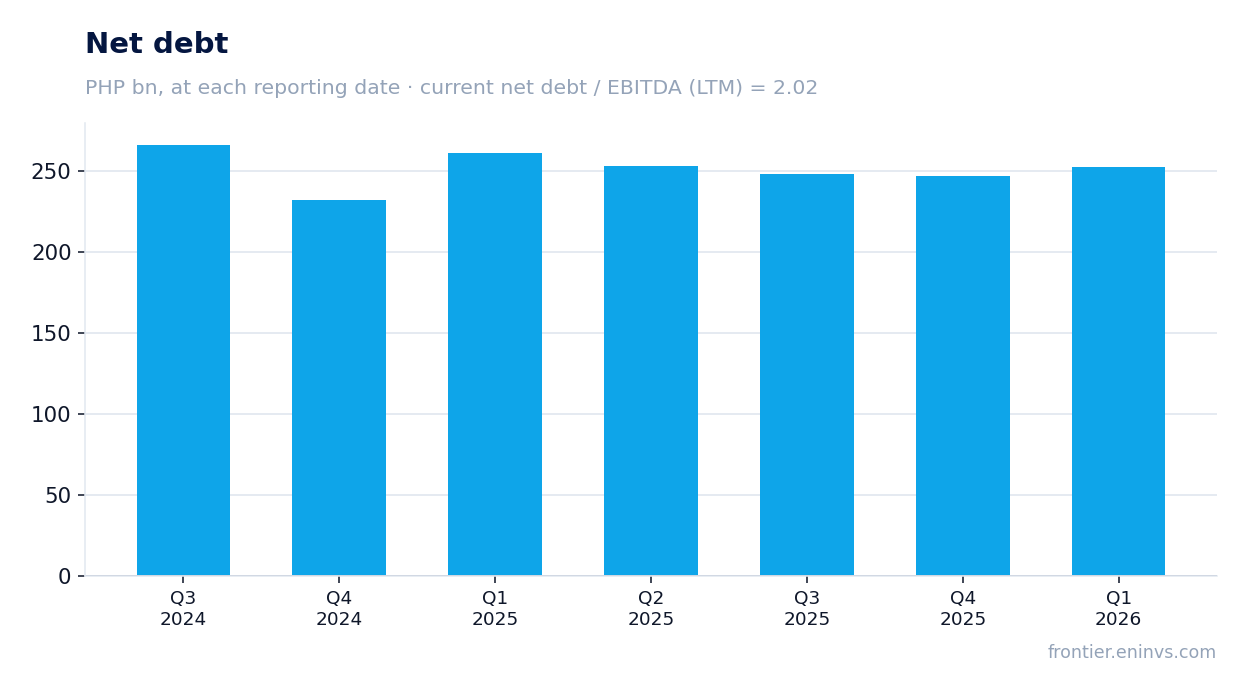
Net debt at the latest reporting date was PHP 250.3 bn, with a net debt to EBITDA ratio of 2.02 for the trailing twelve months. This is a moderate level, but it leaves little room for manoeuvre, especially given that operating cash flow over the trailing twelve months was negative — minus PHP 6.2 bn.
Over the quarter net debt rose by PHP 5.3 bn, while over twelve months it fell by PHP 9.3 bn. The annual decline is linked to the repayment of debt from the petrochemical unit after its shutdown, but the quarterly increase shows the company is still spending more than it earns.
Negative operating cash flow against rising revenue is a warning sign. It means working capital and interest payments are consuming all of the operating profit, and the company is forced to fund its activities through new borrowings or asset sales.
Capex of PHP 11.1 bn consumes almost the entire operating cash flow
Group capital expenditure for the first quarter of 2026 was PHP 11.1 bn. The main areas were additional aircraft and pre-delivery payments at CEB, investment in new and existing facilities at RLC, and capacity expansion at URC.
Operating cash flow for the quarter was PHP 20.5 bn, which covers capital expenditure, but after interest and dividend payments free cash flow is close to zero or negative. Over the trailing twelve months operating cash flow is negative, making capex funding dependent on borrowings.
The company continues to invest in fleet renewal and real estate expansion, which should support future growth, but the current return on these investments is insufficient to generate positive free cash flow. This limits the scope for dividend increases.
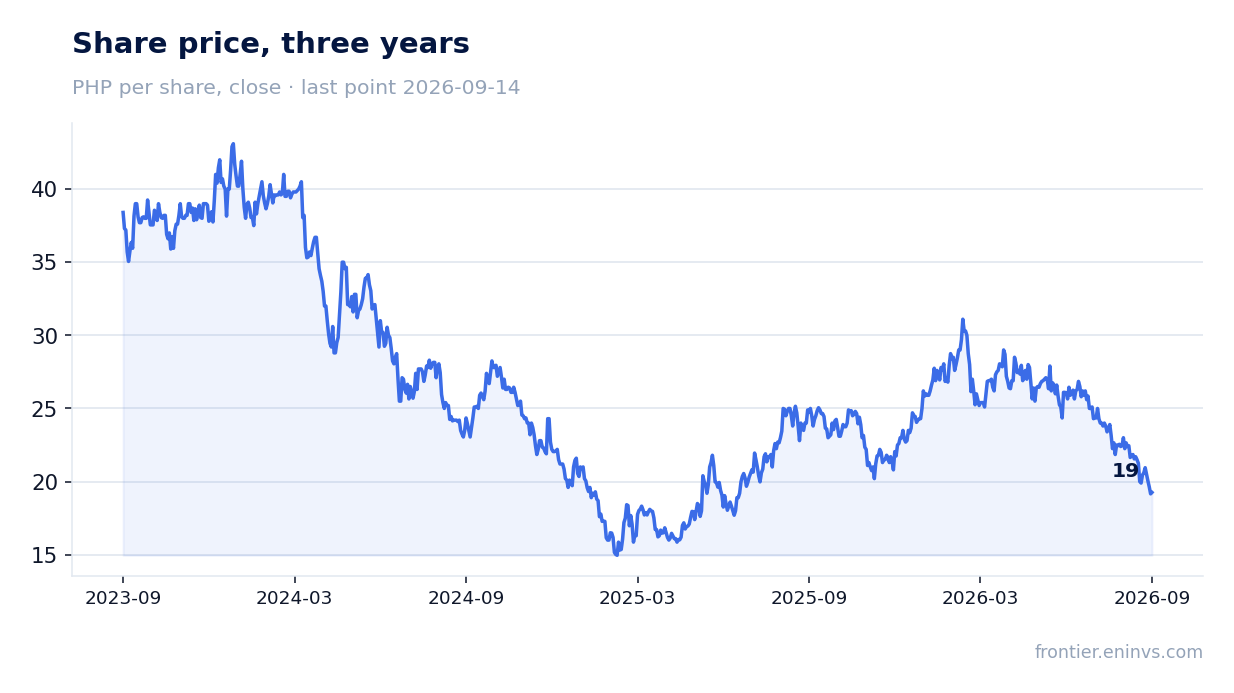
A 2.35% dividend yield against a higher policy rate offers little compensation for the risk
The trailing twelve-month dividend yield is 2.35%. At the current market capitalisation of PHP 146.5 bn, this corresponds to payouts of approximately PHP 3.4 bn. The company has not disclosed a dividend for 2026, but if the current payout practice continues, the dividend is likely to remain at last year's level or grow slightly.
The key risk to the dividend is negative free cash flow and high capital expenditure. If operating cash flow remains negative, the company will have to fund payouts through debt or asset sales, which limits the sustainability of the dividend.
With the policy rate above 2.35%, the yield does not compensate for the risk of holding the stock. For a conservative investor, this is an insufficient premium for earnings volatility and debt load.
At 3.2x EBITDA, the portal model implies 15% downside to fair value
The trailing twelve-month EV/EBITDA ratio is 3.2. This is a low multiple, reflecting both the group's diversification and the risks associated with debt load and negative cash flow. For comparison, the company's three-year average multiple is not disclosed in the provided data.
According to the portal model, which compares EBITDA growth with a target multiple and market capitalisation, the upside to fair value is estimated at minus 15%. This means the current price already prices in an optimistic scenario, and for market capitalisation to grow, the company needs accelerating EBITDA or a reduction in debt load.
Given negative free cash flow and high capital expenditure, the current valuation does not look attractive. A revision of the verdict upwards would require a sustained improvement in operating cash flow and a reduction in the net debt to EBITDA ratio below 2.0.
Valuation on the latest reported figures
| Metric | Value |
|---|---|
| Market cap | 147 bn PHP |
| EV/EBITDA (LTM) | 3.2 |
| P/B | 0.36 |
| Net debt / EBITDA (LTM) | 2.02 |
| Operating cash flow (LTM) | -6.20 bn |
| ROE | 0.0% |
| Dividend yield (12m) | 2.3% |
Bottom line
The strong point of the report remains revenue: 7% growth to PHP 99.9 bn, driven by record CEB traffic and sustained demand for URC products. However, the 19% profit growth came not from operations but from a narrower loss in the shut-down petrochemical business and one-off items, while profit from continuing operations fell 27%. Leverage at 2.02x EBITDA and negative trailing-twelve-month cash flow are the key questions for a holder. With a 2.35% dividend yield and a 3.2x EBITDA valuation, the stock looks neutral: the current price already reflects a recovery, and further gains require sustainable cash flow and lower debt.
Open the company's financial profile JGS →
See also: market overview · valuation map · stock screeners