ID_ADRO: nine-month profit up 82.4%, but the whole gain rests on a single line of the report
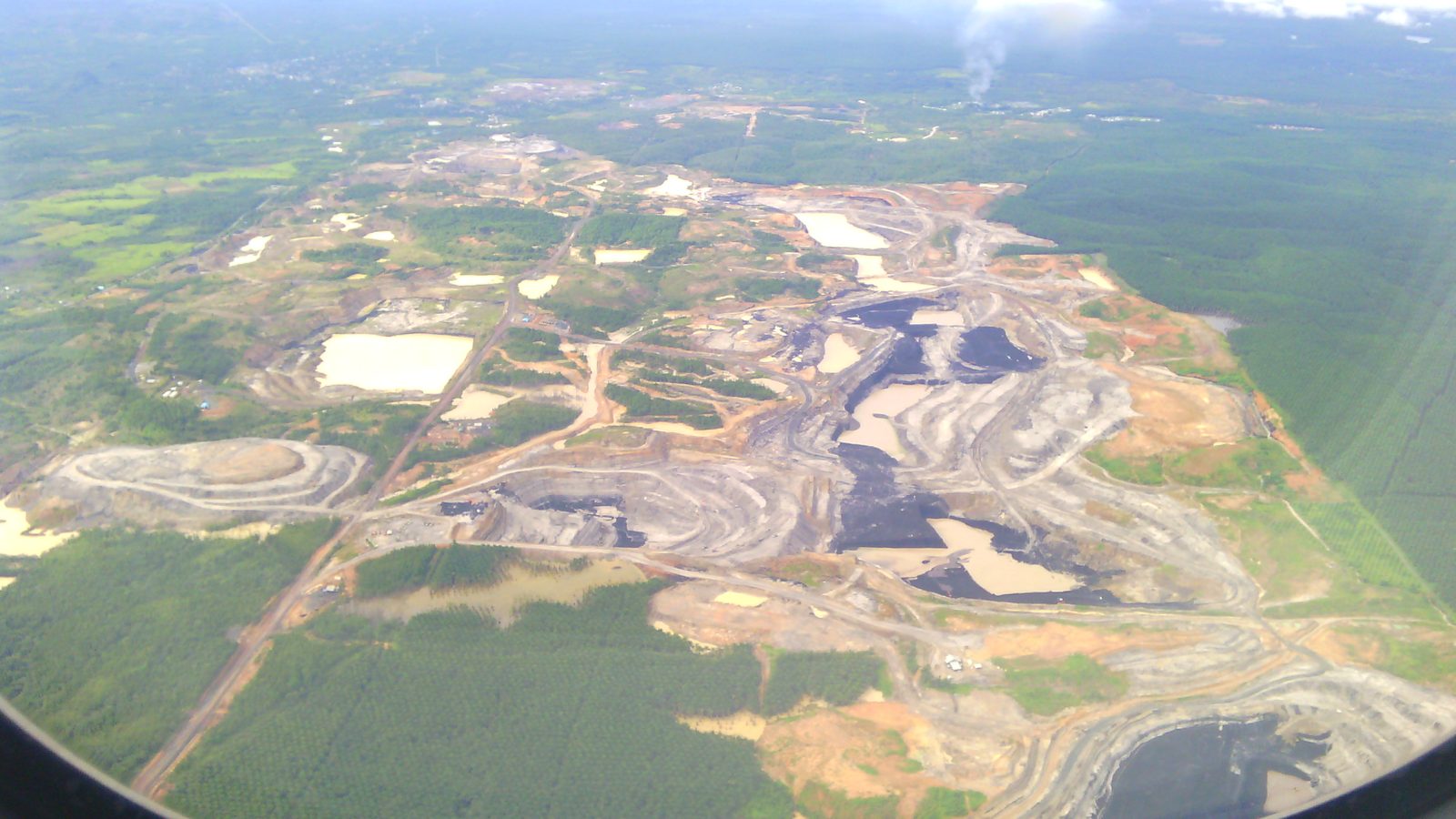
ID_ADRO reported nine-month 2026 revenue of USD 1,901.5m and net profit of USD 606.7m — up 41.0% and 82.4% year on year respectively. The net margin rose to 31.9% from 24.7% a year earlier, while leverage stood at 1.0x LTM EBITDA at period end. At 5.0x trailing earnings and an 11.0% trailing dividend yield, the share looks attractive, and the main argument is not revenue growth but the fact that profit is growing faster than it.
Key takeaways
— Nine-month revenue rose 41.0% to USD 1,901.5m, the fastest pace in the company's available history
— Net profit grew 82.4% to USD 606.7m — almost twice as fast as revenue
— The net margin rose to 31.9% from 24.7%, and the entire gain came from outside the core business
— Debt of USD 662.6m equals 1.0x LTM EBITDA, and it fell by USD 0.3bn over the quarter
— Nine-month free cash flow covers the dividend with room to spare
— An 11.0% dividend yield at 5.0x earnings is the main argument for the share
— On the portal's model, the upside to fair value is +39%
Attractiveness
Key figures, USD bn
| Metric | 9M 2025 | 9M 2026 | Change |
|---|---|---|---|
| Revenue | 1.35 | 1.90 | +41.0% |
| EBITDA | 0.53 | — | — |
| Operating profit | 0.36 | — | — |
| Net profit | 0.33 | 0.61 | +82.4% |
| Operating cash flow | 0.39 | 0.39 | -0.4% |
| Capex | 0.56 | — | — |
| EBITDA margin | 39.1% | — | — |
| Net margin | 24.7% | 31.9% | +7.2 pp |
Nine-month revenue rose 41.0% to USD 1,901.5m, the fastest pace in the company's available history
Nine-month 2026 revenue came to USD 1,901.5m, 41.0% more than a year earlier. For comparison, first-quarter 2026 revenue grew 23.4% year on year to USD 470.9m. The quarterly data stop at the first quarter, so the acceleration to 41.0% applies to the whole nine-month period, not to a single quarter.
Revenue growth of 41.0% is the highest in the company's available reporting. In the first quarter of 2025 revenue was falling, down 73.6% year on year to USD 381.6m, so the current growth is a recovery from a slump rather than a continuation of a flat line.
What exactly produced the increase is not disclosed in the facts. Revenue rose 41.0%, and the analysis ends there: the revenue mix and the contribution of individual segments are absent from the data provided.
Net profit grew 82.4% to USD 606.7m — almost twice as fast as revenue
Nine-month 2026 net profit came to USD 606.7m, 82.4% more than in the same period a year earlier. Revenue over that time grew 41.0%, so profit grew twice as fast as revenue.
That ratio means volume alone is not the whole story. Profit outpaces revenue when either costs fall relative to revenue or a one-off item lands in profit. The facts contain no cost breakdown, so which of the two drove it cannot be established from the data provided.
Over the trailing twelve months net profit was USD 764.0m on revenue of USD 2,400.0m. That is a separate basis: it covers four quarters and does not match the nine-month period, so the 82.4% rate does not apply to it.
The net margin rose to 31.9% from 24.7%, and the entire gain came from outside the core business
The nine-month 2026 net margin was 31.9% against 24.7% in the same period a year earlier. The gain is 7.2 percentage points, and it sits in profit that grew 82.4% on revenue up 41.0%.
Had the margin stayed at 24.7%, profit on revenue of USD 1,901.5m would have been about USD 470m. The company actually earned USD 606.7m, so roughly USD 137m came on top of what the old margin would have produced. That is a measure of the size of the effect, not of its source.
The source of the effect is not named in the facts. The margin rose, and that is a confirmed fact, but the explanation — lower costs or a one-off item — is absent from the data provided. For a holder this is the key uncertainty: if a one-off produced the gain, the next report will show the margin returning to its previous level.
Debt of USD 662.6m equals 1.0x LTM EBITDA, and it fell by USD 0.3bn over the quarter
Net debt at 30 September 2026 was USD 662.6m, or 1.0x LTM EBITDA. That is a moderate level: LTM EBITDA is USD 659.5m, so debt is roughly equal to it.
Over the quarter debt fell: from USD 1.0bn at 30 June 2026 to USD 0.7bn at 30 September 2026, a change of minus USD 0.3bn. Over the year the picture is the reverse: from minus USD 0.3bn at 30 September 2025 to USD 0.7bn at 30 September 2026, i.e. plus USD 1.0bn. A year earlier the company held a net cash position; now it carries net debt.
Nine-month operating cash flow was USD 390.7m. It covers interest, capital expenditure and dividends. That flow, not profit, explains why debt fell over the quarter.
Nine-month free cash flow covers the dividend with room to spare
Nine-month 2026 operating cash flow was USD 390.7m. Capital expenditure is given only by quarter in the facts: USD 159.1m in the first quarter of 2026 and USD 153.3m in the first quarter of 2025. There is no nine-month figure, so free cash flow for the period cannot be calculated precisely.
On the available quarterly data capital expenditure is close to operating cash flow: in the first quarter of 2026 the flow was USD 195.1m against spending of USD 159.1m. If that proportion held, nine-month free cash flow stays positive but thin.
The trailing twelve-month dividend yield is 11.0%. On a market capitalisation of USD 3,808.8m that is about USD 419m of payouts a year. Nine-month operating cash flow of USD 390.7m does not cover that volume on its own — the payouts draw on the cash balance as well as on profit.
An 11.0% dividend yield at 5.0x earnings is the main argument for the share
The trailing twelve-month dividend yield is 11.0%. That is a high yield: well above what an investor can get on risk-free instruments, and therefore the main argument for the share.
Our estimate of the current-year dividend is about USD 419m on a market capitalisation of USD 3,808.8m at an 11.0% yield. It rests on trailing twelve-month profit of USD 764.0m: at a payout ratio of about 55% the dividend fits within that sum. The estimate is ours, not the company's, and it hinges on two things — profit holding at its current level and an unchanged dividend policy.
What could shrink the payout: a fall in profit if the margin gain proves one-off, and rising capital expenditure, which is already close to operating cash flow. Nine-month profit grew 82.4%, but if a one-off produced that growth, next year's dividend base will be lower.
A yield of 11.0% at 5.0x trailing earnings means the market values the share cheaply relative to its own profit. That is the core of the verdict.
On the portal's model, the upside to fair value is +39%
On the portal's model, which re-prices EBITDA at current commodity prices at the target EV/EBITDA, the upside to fair value is +39%. That is our own estimate, not a market consensus and not a target price.
Market multiples support it: 5.0x trailing earnings and 5.4x trailing EV/EBITDA. With a 31.9% net margin and an 11.0% yield, such multiples leave room if profit holds at its current level.
The weak point of the estimate is the profit base. The model re-prices EBITDA, while nine-month profit grew 82.4% on revenue up 41.0%, and the source of that gap is not disclosed in the facts. If the margin gain is one-off, EBITDA and profit will be lower, and the 39% upside will shrink.
The share is held in the portal's live model strategies — ID Commodity-Upside and ID FVC (quality). That is a fact about strategy composition, not an argument for the verdict: each strategy screens on its own criteria.
Valuation on the latest reported figures
| Metric | Value |
|---|---|
| Market cap | 3.81 bn USD |
| P/E (LTM) | 5.0 |
| EV/EBITDA (LTM) | 5.4 |
| P/B | 0.76 |
| Net debt / EBITDA (LTM) | 1.00 |
| ROE | 15.1% |
| Dividend yield (12m) | 11.0% |
Bottom line
The strong side of the report is cash: nine-month operating flow of USD 390.7m, a USD 0.3bn debt reduction over the quarter and moderate leverage at 1.0x LTM EBITDA. The weak side is earnings quality: 82.4% profit growth on revenue up 41.0%, with a 31.9% margin against 24.7%, looks convincing, but the source of the gain is not disclosed, and without it a durable shift cannot be told apart from a one-off item. At 5.0x earnings and an 11.0% yield the market already prices a cautious scenario, and the portal's model shows +39% — an attractive verdict. Two events would change it: the margin returning to 24.7% and debt rising above the current USD 0.7bn.
Open the company's financial profile ADRO →
See also: market overview · valuation map · stock screeners