Bank of America: profit fell 18.1% even as revenue rose 6.7% — margin back to normal
Contents

Bank of America reported third-quarter 2026 results. Revenue rose 6.7% year on year to $29,958 million, net profit fell 18.1% to $6,933 million, and the net margin dropped to 23.1% from 30.2% a year earlier. The slowdown in revenue growth from 19.3% in the second quarter and the profit decline against rising debt make the share neutral on attractiveness at the current price.
Key takeaways
— Revenue rose 6.7% year on year, but that is well below 19.3% in the second quarter — growth has slowed
— Net profit fell 18.1% year on year to $6,933 million, and the net margin dropped to 23.1% from 30.2%
— Over the trailing twelve months revenue reached $123,000 million, confirming the scale of the business
— Net debt at end-2025 rose to $88,071 million from $53,534 million at end-2024
— Return on equity stands at 3.09% — a low level for a bank
— The share is held in the portal's model strategies US Financials (banks), but that is a fact of membership, not an argument to buy
Attractiveness
Key figures, USD bn
| Metric | Q3 2025 | Q3 2026 | Change |
|---|---|---|---|
| Revenue | 28.1 | 30.0 | +6.7% |
| EBITDA | 10.0 | — | — |
| Net profit | 8.47 | 6.93 | -18.1% |
| Operating cash flow | 46.9 | — | — |
| EBITDA margin | 35.7% | — | — |
| Net margin | 30.2% | 23.1% | -7.1 pp |
Revenue rose 6.7% year on year, but that is well below 19.3% in the second quarter — growth has slowed
In the third quarter of 2026, Bank of America's revenue reached $29,958 million, up 6.7% year on year. That is a slowdown from the second quarter, when growth was 19.3%. The deceleration may reflect both a normalisation of lending activity and the effect of a high base a year earlier.
For a bank, revenue consists of net interest and fee income, and its dynamics are sensitive to interest rates and market conditions. Without a breakdown from the report it is hard to say which component contributed most, but the fact that growth slowed from 19.3% to 6.7% indicates that the second quarter's momentum did not repeat.
Over the trailing twelve months revenue reached $123,000 million. That confirms the scale of the business, but does not change the fact that growth in the reported quarter was more modest than in the previous one.
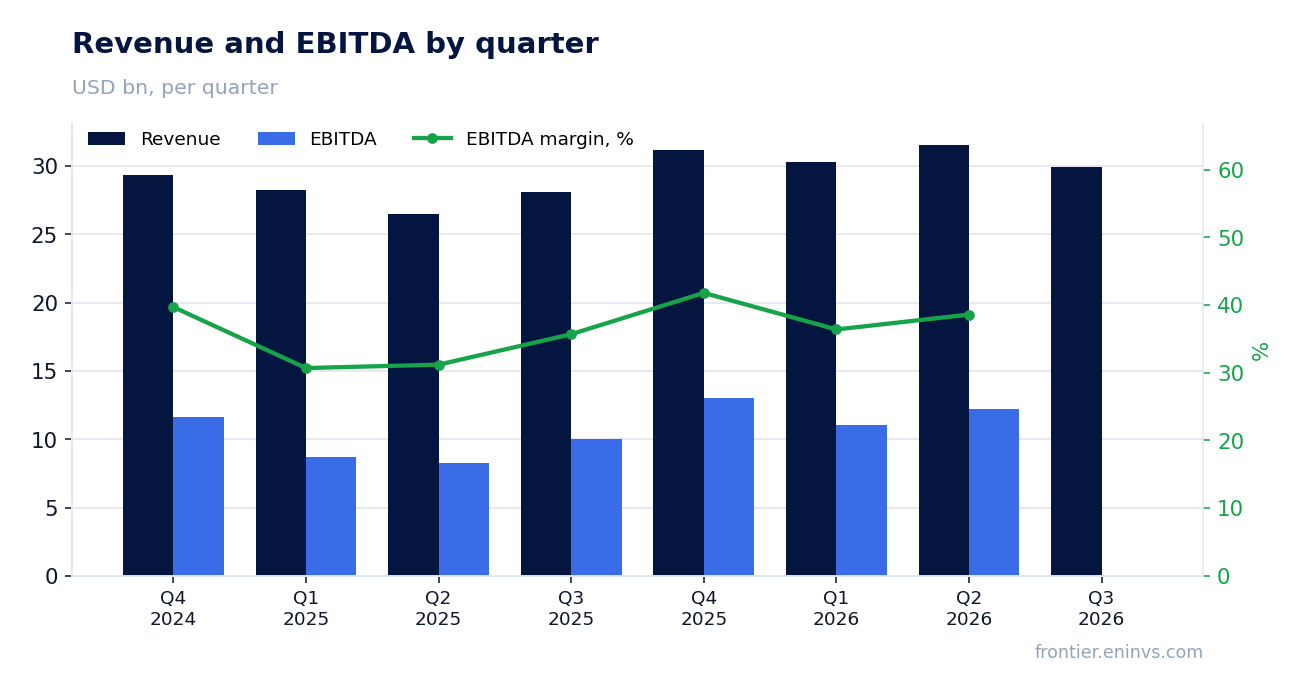
Net profit fell 18.1% year on year to $6,933 million, and the net margin dropped to 23.1% from 30.2%
Net profit for the third quarter of 2026 was $6,933 million, down 18.1% year on year. The net margin fell to 23.1% from 30.2% in the third quarter of 2025. A decline in profit alongside revenue growth means that costs or provisions rose faster than income.
The margin drop of 7.1 percentage points is significant. It could be due to higher costs, increased provisions, or one-off factors, but the provided data lacks detail. For a holder, the important point is that profitability has returned to a lower level, and this is the key negative of the report.
Return on equity (ROE) stands at 3.09%. That is a low figure for the banking sector, and it indicates that the current level of profit does not provide a high return on capital.
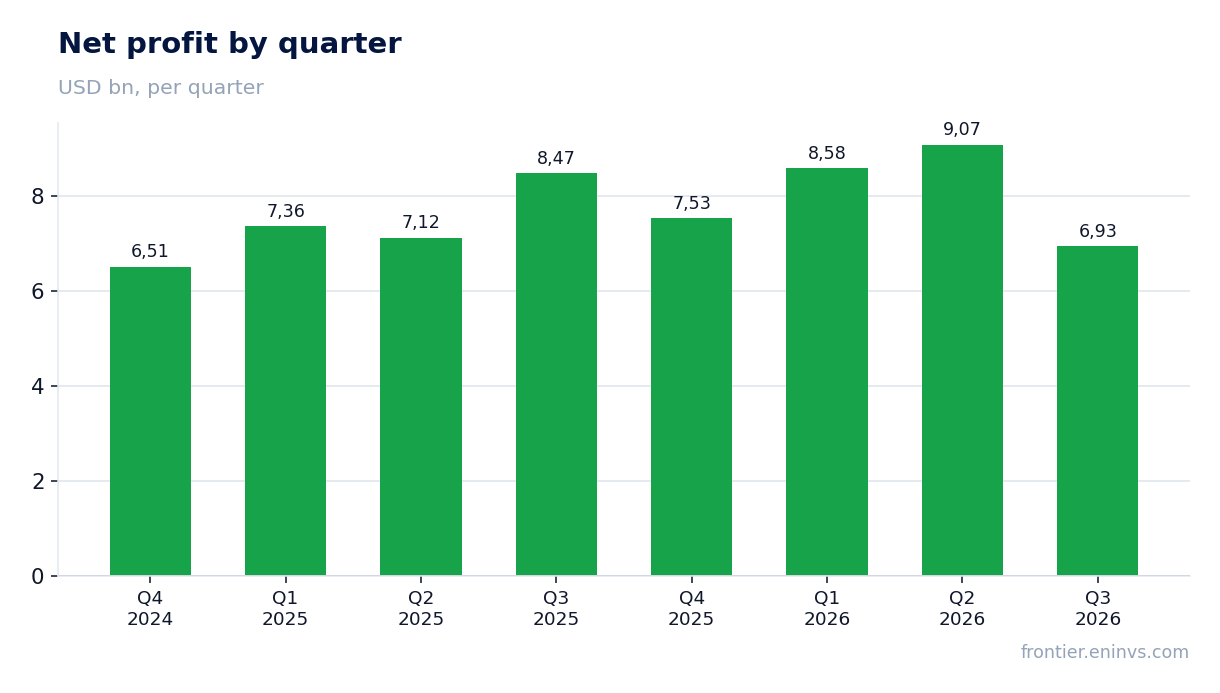
Over the trailing twelve months revenue reached $123,000 million, confirming the scale of the business
Trailing twelve-month (LTM) revenue reached $123,000 million. This figure covers four quarters: from the fourth quarter of 2024 to the third quarter of 2026. It gives an idea of the average size of the business but does not reflect the dynamics of a single quarter.
For comparison, third-quarter 2026 revenue was $29,958 million, close to the average quarterly level over the past year. This indicates stability in the revenue base, but does not offset the slowdown in year-on-year growth in the reported quarter.
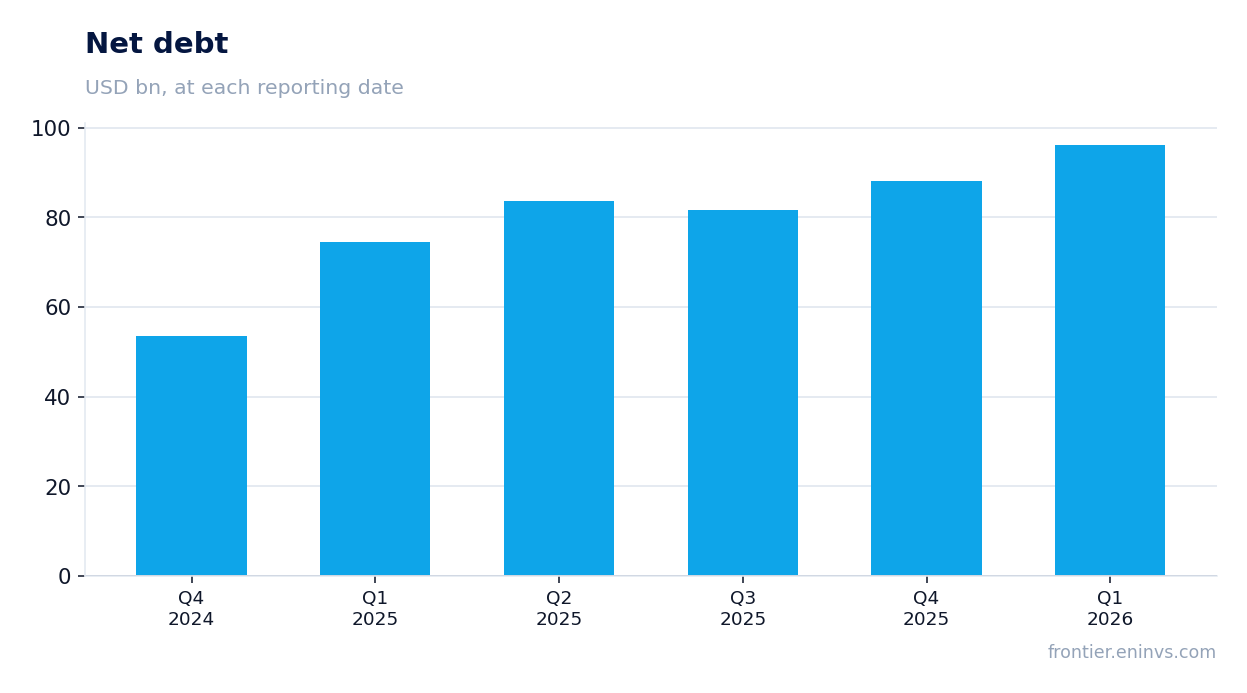
Net debt at end-2025 rose to $88,071 million from $53,534 million at end-2024
Net debt at end-2025 was $88,071 million, up from $53,534 million at end-2024. The increase over the year was $34,537 million. This is a substantial rise, which may reflect both balance sheet expansion and a change in funding structure.
For a bank, debt primarily represents obligations to clients and counterparties, and its growth may be linked to an increase in deposits or borrowings. However, without detail it is difficult to assess the quality of this growth. The important point is that absolute debt has risen, and this increases risks if market conditions deteriorate.
The net debt to EBITDA ratio is not provided, so one cannot judge debt burden relative to profit. One can only state that debt is growing.
Return on equity stands at 3.09% — a low level for a bank
Bank of America's return on equity (ROE) is 3.09%. This is a low figure, indicating that the bank earns little relative to its equity capital. For comparison, many large banks target double-digit ROE.
Low ROE may result from both lower profit and higher capital. Combined with an 18.1% year-on-year decline in net profit, this points to deteriorating business efficiency. For an investor, it is a signal that current profitability does not create significant value.
The share is held in the portal's model strategies US Financials (banks), but that is a fact of membership, not an argument to buy
The US_BAC share is included in the portal's model strategies US Financials (banks). This is a fact we note, but it is not an argument for the attractiveness of the share. The decision to include it in the strategy was based on the portal's own criteria and may not coincide with the current assessment.
For the reader, it is important that membership in a strategy does not replace analysis of the financial statements. Our verdict on the share is based solely on financial metrics and their dynamics.
Bottom line
Bank of America's revenue in the third quarter of 2026 rose 6.7% year on year, but that is well below 19.3% in the second quarter. Net profit fell 18.1%, and the margin dropped to 23.1% from 30.2%. Rising net debt to $88,071 million and low ROE of 3.09% add caution. At the current price the share looks neutral: the positive of revenue growth is balanced by falling profit and debt burden.