MICRON TECHNOLOGY INC: quarterly revenue up 4.5x, and the company became a net lender
Contents
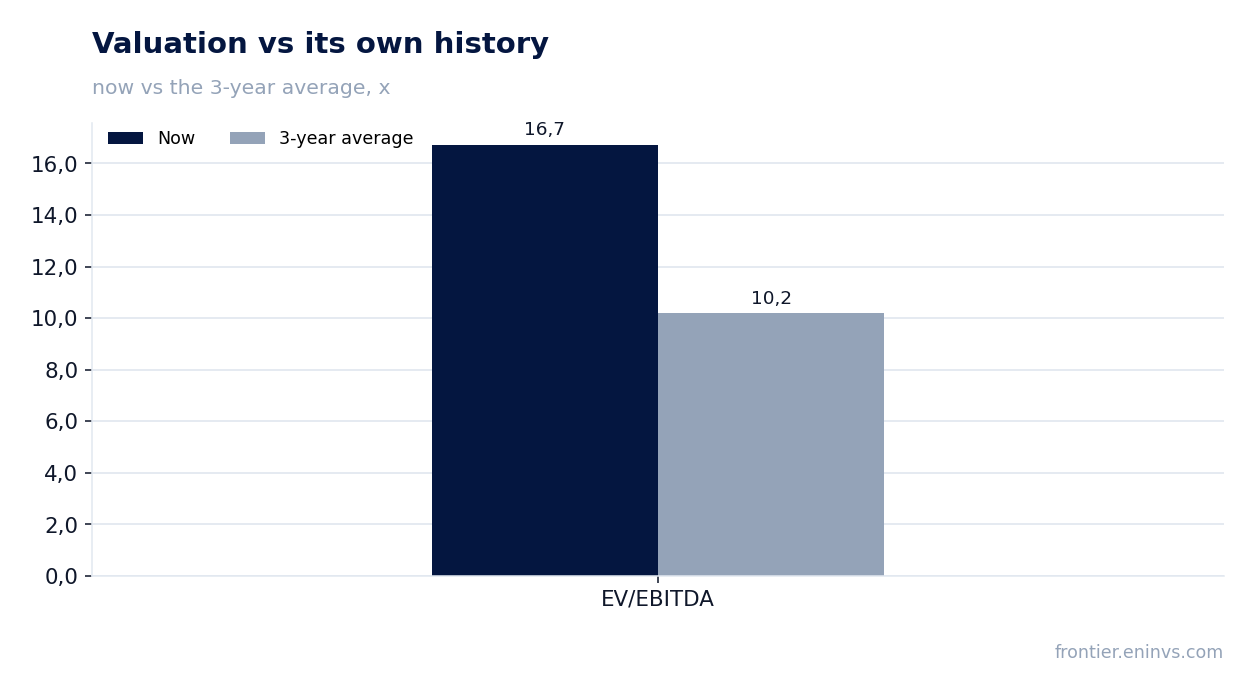
24 июня 2026 года MICRON TECHNOLOGY INC раскрыла результаты за третий квартал 2026 финансового года, закончившийся 28 мая 2026 года. Выручка составила 41 456 млн долл., что в 4,5 раза больше, чем годом ранее, а чистая прибыль выросла до 28 243 млн долл.. Компания впервые за долгое время оказалась нетто-кредитором: чистый долг составил минус 7 532 млн долл.. На текущей цене акция выглядит привлекательно: мультипликатор EV/EBITDA 16,7 заметно выше собственного трёхлетнего среднего 10,2, но модель портала оценивает потенциал роста в +75%.
Key takeaways
— Quarterly revenue grew 4.5x thanks to strategic customer agreements in AI
— EBITDA margin reached 86.1% – a record level driven by memory pricing
— Quarterly net profit was $28.2bn, almost 15x higher than a year ago
— The company became a net lender: net debt fell to minus $7.5bn
— Quarterly operating cash flow was $25.4bn, lifting adjusted free cash flow to $18.3bn
— Capex rose to $7.8bn for the quarter, but the company retains high profitability
— Dividend maintained at $0.15 per share, implying a yield of just 0.05%
Attractiveness
Key figures, USD bn
| Metric | Q3 2025 | Q3 2026 | Change |
|---|---|---|---|
| Revenue | 9.30 | 41.5 | +345.7% |
| EBITDA | 4.26 | 35.7 | +737.0% |
| Operating profit | 2.17 | 33.3 | +1436.1% |
| Net profit | 1.89 | 28.2 | +1398.3% |
| Operating cash flow | 4.61 | 25.4 | +450.8% |
| Capex | 2.94 | 7.83 | +166.4% |
| EBITDA margin | 45.8% | 86.1% | +40.3 pp |
| Net margin | 20.3% | 68.1% | +47.8 pp |
Quarterly revenue grew 4.5x thanks to strategic customer agreements in AI
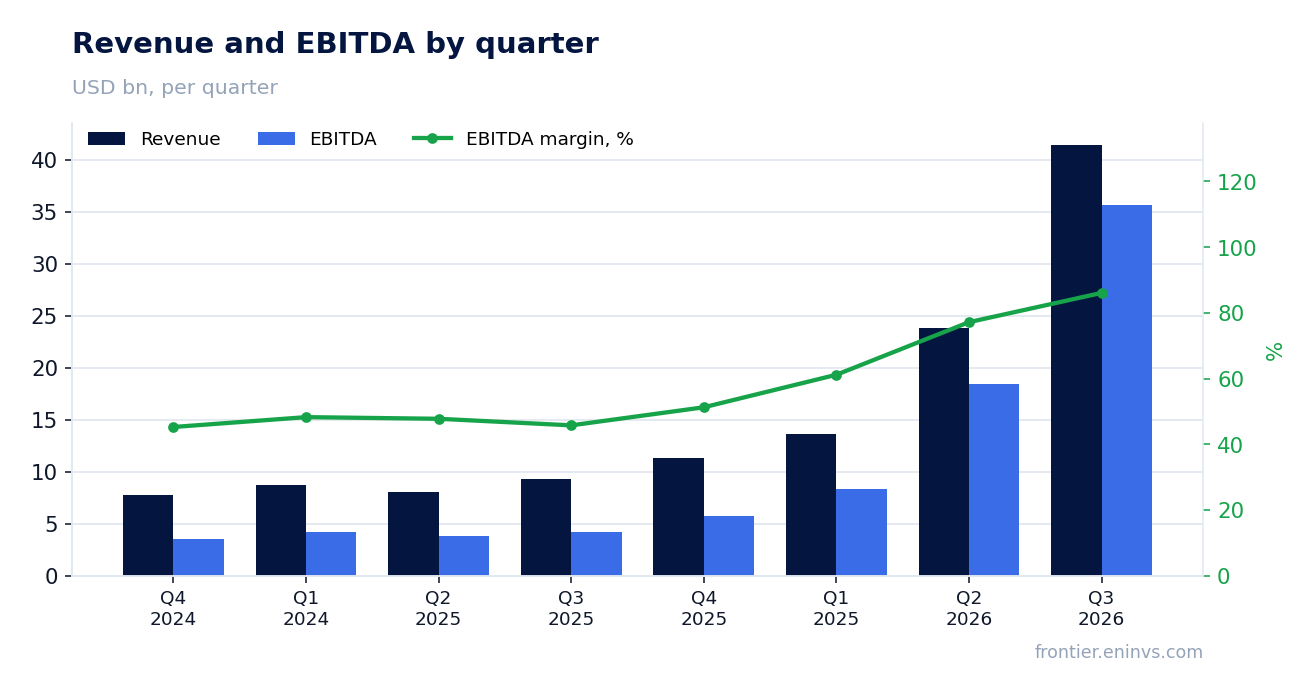
In the third quarter of fiscal 2026, MICRON TECHNOLOGY INC's revenue reached $41,456 million, 4.5 times higher than $9,301 million a year earlier. Sequential growth was also impressive: from $23,860 million to $41,456 million, or 74%.
The main driver was strategic customer agreements announced in the report, securing long-term demand for memory for AI applications. All business units showed multi-fold growth: Cloud Memory Business Unit revenue rose from $3,386 million to $13,769 million, Core Data Center – from $1,530 million to $11,524 million, Mobile and Client – from $3,255 million to $11,521 million, and Automotive and Embedded – from $1,127 million to $4,634 million.
EBITDA margin reached 86.1% – a record level driven by memory pricing
EBITDA for the third quarter of fiscal 2026 was $35,682 million, corresponding to a margin of 86.1%. A year earlier, the margin was 45.8%. The margin expansion reflects a sharp improvement in memory pricing and operating leverage.
GAAP gross margin reached 84.6% versus 37.7% a year earlier. Operating margin rose to 80.4% from 23.3%. The company attributes this to strong demand for AI products and constrained industry supply.
Quarterly net profit was $28.2bn, almost 15x higher than a year ago
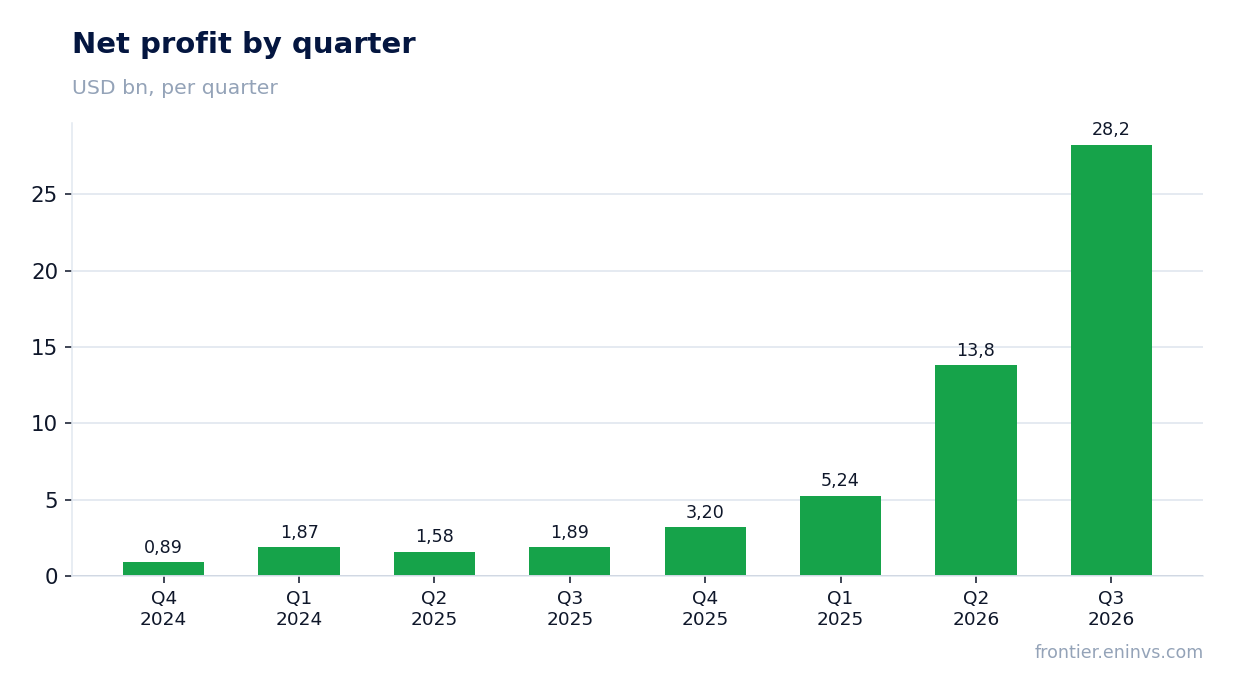
Net profit for the third quarter of fiscal 2026 reached $28,243 million, versus $1,885 million a year earlier. The 15-fold increase was driven not only by record revenue but also by high operating margins.
The company also reported non-GAAP net income of $28,857 million, excluding stock-based compensation and other items. The small gap between GAAP and non-GAAP indicates high earnings quality.
The company became a net lender: net debt fell to minus $7.5bn
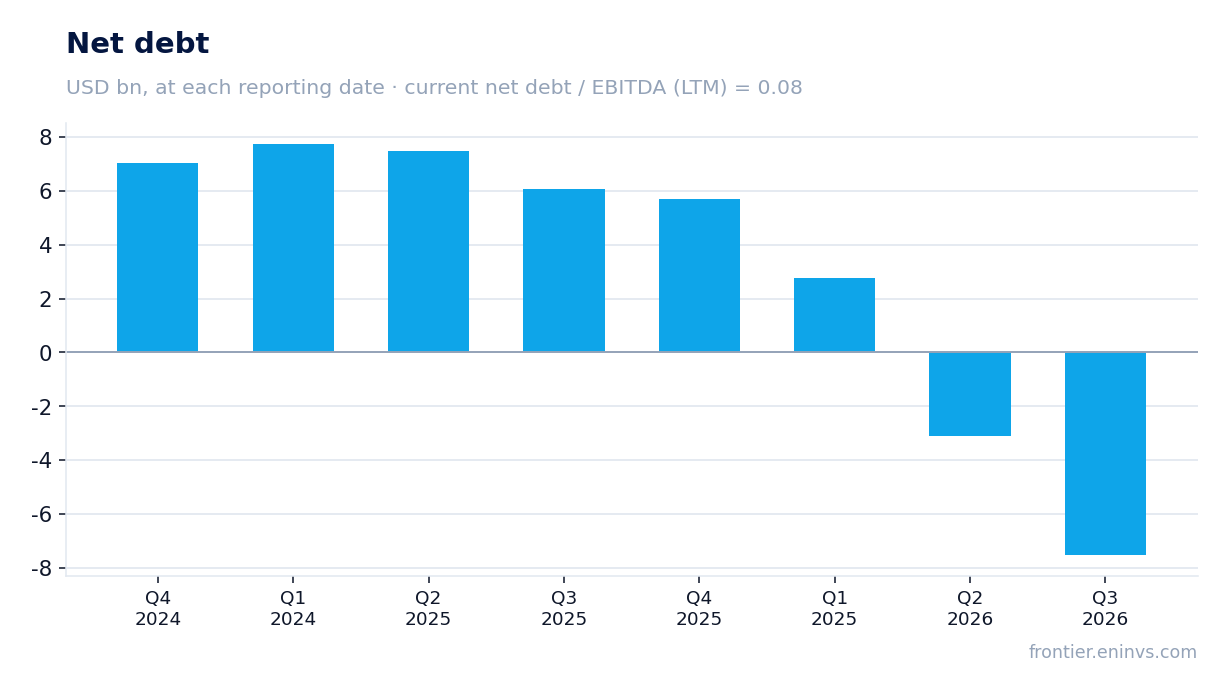
At the end of the quarter, MICRON TECHNOLOGY INC's net debt was minus $7,532 million, meaning cash and investments exceeded debt. A quarter earlier, net debt was minus $3,110 million, and a year earlier – $6,050 million.
The company actively repaid debt: over nine months, debt repayments totaled $9,380 million, and it also repurchased shares for $650 million. As a result, the net debt to EBITDA ratio for the trailing twelve months stands at just 0.08.
Quarterly operating cash flow was $25.4bn, lifting adjusted free cash flow to $18.3bn
Operating cash flow in the third quarter of fiscal 2026 reached $25,388 million, more than five times higher than $4,609 million a year earlier. This drove adjusted free cash flow to $18,304 million.
The cash flow growth reflects not only high profitability but also improved working capital management. Over nine months, operating cash flow was $45,702 million versus $11,795 million in the same period last year.
Capex rose to $7.8bn for the quarter, but the company retains high profitability
Capital expenditures in the third quarter of fiscal 2026 were $7,826 million, significantly higher than $2,938 million a year earlier. The company is investing in capacity expansion to meet growing demand for AI memory.
Despite higher capex, profitability remains high: ROE for the trailing twelve months is 43.5%. The company also maintained its dividend at $0.15 per share, which at the current price implies a yield of just 0.05%.
Dividend maintained at $0.15 per share, implying a yield of just 0.05%
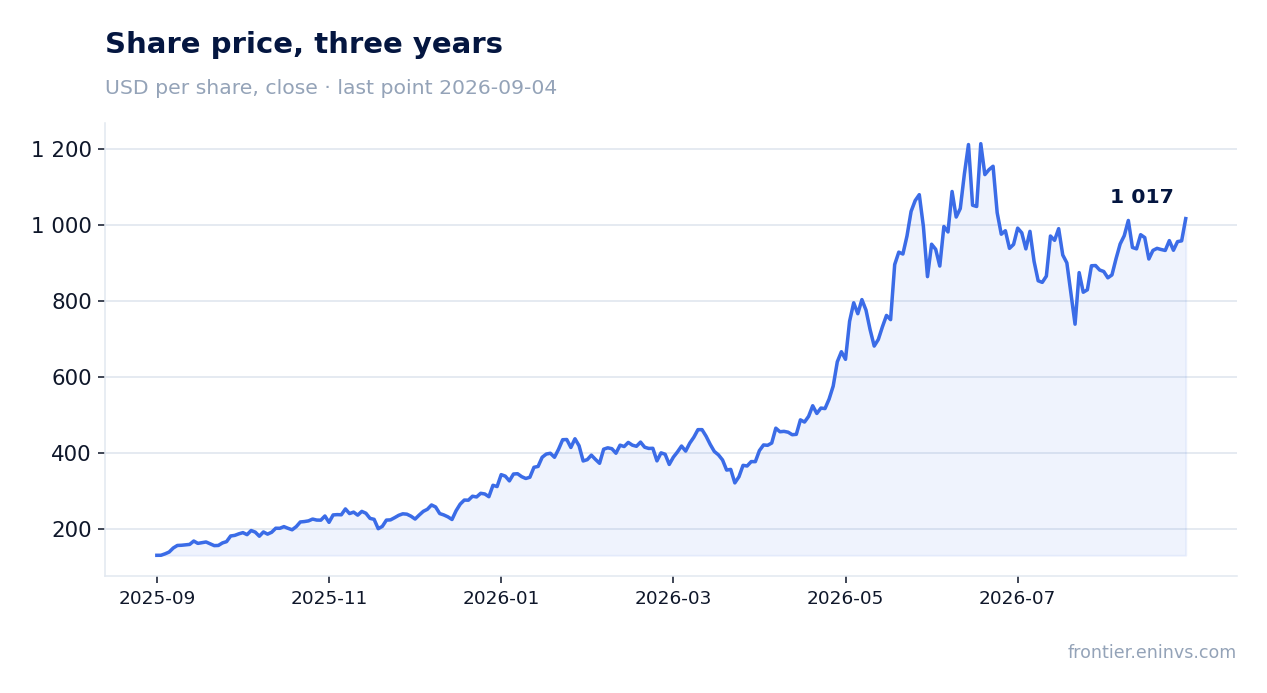
The Board of Directors declared a quarterly dividend of $0.15 per share, payable on July 21, 2026. At the current share price of about $1,051.77, the annual yield is only 0.05%.
For income-oriented investors, this is negligible. The company prefers to allocate free cash flow to capex and debt repayment rather than increasing payouts.
Valuation on the latest reported figures
| Metric | Value |
|---|---|
| Market cap | 1 149 bn USD |
| P/E (LTM) | 22.8 |
| EV/EBITDA (LTM) | 16.7 |
| P/B | 21.21 |
| Net debt / EBITDA (LTM) | 0.08 |
| Operating cash flow (LTM) | 17.5 bn |
| ROE | 43.5% |
| Dividend yield (12m) | 0.1% |
| EV/EBITDA, 3-year average | 10.2 |
Bottom line
MICRON TECHNOLOGY INC's third-quarter fiscal 2026 report shows exceptional strength: revenue grew 4.5x, EBITDA margin reached 86.1%, and the company became a net lender with net debt of minus $7.5bn. However, these results largely reflect the peak of the memory pricing cycle, and investors have already priced this in: EV/EBITDA of 16.7 versus a three-year average of 10.2. Nevertheless, the portal's model sees +75% upside potential, making the stock attractive for long-term investors who believe in the sustainability of AI demand. The key question is whether the company can maintain high margins after the current cycle ends.