Alcoa: profit doubled, but revenue is already decelerating and debt rose ahead of the deal
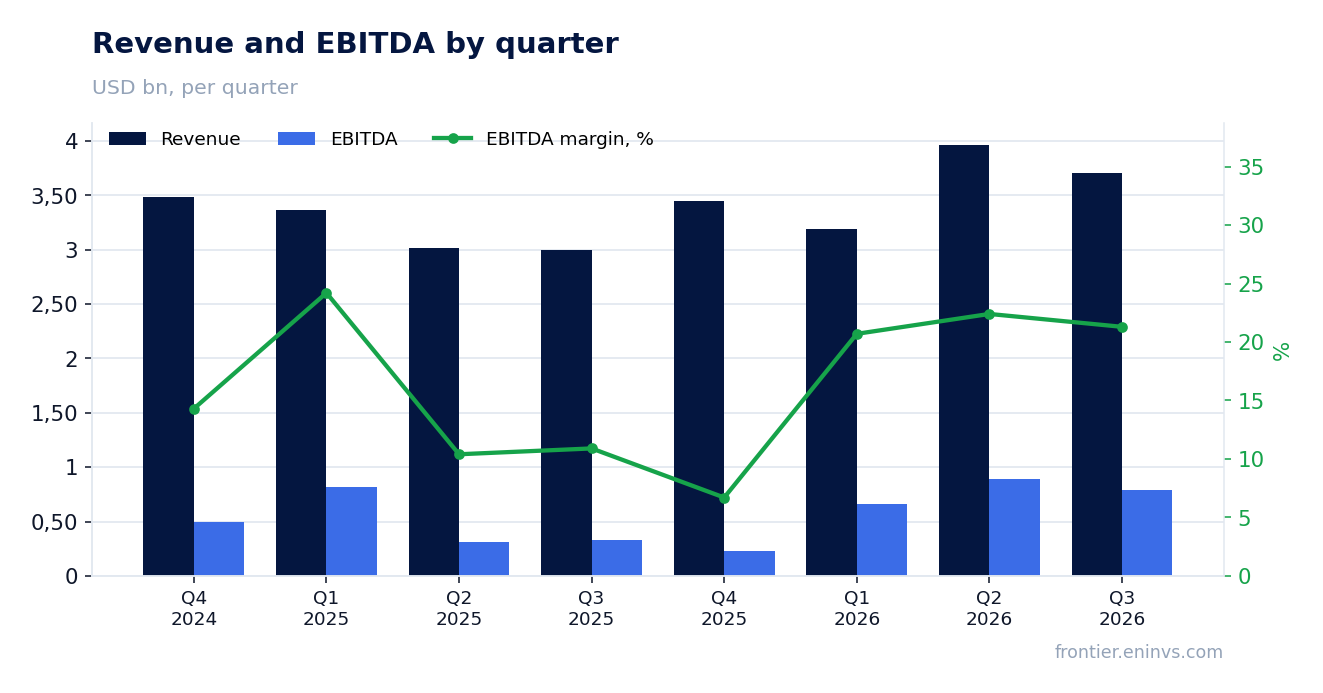
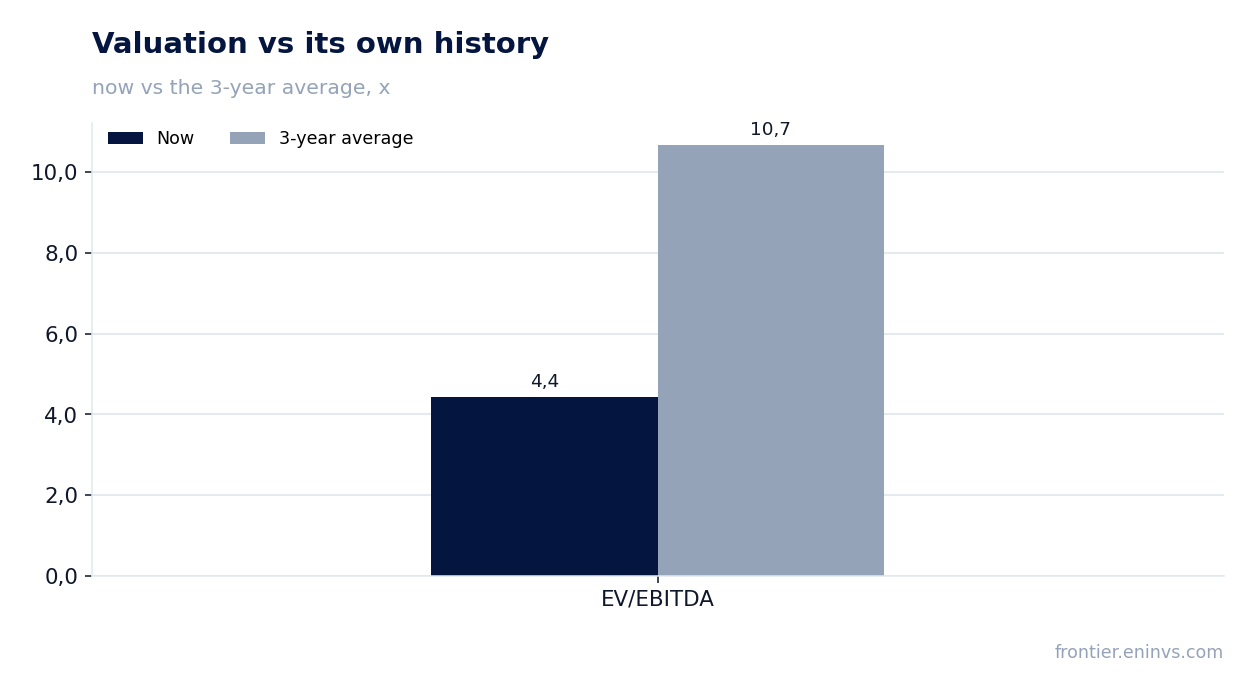
On October 15, Alcoa Corporation released its third-quarter 2026 results. Revenue came in at $3,704 million, up 23.7% year-on-year, but growth decelerated from 31.4% in the second quarter. Adjusted EBITDA jumped 141.3% to $789 million, net income rose 108.2% to $483 million, and the EBITDA margin reached 21.3% versus 10.9% a year earlier. The stock trades at an LTM EV/EBITDA of 4.4, which is 58% below its own three-year average of 10.7, making the share attractive, but the portal's model points to -9% downside to fair value, hence the verdict is 'rather attractive'.
Key takeaways
— Revenue grew 23.7% year-on-year but decelerated from 31.4% in the second quarter
— EBITDA margin rose to 21.3% on lower production costs and higher alumina prices
— Net income doubled, but $60 million of it came from one-off items
— Operating cash flow was $643 million, free cash flow $472 million
— Debt rose to $4.8 billion due to bond issuance for the AliGroup acquisition
— LTM EV/EBITDA of 4.4 is 58% below its own three-year average of 10.7
— Dividend yield of 0.99% with $80 million paid over nine months
Attractiveness
Key figures, USD bn
| Metric | Q3 2025 | Q3 2026 | Change |
|---|---|---|---|
| Revenue | 3.00 | 3.70 | +23.7% |
| EBITDA | 0.33 | 0.79 | +141.3% |
| Operating profit | 0.17 | — | — |
| Net profit | 0.23 | 0.48 | +108.2% |
| Operating cash flow | 0.09 | 0.64 | +656.5% |
| Capex | 0.15 | — | — |
| EBITDA margin | 10.9% | 21.3% | +10.4 pp |
| Net margin | 7.7% | 13.0% | +5.3 pp |
Revenue grew 23.7% year-on-year but decelerated from 31.4% in the second quarter
In the third quarter of 2026, Alcoa's revenue reached $3,704 million, up 23.7% year-on-year. However, compared to the second quarter, when growth was 31.4%, the pace decelerated. The main driver of the year-on-year increase was higher average realized aluminum prices – $4,527 per tonne versus $3,374 a year earlier – as well as a 2% sequential increase in aluminum production to 649,000 tonnes.
By segment, third-party alumina revenue rose 7% sequentially on higher prices and shipments, while aluminum segment revenue fell 9% due to lower shipments and prices. Total aluminum shipments declined 5% sequentially after an unusually high second quarter caused by inventory repositioning.
The deceleration in year-on-year revenue growth mainly reflects the high base of the second quarter and a sequential decline in aluminum prices. At the same time, aluminum production has grown for six consecutive quarters, laying the groundwork for future shipments.
EBITDA margin rose to 21.3% on lower production costs and higher alumina prices
Adjusted EBITDA in the third quarter was $789 million, up 141.3% year-on-year. The EBITDA margin reached 21.3% versus 10.9% in the third quarter of 2025. This margin expansion was driven by improved production costs in both segments and higher alumina prices.
In the aluminum segment, adjusted EBITDA rose to $862 million from $307 million a year earlier, despite a sequential decline in aluminum prices. In the alumina segment, EBITDA remained negative at -$1 million, but this is a significant improvement from -$96 million in the second quarter, thanks to higher alumina prices and improved refinery stability.
The sequential decline in EBITDA of $112 million compared to the second quarter was due to lower aluminum prices and shipments, which partially offset improved costs and higher alumina prices.
Net income doubled, but $60 million of it came from one-off items
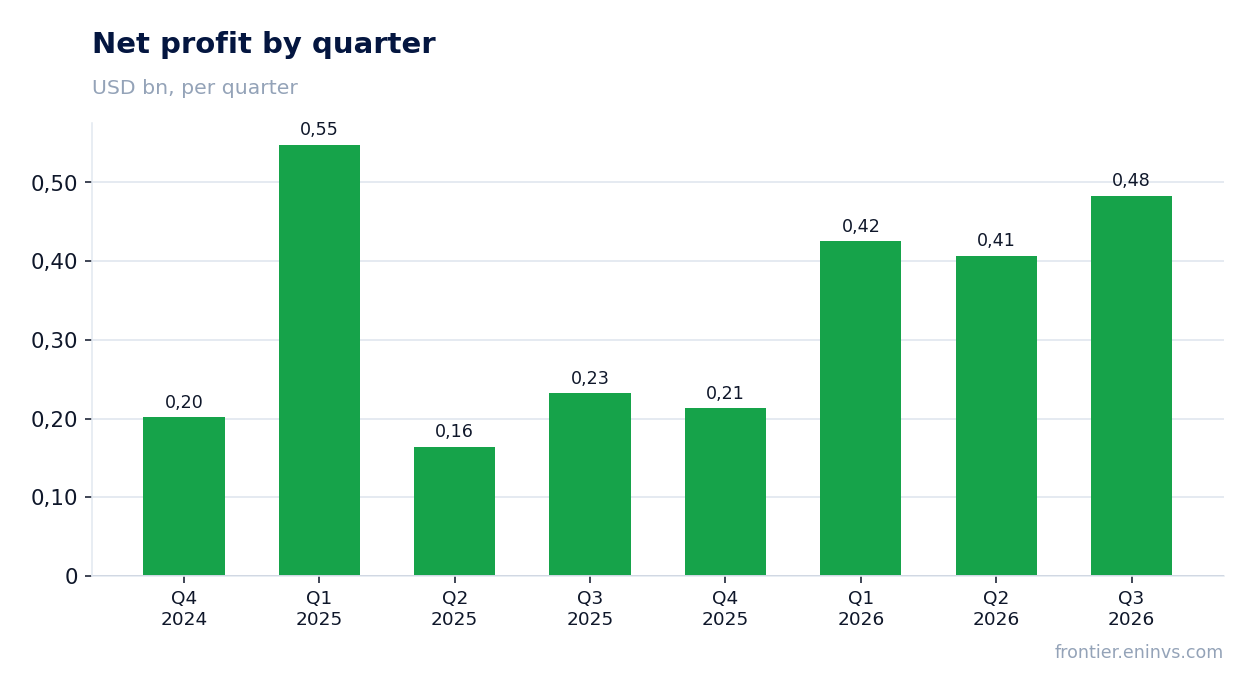
Net income attributable to Alcoa Corporation in the third quarter was $483 million, or $1.81 per share, up 108.2% from $232 million a year earlier. However, adjusted net income, excluding special items, was $485 million, or $1.82 per share.
Special items affecting profit included a $32 million mark-to-market gain on energy contracts, a $28 million mark-to-market gain on Ma'aden shares, $25 million in demolition and remediation costs at closed locations, and $14 million in external costs related to the AliGroup acquisition. These items netted to a $2 million impact.
Thus, the bulk of profit came from operational improvements rather than one-off factors, confirming the sustainability of results.
Operating cash flow was $643 million, free cash flow $472 million
In the third quarter, Alcoa generated $643 million in operating cash flow. Free cash flow was $472 million after capital expenditures of $171 million. This is significantly higher than the $85 million operating cash flow a year earlier.
The increase in cash flow was driven by high profit and improved working capital management. Days working capital stood at 50 days, up 4 days from the second quarter due to higher aluminum inventories, but in line with the third quarter of 2025.
The company ended the quarter with $4.4 billion in cash, including $2.6 billion raised to finance the AliGroup acquisition. This provides liquidity for the deal.
Debt rose to $4.8 billion due to bond issuance for the AliGroup acquisition
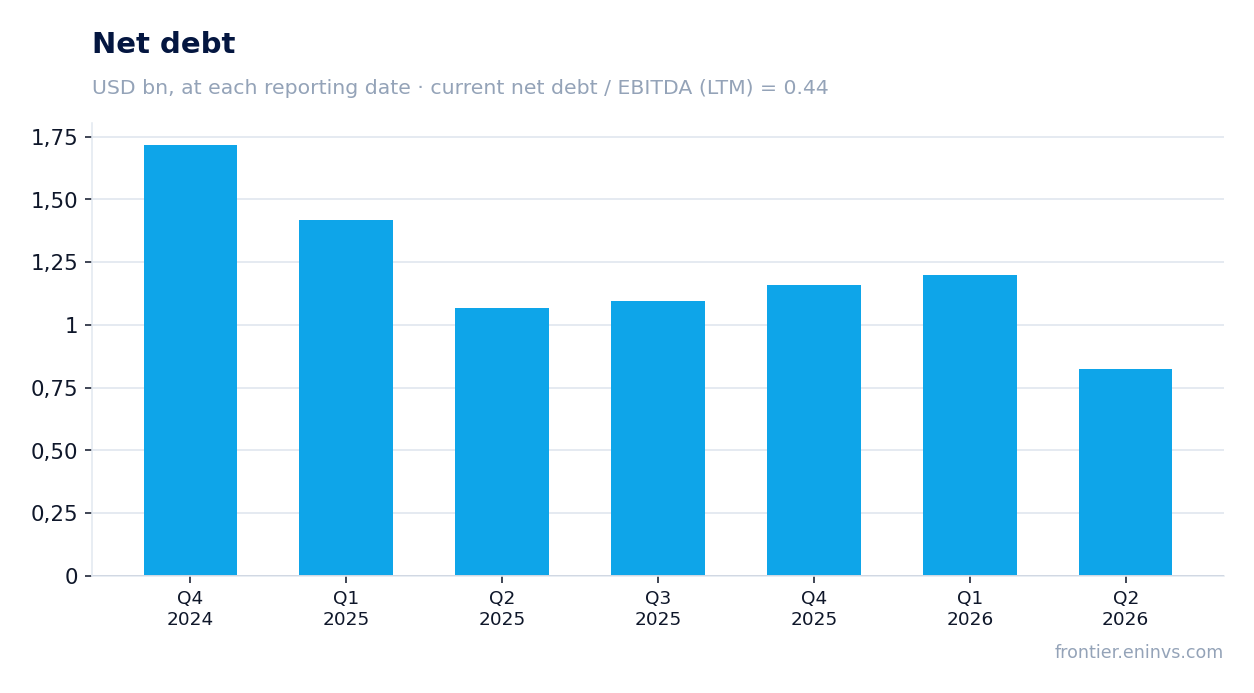
Alcoa's long-term debt at the end of the third quarter was $4,821 million versus $2,438 million at the end of 2025. The increase is due to the issuance of $1.5 billion in 6.625% notes and $1.1 billion in 6.875% notes to finance the AliGroup acquisition.
Net debt at the end of 2025 was $1,159 million, and the net debt to LTM EBITDA ratio was 0.44. This is a low level, but with the new debt and upcoming deal expenses, leverage could rise.
Interest expense in the third quarter was $42 million, and the company expects it to reach $185 million for the year, higher than previously projected due to the bond issuance.
LTM EV/EBITDA of 4.4 is 58% below its own three-year average of 10.7
Currently, Alcoa shares trade at an LTM EV/EBITDA of 4.4, which is 58% below its own three-year average of 10.7. This indicates significant undervaluation relative to historical levels. The LTM P/E is 6.9, also low.
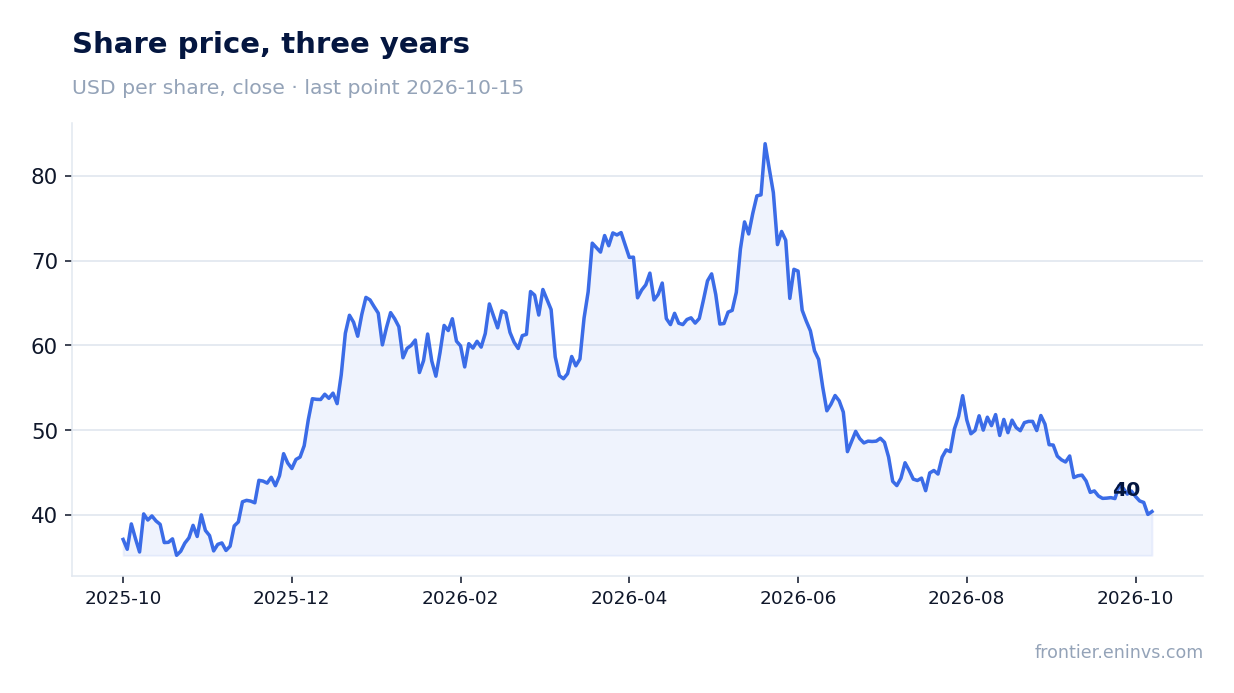
However, the portal's model, which re-prices EBITDA at current commodity prices and the target EV/EBITDA, puts the fair value 9% below the current market price. This means the market is already pricing in an optimistic scenario for aluminum and alumina prices.
The trailing 12-month dividend yield is 0.99%, which is not high, but the company paid $80 million in dividends over the first nine months of 2026.
Dividend yield of 0.99% with $80 million paid over nine months
Alcoa paid $80 million in dividends over the first nine months of 2026. With a current market capitalization of $10,558 million, the trailing 12-month dividend yield is 0.99%. This is a modest level and not a primary factor in the stock's attractiveness.
The company has not announced new dividend programs, and the report contains no information on changes to dividend policy. The main focus now is completing the AliGroup acquisition in the first half of 2027, which may require significant expenses.
Thus, the dividend is not a key driver for investors, and its growth is unlikely until the deal closes.
Valuation on the latest reported figures
| Metric | Value |
|---|---|
| Market cap | 10.6 bn USD |
| P/E (LTM) | 6.9 |
| EV/EBITDA (LTM) | 4.4 |
| P/B | 1.73 |
| Net debt / EBITDA (LTM) | 0.44 |
| Operating cash flow (LTM) | 1.61 bn |
| ROE | 8.2% |
| Dividend yield (12m) | 1.0% |
| EV/EBITDA, 3-year average | 10.7 |
Bottom line
Bottom line: Alcoa delivered a strong quarter with profit and margin growth, but revenue is decelerating and debt is rising ahead of the upcoming acquisition. The stock trades well below its historical EV/EBITDA valuation, making it attractive, but the portal's model points to limited upside. The dividend yield is low, and the main driver is the completion of the AliGroup deal. Verdict: 'rather attractive'.
Open the company's financial profile AA →
See also: market overview · valuation map · stock screeners