Aker Solutions: revenue falls 16.3%, but the margin holds on SLB OneSubsea profit
On 28 October Aker Solutions reported third-quarter 2026 results. Revenue was USD 1,409.1 million, down 16.3% year on year, EBITDA was USD 134.3 million and net profit USD 72.9 million. The EBITDA margin rose to 9.5% from 8.7%, but that gain came from the SLB OneSubsea profit share rather than the core business. At an EV/EBITDA of 3.3 against its own three-year average of 6.3 the share looks cheap, yet the revenue decline and a weak project backlog leave the verdict neutral.
Key takeaways
— Revenue has fallen for three quarters in a row, and the decline accelerated from 7.3% to 16.3%
— The 9.5% margin was lifted by the SLB OneSubsea profit share of NOK 281 million; without it the margin is 7.7%
— The core business still improved its margin by 0.5 pp to 7.7% through cost cuts
— Free cash flow of USD 164.9 million on capital expenditure of just USD 7.0 million
— Net debt is negative at USD 321.5 million, or 0.64 times trailing twelve-month EBITDA
— The 23.4% dividend yield is misleading: nearly half of the payment was a one-off dividend
— EV/EBITDA of 3.3 against its own average of 6.3 makes the share 47% cheaper than its history
Attractiveness
Key figures, USD bn
| Metric | Q3 2025 | Q3 2026 | Change |
|---|---|---|---|
| Revenue | 1.68 | 1.41 | -16.3% |
| EBITDA | 0.15 | 0.13 | -7.9% |
| Operating profit | 0.11 | 0.09 | -17.0% |
| Net profit | 0.09 | 0.07 | -15.6% |
| Operating cash flow | 0.04 | 0.17 | +306.4% |
| Capex | 0.01 | 0.01 | -24.7% |
| EBITDA margin | 8.7% | 9.5% | +0.8 pp |
| Net margin | 5.1% | 5.2% | +0.1 pp |
Revenue has fallen for three quarters in a row, and the decline accelerated from 7.3% to 16.3%
In the third quarter of 2026 revenue was USD 1,409.1 million against USD 1,682.8 million a year earlier, a decline of 16.3%. In the second quarter the fall was a more modest 7.3%, so a slower decline turned into a faster one. The company itself attributes this to peak activity in 2025, after which project volumes began to recede.
The weakness comes from the project segment. The Renewables and Field Development backlog fell from NOK 49.3 billion in the first quarter of 2025 to NOK 27.1 billion in the third quarter of 2026. New orders in the quarter were NOK 5.4 billion, or 0.4 times revenue, meaning the company is executing old contracts faster than it wins new ones.
Total backlog at 30 September 2026 was NOK 69.3 billion. Of that, NOK 12.0 billion is scheduled for the fourth quarter of 2026, NOK 24.0 billion for 2027 and NOK 33.3 billion for 2028 and later. The long end is held by Life Cycle: NOK 40.0 billion, of which NOK 26.4 billion is beyond 2028. That smooths the project slump but does not erase it.
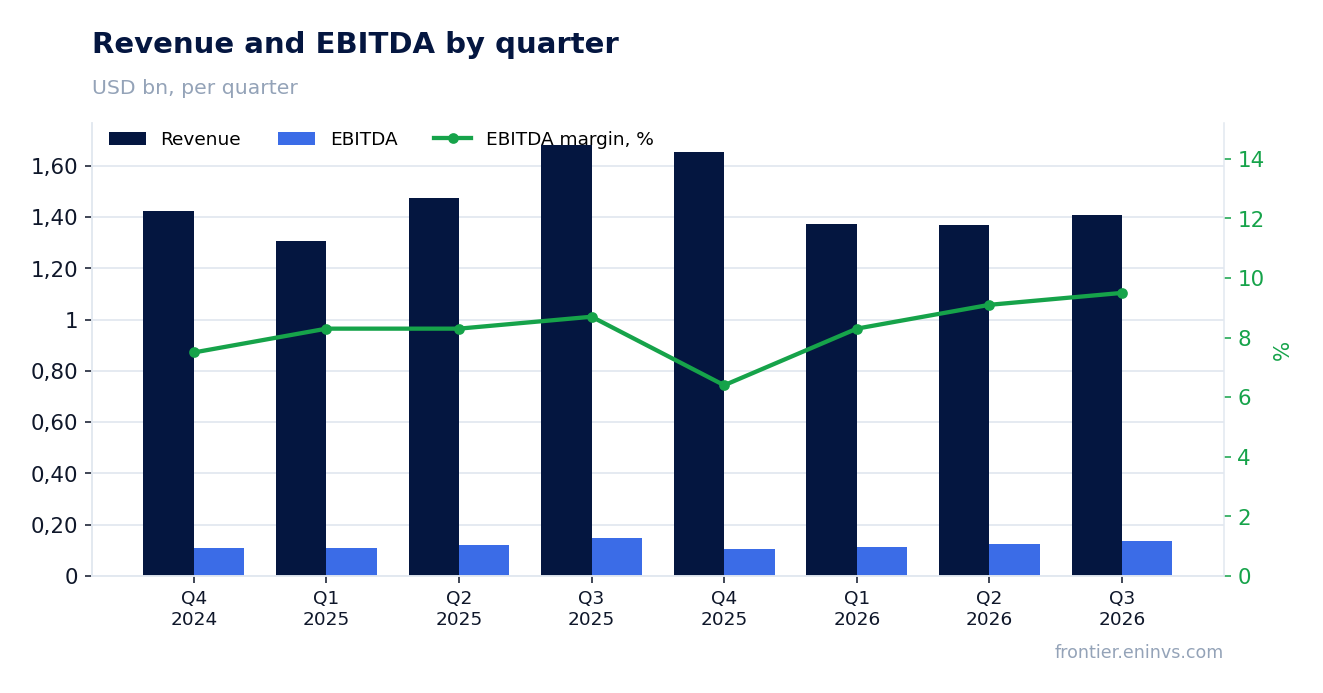
The 9.5% margin was lifted by the SLB OneSubsea profit share of NOK 281 million; without it the margin is 7.7%
EBITDA in the third quarter of 2026 was USD 134.3 million, a margin of 9.5% against 8.7% a year earlier. In the release the company cites a 9.6% margin and separately states 7.7% excluding the SLB OneSubsea profit share. The 1.9 pp gap is the NOK 281 million profit share booked in revenue and other income.
SLB OneSubsea, 20% owned by Aker Solutions, grew revenue 12% year on year to USD 1.1 billion at an 18.5% EBITDA margin. This is equity-accounted profit, not cash flow. OneSubsea dividends are a separate line: NOK 137 million received in the third quarter of 2026 and NOK 841 million in 2025, and they do not affect EBITDA.
Even without OneSubsea the core business margin rose: 7.7% against 7.2% a year earlier, up 0.5 pp. The company is cutting costs and reshaping project execution, and that already shows in the numbers. The 7.7% cannot be compared with last year's 8.7% – that 8.7% already included OneSubsea.
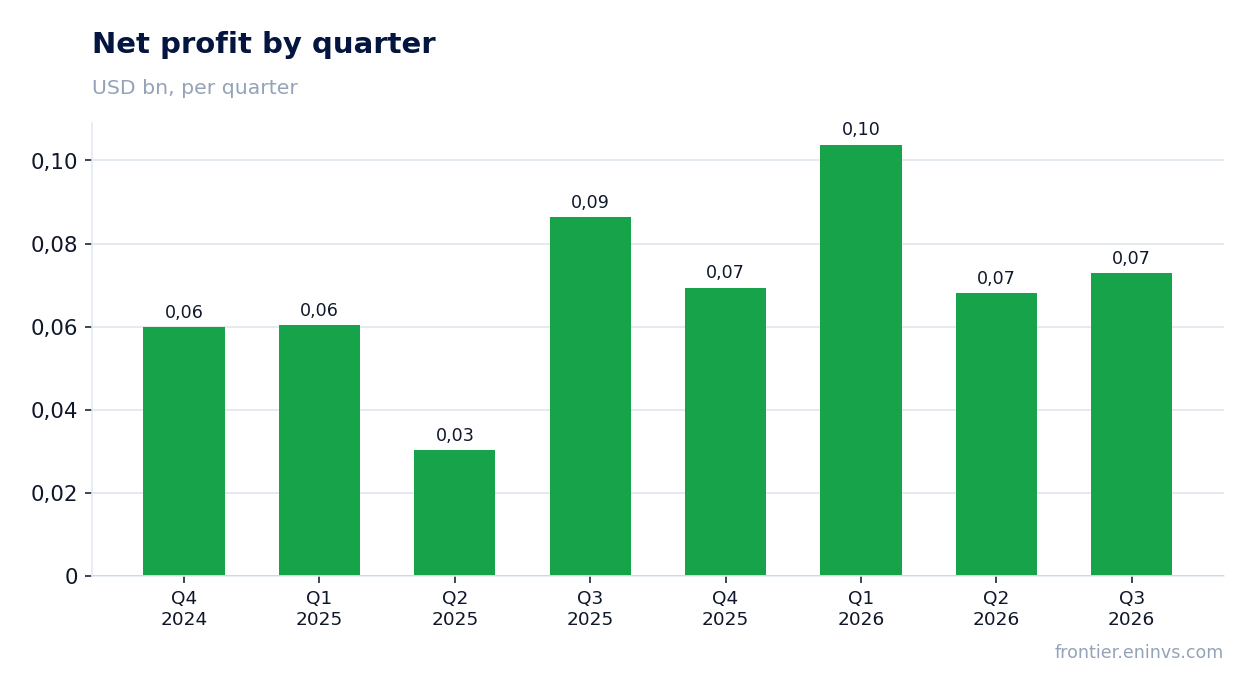
The core business still improved its margin by 0.5 pp to 7.7% through cost cuts
The 0.5 pp improvement in the core business is the main operating argument of the report. The company explicitly cites standardised solutions, a shift from documents to data and AI-supported digital tools. These should lower project execution costs, and the first 0.5 pp confirm the direction is working.
Net profit for the quarter was USD 72.9 million, 15.6% below a year earlier. The net margin was almost unchanged at 5.2% against 5.1%. Profit was supported by the OneSubsea stake and low capital expenditure, not by revenue growth.
For 2027 the company guides revenue of NOK 35–40 billion at a 7.0–8.0% EBITDA margin excluding OneSubsea. That is below the current revenue level, and the company is already cutting costs and capacity for lower activity. The 2026 guidance is NOK 53–55 billion at a 7.5–8.0% margin excluding OneSubsea.
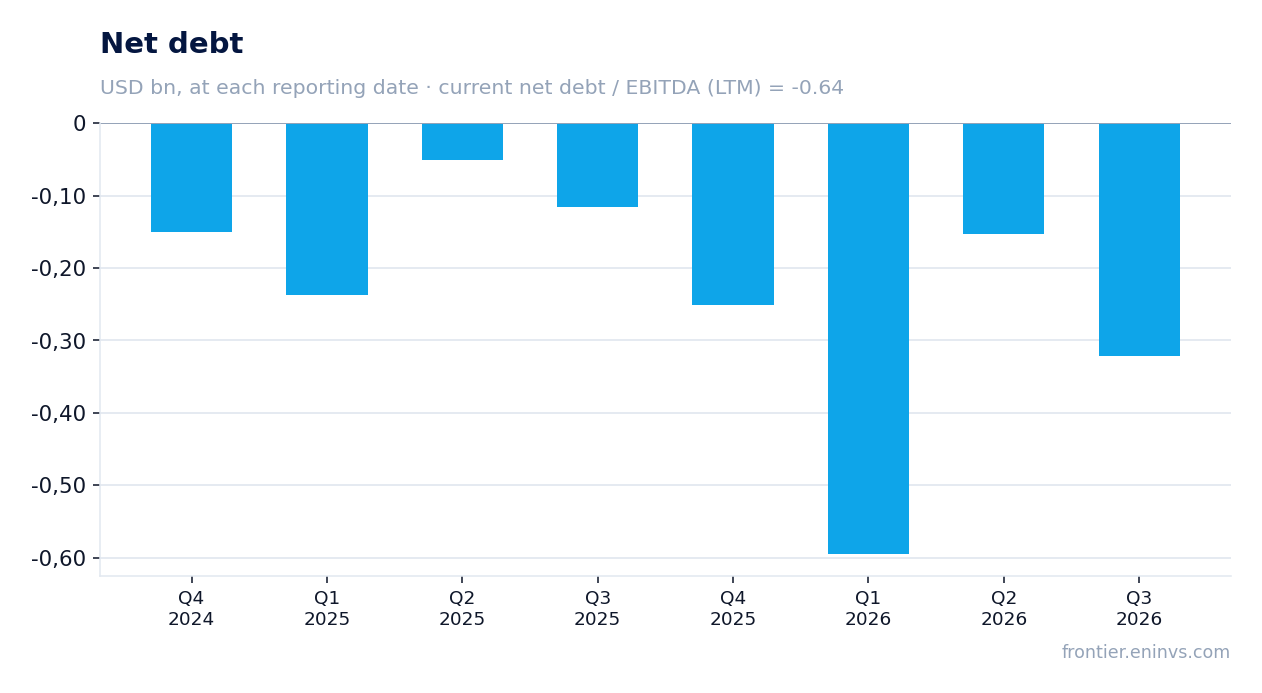
Free cash flow of USD 164.9 million on capital expenditure of just USD 7.0 million
Operating cash flow in the third quarter of 2026 was USD 171.9 million, capital expenditure USD 7.0 million and free cash flow USD 164.9 million. That is a strong result for a quarter with falling revenue, explained by a NOK 677 million working capital improvement.
Working capital is a reversible item: what was released this quarter can go back in the next. In the second quarter of 2026 operating cash flow was negative at USD 22.1 million, so quarterly dynamics are uneven. Over the trailing twelve months operating cash flow was USD 518.4 million.
Capital expenditure of USD 7.0 million is very low for a company with quarterly revenue of USD 1.4 billion. Aker Solutions' main assets are people and contracts, not plants, so low capex is normal here. But it also means free cash flow is almost entirely operating cash flow.
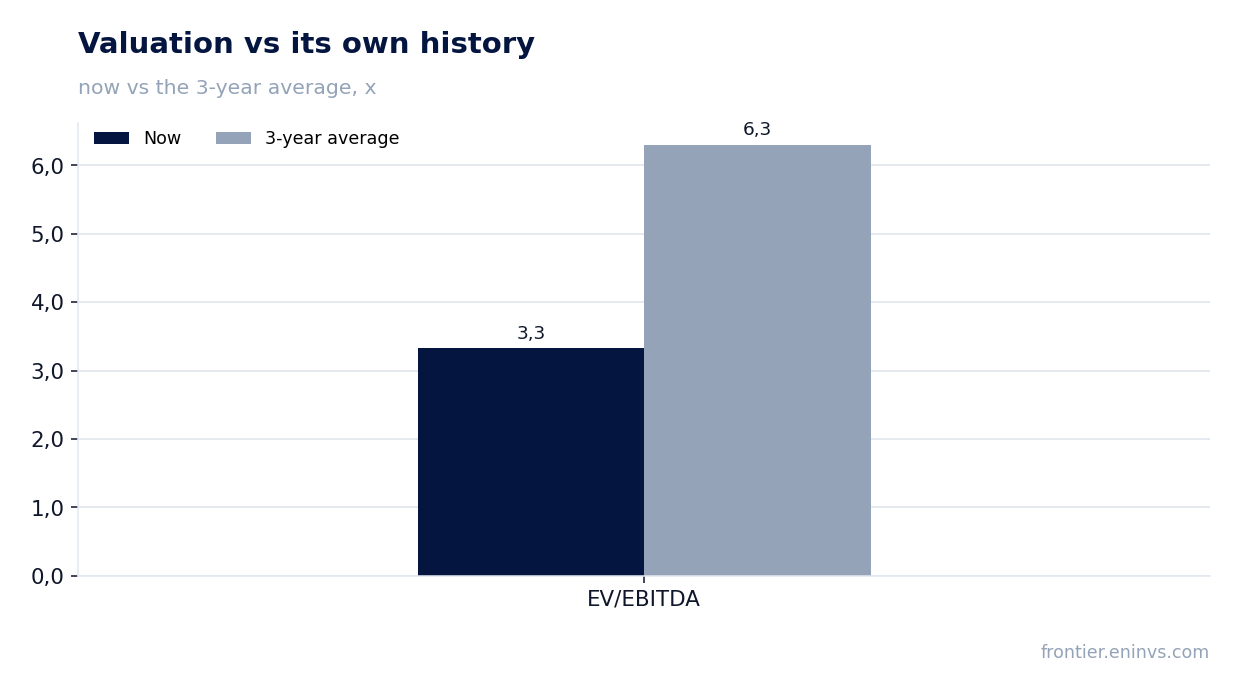
Net debt is negative at USD 321.5 million, or 0.64 times trailing twelve-month EBITDA
At 30 September 2026 net debt was negative USD 321.5 million, meaning the company holds net cash. Net debt to trailing twelve-month EBITDA is negative 0.64. The company has no borrowings, and its NOK 5.8 billion cash position includes liquid funds; lease liabilities are NOK 2.7 billion.
Over the quarter net debt moved from negative USD 0.2 billion at 30 June 2026 to negative USD 0.3 billion at 30 September 2026, so the cash cushion grew by USD 0.2 billion. Over twelve months the same measure moved from negative USD 0.1 billion at 30 September 2025 to negative USD 0.3 billion.
With such a cushion interest expense is not a risk factor, and leverage does not constrain either dividends or cost cuts. The weak spot in the balance sheet is not debt but the dependence of profit on the OneSubsea stake, which does not feed EBITDA with cash.
The 23.4% dividend yield is misleading: nearly half of the payment was a one-off dividend
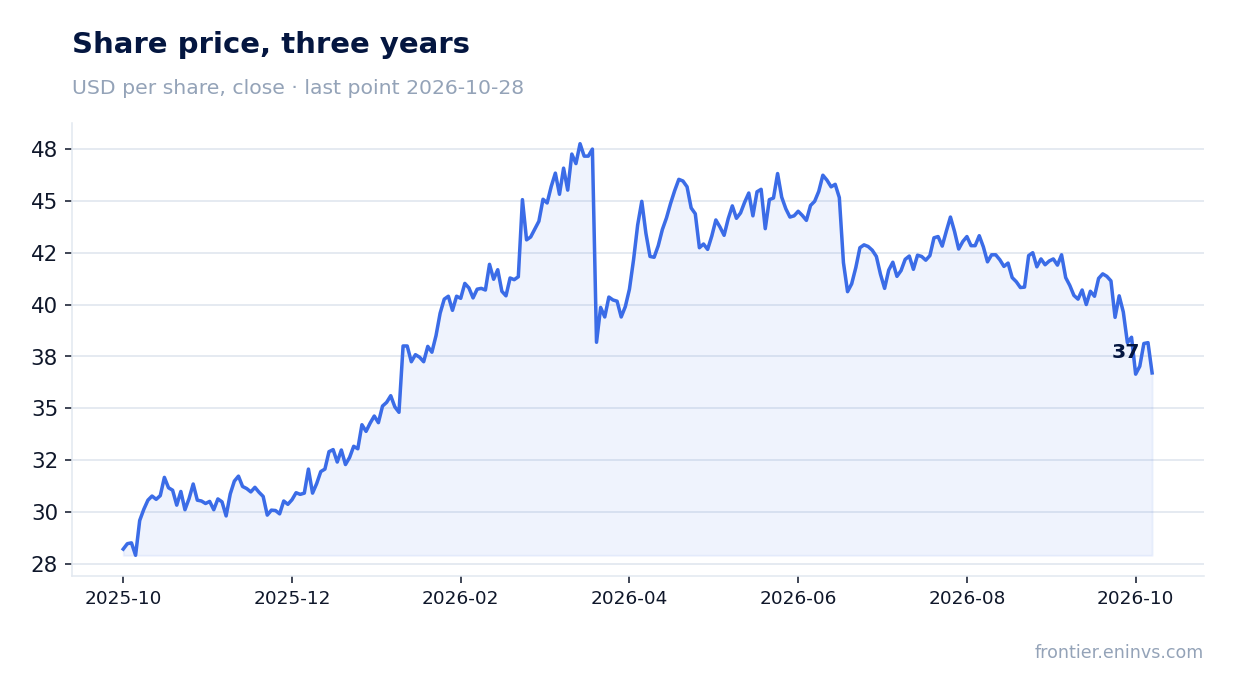
The trailing twelve-month yield is 23.4%, but it is inflated by a one-off. In the second quarter of 2026 the company paid NOK 4,177 million: an ordinary dividend of NOK 3.60 per share for 2025 plus an extraordinary dividend of NOK 5.00 per share. At a share price of NOK 36.70 the ordinary dividend alone yields about 9.8%.
Our estimate for the 2026 dividend is about NOK 3.60 per share, roughly 9.8% at the current price, if the company keeps the ordinary payment at last year's level. This hinges on profit: trailing twelve-month net profit was USD 314.2 million, and a payout of that size requires profit not to slide with revenue.
The payment is not funded by SLB OneSubsea dividends: NOK 137 million was received in the third quarter of 2026 and NOK 841 million in 2025. The main source is the company's own cash flow, which was USD 518.4 million over twelve months. A smaller payout would come from a profit decline in 2027, when the company itself expects revenue of NOK 35–40 billion.
EV/EBITDA of 3.3 against its own average of 6.3 makes the share 47% cheaper than its history
Trailing twelve-month EV/EBITDA is 3.3 against its own three-year average of 6.3. The share trades 47% below its history on this multiple. Trailing P/E is 6.1 and return on equity is 10.5%.
The cheapness is explainable: the market is pricing in the 2027 revenue decline and lower profit. Company guidance is NOK 35–40 billion of revenue in 2027 against NOK 53–55 billion in 2026. If profit falls with revenue, today's multiple will not look as low on the new numbers.
What could change the valuation is delivery on the margin guidance. The company promises 7.0–8.0% EBITDA excluding OneSubsea in 2027, and if cost cuts hold the margin nearer the top of that range, profit will fall less than revenue. The second factor is orders: a book-to-bill of 0.4 in the third quarter needs to return above one, otherwise the revenue decline continues into 2028.
Valuation on the latest reported figures
| Metric | Value |
|---|---|
| Market cap | 1.92 bn USD |
| P/E (LTM) | 6.1 |
| EV/EBITDA (LTM) | 3.3 |
| P/B | 1.70 |
| Net debt / EBITDA (LTM) | -0.64 |
| Operating cash flow (LTM) | 0.52 bn |
| ROE | 10.5% |
| Dividend yield (12m) | 23.4% |
| EV/EBITDA, 3-year average | 6.3 |
Bottom line
The strong parts of the report were cash flow – USD 164.9 million of free cash on USD 7.0 million of capex – and a 0.5 pp improvement in the core business margin to 7.7%. The weak part was revenue, down 16.3%, with the decline accelerating from 7.3% in the second quarter. Part of the profit and margin came from the SLB OneSubsea stake rather than operations, and the 23.4% dividend yield is half a one-off payment. The question for a holder now is whether the company holds a 7.0–8.0% margin in 2027 on NOK 35–40 billion of revenue and whether orders return. The verdict is neutral: an EV/EBITDA of 3.3 against an average of 6.3 is cheap, but the revenue decline and the OneSubsea dependence balance that cheapness.
Open the company's financial profile AKSO →
See also: market overview · valuation map · stock screeners