Ramaco Resources: revenue up 24% but EBITDA negative again – profit propped up by a tax benefit
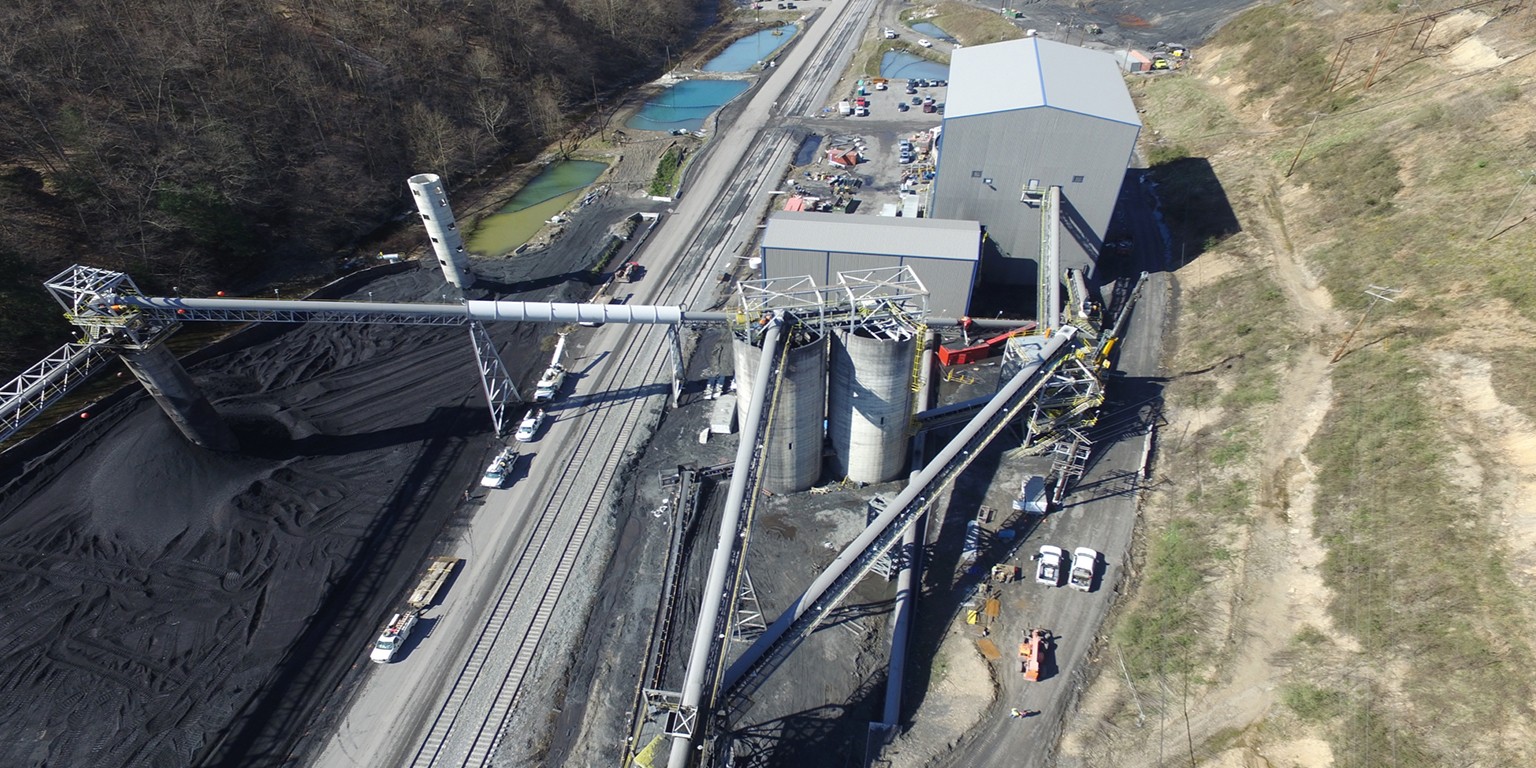
On 3 November Ramaco Resources reported third-quarter 2026 results. Revenue rose 24.0% year on year to $150.1 million, but adjusted EBITDA was $3.0 million per the release and -$3.5 million on our figures, while the net loss reached $18.2 million. Sales growth came from drawing down stockpiled inventory rather than from output, which fell 10%. At the current price the share looks unattractive: EV/EBITDA of about 6.7x against its own three-year average, net debt up $0.3 billion over the year, and profit propped up by one-off items.
Key takeaways
— Revenue rose 24.0% on inventory drawdown, not output: sales added 23% while production fell 10%
— EBITDA stayed negative at -$3.5 million because cash cost per ton rose to $104
— The $18.2 million net loss was softened by a $5.2 million tax benefit
— Net debt rose $0.3 billion over the year, from -$0.1 billion to $0.2 billion, with operating cash flow at -$12.0 million
— Capex rose to $35.5 million and free cash flow remains negative
— A Class B dividend of $0.0742 per share was declared, but there is no profit behind it
— EV/EBITDA of about 6.7x is above its own three-year average, and that is with a loss
Attractiveness
Key figures, USD bn
| Metric | Q3 2025 | Q3 2026 | Change |
|---|---|---|---|
| Revenue | 0.12 | 0.15 | +24.0% |
| EBITDA | 0.00 | -0.00 | -233.3% |
| Operating profit | -0.01 | -0.02 | — |
| Net profit | -0.01 | -0.02 | — |
| Operating cash flow | -0.00 | -0.01 | — |
| Capex | 0.02 | — | — |
| EBITDA margin | 2.2% | -2.3% | -4.5 pp |
| Net margin | -11.0% | -12.1% | -1.1 pp |
Revenue rose 24.0% on inventory drawdown, not output: sales added 23% while production fell 10%
Revenue in the third quarter of 2026 was $150.1 million, up 24.0% year on year. Growth accelerated from the second quarter, when revenue fell 5.3%: the company sold 1,077 thousand tons versus 873 thousand tons a year earlier, up 23%.
However, production over the same period fell 10% to 851 thousand tons. The company attributes this to deliberate cuts in high-volatile coal output amid a weak market. Sales growth therefore came from drawing down stockpiled inventory: about 900 thousand tons remained in stock at quarter-end, more than 600 thousand tons above normal.
The realised price stayed at $120 per ton, unchanged year on year. Spot US coal prices rose 4% in the third quarter versus the previous one and a further 9% after quarter-end. The company expects selling down inventory at higher prices to release working capital in the fourth quarter.
EBITDA stayed negative at -$3.5 million because cash cost per ton rose to $104
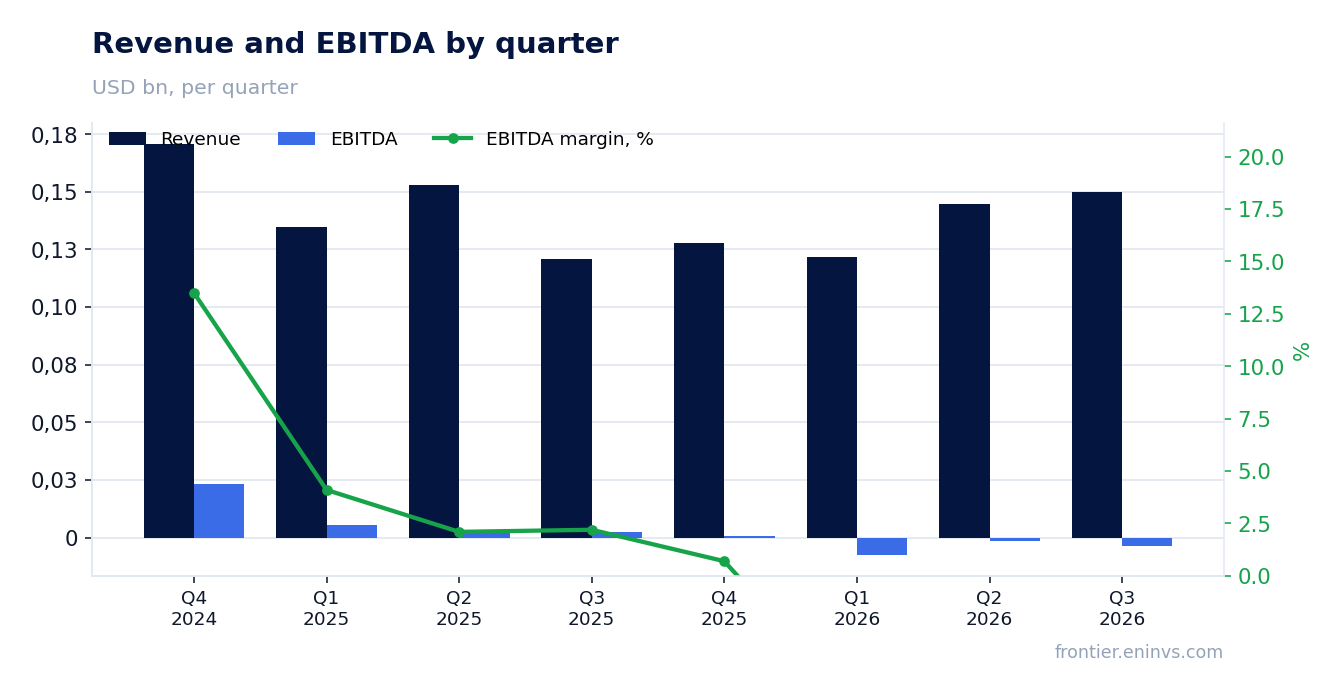
Adjusted EBITDA was $3.0 million per the release, but on our figures EBITDA is negative at -$3.5 million. A year earlier it was positive at $2.6 million. The EBITDA margin turned negative at -2.3% versus +2.2% a year earlier.
The cause is cash cost per ton rising to $104 from $99 in the second quarter and $97 a year earlier. The company names the driver directly: diesel rose to $5.85 per gallon from $2.50 at the start of the year. Cash margin per ton compressed to $16 from $23 a year earlier.
The operating loss widened to $21.1 million from $14.5 million a year earlier. Revenue growth does not translate into profit because cost of sales rose 31%, faster than revenue. The company raised its 2026 cash cost guidance to $101–103 per ton from $96–99.
The $18.2 million net loss was softened by a $5.2 million tax benefit
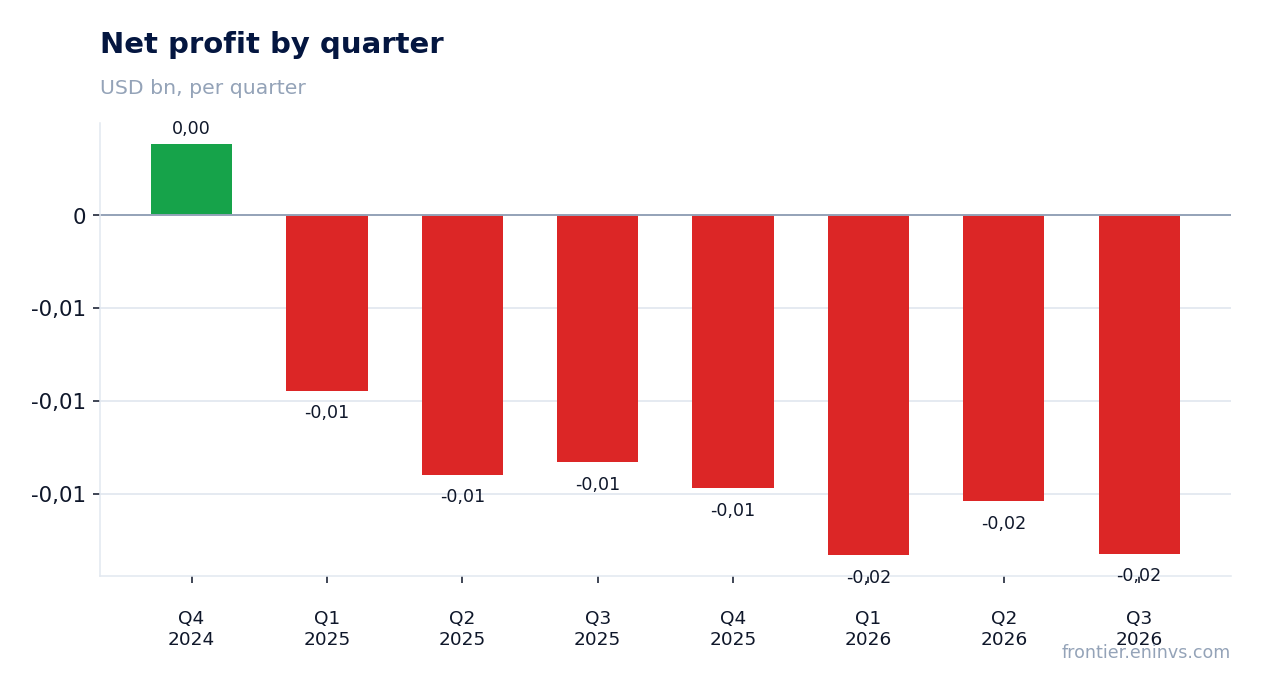
The net loss in the third quarter was $18.2 million versus $13.3 million a year earlier. Loss per Class A share was $0.32. Net margin was -12.1% versus -11.0% a year earlier.
There is a one-off positive inside the loss: the company recognised a tax benefit of $5.2 million at an effective rate of about 22%. Without it the loss would have been notably larger. The company also won a $30 million jury verdict against Chubb Insurance over the 2018 silo failure, including $27.5 million in net economic losses. The final amount depends on post-trial motions and was not recognised in the reported quarter.
Interest expense fell to $1.4 million from $2.3 million a year earlier. That is the only line that improved the result. Operations remain loss-making, and without one-off items the picture would be worse.
Net debt rose $0.3 billion over the year, from -$0.1 billion to $0.2 billion, with operating cash flow at -$12.0 million
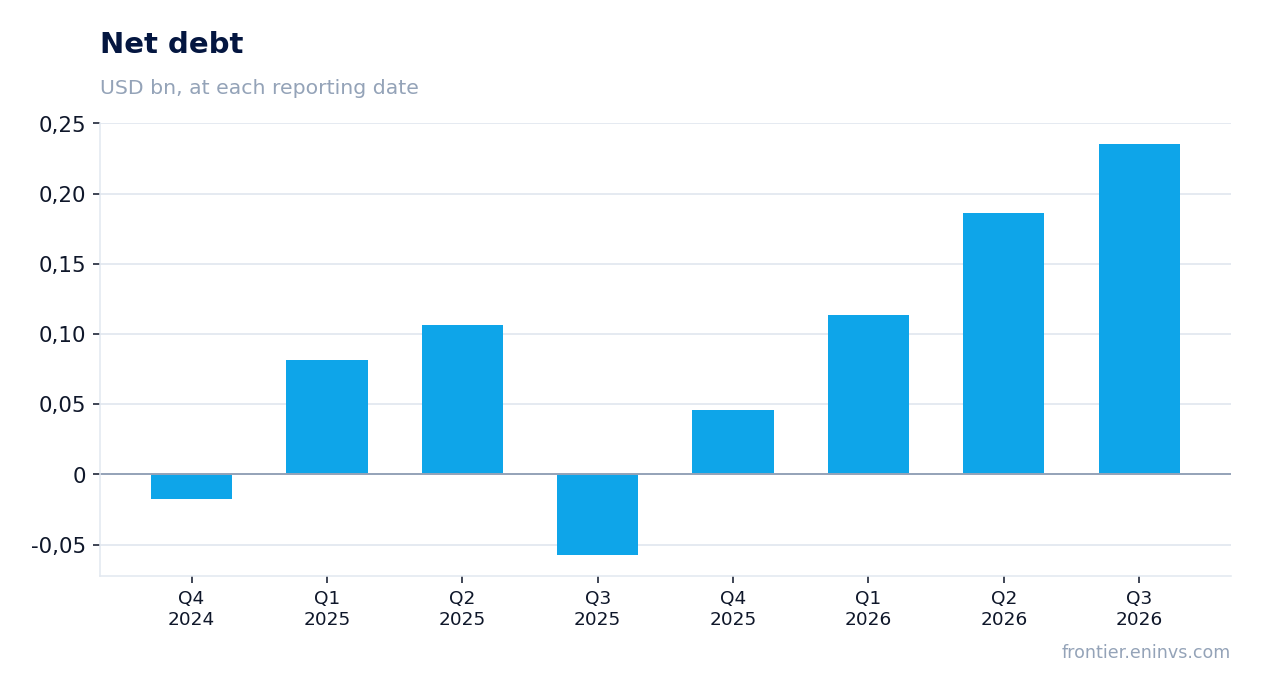
Net debt at 30 September 2026 was $0.2 billion. A year earlier, at 30 September 2025, it was negative at -$0.1 billion. Over 12 months the change was +$0.3 billion. Since 30 June 2026 net debt has not changed: $0.2 billion on both dates.
Operating cash flow in the third quarter was negative at -$12.0 million. For the nine months of 2026 the outflow was $34.4 million versus an inflow of $20.3 million a year earlier. Negative cash flow with rising debt means the company is funding working capital and investment from the balance sheet.
Liquidity at quarter-end was $374.7 million, including $233.0 million of cash and $141.7 million of available revolver capacity. The company stresses that revolver borrowings are zero. However, long-term debt on the balance sheet is $453.6 million, and servicing it with negative EBITDA falls on liquidity.
Capex rose to $35.5 million and free cash flow remains negative
Capex in the third quarter was $35.5 million versus $16.6 million a year earlier, up 114%. The company attributes this to ramping up low-vol projects at the Berwind and Maben complexes. 2026 capex guidance was raised to $97–102 million from $92–97 million.
With an operating outflow of $12.0 million and capex of $35.5 million, free cash flow is deeply negative. For the nine months of 2026 capex was $80.0 million versus $52.1 million a year earlier. The gap is funded from cash and debt.
The company expects selling down inventory in the fourth quarter to release working capital. That may improve cash flow, but it does not change the fact that the investment programme is outrunning operating generation. The new rail loadout at Maben is expected to cut trucking costs by about $20 per ton from January 2027.
A Class B dividend of $0.0742 per share was declared, but there is no profit behind it
The board declared a quarterly dividend of $0.0742 per Class B share for the fourth quarter of 2026. Payment is set for 18 December 2026 to holders of record on 4 December. This is the only dividend mentioned in the period's release.
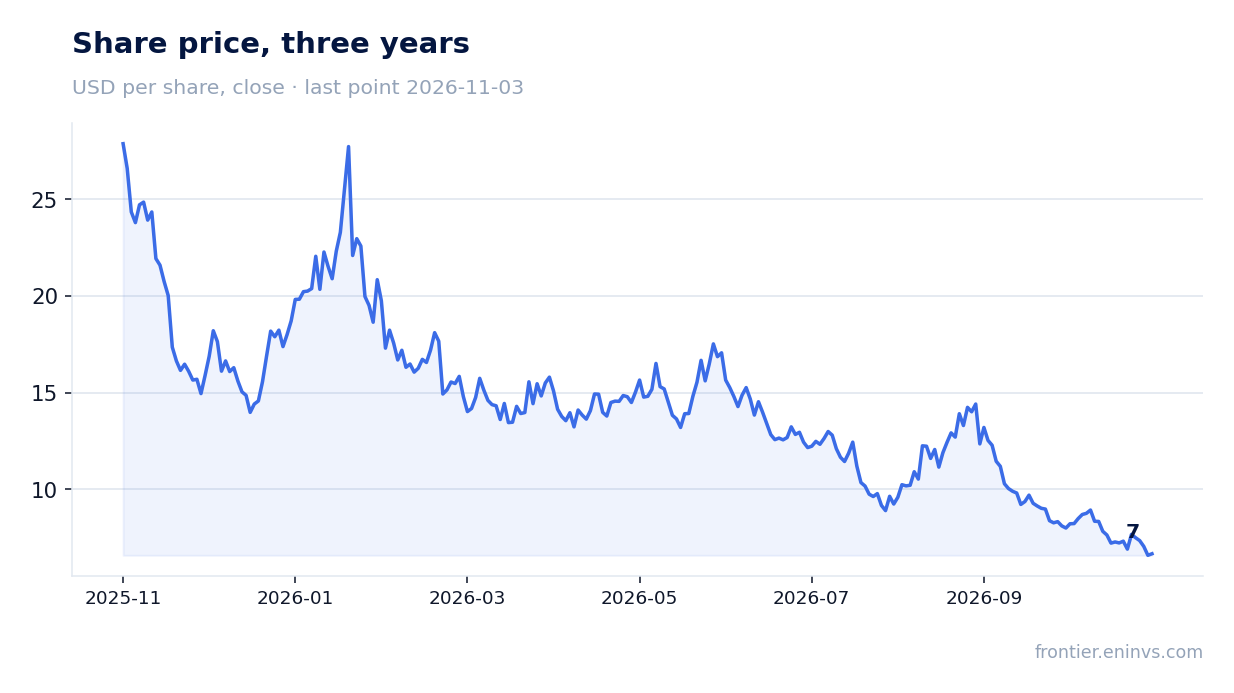
The company pays a dividend while posting a net loss of $18.2 million for the quarter and $52.0 million for nine months. The payout is funded from liquidity, not profit. At an annualised dividend of about $0.30 per Class B share and a share price of $6.59, the yield is roughly 4.5% – our estimate, resting on the balance sheet rather than on earnings.
The dividend could be cut if liquidity keeps shrinking. Over nine months of 2026 the company spent $65.9 million buying back its own shares and $17.7 million on tax withholding on share deliveries. Those outlays compete with the dividend for the same cash.
EV/EBITDA of about 6.7x is above its own three-year average, and that is with a loss
The three-year average EV/EBITDA is 6.66x. Current market cap is $346.6 million and net debt is $0.2 billion, putting enterprise value at about $0.6 billion. With negative EBITDA the multiple is meaningless, but even on adjusted EBITDA of $3.0 million for the quarter it is well above the historical average.
Return on equity is negative at -19.7%. The company is loss-making and the multiple does not reflect earnings. The share trades at $6.59 and has added 1.2% since the release. The market reaction was muted, but the valuation remains high against its own history.
The comparison with the three-year average shows the share above its historical valuation. That is not support for the current price: with a loss and rising debt the multiple should be lower, not higher. Until earnings recover, the valuation stays stretched.
Valuation on the latest reported figures
| Metric | Value |
|---|---|
| Market cap | 0.35 bn USD |
| P/B | 0.72 |
| ROE | -19.7% |
Bottom line
The strong point of the quarter was revenue: it rose 24.0% to $150.1 million as the company sold down inventory at higher prices. But that growth does not turn into profit: EBITDA is negative at -$3.5 million, and the $18.2 million net loss was softened by a $5.2 million tax benefit. Net debt rose $0.3 billion over the year to $0.2 billion, operating cash flow is negative, and capex is rising. The $0.0742 per Class B share dividend is paid from liquidity, not profit. The verdict is unattractive: the multiple is above its own three-year average, there is no profit, and improvement depends on a sustained rise in coal prices.
Open the company's financial profile METC →
See also: market overview · valuation map · stock screeners