The Mosaic Company: revenue fell 10.2% and the phosphate segment slipped into a loss on costly sulfur

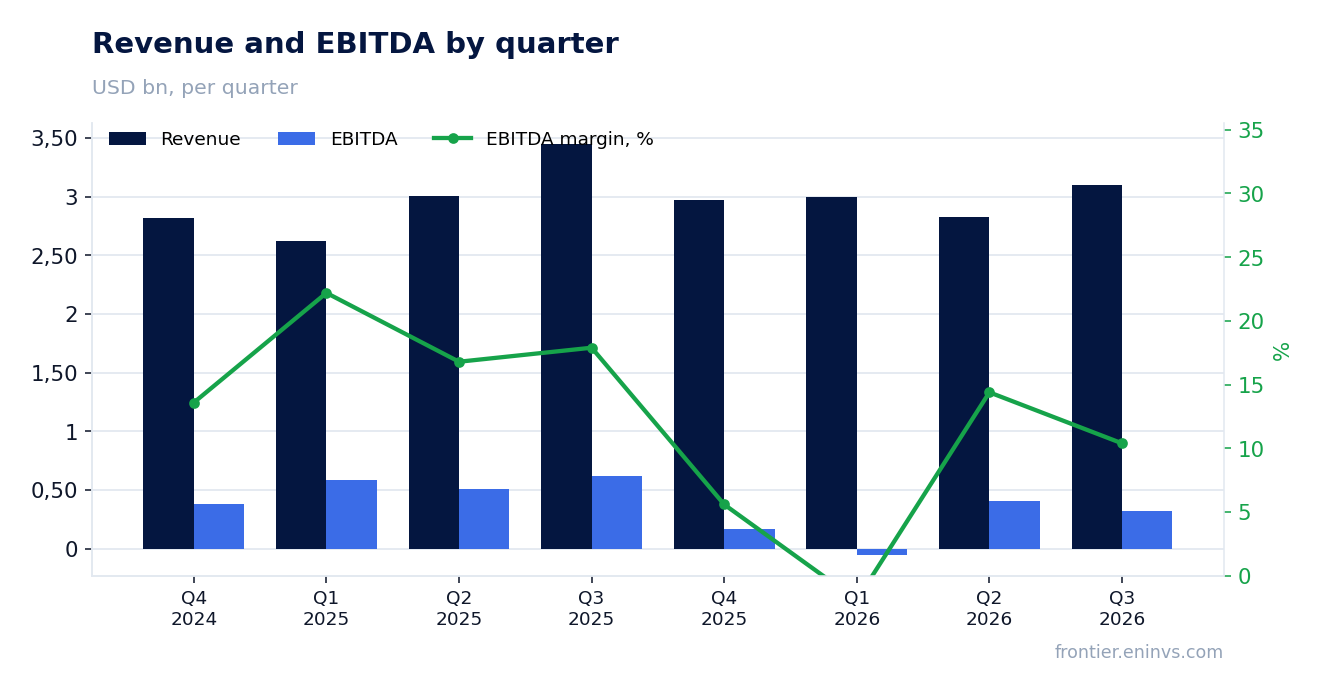
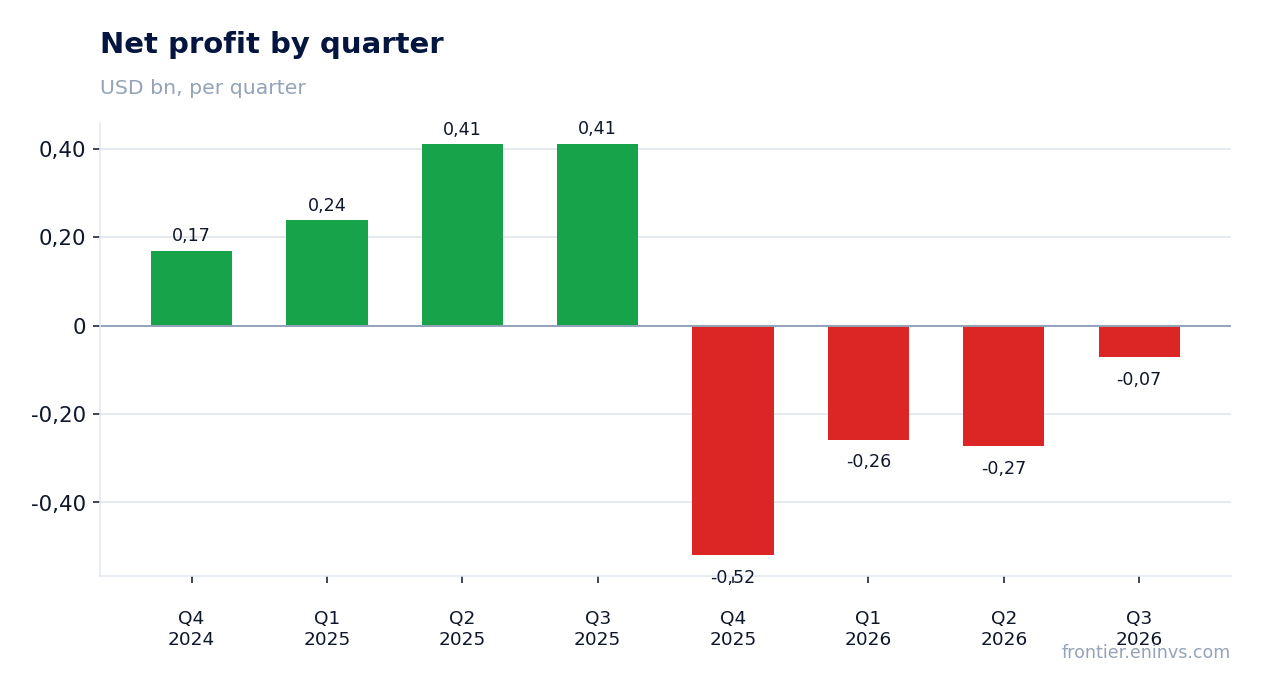
On November 3, The Mosaic Company reported results for the third quarter of 2026. Revenue fell 10.2% year on year to USD 3,101 million, adjusted EBITDA dropped 47.5% to USD 324 million, and the net loss came to USD 72 million against a profit of USD 411 million a year earlier. The EBITDA margin compressed from 17.9% to 10.4%, and the phosphate segment posted an operating loss of USD 194 million. With EV/EBITDA at 13.9 against its own three-year average of 6.9 and a negative fair-value upside on the portal's model, the share looks unattractive.
Key takeaways
— Revenue fell 10.2% year on year, and the slowdown deepened from minus 6.0% a quarter earlier
— The phosphate segment swung to an operating loss of USD 194 million as sulfur rose to USD 715 per tonne
— The EBITDA margin compressed to 10.4% from 17.9% as gross margin collapsed to USD 84 million
— The USD 72 million net loss was cushioned by notable items of minus USD 53 million; without them the loss would have been deeper
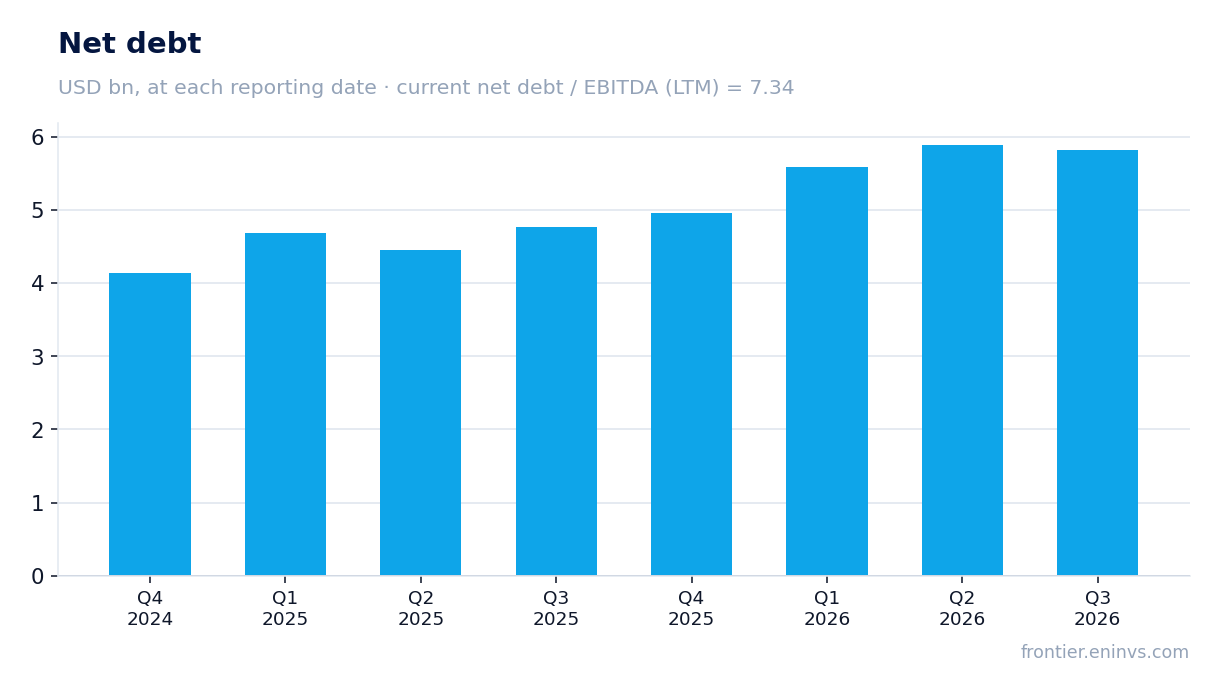
— Leverage stands at 7.34x EBITDA LTM with net debt of USD 5.8 billion
— Dividend yield is 4.8% with USD 70 million paid per quarter
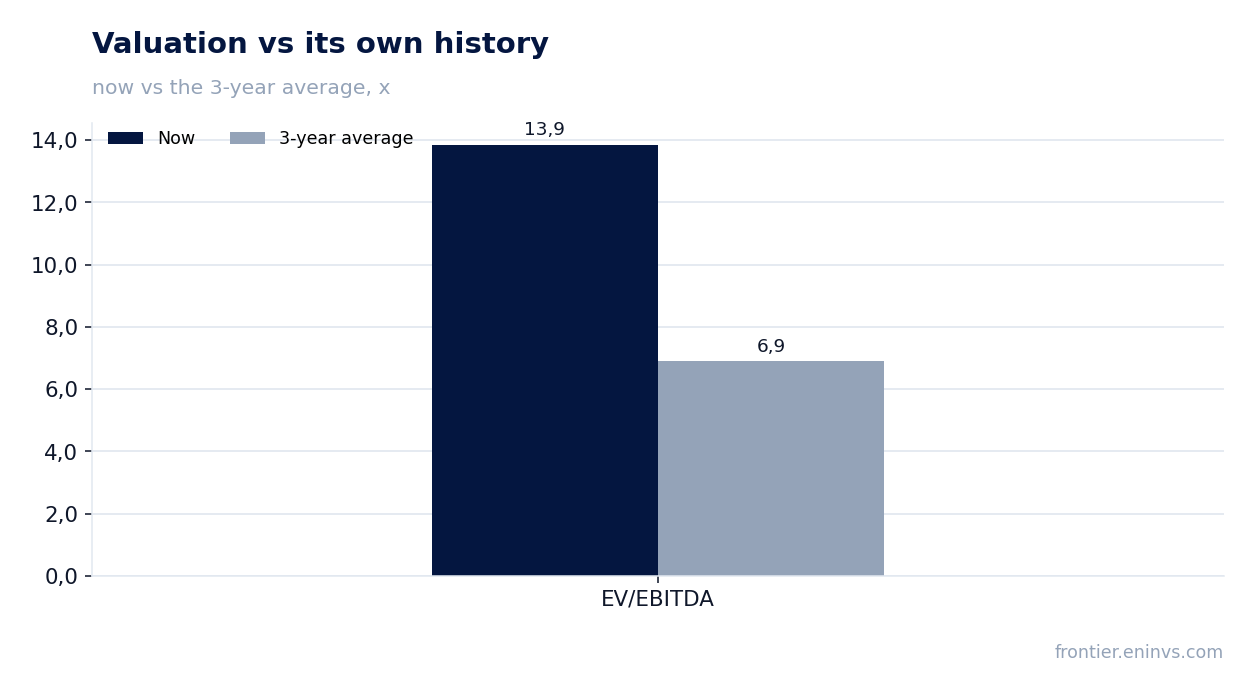
— EV/EBITDA of 13.9 is more than double its own three-year average of 6.9
Attractiveness
Key figures, USD bn
| Metric | Q3 2025 | Q3 2026 | Change |
|---|---|---|---|
| Revenue | 3.45 | 3.10 | -10.2% |
| EBITDA | 0.62 | 0.32 | -47.5% |
| Operating profit | 0.34 | -0.10 | -128.3% |
| Net profit | 0.41 | -0.07 | -117.5% |
| Operating cash flow | 0.23 | 0.28 | +24.3% |
| Capex | 0.36 | 0.28 | -22.6% |
| EBITDA margin | 17.9% | 10.4% | -7.5 pp |
| Net margin | 11.9% | -2.3% | -14.2 pp |
Revenue fell 10.2% year on year, and the slowdown deepened from minus 6.0% a quarter earlier
Revenue for the third quarter of 2026 came to USD 3,101 million, 10.2% below the level a year earlier. In the second quarter the decline was smaller at minus 6.0%, so the slowdown deepened. The drop comes against shrinking volumes: finished product sales fell to 5,533 thousand tonnes from 6,885 thousand tonnes a year earlier.
The phosphate segment generated USD 1,295 million of revenue against USD 1,290 million a year earlier, essentially flat. Potash declined to USD 644 million from USD 695 million, and Mosaic Fertilizantes to USD 1,254 million from USD 1,592 million. The weakness in the Brazilian unit is tied to phosphate production falling to 273 thousand tonnes from 834 thousand tonnes a year earlier at a 27% operating rate.
The average phosphate selling price rose to USD 814 per tonne from USD 712, but this did not offset the volume decline. The MOP price held at USD 276 per tonne. Revenue falls faster than volumes only in the Brazilian segment, where sales dropped 21% on a 32% volume decline.
The phosphate segment swung to an operating loss of USD 194 million as sulfur rose to USD 715 per tonne
The phosphate segment's operating loss came to USD 194 million against a profit of USD 102 million a year earlier. Segment gross margin went negative at USD 148 million: cost of goods sold rose to USD 1,443 million on revenue of USD 1,295 million. Segment adjusted EBITDA fell to USD 49 million from USD 280 million.
The main driver is sulfur cost, which rose to USD 715 per long ton from USD 272 a year earlier. Ammonia rose to USD 619 per tonne from USD 455. Cash costs of U.S. mined rock increased to USD 67 per tonne from USD 62. Phosphate production fell to 1,289 thousand tonnes from 1,678 thousand tonnes, and the operating rate dropped to 52% from 68%.
Potash remained the support: operating profit of USD 189 million against USD 229 million a year earlier, adjusted EBITDA of USD 284 million against USD 329 million. Segment gross margin was USD 200 million on revenue of USD 644 million. The decline reflects sales volumes falling to 2,068 thousand tonnes from 2,279 thousand tonnes, while the MOP price rose to USD 276 from USD 271.
The EBITDA margin compressed to 10.4% from 17.9% as gross margin collapsed to USD 84 million
Group gross margin came to USD 84 million against USD 552 million a year earlier, and its rate fell to 3% from 16%. Cost of goods sold rose to USD 3,017 million on revenue of USD 3,101 million. Adjusted EBITDA declined to USD 324 million from USD 616 million, and the margin to 10.4% from 17.9%.
The operating loss was USD 96 million against a profit of USD 339 million a year earlier. SG&A was essentially flat at USD 125 million against USD 126 million. Other operating expense fell to USD 55 million from USD 87 million, but this did not rescue the picture.
The net loss reached USD 72 million against a profit of USD 411 million a year earlier, and the net margin was minus 2.3% against plus 11.9%. Diluted loss per share was USD 0.23 against earnings of USD 1.29. Adjusted loss per share was USD 0.19 against earnings of USD 1.04.
The USD 72 million net loss was cushioned by notable items of minus USD 53 million; without them the loss would have been deeper
Notable items in the third quarter of 2026 totaled minus USD 53 million pre-tax, or minus USD 0.04 per share. The largest were environmental reserves of USD 42 million, closed and indefinitely idled facility costs of USD 14 million each in the phosphate and Brazilian segments, and a USD 13 million loss on debt extinguishment.
Positive contributions came from the Ma'aden mark-to-market of USD 39 million and a foreign currency gain of USD 32 million. Without notable items the adjusted loss per share would have been USD 0.19 against the diluted loss of USD 0.23. In other words, notable items improved the reported result rather than worsening it.
For comparison, notable items reached minus USD 351 million in the second quarter and minus USD 323 million in the first. The heaviest burden fell in the early part of the year: a USD 302 million loss on Brazilian assets held for sale in the first quarter and a USD 162 million Ma'aden mark-to-market in the second.
Leverage stands at 7.34x EBITDA LTM with net debt of USD 5.8 billion
Net debt at September 30, 2026 was USD 5,812 million. Against June 30 it fell from USD 5,889 million by USD 0.1 billion, while over 12 months it rose from USD 4,764 million by USD 1.0 billion. The ratio of net debt to EBITDA over the trailing twelve months is 7.34, which is high for a fertilizer producer.
EBITDA over the trailing twelve months was USD 791.5 million on revenue of USD 11,900 million. Operating cash flow for the quarter was positive at USD 284 million, but capital expenditures were USD 282 million, leaving free cash flow near zero. Over the trailing twelve months operating cash flow was USD 499.1 million.
Interest expense rose to USD 60 million from USD 46 million a year earlier. Short-term debt fell to USD 512 million from USD 1,154 million, while long-term debt rose to USD 5,402 million from USD 3,415 million. Cash stood at USD 273 million. The high leverage limits room for maneuver while phosphate prices remain weak.
Dividend yield is 4.8% with USD 70 million paid per quarter
For the third quarter of 2026 the company paid USD 70 million in dividends, the same as in each of the preceding quarters. With a market capitalization of USD 5,858 million, the trailing twelve-month dividend yield is 4.8%. Payments have been steady despite the loss.
Our estimate: if the quarterly payout of USD 70 million is maintained, annual dividends will be about USD 280 million, giving the same 4.8% yield at the current price. That is above the yield we consider fair for a company with this leverage, around 4%. But the payout rests not on profit, which is absent, but on cash flow and the liquidity balance.
The risk of a cut is tied to pressure on free cash flow: with capital expenditures of USD 282 million per quarter and operating cash flow of USD 284 million, free cash flow is near zero. If sulfur prices stay high and phosphate production volumes do not recover, the company may revise the payout. The dividend is the main argument for the share, but it is not backed by profit.
EV/EBITDA of 13.9 is more than double its own three-year average of 6.9
The trailing twelve-month EV/EBITDA multiple is 13.9 against its own three-year average of 6.9, 101% above. The share is more expensive than its own history on this multiple. At the same time, trailing twelve-month EBITDA fell to USD 791.5 million, which is what inflates the multiple.
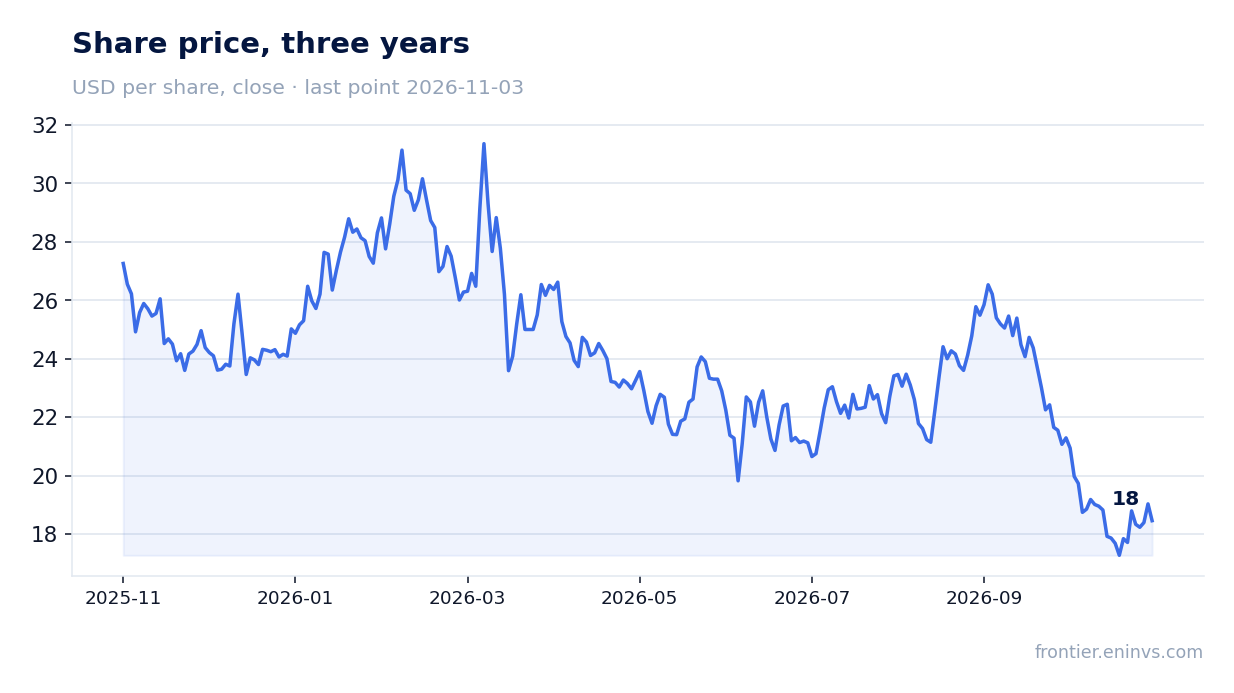
On the portal's model, which re-prices EBITDA at current commodity prices at the target EV/EBITDA, the upside of the share to fair value is minus 57%. This is our own estimate, not a market consensus. Market capitalization is USD 5,858 million, and the share price before the release was USD 19.03.
The market reaction was muted: the share lost 3.0% on the release day and 3.0% from the release to November 3, 2026. Return on equity is negative at minus 9.4%. The combination of a high multiple, negative profit and weak free cash flow makes the valuation vulnerable.
Valuation on the latest reported figures
| Metric | Value |
|---|---|
| Market cap | 5.86 bn USD |
| EV/EBITDA (LTM) | 13.9 |
| P/B | 0.48 |
| Net debt / EBITDA (LTM) | 7.34 |
| Operating cash flow (LTM) | 0.50 bn |
| ROE | -9.4% |
| Dividend yield (12m) | 4.8% |
| EV/EBITDA, 3-year average | 6.9 |
Bottom line
The strong points of the report remain Potash with operating profit of USD 189 million and a stable MOP price, plus positive operating cash flow of USD 284 million for the quarter. But the phosphate segment swung to a USD 194 million loss on sulfur at USD 715, and that outweighs. The USD 72 million net loss was cushioned by notable items, and free cash flow is near zero with USD 5.8 billion of debt. The 4.8% dividend yield looks attractive but is not backed by profit. With EV/EBITDA at 13.9 against a historical 6.9 and minus 57% upside on the portal's model, the share is expensive. Verdict: unattractive.
Open the company's financial profile MOS →
See also: market overview · valuation map · stock screeners