ONEOK: profit up 44%, but nearly a quarter of it came from a one-off tax benefit
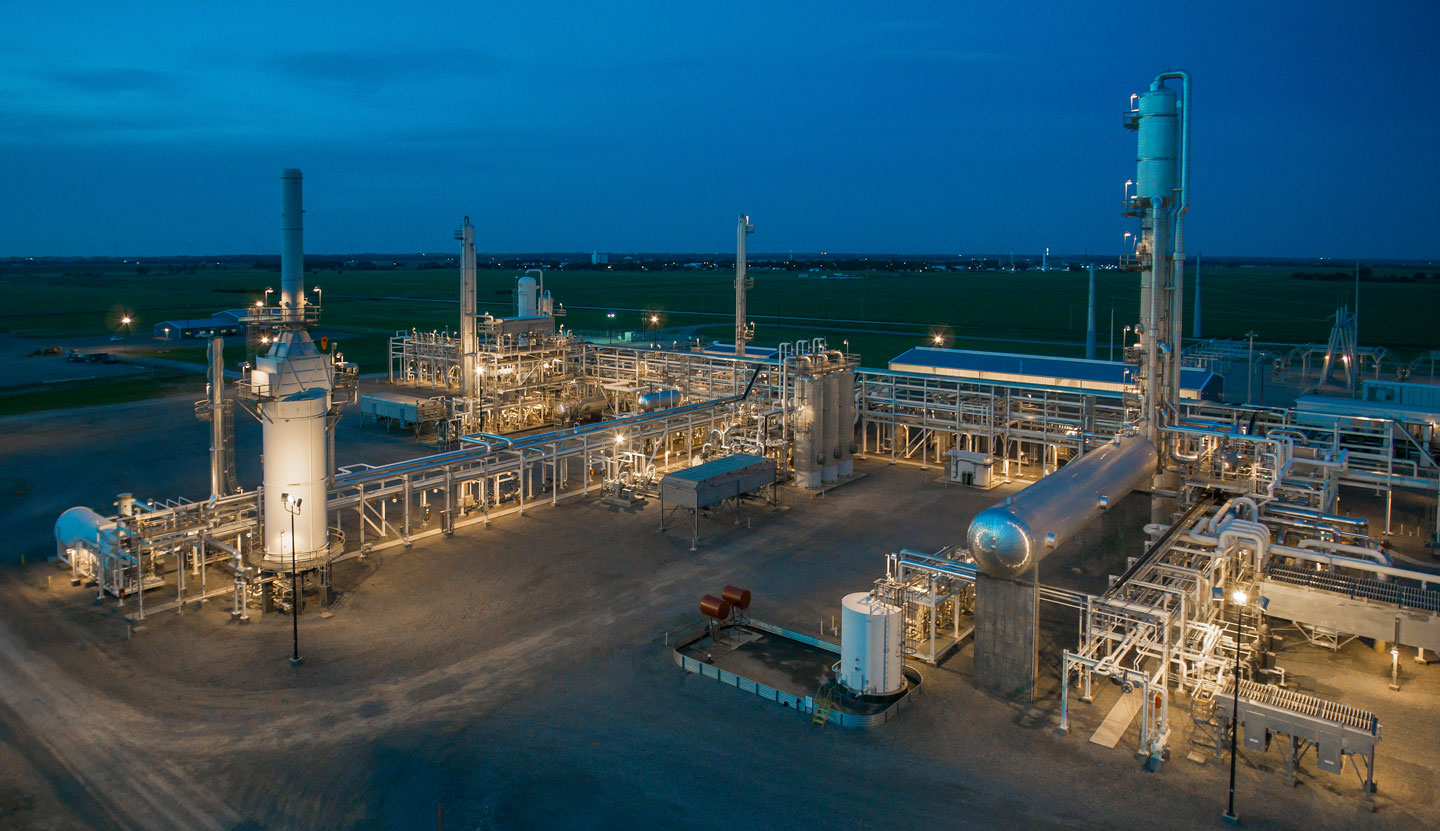
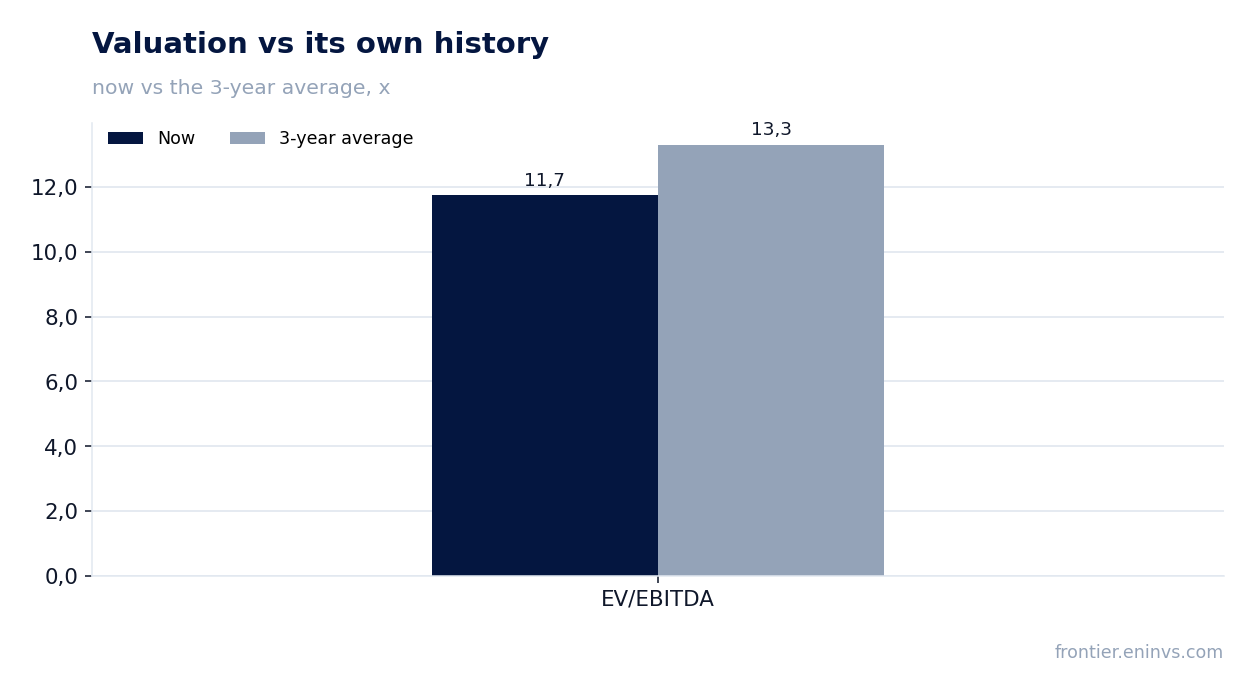
On 27 October ONEOK reported third-quarter 2026 results. Revenue rose 44.3% year on year to $12,455 million, adjusted EBITDA by 15.6% to $2,238 million, and net income attributable to ONEOK by 43.8% to $1,350 million. Inside that profit sits a one-off non-cash tax benefit of $336 million from the reorganisation tied to the minority equity investment; without it growth would have been markedly more modest. At an EV/EBITDA of 11.7 against its own three-year average of 13.3 the stock trades below its own history, and a 4.4% dividend yield supports the case – at the current price the share looks rather attractive.
Key takeaways
— Revenue added 44.3%, but growth decelerated from 52.8% a quarter earlier
— EBITDA rose 15.6%, while its margin compressed to 18.0% from 22.4% on higher operating costs
— Nearly a quarter of profit – $336 million – came from a one-off tax benefit, not from operations
— Adjusted EBITDA of $2,238 million includes a $53 million one-off net benefit from the minority equity and Brazos Midland transactions
— Leverage of 4.14x EBITDA is a level, not an improvement: the company extinguished nearly $5.5 billion of debt principal in September
— The $1.07 quarterly dividend gives a 4.4% yield, with $2,022 million paid over nine months
— EV/EBITDA of 11.7 is 12% below its own three-year average of 13.3 – the share is cheaper than its own history
Attractiveness
Key figures, USD bn
| Metric | Q3 2025 | Q3 2026 | Change |
|---|---|---|---|
| Revenue | 8.63 | 12.5 | +44.3% |
| EBITDA | 1.94 | 2.24 | +15.6% |
| Operating profit | 1.56 | 1.57 | +0.6% |
| Net profit | 0.94 | 1.35 | +43.8% |
| Operating cash flow | 1.62 | — | — |
| Capex | 0.80 | — | — |
| EBITDA margin | 22.4% | 18.0% | -4.4 pp |
| Net margin | 10.9% | 10.8% | -0.1 pp |
Revenue added 44.3%, but growth decelerated from 52.8% a quarter earlier
Third-quarter 2026 revenue was $12,455 million, 44.3% above the year-earlier level. That is a strong result, but it is more modest than the previous quarter's growth: in the second quarter revenue was adding 52.8%, so the pace has decelerated.
Volumes were the main driver. NGL raw feed throughput rose 6%, including a 16% increase in the Gulf Coast/Permian region; refined products shipped rose 6%, and Permian natural gas processed rose 4%. The company directly attributes the result to higher Permian Basin volumes and system integration.
By segment, Refined Products and Crude grew most: segment adjusted EBITDA rose to $685 million from $582 million a year earlier. Natural Gas Pipelines added to $231 million from $200 million on optimisation and marketing around the Waha Hub–Katy price spread. NGL and Gathering and Processing stayed roughly flat – $718 million versus $748 million and $563 million versus $566 million respectively.
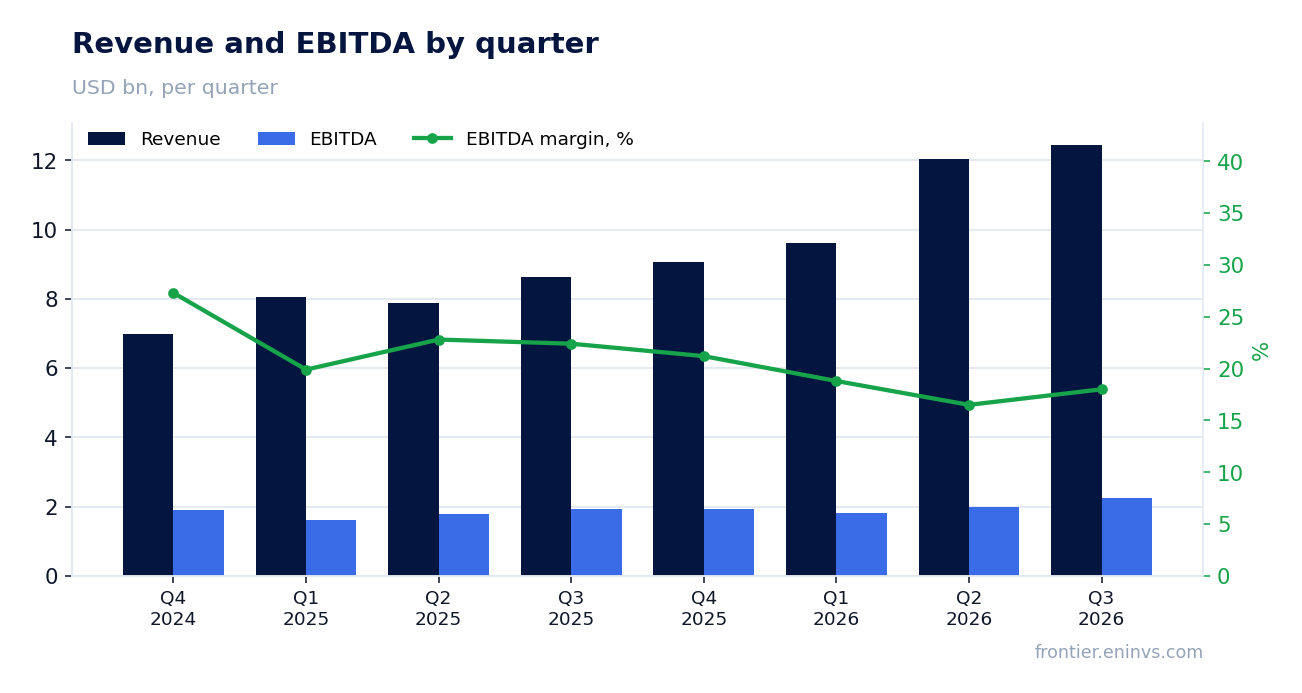
EBITDA rose 15.6%, while its margin compressed to 18.0% from 22.4% on higher operating costs
Adjusted EBITDA was $2,238 million, 15.6% above the year-earlier level. There is growth, but it is three times slower than revenue growth, and that fed straight into the margin: the EBITDA margin fell to 18.0% from 22.4%.
The cause is operating costs. Company-wide they rose to $861 million from $738 million. In the NGL segment costs rose by $27 million, including $20 million of higher outside services and $7 million of higher employee-related costs tied to expanding operations. Refined Products and Crude costs rose $18 million, Gathering and Processing $19 million.
Cost of sales and fuel increased to $9,612 million from $5,962 million – faster than revenue, which is typical for a model with growing commodity volumes. The net margin was almost unchanged at 10.8% versus 10.9%, but only because it was supported by the one-off tax effect discussed below.
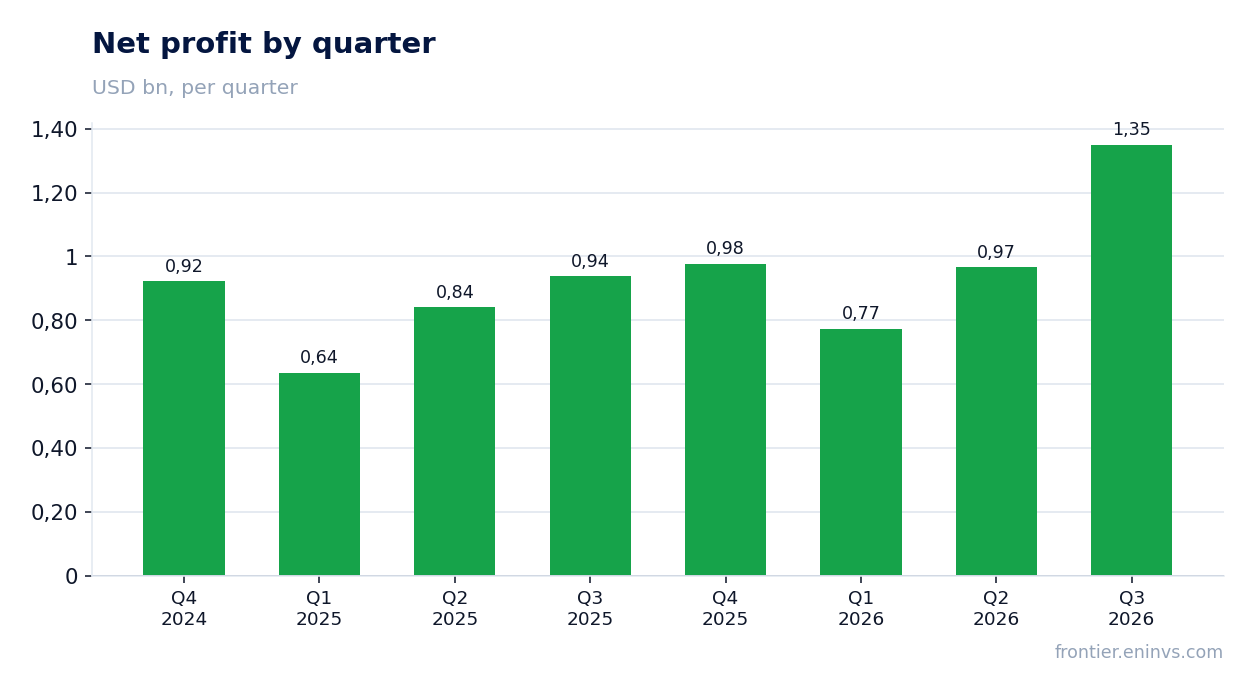
Nearly a quarter of profit – $336 million – came from a one-off tax benefit, not from operations
Net income attributable to ONEOK was $1,350 million, or $2.13 per diluted share, against $939 million and $1.49 a year earlier. Growth of 43.8% looks impressive, but inside it sits a one-off non-cash tax benefit of $336 million, or $0.53 per share, from the ONEOK, Inc. reorganisation tied to the minority equity investment.
Without that effect profit would have been markedly lower. Operating income, which does not depend on tax, rose only to $1,568 million from $1,558 million – essentially flat. That means the entire increase at the net line came from tax and lower interest expense, not from operating leverage.
Interest expense fell to $415 million from $450 million as the company repaid part of its debt. But here too there is a one-off element: adjusted EBITDA includes a $53 million net benefit from the minority equity and Brazos Midland transactions, mainly corporate gains on debt extinguishment partly offset by costs.
Adjusted EBITDA of $2,238 million includes a $53 million one-off net benefit from the minority equity and Brazos Midland transactions
The release states directly that third-quarter adjusted EBITDA includes a $53 million net benefit from the minority equity and Brazos Midland transactions. This is mainly corporate gains on debt extinguishment, partly offset by transaction costs. Without them the figure would have been about $2,185 million.
For comparison, a year earlier third-quarter EBITDA included $22 million of corporate gains on debt extinguishment. The one-off element has thus more than doubled, and it is part of the explanation for the 15.6% EBITDA growth.
The company completed the acquisition of Brazos Midstream's Permian Midland Basin assets and expects a contribution of about $75 million in 2026, of which roughly $50 million should show up in adjusted EBITDA net of transaction costs. That is acquisition effect, not organic growth.
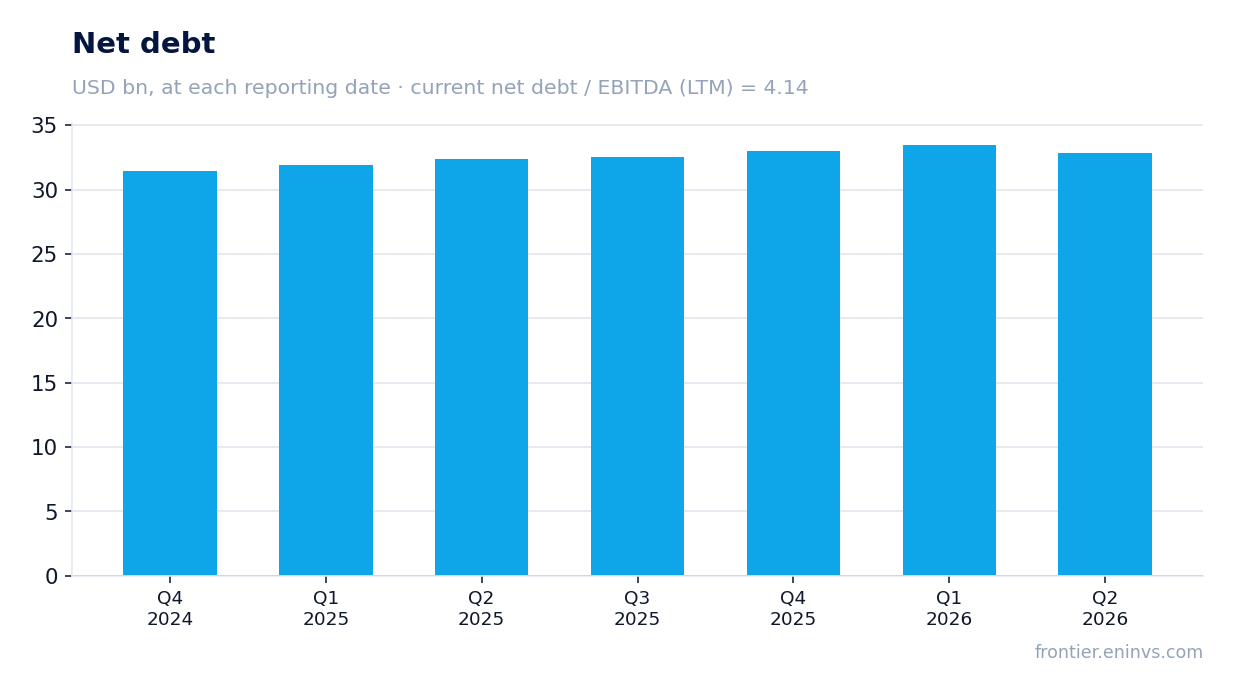
Leverage of 4.14x EBITDA is a level, not an improvement: the company extinguished nearly $5.5 billion of debt principal in September
Net debt at the latest annual balance sheet was $32,975 million, and the ratio of net debt to trailing-twelve-month EBITDA was 4.14. That is a leverage level, and it remains high for an infrastructure company, though below many issuers with a comparable rating.
In September 2026 ONEOK extinguished nearly $5.5 billion of debt principal. The 30 September balance sheet shows long-term debt of $26,935 million against $30,755 million at end-2025, and short-term borrowings down to $85 million from $820 million. At the same time the company completed a $9 billion minority equity investment, lifting noncontrolling interests in equity to $9,144 million.
Interest expense for nine months fell to $1,288 million from $1,330 million. That is modest, but with the September repayment the full effect on interest expense will show in the fourth quarter and in 2027. Rating agencies S&P Global Ratings and Fitch upgraded ONEOK to BBB+.
The $1.07 quarterly dividend gives a 4.4% yield, with $2,022 million paid over nine months
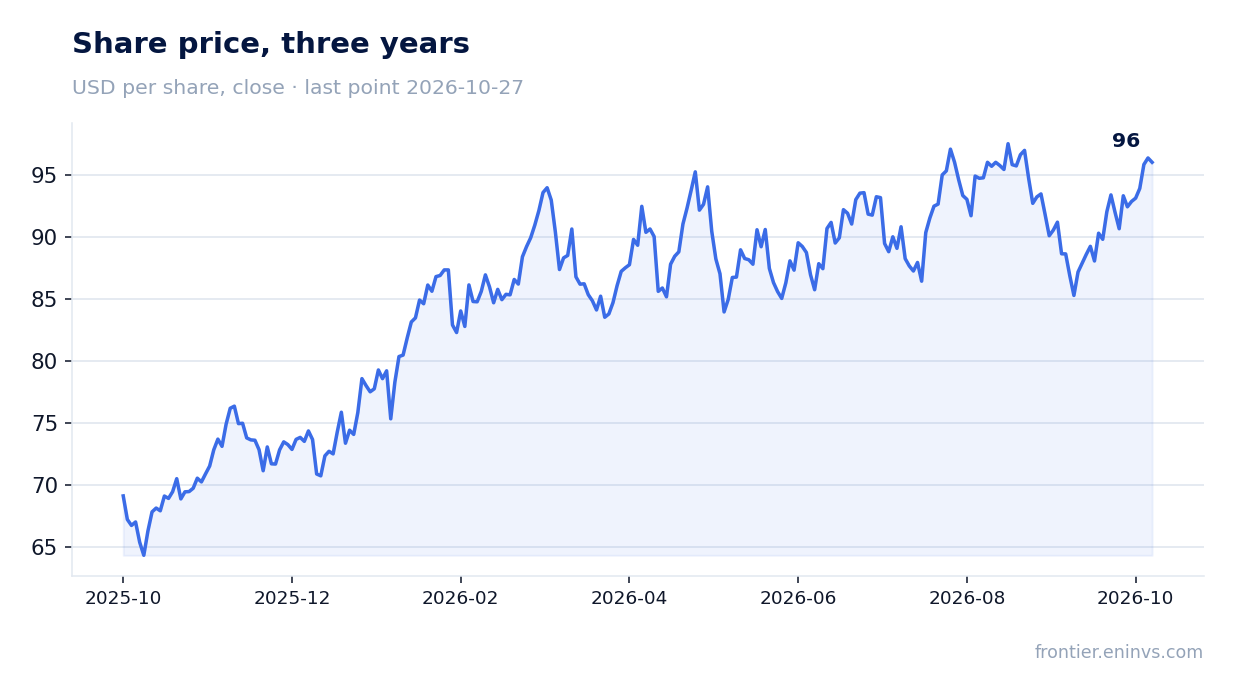
In October 2026 ONEOK declared a quarterly dividend of $1.07 per share, or $4.28 annualised. At the pre-release closing price of $96.36 that gives a 4.4% yield on trailing-twelve-month payments.
Over nine months of 2026 the company paid $2,022 million of dividends against $1,935 million a year earlier. With nine-month net income attributable to ONEOK of $3,090 million, payments are about two-thirds of profit. That is a high payout ratio, sustained in part by one-off tax effects that lift profit but not cash flow.
Our estimate: at the current price and with the quarterly dividend held at $1.07, the annual yield will stay around 4.4%. It rests on profit that in 2026 is supported by the $336 million one-off tax benefit and gains on debt extinguishment. If those effects do not repeat, the payout ratio will rise, and that is the main risk to the dividend. A 4.4% yield is well above most infrastructure companies, but leverage of 4.14x EBITDA limits room to raise it.
EV/EBITDA of 11.7 is 12% below its own three-year average of 13.3 – the share is cheaper than its own history
On the trailing-twelve-month EV/EBITDA multiple the share trades at 11.7 against its own three-year average of 13.3, i.e. 12% below its own history. That is the only valid comparison: we do not compare it with a sector or peers, as no such data is in the facts.
The trailing-twelve-month P/E is 14.9 and return on equity is 17.1%. At the pre-release price of $96.36 and a market capitalisation of $60,458 million, the market values the company below its own average multiple, which partly reflects high leverage and the one-off nature of part of the profit.
On the portal's model, repricing EBITDA to current commodity prices at the target EV/EBITDA puts the upside of the share to its model fair value at +33%. That is our own estimate, not a market consensus and not a target price. The market reaction to the release was muted: the share lost 0.4% on the release day and was at the same level from then to 27 October.
Valuation on the latest reported figures
| Metric | Value |
|---|---|
| Market cap | 60.5 bn USD |
| P/E (LTM) | 14.9 |
| EV/EBITDA (LTM) | 11.7 |
| P/B | 2.69 |
| Net debt / EBITDA (LTM) | 4.14 |
| ROE | 17.1% |
| Dividend yield (12m) | 4.4% |
| EV/EBITDA, 3-year average | 13.3 |
Bottom line
The strong part of the release is revenue and volumes: 44.3% growth and record Permian Basin volumes. But profit growth of 43.8% came mainly from the $336 million one-off tax benefit and gains on debt extinguishment, while operating income was almost flat year on year. The EBITDA margin compressed to 18.0% from 22.4%, a direct consequence of higher costs. At 11.7 times EV/EBITDA against its own three-year average of 13.3 and a 4.4% yield, the share is cheaper than its own history, but leverage of 4.14x EBITDA and the one-off nature of part of the profit limit re-rating. The verdict is rather attractive: the discount to its own history and the dividend outweigh, but confirmation needs a quarter without one-offs and with margin recovery.
Open the company's financial profile OKE →
See also: market overview · valuation map · stock screeners