Delimobil: EBITDA up 18.3% but a RUB 1.67 bn loss and 10.1x EBITDA leverage keep the stock hostage
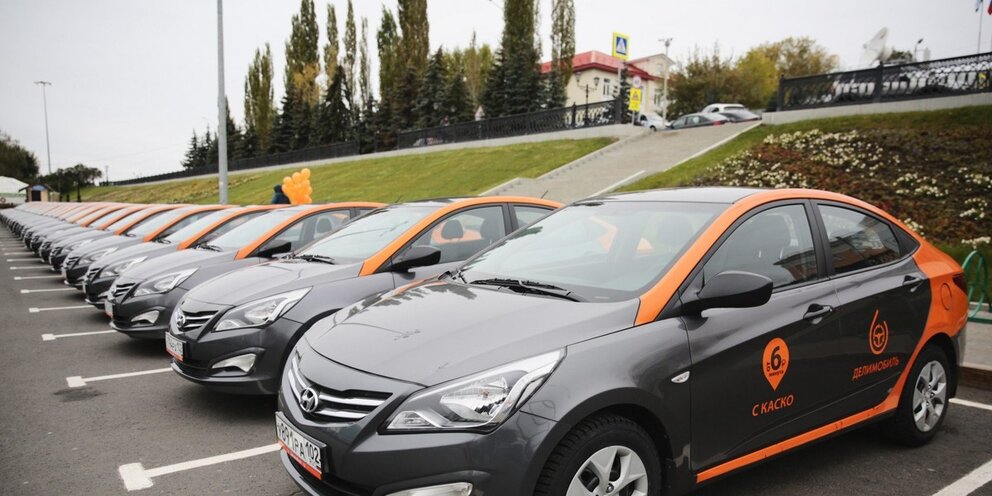
On 14 August, PAO Karshering Russia (Delimobil brand) released its interim financial statements for H1 2026. Revenue fell 3.6% year-on-year to RUB 14,149 mn, but EBITDA rose 18.3% to RUB 2,135 mn, with the margin improving from 12.3% to 15.1%. The net loss was RUB 1,670 mn, with net debt of RUB 34.9 bn and a net debt/EBITDA LTM ratio of 10.13. At RUB 47.65 per share, the stock looks unattractive: EBITDA growth does not cover interest expense, and leverage remains prohibitively high.
Key takeaways
— EBITDA rose 18.3% while revenue fell 3.6% – margin was lifted by savings on repairs and lease costs
— Net loss of RUB 1,670 mn – interest on debt and leases consumed all operating profit
— Leverage at 10.13x EBITDA LTM – the company is on the edge of covenants, with RUB 5.3 bn reclassified as short-term
— Operating cash flow of RUB 3,988 mn does not even cover interest payments of RUB 3,104 mn
— Capex collapsed to RUB 139 mn – the company stopped buying cars and switched to sale-and-leaseback
— No dividends paid over the last 12 months, and with a loss none are expected
— The portal's model shows 32% upside to fair value, but the market values the company at 10.59x EBITDA LTM
Attractiveness
Key figures, RUB bn
| Metric | H1 2025 | H1 2026 | Change |
|---|---|---|---|
| Revenue | 14.7 | 14.1 | -3.6% |
| EBITDA | 1.80 | 2.13 | +18.3% |
| Operating profit | 0.51 | 0.80 | +55.8% |
| Net profit | -1.93 | -1.67 | — |
| Operating cash flow | 2.93 | 3.99 | +36.3% |
| Capex | 0.30 | 0.14 | -54.4% |
| EBITDA margin | 12.3% | 15.1% | +2.8 pp |
| Net margin | -13.2% | -11.8% | +1.4 pp |
EBITDA rose 18.3% while revenue fell 3.6% – margin was lifted by savings on repairs and lease costs
Revenue for H1 2026 fell 3.6% year-on-year to RUB 14,149 mn. The core short-term rental segment declined more sharply: car-sharing revenue dropped to RUB 8,240 mn from RUB 10,026 mn a year earlier. This is a consequence of the strategy to abandon aggressive fleet expansion: the company reduced its fleet and focused on efficiency per vehicle.
At the same time, EBITDA rose 18.3% to RUB 2,135 mn, and the EBITDA margin climbed to 15.1% from 12.3%. The secret is cost savings: vehicle maintenance and repair costs fell to RUB 2,377 mn from RUB 2,872 mn, vehicle lease costs to RUB 382 mn from RUB 668 mn, and insurance costs to RUB 556 mn from RUB 714 mn. The company completed investments in its service station network and warehouse centre, which reduced repair costs.
However, EBITDA growth does not translate into net profit: operating profit was only RUB 796 mn, while financial expenses reached RUB 3,107 mn. Interest expense on loans and borrowings rose to RUB 1,554 mn from RUB 1,379 mn, and lease interest amounted to RUB 1,552 mn. As a result, the net loss for the half-year was RUB 1,670 mn, though a year earlier it was RUB 1,934 mn.
Net loss of RUB 1,670 mn – interest on debt and leases consumed all operating profit
Operating profit for H1 2026 was RUB 796 mn – a positive result, but it pales against financial expenses of RUB 3,107 mn. Interest on loans and borrowings reached RUB 1,554 mn, and interest on lease liabilities RUB 1,552 mn. Even with interest income of RUB 132 mn, net financial expense exceeded RUB 2.9 bn.
The pre-tax loss was RUB 2,138 mn, but thanks to an income tax benefit of RUB 468 mn (deferred tax assets), the final net loss was reduced to RUB 1,670 mn. This is less than RUB 1,934 mn a year earlier, but still deeply negative.
Accumulated loss on the balance sheet grew to RUB 10,965 mn from RUB 9,295 mn at end-2025. Shareholders' equity is only RUB 784 mn – less than 2% of assets. With such a capital base, any further deterioration could lead to negative equity.
Leverage at 10.13x EBITDA LTM – the company is on the edge of covenants, with RUB 5.3 bn reclassified as short-term
Net debt at 30 June 2026 was RUB 34.9 bn, up from RUB 29.4 bn at 31 December 2025 (+RUB 5.5 bn) and from RUB 30.7 bn at 30 June 2025 (+RUB 4.2 bn over 12 months). The net debt/EBITDA LTM ratio is 10.13. This is a prohibitively high level: the company must direct almost all operating cash flow to debt servicing.
The statements disclose that as of 30 June 2026, financial liabilities of RUB 5,332 mn were classified as short-term due to a covenant breach. The company received confirmation from the lender that the early repayment right would not be exercised, and after the reporting date reclassified these liabilities as long-term. This signals the fragility of the financial position.
Total debt including leases amounts to RUB 35,959 mn (RUB 11,166 mn long-term loans and bonds + RUB 3,387 mn short-term + RUB 8,554 mn long-term leases + RUB 12,852 mn short-term leases). The company actively uses sale-and-leaseback: in May 2026 it signed vehicle sale and leaseback agreements worth RUB 5,436 mn. This raised cash but increased lease liabilities.
Operating cash flow of RUB 3,988 mn does not even cover interest payments of RUB 3,104 mn
Operating cash flow for H1 2026 was RUB 3,988 mn versus RUB 2,926 mn a year earlier. This is an improvement, but insufficient: interest payments on loans and borrowings alone amounted to RUB 3,104 mn. After interest, less than RUB 900 mn remains for everything else.
Investments in fixed and intangible assets were minimal: purchases of fixed assets – RUB 28 mn, intangible assets – RUB 111 mn. Total capex RUB 139 mn. The company has virtually stopped buying cars, switching to sale-and-leaseback. This reduces the cash flow burden now but means the fleet is not being renewed.
Financing activities resulted in an outflow of RUB 4,203 mn: repayment of bonds and loans RUB 6,647 mn, repayment of lease liabilities RUB 2,654 mn, while raising RUB 2,766 mn in new loans and RUB 5,436 mn from sale-and-leaseback. The company is refinancing debt but not reducing it.
Capex collapsed to RUB 139 mn – the company stopped buying cars and switched to sale-and-leaseback
Capex for H1 2026 was only RUB 139 mn – many times less than in previous periods. For comparison, depreciation of fixed assets and right-of-use assets for the half-year was RUB 1,210 mn. The company is not investing in fleet renewal, only maintaining the current fleet.
Instead of buying cars, the company uses sale-and-leaseback: in May 2026 it signed vehicle sale and leaseback agreements worth RUB 5,436 mn. This raises cash now but increases future lease liabilities. The carrying value of vehicles received under such transactions rose to RUB 7,662 mn from RUB 1,501 mn at end-2025.
The company's strategy in 2026 is to abandon aggressive fleet expansion and focus on efficiency per vehicle. This explains the decline in short-term rental revenue, but also the margin improvement: the company is cutting less efficient cars and reducing repair and maintenance costs.
No dividends paid over the last 12 months, and with a loss none are expected
No dividends were paid over the last 12 months. The last payment was in 2024 – RUB 1.0 per share at an ex-date price of RUB 210.55, giving a yield of 0.5%. Since then the company has posted a loss for 2025 and a loss for H1 2026, with accumulated losses reaching RUB 10,965 mn.
With the current loss and high debt, paying dividends is impossible without breaching covenants and further undermining capital. Shareholders' equity is only RUB 784 mn, and any payment would reduce it further. The company's dividend history is likely a thing of the past until profitability is restored.
For the investor, this means no dividend support. The yield at the current price of RUB 47.65 is zero. With the key rate remaining high and the company not paying dividends, the stock is unattractive for income-oriented investors.
The portal's model shows 32% upside to fair value, but the market values the company at 10.59x EBITDA LTM
EV/EBITDA LTM is 10.59. This is a high multiple for a company that is shrinking revenue and generating a loss. For comparison: market capitalisation is RUB 7,120 mn, and net debt is RUB 34,912 mn, so EV is about RUB 42 bn. The market values the business at 10.59x annual EBITDA, even though EBITDA does not cover interest.
According to the portal's model, which compares EBITDA growth with a target multiple, the upside to fair value is 32%. However, this model does not account for debt burden and refinancing risk. With net debt at 10.13x EBITDA, any decline in EBITDA or rise in rates could destroy shareholder value.
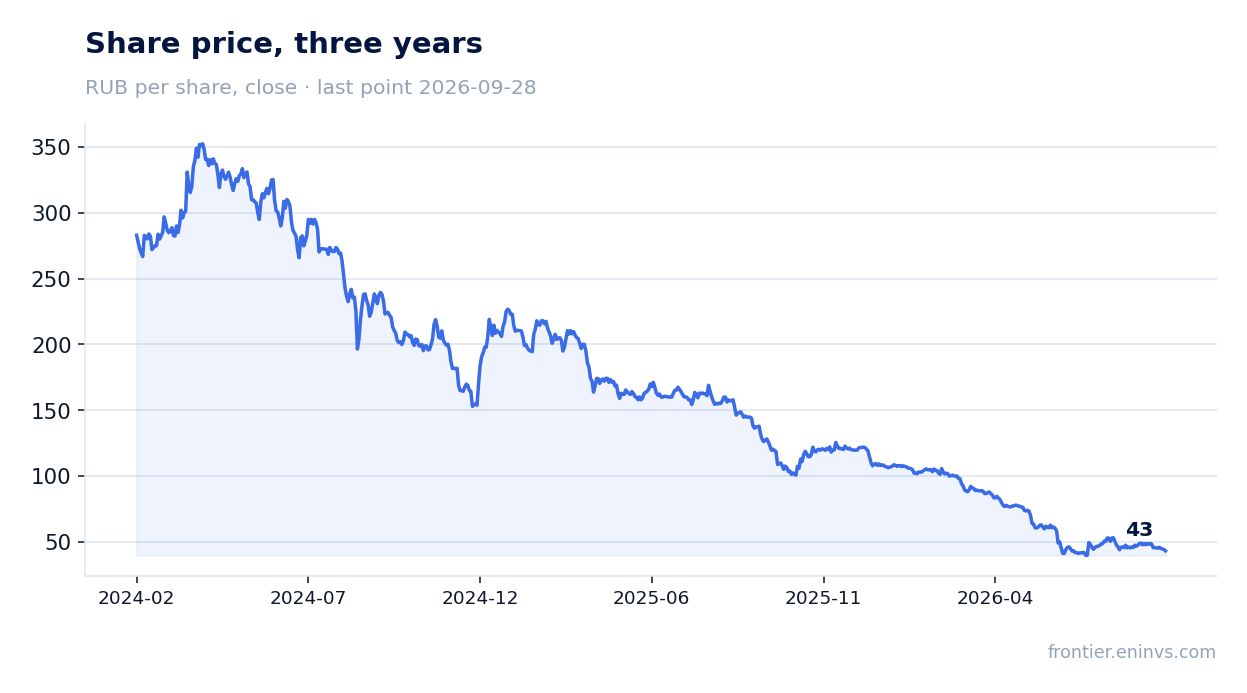
Since the release on 14 August, the stock has fallen 3.1% on the release day and 9.4% by 28 September. The market is negative on the company's ability to service debt and generate profit. At the current price of RUB 47.65 and market cap of RUB 7,120 mn, the stock trades at a discount to the portal's fair value, but this discount is justified by high risks.
Valuation on the latest reported figures
| Metric | Value |
|---|---|
| Market cap | 7.12 bn ₽ |
| EV/EBITDA (LTM) | 10.6 |
| P/B | 2.90 |
| Net debt / EBITDA (LTM) | 10.13 |
| Operating cash flow (LTM) | 7.19 bn |
| ROE | -206.3% |
Bottom line
The strong point of the report is EBITDA growth of 18.3% and margin improvement to 15.1% through cost cuts in repairs, leases and insurance. However, this growth does not convert into profit: net loss of RUB 1,670 mn, operating profit of RUB 796 mn does not cover financial expenses of RUB 3,107 mn. Leverage at 10.13x EBITDA LTM and the reclassification of RUB 5.3 bn of liabilities due to covenants make the company's position fragile. No dividends are paid, capex fell to RUB 139 mn, and operating cash flow of RUB 3,988 mn barely covers interest. At RUB 47.65, the stock looks unattractive: even with 32% upside on the portal's model, the risks outweigh.
Open the company's financial profile DELI →
See also: market overview · valuation map · stock screeners