Apple Inc.: revenue rose 11.7%, but higher R&D spending absorbed the entire profit gain

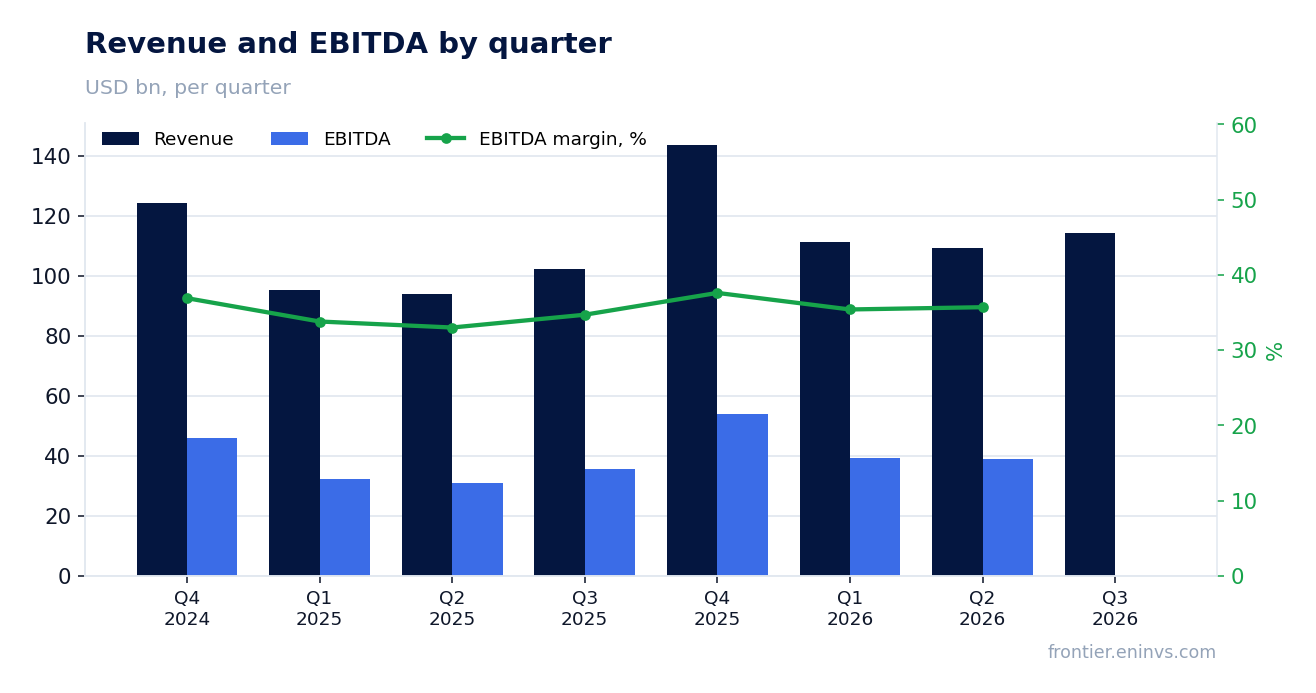
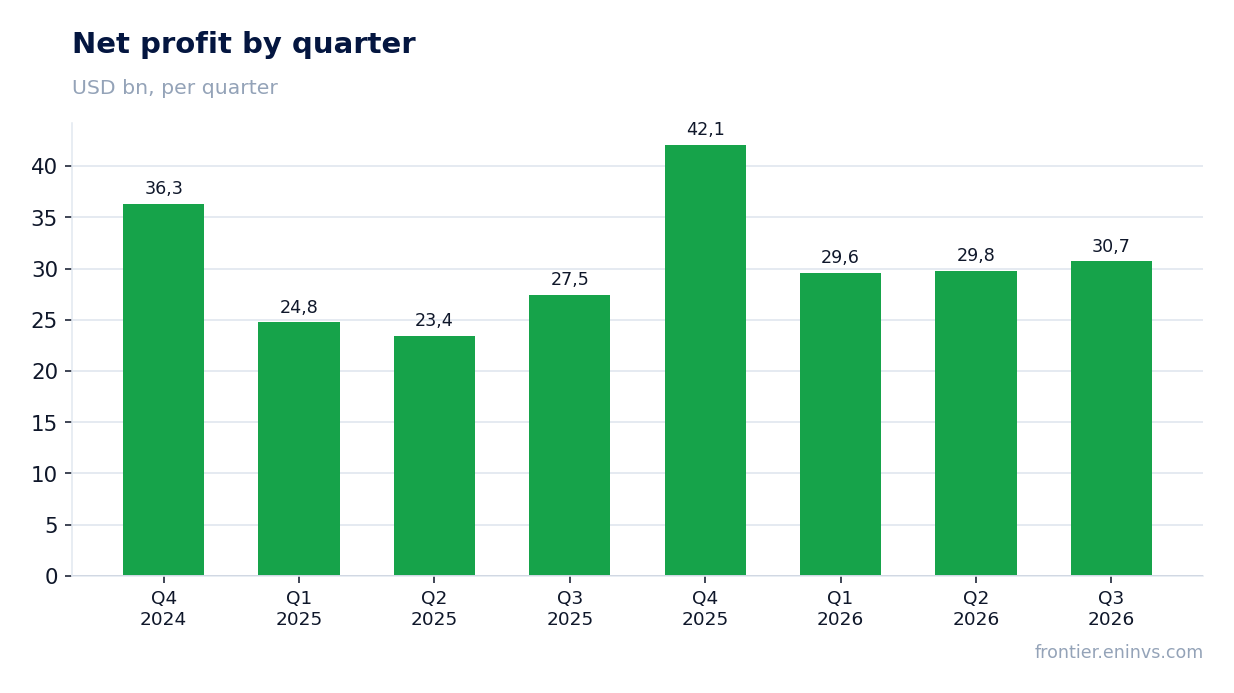
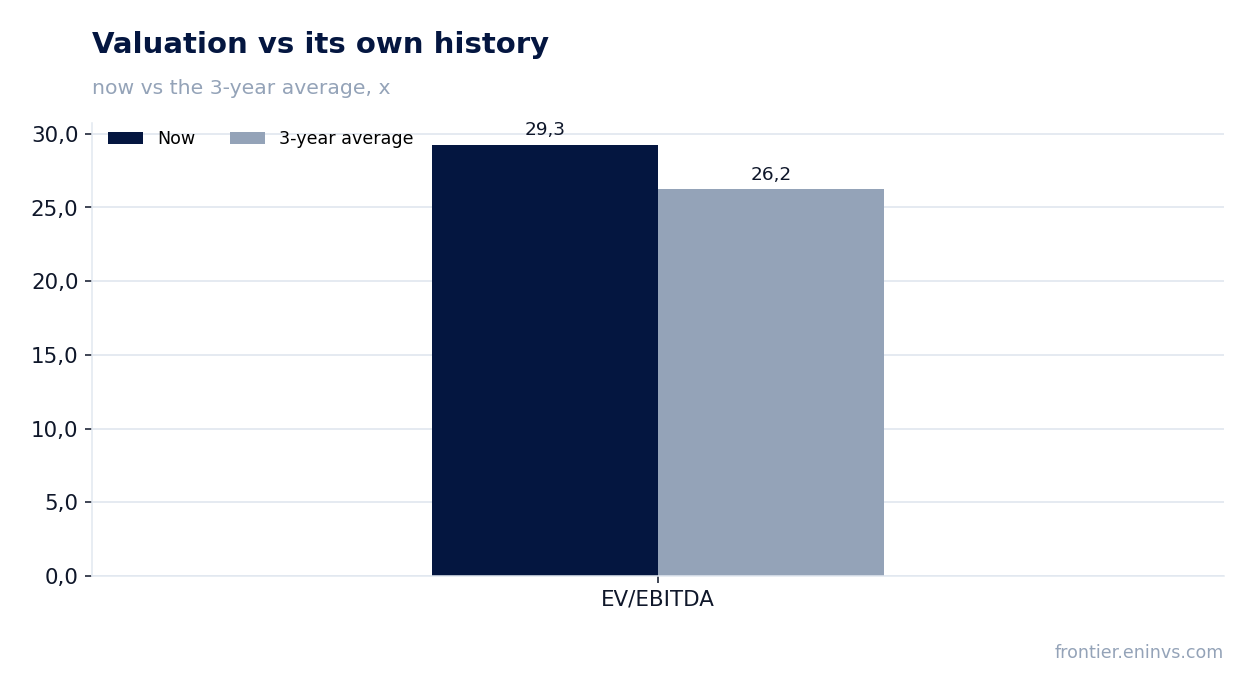
On 2 November Apple Inc. reported results for the quarter ended 26 September 2026. Revenue came in at USD 114,477m (+11.7% year on year), operating profit at USD 35,631m, and net profit at USD 30,711m (+11.8%). The net margin held at 26.8%, but profit grew more slowly than revenue: research and development spending rose to USD 11,730m from USD 8,866m a year earlier. With EV/EBITDA at 29.3 against its own three-year average of 26.2, the share is more expensive than its own history, so the verdict is neutral.
Key takeaways
— Revenue of USD 114.5bn was carried by iPhone: USD 57.6bn versus USD 49.0bn a year earlier
— The net margin held at 26.8% even as R&D spending rose by USD 2.9bn
— Services delivered USD 31.6bn – an all-time high for a September quarter
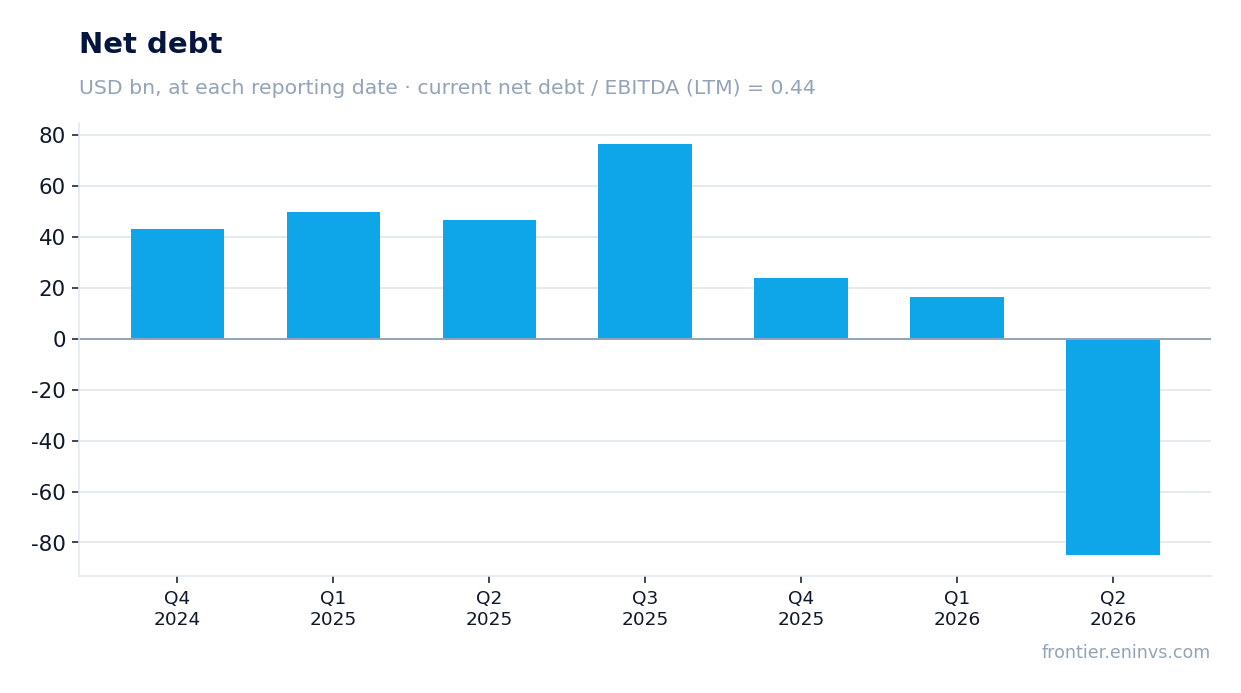
— Net debt of USD 76.4bn equals 0.44x LTM EBITDA
— The USD 0.27 dividend, a 0.31% yield, barely moves total return
— EV/EBITDA of 29.3 is 11% above its own three-year average of 26.2
— Revenue growth decelerated from 16.4% in the prior quarter to 11.7%, which the next report must confirm
Attractiveness
Key figures, USD bn
| Metric | Q3 2025 | Q3 2026 | Change |
|---|---|---|---|
| Revenue | 102 | 114 | +11.7% |
| EBITDA | 35.6 | — | — |
| Operating profit | 32.4 | 35.6 | +9.9% |
| Net profit | 27.5 | 30.7 | +11.8% |
| Operating cash flow | 29.7 | — | — |
| Capex | 3.24 | — | — |
| EBITDA margin | 34.7% | — | — |
| Net margin | 26.8% | 26.8% | +0.0 pp |
Revenue of USD 114.5bn was carried by iPhone: USD 57.6bn versus USD 49.0bn a year earlier
Revenue for the quarter ended 26 September 2026 was USD 114,477m, up 11.7% year on year. iPhone sales drove the result at USD 57,583m versus USD 49,025m a year earlier. Americas (USD 48,680m) and Europe (USD 32,008m) also grew, while Greater China rose to USD 17,539m from USD 14,493m.
Mac rose to USD 10,792m from USD 8,726m, while iPad and Wearables, Home and Accessories declined to USD 6,229m and USD 8,300m respectively. Services reached USD 31,573m, an all-time high for a September quarter.
The deceleration in revenue growth from 16.4% in the prior quarter to 11.7% in the reported one is an important signal. The company attributes the dynamics to the launch of the new iPhone lineup, but the durability of holiday-season demand has yet to be confirmed.
The net margin held at 26.8% even as R&D spending rose by USD 2.9bn
Net profit for the quarter was USD 30,711m versus USD 27,466m a year earlier, up 11.8%. The net margin held at 26.8%, the same as in the year-earlier quarter.
Gross margin reached 47.9%, including roughly 1 percentage point from tariff refunds. R&D spending rose to USD 11,730m from USD 8,866m, and SG&A to USD 7,459m from USD 7,048m. The USD 3,275m increase in operating expenses almost fully explains why profit grew more slowly than revenue.
Diluted EPS was USD 2.10 versus USD 1.85 a year earlier, including USD 0.05 from tariff refunds. Without that one-off, EPS growth would have been more modest.
Services delivered USD 31.6bn – an all-time high for a September quarter
Services revenue was USD 31,573m versus USD 28,750m a year earlier, reaching an all-time high for a September quarter. This segment remains more profitable than hardware: cost of services was USD 7,593m, while cost of products was USD 52,064m.
Services growth supported the gross margin at 47.9% despite pressure from R&D spending. The installed base of active devices reached a new all-time high across all major product categories and geographic segments, providing a base for further services revenue growth.
Net debt of USD 76.4bn equals 0.44x LTM EBITDA
Net debt at the latest reported balance sheet was USD 76,443m. The ratio of net debt to LTM EBITDA is 0.44, still a low level for a company of this scale.
Operating cash flow over the last twelve months was USD 145,097m, comfortably covering capital expenditure of USD 9,041m. Free cash flow funds dividends and buybacks: the company returned USD 28bn to shareholders over the year.
The USD 0.27 dividend, a 0.31% yield, barely moves total return
The board declared a quarterly dividend of USD 0.27 per share, payable on 16 November 2026. Over the last twelve months the dividend yield was 0.31% – a figure that barely affects the share's total return.
In our estimate, based on current profit and dividend policy, the annual dividend will stay near its current level. Payouts depend on profit and on buybacks, which amounted to USD 86,390m over the year. A cut is possible only with a sharp fall in profit, which current metrics do not suggest.
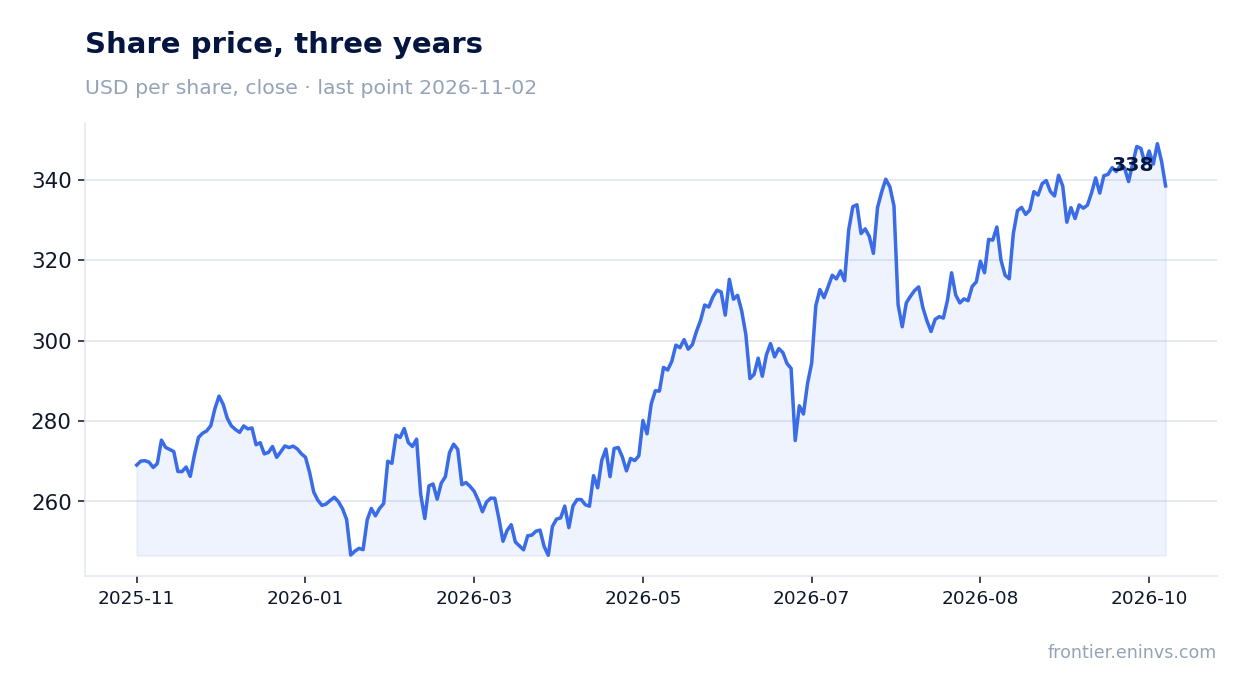
EV/EBITDA of 29.3 is 11% above its own three-year average of 26.2
The LTM EV/EBITDA multiple is 29.3, 11% above its own three-year average of 26.2. The share trades above its own history on this multiple.
The LTM P/E is 37.8, also pointing to a premium valuation. On the portal's model, the upside to fair value is +18%, but that estimate comes from our own model, not from market consensus.
Revenue growth decelerated from 16.4% in the prior quarter to 11.7%, which the next report must confirm
Revenue growth decelerated from 16.4% in the prior quarter to 11.7% in the reported one. This slowdown matters as the company enters the holiday season with a new iPhone lineup.
The next report will show whether the deceleration was one-off or sustained. Key factors are demand for the iPhone Duo and iPhone 18 Pro, as well as services revenue dynamics. If revenue growth stays below 12%, the current premium valuation could come under pressure.
Valuation on the latest reported figures
| Metric | Value |
|---|---|
| Market cap | 5 000 bn USD |
| P/E (LTM) | 37.8 |
| EV/EBITDA (LTM) | 29.3 |
| Net debt / EBITDA (LTM) | 0.44 |
| ROE | 111.9% |
| Dividend yield (12m) | 0.3% |
| EV/EBITDA, 3-year average | 26.2 |
Bottom line
The report's strengths are revenue growth of 11.7%, record services, and a stable net margin of 26.8%. However, profit growth was held back by higher R&D spending, and part of EPS came from one-off tariff refunds. The key question for a holder is whether the company can sustain its premium valuation as revenue growth decelerates. The verdict is neutral: the share is fairly valued relative to its own history but offers no margin of upside.
Open the company's financial profile AAPL →
See also: market overview · valuation map · stock screeners