Phosagro: Q2 revenue up 7.7%, but EBITDA down 26.7% on higher costs
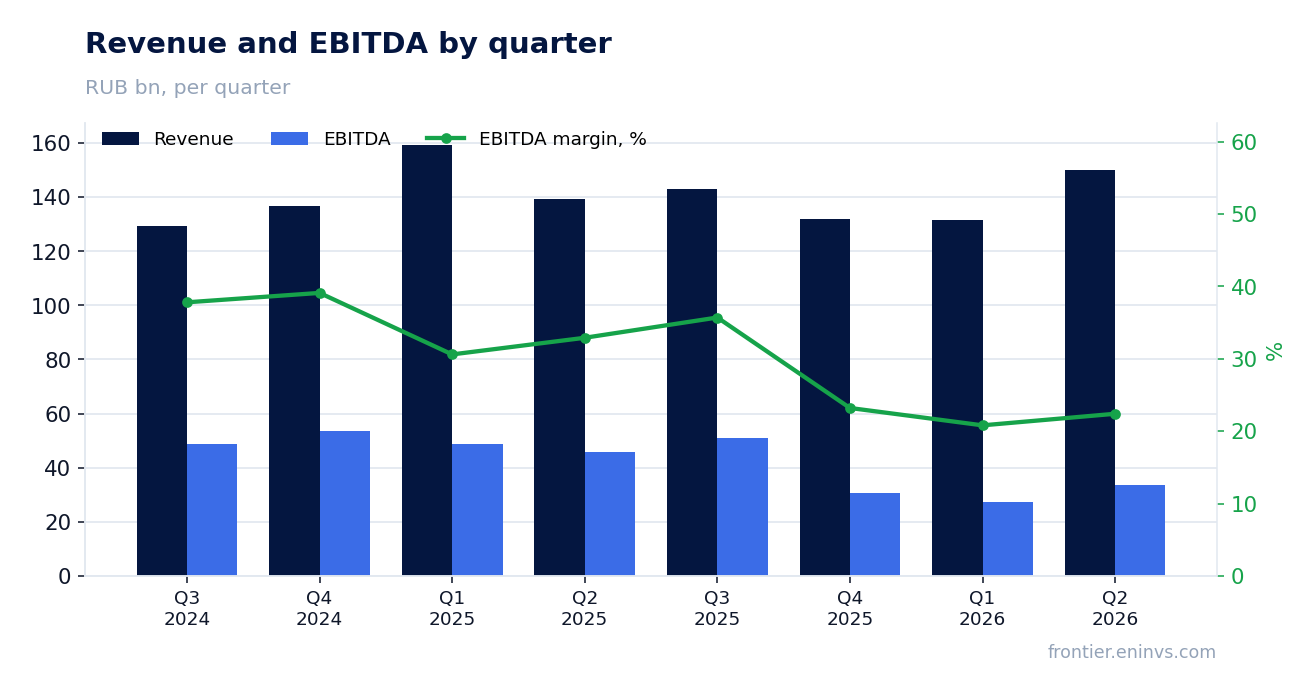
On August 22, 2026, Phosagro reported Q2 2026 results. Revenue rose 7.7% YoY to RUB 149.9 bn, but EBITDA fell 26.7% to RUB 33.5 bn, and net profit dropped 33.9% to RUB 18.4 bn. This review examines the margin squeeze and the factors that will shape H2.
Key takeaways
— Q2 EBITDA fell 26.7% despite revenue growth of 7.7% – margin contracted from 32.9% to 22.4%
— Cost of goods sold rose 28.9% in H1, driven mainly by higher sulphur and sulphuric acid prices
— H1 net profit shrank fourfold to RUB 18.7 bn from RUB 75.5 bn a year earlier
— H1 operating cash flow fell 37% to RUB 56.4 bn, while capex rose 20%
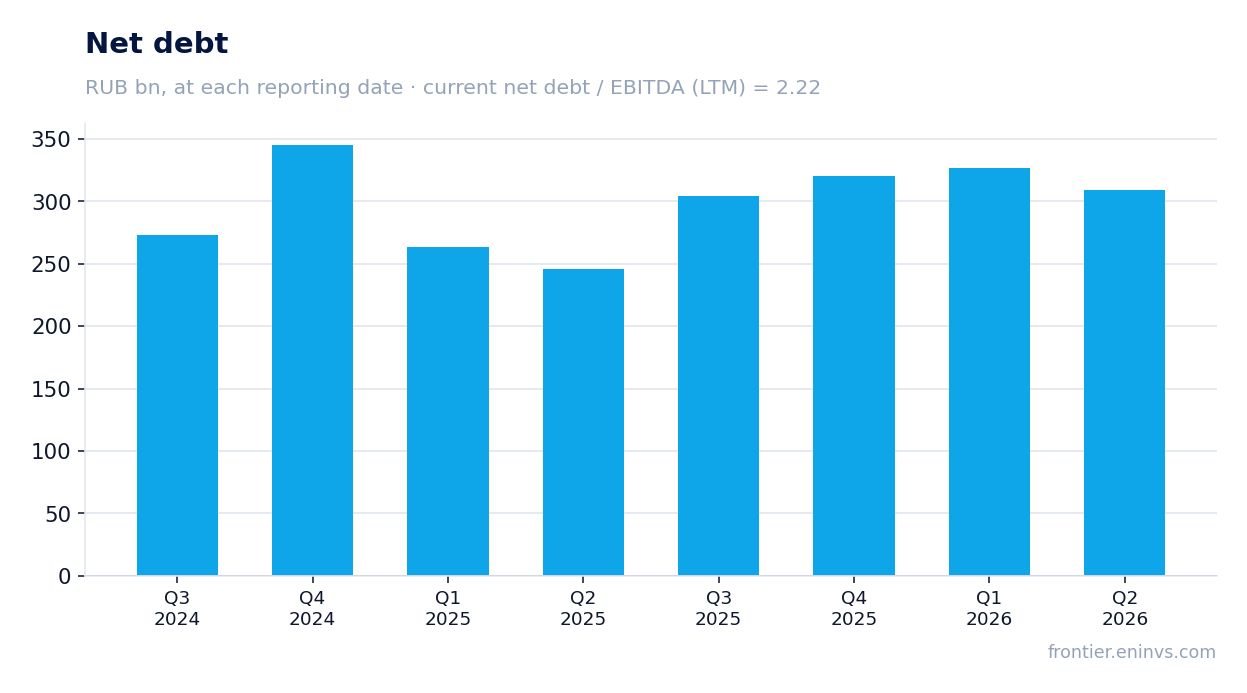
— Net debt increased by RUB 47.4 bn over the year to RUB 309.2 bn, with net debt/EBITDA LTM at 2.22
— Trailing dividend yield is 7.7%, below our fair yield of 10.5%
— The company did not disclose segment information for H1 – auditor issued a qualified opinion
Key figures, RUB bn
| Metric | Q2 2025 | Q2 2026 | Change |
|---|---|---|---|
| Revenue | 139 | 150 | +7.7% |
| EBITDA | 45.8 | 33.5 | -26.7% |
| Operating profit | 36.0 | 21.7 | -39.9% |
| Net profit | 27.9 | 18.4 | -33.9% |
| Operating cash flow | 36.0 | 21.7 | -39.9% |
| Capex | 15.2 | 20.5 | +34.7% |
| EBITDA margin | 32.9% | 22.4% | -10.5 pp |
| Net margin | 20.0% | 12.3% | -7.7 pp |
Q2 EBITDA fell 26.7% despite revenue growth of 7.7% – margin contracted from 32.9% to 22.4%
In Q2 2026, Phosagro's revenue rose 7.7% YoY to RUB 149.9 bn, but EBITDA fell 26.7% to RUB 33.5 bn. EBITDA margin contracted from 32.9% to 22.4% – the lowest in eight quarters.
The main reason is rising costs. In H1, cost of goods sold increased 28.9% YoY to RUB 194.6 bn, while revenue for the same period declined 5.8% to RUB 281.4 bn. As a result, gross profit for H1 fell 38.3%.
Margin pressure is unlikely to ease in H2: sulphur and sulphuric acid prices remain high, and since July 1, 2026, the EU has imposed higher duties on Russian fertilizers – EUR 45 per tonne for complex fertilizers, which will increase over three years.
Cost of goods sold rose 28.9% in H1, driven mainly by higher sulphur and sulphuric acid prices
In H1 2026, Phosagro's cost of goods sold amounted to RUB 194.6 bn versus RUB 158.9 bn a year earlier. The key contributor was spending on sulphur and sulphuric acid, which more than doubled from RUB 18.3 bn to RUB 41.8 bn in H1.
Personnel costs also rose notably – up 14.7% in H1 to RUB 23.7 bn, and potassium chloride costs increased 30.1% to RUB 14.6 bn. Logistics costs, in contrast, declined 4.5% to RUB 15.8 bn, mainly due to lower freight and port charges.
Cost growth outpaced revenue, squeezing margins. In Q2, cost of goods sold rose 28.9% YoY to RUB 100.4 bn, while revenue grew 7.7%.
H1 net profit shrank fourfold to RUB 18.7 bn from RUB 75.5 bn a year earlier
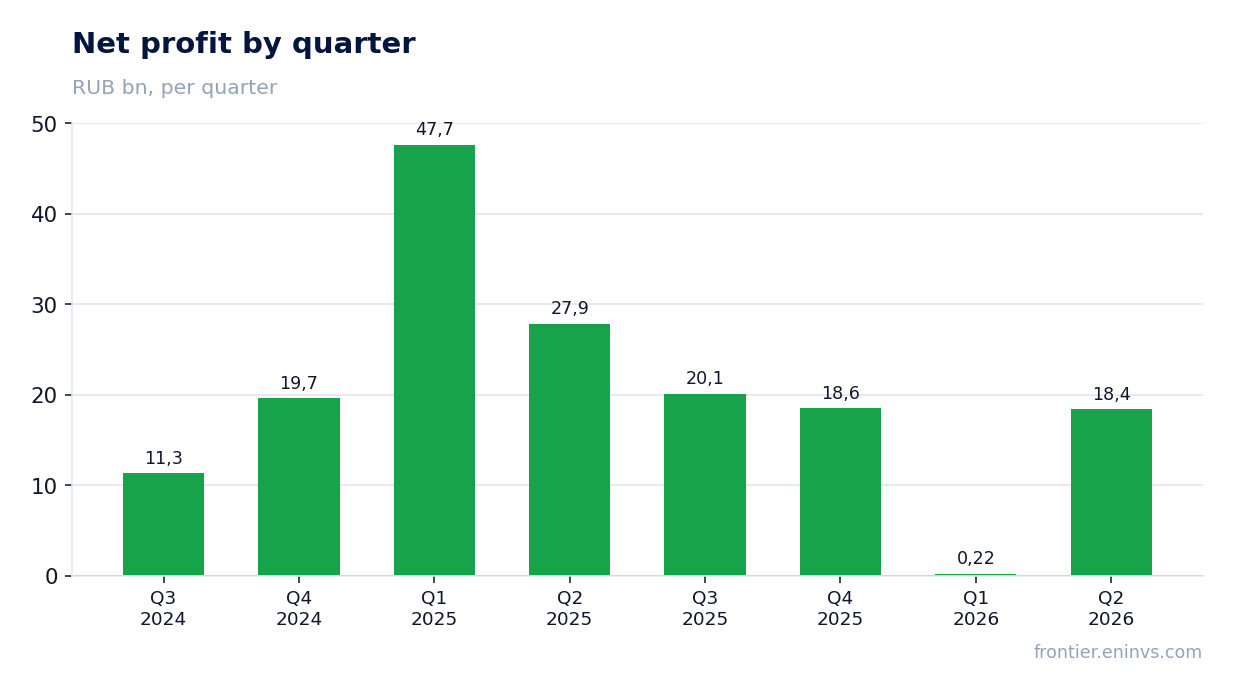
In H1 2026, Phosagro's net profit was RUB 18.7 bn versus RUB 75.5 bn in the same period of 2025. In Q2, net profit fell 33.9% YoY to RUB 18.4 bn.
The decline is explained not only by operational factors but also by the effect of exchange rate differences. In H1 2025, the company recorded a gain from FX differences on financing activities of RUB 34.5 bn, while in 2026 it recorded a loss of RUB 2.0 bn. This added about RUB 36.5 bn to the pre-tax decline.
Excluding FX differences, operating profit for H1 fell 49.4% from RUB 74.8 bn to RUB 37.9 bn. Net margin in Q2 was 12.3% versus 20.0% a year earlier.
H1 operating cash flow fell 37% to RUB 56.4 bn, while capex rose 20%
In H1 2026, Phosagro's operating cash flow was RUB 56.4 bn versus RUB 89.5 bn a year earlier. The decline is due to lower profit and higher working capital: inventories increased by RUB 6.2 bn, receivables decreased by RUB 7.0 bn, and payables rose by RUB 8.0 bn.
Capital expenditures for H1 rose 20% to RUB 38.3 bn, plus RUB 3.8 bn of capitalized interest. Key projects include modernization of mines and processing plants in Kirovsk, as well as sulphuric and phosphoric acid capacities in Balakovo and Cherepovets.
Free cash flow for H1 was about RUB 18.1 bn (RUB 56.4 bn minus RUB 38.3 bn capex), covering only part of the dividends paid over the last 12 months. The company paid RUB 387 per share over the last 12 months, corresponding to a 7.7% yield.
Net debt increased by RUB 47.4 bn over the year to RUB 309.2 bn, with net debt/EBITDA LTM at 2.22
At the end of Q2 2026, Phosagro's net debt stood at RUB 309.2 bn – RUB 47.4 bn higher than a year earlier. On a quarterly basis, debt declined by RUB 21.0 bn, but over 12 months the increase is significant.
Net debt/EBITDA for the trailing twelve months is 2.22. This is a moderate level, but noticeably higher than a year ago when EBITDA was substantially higher.
Interest expenses for H1 amounted to RUB 11.2 bn, down 8.8% YoY, thanks to the CBR key rate cut from 21% to 14.25% by the end of June 2026. The company also capitalized RUB 3.8 bn of interest into fixed assets.
Trailing dividend yield is 7.7%, below our fair yield of 10.5%
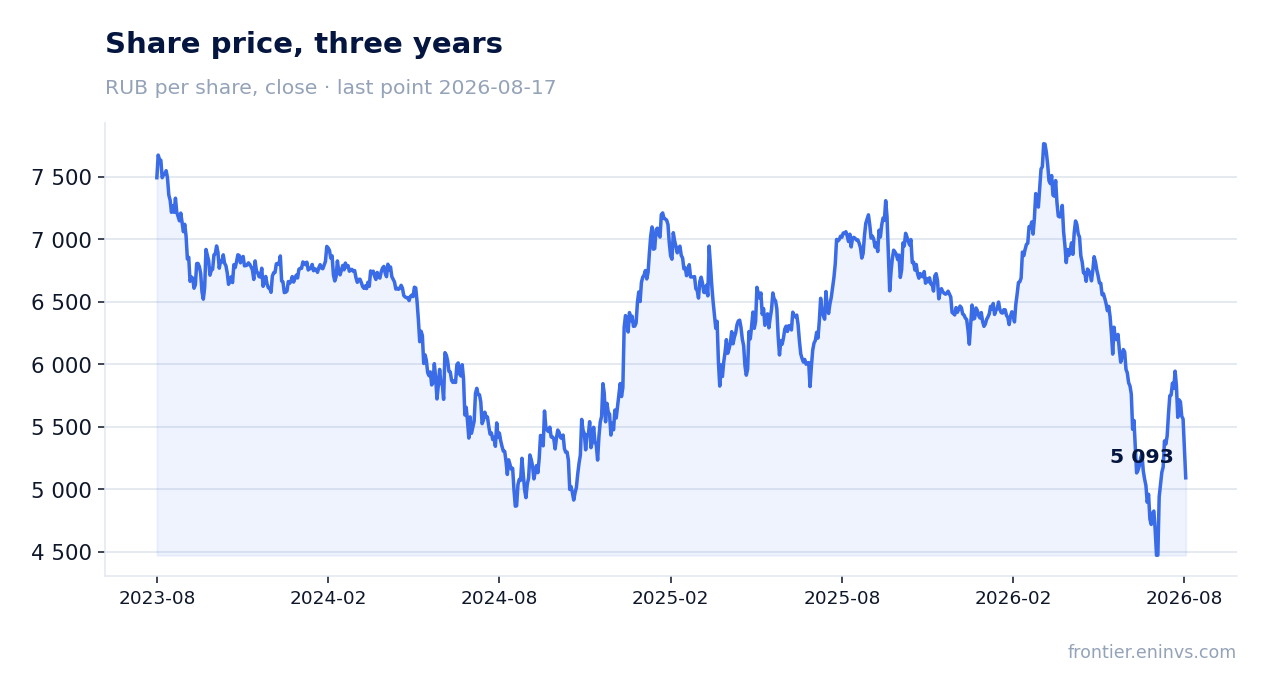
Over the last 12 months, Phosagro paid RUB 387 per share, implying a yield of 7.7% at the current price. Our model estimates the next payout at RUB 387 per share, corresponding to a forward yield of 7.6%.
We consider a fair yield for this stock to be 10.5%. The current yield is below fair, meaning the market prices the shares above our fair value based on dividend potential.
The payout ratio is estimated at 0.72 of profit. At current profit and capex levels, the company can sustain such payments, but free cash flow for H1 covers them only partially.
The company did not disclose segment information for H1 – auditor issued a qualified opinion
Auditor Technologies of Trust – Audit issued a qualified conclusion on the review of Phosagro's condensed interim financial statements for H1 2026. The reason is the non-disclosure of segment information required by IAS 34.
This limits investors' ability to assess the contribution of individual business lines. The statements only provide a breakdown of revenue into phosphate and nitrogen products (RUB 271.5 bn for H1) and other revenue (RUB 9.9 bn).
The lack of segment data is particularly important when prices for different fertilizer types move in opposite directions. Without this information, it is difficult to judge which products support revenue and which are dragging it down.
Valuation on the latest reported figures
| Metric | Value |
|---|---|
| Market cap | 662 bn ₽ |
| P/E (LTM) | 11.5 |
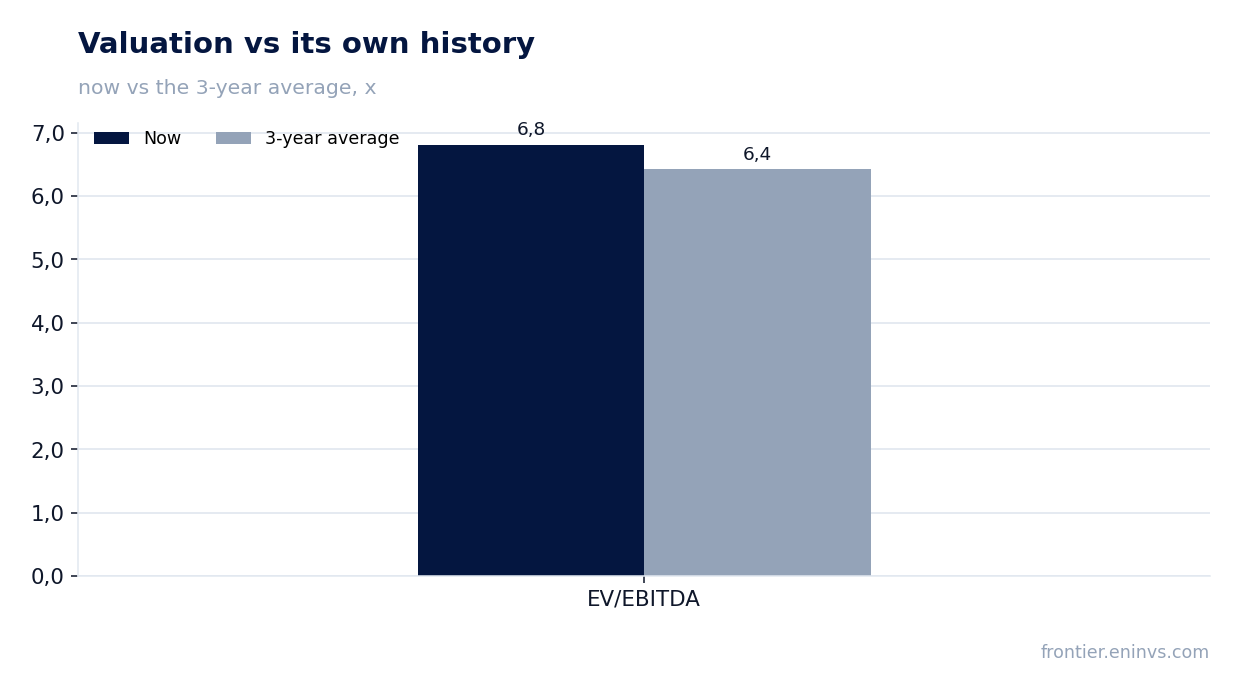
| EV/EBITDA (LTM) | 6.8 |
| P/B | 2.76 |
| Net debt / EBITDA (LTM) | 2.22 |
| Operating cash flow (LTM) | 98.6 bn |
| ROE | 27.9% |
| Dividend yield (12m) | 6.3% |
| EV/EBITDA, 3-year average | 6.4 |
Bottom line
Phosagro's Q2 2026 results show a company in a margin squeeze: revenue is growing, but costs are growing faster, and net profit is falling due to operational and FX factors. The strength remains a moderate debt level and lower interest expenses thanks to a softer monetary policy. However, free cash flow for H1 covers dividends only partially, and the lack of segment disclosure reduces transparency. The key question for shareholders is whether the company can restore profitability in H2, or whether the current margin level becomes the new norm.
Open the company's financial profile PHOR →
See also: market overview · valuation map · stock screeners